Business · Technology · Transport
Waymo pauses service San Francisco-wide after robotaxis stalled on flooded streets in a near-record atmospheric river storm — the second time in 48 hours the company has pulled its driverless cars back, a day after California barred them from every freeway in the state.
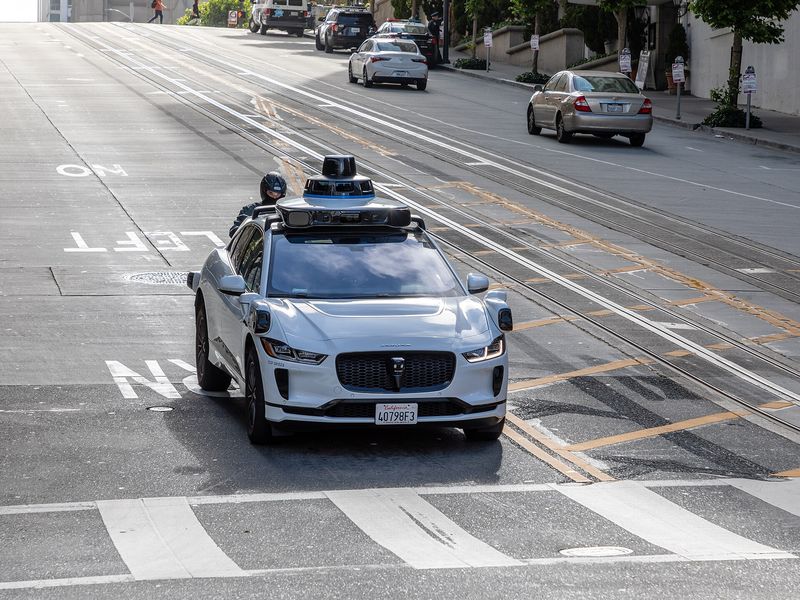
SAN FRANCISCO, November 18, 2026 — At about 11 a.m. Pacific time on Wednesday, the message appeared in the Waymo app, and the largest driverless taxi service in the Bay Area simply stopped. “We’ve paused for now due to weather,” riders were told. “We’ll be back when road conditions improve and the forecast looks clear.” By then, the reason was already visible on phone screens across the city: Waymo robotaxi flooded streets had become the defining image of the strongest California storm in months, as driverless cars stalled in standing water from the Panhandle to Bayshore Boulevard and other drivers picked their way around them.
The pause was not a single-neighbourhood trim. The Waymo service suspended Bay Area storm footprint covered San Francisco, the Peninsula and the South Bay, according to San Francisco Chronicle reporting carried by CBS News Bay Area — the company’s entire regional operation, switched off in the middle of a weekday because the streets it drives had filled with water faster than its cars could be trusted to judge it. The service was still paused as of 3 p.m. Wednesday, and Waymo announced no restart time. It is the direct answer to why did Waymo suspend service today: not a breakdown, not a regulatory order, but a fleet that met floodwater it could not reliably read — and a company that decided, after cars had already stalled in it, that the only safe move left was to stop everything.
The timing compounds the story. Tuesday, the California Department of Motor Vehicles barred Waymo’s driverless vehicles from every freeway in the state, calling the operations an imminent hazard after incursions into construction zones — a decision Signal Post News covered in full in its report on the Waymo freeway ban California DMV imposed this week. On Tuesday the state took the freeways. On Wednesday the weather took the surface streets. A service that began the week as the most advanced robotaxi operation in the world ended Wednesday afternoon unable to run anywhere in its home market — off the freeways by order, and off the city grid by water.
What happened, street by street
The stalls were not scattered malfunctions. Read in sequence, they describe a single failure mode repeating across the map: a driverless car reaching water of uncertain depth, declining — or failing — to proceed, and becoming a fixed obstacle in a live traffic lane while human drivers improvised around it. No injuries or deaths from the Waymo stalls have been reported, and Signal Post News states that plainly at the outset, because the day’s most alarming headline framing — the New York Post’s account of cars trapping passengers in rising floodwater — is a characterisation built on eyewitness social-media posts, not a confirmed casualty picture. What is confirmed, by multiple outlets and by the company’s own response, is the stalls themselves, the blocked intersections, and the pause that followed.
Oak Street at Cole Street: the Waymo stuck flooded intersection by the Panhandle
The best-documented stall came at Oak Street at Cole Street, beside the Panhandle, where a Waymo robotaxi stopped in a flooded lane and blocked traffic. Eyewitness video posted to X by Julia Daniel showed the car sitting in the water as flooding spread across the junction; in her post, addressed to the company and tagging District 5 Supervisor Bilal Mahmood, she wrote that the car was “blocking the shallowest out of all the flooded lanes on Oak in SF” and creating a hazard that was getting worse. Mahmood posted that San Francisco emergency personnel responded to a Waymo stalling in the Panhandle — which means that at the height of a citywide storm response, a driverless car that had simply stopped became one more incident for crews to attend. The detail that matters is in Daniel’s wording: the shallowest lane. The car had not driven into the deepest water on the street. It had stopped where the flooding was least severe, and stopped traffic with it.
Bayshore Boulevard at Industrial Street: disabled and blocking traffic
On the city’s south-eastern edge, another Waymo vehicle was seen disabled and blocking traffic on a flooded stretch of Bayshore Boulevard at Industrial Street, just east of U.S. Highway 101 and north of Interstate 280, CBS News Bay Area reported. The location is instructive: Bayshore is a working arterial, not a residential side street, and a stalled vehicle there does not merely inconvenience a block — it dams a corridor. The same junction overwhelmed human drivers too: at least four cars were later towed after becoming trapped in the flooded portion of Bayshore at Industrial, according to CBS reporting, with the disabled Waymo among the vehicles caught at the intersection. That context cuts in two directions. The water at Bayshore was genuinely dangerous, deep enough to trap ordinary cars with drivers in them. But it also underlines the difference in how the two kinds of vehicle fail: a human driver who misjudges floodwater is making an individual error in real time, while a robotaxi that stalls in the same water is exhibiting a property of a fleet — one that will repeat, identically, at the next flooded arterial until the system changes.
A flooded crosswalk, an overflowing drain, and a rider told to stay inside
Other encounters filled in the pattern. One Waymo vehicle stopped in a flooded crosswalk, forcing other drivers to steer around it; another was reported stopped in the middle of a busy intersection where the car would not go around an overflowing drain, leaving drivers to pass on the wrong side of the road. And in a separate incident described by Engadget, a Waymo idled mid-road in the floodwater and told its rider to stay inside the vehicle. That instruction deserves a fair reading. Telling a passenger to remain in the car rather than step into moving floodwater of unknown depth — water that can hide open drains, debris and live electrical hazards — is, in isolation, the cautious choice, and it is the choice every flood-safety leaflet endorses for human drivers too. But it also captures the strangeness of the driverless failure state: a car that will not move, a passenger who cannot drive it, and a support system reachable only by phone, in a city where the emergency services were simultaneously rescuing motorists from underpasses. The rider is safe. The rider is also, for the duration, cargo in a stalled machine in rising water — and the gap between those two sentences is where Wednesday’s public argument about robotaxis actually lives.
Edward Frazer’s 90-minute ride from North Beach to Mission Bay
The fullest rider account came from Edward Frazer, who posted on X that he had been in a Waymo for an hour and a half travelling from North Beach to Mission Bay — a cross-town trip that ordinarily takes a fraction of that time. In his post, quoted by the New York Post, Frazer wrote that the car had pulled over more than ten times, that he could no longer connect to support — speculating that there were probably too many concurrent calls — and that despite roughly 500 rides with the service, this was “by far the worst ever.” Signal Post News reports this as what it is: one rider’s account, in his own words, on his own account. It is not a company figure and not an official finding. But its specifics — the repeated pull-overs, the unreachable support line — sketch the system-level picture the official statements do not: a fleet degrading simultaneously across a city, with every stalled or crawling car generating a support call into the same overwhelmed queue. A single robotaxi having a bad trip is an anecdote. Hundreds of riders having the same bad trip at the same hour, in the same rain, is an operations failure, and Frazer’s post reads like a dispatch from inside one.
The storm in numbers: San Francisco flooding November 18 2026
None of this happened in ordinary rain. The National Weather Service described the system as an atmospheric river — a long plume of Pacific moisture aimed at the coast — and the strongest storm to hit California in months, arriving as a strong El Niño continues to build in the Pacific and forecasters warn of a long, rough winter for the state. Bay Area storm flooding today was the local expression of a statewide event: flood advisories, high wind warnings and winter storm warnings ran from San Francisco and San Jose to Sacramento and the Sierra, and the rain that fell on San Francisco’s streets fell at near-record pace.
2.18 inches by 2 p.m. — and the San Francisco rain record 1918
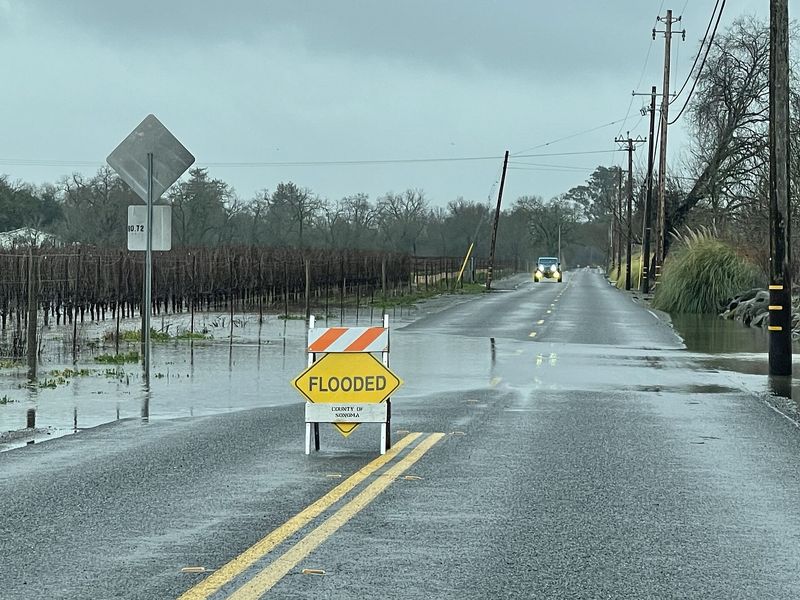
By 2 p.m. Wednesday, downtown San Francisco had recorded 2.18 inches of rain, according to the National Weather Service — within six-hundredths of an inch of the record for November 18, 2.24 inches, set in 1918. A 108-year-old record is not a rhetorical flourish; it is the correct scale for what the city’s drainage was asked to handle in a single day. Streets flood in San Francisco when rainfall intensity outruns the drains, and on Wednesday it did so at historic rates: the California Highway Patrol reported more than a foot of water in the southbound lanes of Interstate 280 near Geneva Avenue by about 10:35 a.m., and water was reported spilling back out of storm drains in the heaviest-hit districts. The advisories matched the measurements. A wind advisory ran until 4 p.m., with sustained winds of 20 to 30 mph and gusts to 55 mph; a flood advisory covered the Bay Area until 3:30 p.m.; and the Coastal Flood and High Surf Advisory was extended until 10 a.m. on Friday, November 20. Nor is the event finished: the weather service expected the rain to lighten Wednesday afternoon, then return Wednesday night and continue into late Thursday — the same window in which Waymo must decide whether its pause ends.
Berkeley’s Ashby Avenue rescue — and a ground stop at SFO
The storm’s human stakes were clearest across the bay. In Berkeley, authorities warned drivers shortly before 11 a.m. to avoid Ashby Avenue near Bay Street because of extreme flooding, and at least two vehicles became stuck in the water beneath the overpass; the Berkeley Fire Department rescued one motorist, and no injuries were reported. At San Francisco International Airport, the storm forced a ground stop that lasted until noon, according to storm coverage of the disruption. Put those facts beside the Waymo stalls and the day comes into focus: this was a storm that trapped cars with drivers in them, closed freeway lanes under a foot of water, halted departures at one of the country’s largest airports and came within a hair of a rainfall record older than the automobile’s dominance of the city. Waymo’s fleet did not fail on a normal day. It failed — visibly, repeatedly and in public — on the hardest driving day San Francisco has had in months, which is precisely the class of day on which a transport service is supposed to prove what it is for.
Waymo’s response: tracked for hours, fleet cut, then paused
Waymo’s account, given by a company spokesperson to CBS News Bay Area, is that the pause was managed rather than improvised. The company said it had tracked the storm hours in advance, reduced its operational fleet before pausing service altogether, and was in touch with local government emergency management about resuming operations. Each element of that statement does specific work. Tracking the storm hours ahead answers the charge of surprise: the company saw the atmospheric river coming. Reducing the fleet before the pause answers the charge of recklessness: exposure was being wound down as conditions worsened, not after they peaked. And the emergency-management contact answers the charge of unilateralism: the restart, whenever it comes, is being coordinated with the city rather than simply announced to it.
What the statement does not contain is a time. No restart hour was announced, and as of 3 p.m. Wednesday the service remained paused, with the app’s formulation — back “when road conditions improve and the forecast looks clear” — standing as the only public criterion. That vagueness is partly honesty: floodwater recedes unevenly, street by street, and a fleet-wide restart keyed to a clock rather than to conditions would be its own kind of hazard. But it is also a measure of the company’s position. Twenty-four hours earlier, Waymo was absorbing a state order it could not appeal its way around. On Wednesday it could not even promise its home city a time by which its cars would move again — and with rain forecast to return Wednesday night and run into late Thursday, the company’s own stated test, a clear forecast, may not be met until the storm has fully passed.
Not the first time: December 2025, May 2026 and the flooded-road pattern
The Waymo robotaxi storm pause has a history, and the history is what elevates Wednesday from a weather story into a technology story. In December 2025, Waymo paused service in San Francisco during a power outage that left robotaxis blocking streets across the city — the same signature image as Wednesday’s: driverless cars stationary in live lanes, traffic flowing around them, a city negotiating with machines that had decided to stop. The trigger differed — darkness and dead signals then, floodwater now — but the failure state was identical, and it taught the city the lesson it re-learned this week: when a Waymo cannot proceed, it does not pull to the kerb and wait like a cautious human driver. It stops where it is, and the street reorganises around it.
The flood-specific history is more damning, because it is more recent and because it was supposed to have been fixed. In May 2026, Waymo recalled nearly 4,000 vehicles after a robotaxi drove into a flooded road in San Antonio, issued a software update addressing the behaviour, and then paused service in Atlanta after another flooded-street incident there. CBS News Bay Area’s accounting of that period lists the pattern plainly: Waymo vehicles had previously had trouble avoiding flooded streets in Atlanta, Austin, Dallas, Houston and San Antonio, forcing pauses in those cities in May. Five cities, one failure mode, a federal-scale recall and a software remedy — six months before a flooded Wednesday in San Francisco produced the same photographs. Whatever the May update changed, it did not change the outcome that matters: confronted with enough standing water, the fleet’s answer is still to stop in it, and the company’s answer is still to suspend the service.
Why this matters
A stopped driverless car is safe for its rider — and an obstacle for everyone else
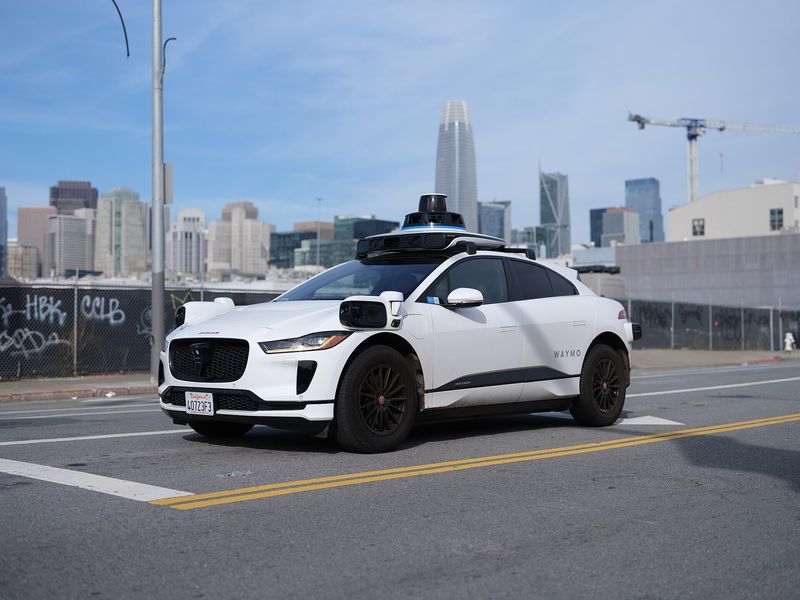
The deepest question Wednesday raises is not whether Waymo’s cars behaved dangerously. By the narrow standard of occupant safety, a car that refuses to enter floodwater is behaving well: vehicles are swept away in surprisingly shallow moving water, and a system biased toward stopping is biased toward keeping its passenger alive. The problem is that a robotaxi is not only a vehicle; it is a participant in a shared street system, and its safety decision is exported onto everyone around it. A Waymo stopped in the shallowest lane on Oak Street is a hazard that grows as the water rises around it — Daniel’s phrase — because every human driver behind it must now make the flooded-street judgement the robotaxi declined, in worse conditions, around a two-ton obstruction. A car idled mid-road with a rider told to stay inside is a rescue incident waiting for a crew that, in Berkeley on the same morning, was pulling a motorist from an underpass. Autonomy’s safety case has always been made in aggregate statistics. Wednesday was a reminder that the public experiences the technology one blocked intersection at a time — and that a fleet which fails safe for its riders and fails obstructive for everyone else has solved only half of the problem it was sold as solving.
Flood depth is the unsolved edge case
Standing water is a peculiarly cruel test for a driving system. Its depth cannot be judged from its surface; its hazards — submerged kerbs, open drains, debris, washed-out pavement — are by definition invisible; and its correct traversal speed depends on the vehicle’s wading limits and on what the water conceals, none of which a camera or a lidar can measure directly. Human drivers solve this problem badly but socially: they watch the car ahead, read the waterline on parked wheels, and follow local knowledge about which underpass floods first. A robotaxi has none of that social layer, and Wednesday suggests it has not yet built a substitute. That is why the May history matters so much. A recall of nearly 4,000 vehicles and a software update constitute the industry’s standard remedy cycle, and the remedy was applied to exactly this failure — after which the failure recurred, in the company’s flagship market, in front of the whole internet. If flood depth remains unjudged after a dedicated fix, the honest conclusion is that it is not a bug awaiting a patch but a capability gap: the system does not know how deep the water is, knows that it does not know, and has been given no better instruction than to stop. Stopping is safe. A transport network whose vehicles stop in floodwater, in a winter forecast to be defined by atmospheric rivers, is a network with a known, dated, recurring outage mode.
Two blows in 48 hours: the freeway ban and the flood pause
Wednesday cannot be separated from Tuesday. The California DMV’s freeway prohibition — indefinite, grounded in construction-zone incursions and a traffic-break incident, and serious enough that Waymo voluntarily pulled its robotaxis off freeways in all of its markets in response — was already the worst regulatory week in the company’s history. The flood pause lands differently because of it. Alone, a weather suspension reads as prudence, even as good citizenship. Arriving a day after a state safety regulator declared the same company’s freeway driving an imminent hazard, it reads as a pattern: a technology whose edge cases — work zones, traffic breaks, floodwater — keep arriving faster than its fixes. Regulators at the DMV and the California Public Utilities Commission, which oversees the commercial service, will read it that way too, because reading incidents as patterns is their institutional job. Waymo’s defenders will answer, correctly, that a voluntary weather pause is the system working as intended — the company choosing caution over bravado. Both readings are available. But only one of them will be quoted back at the company the next time it asks California for permission to do something new.
A record El Niño winter is the real stress test
The forecast is the final multiplier. The National Weather Service frames this storm as the opening of a winter shaped by a strong, still-building El Niño, with the possibility of record seasonal rainfall for California. San Francisco’s streets will flood again this winter — that is not a prediction, it is the city’s hydrology in a wet year. If every major storm pauses the fleet, then the Bay Area’s driverless service has a seasonal availability ceiling set by the weather, and the ceiling arrives exactly when demand for rides peaks and when the road network is under most stress. A service that disappears in every big storm is not useless — most trips, most days, it will run — but it cannot be planned around, by riders, by cities building transport policy on it, or by regulators asked to treat it as infrastructure rather than as a fair-weather amenity. Wednesday was one storm. The winter will grade the pattern.
What happens next
The immediate question is the restart, and it will be answered on Waymo’s own stated terms: road conditions improved and a forecast that looks clear. With rain returning Wednesday night and continuing into late Thursday, that test points to a pause measured in days rather than hours, whatever the company’s hopes — and every additional hour of suspension extends the story from an incident into an outage. Watch, next, for the regulatory echo: whether the DMV or the CPUC seeks a formal accounting of the stalls, as both agencies did after earlier episodes, and whether Wednesday’s blocked intersections — one of which drew a supervisor’s public complaint and an emergency response — enter the record in the freeway proceeding, where the question before the state is precisely how Waymo’s vehicles behave in situations the map does not describe. Watch, too, for the company’s engineering answer, because May’s precedent says one will be claimed: a software change, a tightened flood-avoidance threshold, a new operational rule for standing water. The credibility of that answer will be judged against a simple standard — whether the next atmospheric river produces the same photographs.
And there will be a next one. The same storm system that stalled the robotaxis spun twin waterspouts over San Francisco Bay off Candlestick Point this week, and the season’s flood risk is national as much as local — in Florida, residents are still reckoning with the Broward County flooding that dropped 15 inches of rain on Hollywood and brought down a synagogue roof. Against that backdrop, Wednesday’s lesson is narrow but durable. Waymo’s cars did the safe thing, one vehicle at a time, and the sum of those safe decisions was a city whose newest transport network switched itself off in the middle of the storm. Whether that is a prudent machine awaiting better judgment, or a fair-weather service meeting its climate, is the question the El Niño winter is about to answer — in public, street by flooded street.
Related coverage
California Bars Waymo From Freeways as ‘Imminent Hazard’ — Robotaxis Pause Highway Rides Nationwide
Twin Waterspouts Spin Over San Francisco Bay as Storms Lash California
Sources
- CBS News Bay Area via KION, November 18, 2026 — “Bay Area Waymo robotaxi service suspended amid storm, flooding” by Carlos E. Castañeda (kioncentralcoast.com): the pause at about 11 a.m. and the app message; the Oak Street at Cole Street and Bayshore Boulevard at Industrial Street stalls; the Waymo spokesperson’s statement that the company tracked the storm hours in advance, reduced its fleet before pausing and was in touch with local emergency management; the service still paused in the mid-afternoon; the May history of flooded-street trouble in Atlanta, Austin, Dallas, Houston and San Antonio; and the follow-up reporting that at least four cars were towed from the flooded Bayshore Boulevard and Industrial Street intersection where a Waymo vehicle was also disabled (kioncentralcoast.com).
- CBS News Bay Area via KION, November 18, 2026 — “Storm system pounds Bay Area with heavy rain, strong winds; near record rainfall in San Francisco” by Tim Fang (kioncentralcoast.com): 2.18 inches in downtown San Francisco by 2 p.m. against the 1918 record of 2.24 inches; more than a foot of water on Interstate 280 near Geneva Avenue, per the California Highway Patrol; and the wind advisory with gusts to 55 mph.
- Engadget, November 18, 2026 — “Waymo pauses service in San Francisco after robotaxis get stuck on flooded streets” (engadget.com): Supervisor Bilal Mahmood’s post and the app message; robotaxis blocking intersections in the flooding; the vehicle that idled mid-road and told its rider to stay inside; the December 2025 power-outage pause; the May 2026 recall of nearly 4,000 vehicles after the San Antonio flooded-road incident, the software update and the subsequent Atlanta pause; and the record El Niño winter framing.
- USA Today, November 18, 2026 — “High winds, floods, snow: Northern California battered by storm” (usatoday.com): National Weather Service characterisation of the atmospheric river as the strongest California storm in months, driven by a building strong El Niño; the wind advisory to 4 p.m. with gusts to 55 mph; the flood advisory to 3:30 p.m.; rain returning Wednesday night into late Thursday; the Coastal Flood and High Surf Advisory extended to 10 a.m. November 20; 2.18 inches downtown by 2 p.m. against the 1918 record of 2.24 inches; and emergency personnel responding to the Waymo stalling in the Panhandle, per Supervisor Mahmood.
- San Francisco Chronicle, November 18, 2026, reporting carried by CBS News Bay Area and the New York Post: the pause’s scope across San Francisco, the Peninsula and the South Bay, and Waymo’s statement that it tracked the storm hours in advance and scaled back operations before shutting down.
- New York Post, November 18, 2026 — “Waymos spark terror as they trap drivers in rapidly rising floodwater as monster storm hits California city” (nypost.com): the eyewitness X posts, including Julia Daniel’s video from Oak Street and rider Edward Frazer’s post describing a 1.5-hour North Beach to Mission Bay ride, more than ten pull-overs and an unreachable support line — reported in this article as the riders’ own accounts; the Post’s “trapped in rising water” headline framing is identified as that paper’s characterisation and is not treated as confirmed fact. No injuries or deaths from the Waymo stalls have been reported by any source cited here.
- Eyewitness posts on X, November 18, 2026, as embedded and quoted in the coverage above: Julia Daniel (Oak Street video, tagging Supervisor Bilal Mahmood), Edward Frazer (North Beach to Mission Bay ride) and James Reichert (storm flooding footage). Photographs: a Waymo Jaguar I-Pace on California Street, San Francisco, 2022 — Dietmar Rabich via Wikimedia Commons (file photo); Slusser Road, Windsor, Sonoma County, January 2023 — Sarah Stierch (Missvain) via Wikimedia Commons (file photo); a Waymo Jaguar I-Pace in San Francisco, 2023 — Dllu via Wikimedia Commons (file photo). All credited in place.