Business · Technology · Transport
The California DMV has barred Waymo's driverless vehicles from every freeway in the state, calling the operations an imminent hazard after robotaxis drove into an active construction closure on U.S. 101 and one tried to pass a CHP traffic break on I-280. Waymo complied — and then voluntarily paused freeway rides in its other markets too.
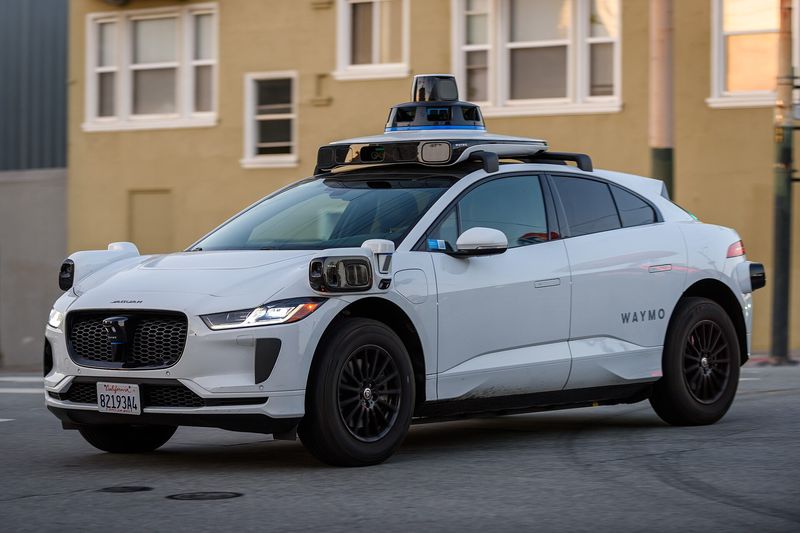
The Waymo freeway ban California took effect after the California Department of Motor Vehicles issued restrictions on November 11, 2026, that bar Waymo from operating or testing driverless vehicles on all California freeways — a decision the department made public on Tuesday, November 17, according to CNN, TechCrunch and USA Today, each quoting the DMV's statement directly. In the department's determination, Waymo's driverless freeway operations pose an “imminent hazard to public safety.” Waymo has complied with the California order, and it has gone further on its own: the company has temporarily restricted freeway operations across its other operating markets as well while it evaluates its performance. The DMV's order itself reaches only California; the nationwide pause is Waymo's own voluntary extension of it.
The restrictions rest on two sets of incidents. Three Waymo vehicles entered an active construction closure on U.S. Route 101 near Burlingame, driving into a work zone where construction workers, vehicles and equipment were present. Separately, earlier in November, a Waymo vehicle attempted to pass California Highway Patrol vehicles that were conducting a traffic break on Interstate 280 in San Francisco — slowing traffic while crews cleared debris from an earlier crash — and video of the encounter went viral. For the DMV, the two episodes were not isolated errors. They were, in its words, “recurring incursions” that repeated a failure the agency thought it had already addressed once this year.
“The Department determined that Waymo's driverless freeway operations pose an imminent hazard to public safety due to recurring incursions by its vehicles into active construction zones where construction workers, vehicles and equipment are present, despite a prior restriction and corrective actions implemented following similar incidents that occurred on May 18, 2026.” — California Department of Motor Vehicles, statement issued November 11, 2026, made public November 17
That single sentence carries the whole case: a finding of present danger, a specific failure mode — construction zones — and a history. The phrase “despite a prior restriction and corrective actions” is the regulator saying that the fix Waymo applied after the May 18, 2026 incidents did not hold. Everything else in this story — the test Waymo must now pass to return, the commercial cost of losing freeway access, and the question of whether one state's judgment should idle a national service — follows from it.
What happened on U.S. 101 and I-280
The Waymo construction zone incidents on 101 near Burlingame
The most serious trigger was on U.S. Route 101 near Burlingame, on the San Francisco Peninsula, where three Waymo vehicles entered an active construction closure. A closure is not an ambiguous road feature: it is a stretch of freeway deliberately sealed off, typically with cones, barriers, signage and arrow boards, precisely because people are working inside it, on foot, alongside heavy equipment. A driverless vehicle that crosses that boundary has not merely broken a rule; it has carried a two-ton machine at freeway speed into a space whose entire design assumes no traffic will be there. The DMV's statement emphasises who was inside the zone — “construction workers, vehicles and equipment” — because that is what converts a navigation error into the department's finding of an imminent hazard to public safety.
Waymo's account of the U.S. 101 encounters, given through spokesperson Dana Gallagher, is that they involved no injuries or collisions. That is the company's statement about those specific encounters, and Signal Post News reports it as such: it is not a finding about the I-280 incident, and it does not answer the DMV's objection, which is about exposure rather than outcome. A regulator does not have to wait for a worker to be struck before acting on vehicles entering sealed work zones; the near-miss is the violation. But the absence of harm matters to the proportionality debate that will follow, and Waymo is entitled to have it on the record.
The Waymo CHP traffic break on I-280 and the video
The second trigger is the one the public has actually seen. Earlier in November, on Interstate 280 in San Francisco, California Highway Patrol officers were running a traffic break — a manoeuvre in which patrol vehicles weave across lanes to slow or stop following traffic, in this case while crews cleared debris from a crash ahead. A Waymo vehicle attempted to pass the CHP vehicles conducting the break. Video of the Waymo CHP traffic break I-280 encounter spread widely online, and it is easy to see why: a traffic break is one of the most human rituals on a freeway, an improvised, officer-directed negotiation between drivers that depends on reading intent — flashing lights, a patrol car deliberately straddling lanes, the shared understanding that you do not go around. The robotaxi's attempt to pass suggested a system that had parsed the patrol cars as ordinary slow traffic to be overtaken, rather than as an instruction to stop.
Taken together, the two incidents describe the same underlying gap from opposite directions. On the 101, the vehicles failed to treat a marked, physical closure as absolute. On the 280, the vehicle failed to treat an unmarked, human-directed closure as absolute. Both are cases where the freeway stops behaving like a map and starts behaving like a workplace or a police operation — and in both, according to the DMV, the Waymo robotaxi freeway suspended service is the consequence of the car proceeding as if the road were simply open.
The DMV's test for return
The California DMV Waymo freeway ban is not framed as permanent, and it is not framed as a punishment with a fixed term. The restrictions stay in place until Waymo demonstrates what the department calls “effective corrective actions.” In practical terms, Waymo must show that its vehicles can detect and respond appropriately to construction zones, to emergency vehicles, and to other roadway situations of the kind that produced the 101 and 280 incidents — and the DMV, not Waymo, reviews that showing and decides whether it is sufficient.
When will Waymo return to freeways?
There is no date, and anyone offering one is guessing. The honest answer to when will Waymo return to freeways is that the timetable belongs to the regulator: Waymo has to build the fix, evidence it to the department's satisfaction, and wait for the department to lift restrictions it imposed precisely because a previous round of corrective actions did not prevent a recurrence. The May precedent cuts both ways here. It shows a return is possible — Waymo paused freeway operations in May 2026 and was back in July after a software update — but it also shows why the DMV will be slower to be persuaded this time: the agency has already accepted one set of assurances about construction zones, and the 101 closure was entered anyway. A second return will likely require more than a software note; it will require demonstrated performance, in the specific scenarios that failed, that the department can defend publicly if anything goes wrong again.
Waymo's response: comply in California, pause everywhere
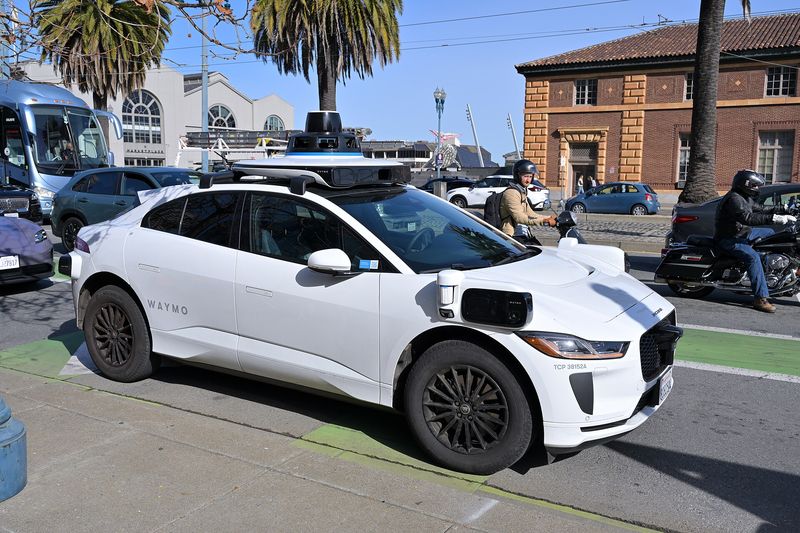
Waymo's response, delivered by spokesperson Dana Gallagher, had three parts. First, compliance: the company has complied with the California restrictions. Second, extension: Waymo has temporarily restricted freeway operations across its other operating markets too, to evaluate its performance — which is why this story's headline describes robotaxis pausing highway rides nationwide even though the legal order covers one state. That is the precise answer to why is Waymo banned from freeways in places the DMV does not regulate: it is not banned there; Waymo pauses freeway rides nationwide by its own choice, because the failure mode California identified — construction zones and emergency-vehicle situations — is a property of its driving system, not of California geography. Third, continuity: surface-street service continues, and the company says it is still serving over half a million trips each week.
“Safety is at the foundation of everything we do,” Gallagher said, adding that Waymo is working with the California DMV and other state officials diligently and responsibly to resume freeway operations. The statement is carefully built. It does not contest the DMV's characterisation in public, it foregrounds the no-injuries point on the 101 encounters, and it converts a regulatory order into a display of corporate caution by extending the pause voluntarily. Whether that reads as responsibility or as an admission depends on the audience — but as crisis handling, it denies the story its most damaging possible second day: a company fighting its safety regulator for the right to keep driving on freeways.
Why freeways matter: the Peninsula, the airports and the clock
It would be possible to read a freeway suspension as a marginal trim to a robotaxi service — most trips, after all, are short and urban. That reading is wrong, and the Bay Area shows why. Freeway access had cut San Francisco Peninsula trips that take 45 minutes to over an hour on surface streets; the corridor between San Francisco and the Peninsula's suburbs and office parks is exactly the kind of longer, higher-value journey that turns a novelty ride into a transport habit. Airport trips make the point sharpest: without freeways, journeys such as those to San Francisco International Airport are effectively lengthened to the point of impracticality, or blocked as a robotaxi proposition altogether. A service that can take you across town but not to the airport, and not down the Peninsula in reasonable time, is a service with its most lucrative use cases amputated.
The scale of what is paused is also worth stating precisely, because the numbers are easily merged and should not be. Freeway rides had been offered in five markets — the San Francisco Bay Area, Los Angeles County, Phoenix, Miami and Austin — according to CNN and the company. Waymo's overall commercial operations span 15 U.S. cities, according to TechCrunch. The first figure is the freeway footprint that is now suspended, in California by order and elsewhere by Waymo's choice; the second is the size of the business whose surface-street operations continue. Confusing the two either inflates the ban into a shutdown of a 15-city network — it is not — or shrinks it into a local inconvenience, which the Peninsula arithmetic refutes.
A pattern, not a one-off
This is the second freeway curtailment of 2026, and the chronology is the DMV's strongest evidence. Waymo's freeway rides began only in late 2025 — the service is barely a year old. On May 18, 2026, incidents similar to the latest ones occurred, involving construction zones; the DMV imposed a prior restriction, Waymo implemented corrective actions, and in May 2026 the company abruptly paused freeway operations altogether. It returned in July, after a software update. Then, in November, three vehicles entered the Burlingame closure and another tried to pass a CHP traffic break, and the department concluded that the problem it had been assured was fixed had recurred.
The wider record adds context without settling the argument. CNN's June analysis found hundreds of alleged dangerous-maneuver incidents involving Waymo vehicles — a finding Signal Post News attributes to CNN's analysis, as the company disputes aspects of how such incident counts are compiled, and “alleged” is doing real work in that sentence. But even stripped of every contested count, the undisputed spine of the timeline is damaging enough: same failure category, two regulatory interventions, one software fix in between. Regulators forgive first failures as the cost of innovation. It is the repeat — the failure that arrives after the corrective action — that changes the legal language from concern to “imminent hazard.”
The safety data versus the regulator's narrower question
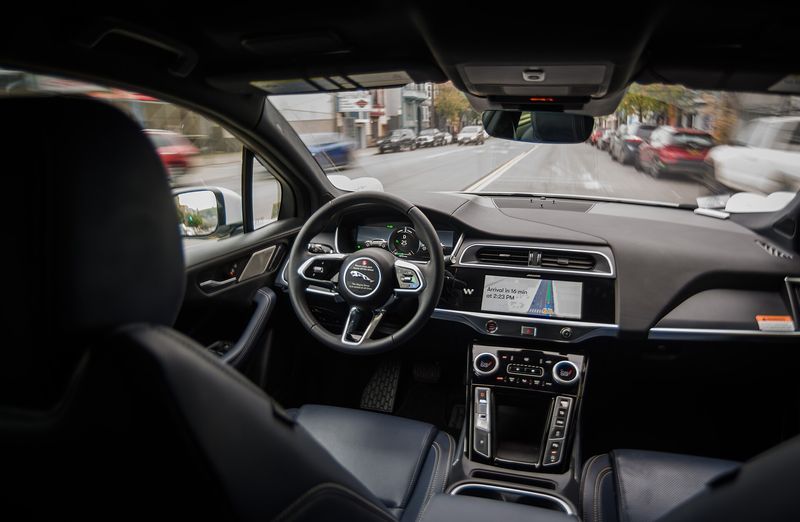
Waymo's counterpoint is aggregate, and on its own terms it is striking: company data says its vehicles record 95% fewer crashes causing serious injury or worse than human drivers. Signal Post News attributes that figure to Waymo's own data, as the company presents it — it is not an independent finding, and it aggregates the driving the fleet mostly does, which is surface-street driving in mapped urban areas. But even taken entirely at face value, it does not refute the DMV, because the DMV is not making an aggregate claim. The department's concern is narrower and, for a regulator, more legible: not “are these vehicles safer than humans on average?” but “can these vehicles be trusted, at 65 miles per hour, around the two situations where a mistake is least forgivable — people working in a closed lane, and officers standing in a live freeway slowing traffic by hand?”
Both things can be true at once, and the mature reading of this dispute is that they probably are. A fleet can be dramatically safer than human drivers across millions of ordinary miles and still have a specific, repeatable weakness in rare, unstructured, authority-directed situations — the long tail where freeway driving stops being a perception problem and becomes a judgement problem. Human drivers fail those situations too, sometimes fatally; but a human failure is prosecuted as an individual tragedy, while a software failure is understood, correctly, as a fleet-wide property that will recur identically until the code changes. That asymmetry is not unfair to Waymo. It is the logical consequence of selling a driver as a product: products get recalled for defects that, in a human, would be called mistakes.
Why this matters
Freeways are autonomy's hardest public test, and this ban is best understood as the industry colliding with that fact. Surface-street success — the domain where Waymo has built its record and its ridership — proves a vehicle can handle intersections, pedestrians, cyclists and parked cars at urban speeds. It does not prove the vehicle can handle the freeway's distinctive edge cases: high closing speeds that shrink every decision window; work zones that redraw the road daily with cones, temporary markings and human flaggers; and traffic breaks, debris fields and emergency scenes where the rules are being improvised in real time by officers whose gestures and vehicle placement are the traffic control. Those are precisely the unstructured situations where a rule-following system is most exposed, because there is no stable rule to follow — there is a situation to read. California's order says, in effect, that reading situations is the test, and Waymo has not yet passed it twice in a row.
The second significance is jurisdictional. California has become, in practice if not in law, a de facto national regulator for this technology — not because other states delegated that role, but because Waymo chose to pause everywhere in response to one state's finding. That choice was commercially rational: the driving system is shared across markets, so a defect found in Burlingame exists in Phoenix too, and no company wants to explain why it kept freeway service running in Arizona with software California had just declared an imminent hazard. But the consequence deserves naming: the strictest regulator in the network now sets the effective national standard, and every other state's permission is only as durable as California's confidence. Other states will notice that dynamic, and some will resent it; the robotaxi industry, which has long preferred state-by-state patchworks to federal rules, may find that the patchwork has quietly produced a single point of failure anyway. The competitive frame is shifting too — as Pony.ai's robotaxi expansion with inDrive in Astana shows, driverless services are scaling internationally under very different regulatory philosophies, and a prolonged American freeway hiatus is the kind of opening rivals plan around.
The third significance is trust economics. Waymo's surface street rides — 500000 a week and more, on the company's count — are a business built on passengers being willing to sit in a car with nobody at the wheel. That willingness is a stock of public confidence, accumulated ride by uneventful ride, and it is spent by exactly the kind of viral video the I-280 traffic break produced. Riders do not distinguish between freeway operations and surface operations when they decide whether the technology feels safe; a headline about an “imminent hazard” finding taxes the whole brand, including the parts the DMV never questioned. Which is why Waymo's voluntary nationwide pause, costly as it is, may be the economically correct move: it converts “regulator forces robotaxis off freeways” into “company holds itself to one standard everywhere,” and it protects the half-million weekly rides that continue. The parallel with Washington's technology rulemaking this week is instructive — in the new rule licensing remote access to advanced AI chips, as here, a single regulatory determination about an edge case ends up redrawing what a whole industry can sell, and where.
What happens next: return scenarios, rivals and other states
Three scenarios cover the plausible futures. In the fastest, Waymo demonstrates targeted improvements — construction-zone recognition hardened against temporary markings and partial closures, traffic-break and emergency-vehicle behaviour explicitly modelled and evidenced — and the DMV lifts the California restrictions within months, with other markets following. The May-to-July precedent shows the machinery for this exists, though the department's “despite a prior restriction” language warns that the evidentiary bar has risen. In the middle scenario, the return is phased and conditional: freeway operations resume in limited geographies or conditions first, under enhanced reporting, while the full five-market freeway footprint rebuilds over a longer period. In the slowest, the dispute hardens — further incidents during testing, a contested review, or political pressure in Sacramento — and freeway service becomes the industry's long pole, with Waymo's growth story rewritten around surface streets for a year or more.
Rivals and other states will not stand still in any of them. Competing robotaxi operators will read the DMV's statement as a specification: construction zones and emergency-vehicle interactions are now the audited competencies, and any operator seeking freeway permission in California — or fearing the same finding elsewhere — will be engineering and documenting for exactly those cases. Other state regulators, meanwhile, face a choice the California action has forced into the open: adopt California's conclusion, conduct their own reviews, or publicly accept a standard California rejected. None of those is cost-free, and Waymo's voluntary pause has at least spared them an immediate decision. What none of them can do is un-know the two November facts: three cars in a sealed work zone on the 101, and one car trying to pass a traffic break on the 280.
The freeway was always going to be where driverless technology met its strictest examination, because the freeway is where the consequences of a misread situation arrive fastest and where the people exposed to it — road workers, officers, cleanup crews — never consented to share the road with an experiment. Waymo's cars will return to California's freeways when the company can show the DMV, convincingly and in the specific scenarios that failed, that its vehicles understand a closure is a closure and a traffic break is a command. Until then, the most advanced robotaxi service in the world will keep doing what it did this week: carrying half a million riders a week through city streets, and stopping, like everyone else, at the on-ramp — waiting for permission to merge.
Sources
California Department of Motor Vehicles, statement on restrictions on Waymo's driverless freeway operations, issued November 11, 2026 and made public November 17, 2026, as quoted by CNN, TechCrunch and USA Today: the “imminent hazard to public safety” determination; the recurring incursions into active construction zones; and the reference to the prior restriction and corrective actions following the similar incidents of May 18, 2026. CNN, November 17, 2026: the U.S. Route 101 construction-closure incursions near Burlingame; the Interstate 280 traffic-break incident and its viral video; freeway rides offered in five markets (San Francisco Bay Area, Los Angeles County, Phoenix, Miami, Austin); freeway rides beginning in late 2025; the May 2026 pause and July return after a software update; and CNN's June analysis of hundreds of alleged dangerous-maneuver incidents. TechCrunch, November 17, 2026: Waymo's commercial operations in 15 U.S. cities and the terms of the DMV restrictions and return test. USA Today, November 17, 2026: the restrictions and Waymo's response. Waymo, statement via spokesperson Dana Gallagher, November 17, 2026: compliance with the California restrictions; the temporary restriction of freeway operations across other operating markets to evaluate performance; “Safety is at the foundation of everything we do”; the U.S. 101 encounters involving no injuries or collisions; surface-street service continuing at over half a million trips each week; work with the California DMV and other state officials to resume freeway operations; and company safety data reporting 95% fewer crashes causing serious injury or worse than human drivers.