Markets
Election Day split Wall Street down the middle. Chip stocks dragged the Nasdaq and the S&P 500 out of a three-day slide, Apple and Palantir dragged the Dow the other way, and the bond market quietly delivered the day's most consequential number: a 10-year Treasury yield of 4.97 percent, knocking on the door of 5.
Track it live: live markets tracker — indexes, yields, oil and gold

Stock market today ended the way the country voted: divided. The Nasdaq Composite rose 208.86 points, or 0.83 percent, to 25,373.18, and the S&P 500 added 27.90 points, or 0.37 percent, to 7,569.30 — the first higher close in four sessions for both indexes, snapping three-day losing streaks that had carried the Nasdaq into its worst three-day run since April 2025. The Dow Jones Industrial Average went the other way, falling 197.26 points, or 0.38 percent, to 51,786.72, weighed down by Apple. The small-cap Russell 2000 edged up about 0.2 percent to roughly 2,811. It was, in other words, a modest rebound rather than a verdict — a market that stopped falling, steadied itself, and then turned to watch the election returns.
The split was almost a perfect reversal of Monday. In the previous session the Dow had been the only one of the four major benchmarks to finish higher, rising 0.41 percent as oil prices plunged on hopes of a diplomatic opening between the United States and Iran, while the S&P 500 fell 0.51 percent and the Nasdaq dropped 1.07 percent under a fresh wave of doubt about artificial-intelligence spending. Tuesday flipped the leadership: the technology-heavy indexes recovered, the old-economy Dow sagged, and the CBOE Volatility Index eased about 1.5 percent to roughly 20.8 — still elevated, a sign that traders were hedged for an unsettled night rather than calm about one.
Why the stock market moved today: a chip bounce under an election cloud
Two forces ran the session. The first was a rebound in semiconductor stocks, the group at the center of last week's rout, ahead of quarterly results from Advanced Micro Devices due after the closing bell. The second was the midterm elections themselves. Americans voted Tuesday on control of Congress, and prediction markets had pushed the odds of a Democratic sweep of both chambers above 75 percent early in the day — a scenario investors spent the session gaming out for what it could mean for federal spending, regulation, energy policy and the tax treatment of the technology giants. Supporters of divided government argue gridlock is historically kind to markets because it limits policy surprises; skeptics answer that a sweep by either party raises the odds of bigger fiscal moves. What the market did with that uncertainty, mostly, was wait: volumes were orderly, the indexes spent the middle of the day drifting near unchanged, and the real positioning was pushed into the overnight hours, when the first results would land after the closing bell had already rung.
The morning's economic data — September job openings and factory orders — barely moved the needle against that backdrop. Nor did a tightening world: Australia's central bank raised its cash rate 25 basis points to 4.85 percent on Tuesday, an 18-year high, a reminder that the global rate cycle has turned upward again and that the Federal Reserve is not the only central bank leaning against inflation. For U.S. stocks, the day's real question was never the data. It was whether the chip rebound had legs — and whether the election would hand the market a Congress it had already priced in.

Chip stocks rally: AMD, Nvidia and Broadcom lead the bounce
Semiconductors did the heavy lifting. AMD shares rose nearly 4 percent during the regular session, closing at $483.90, as investors positioned ahead of its earnings report — a notable vote of confidence in a stock that had lost nearly 20 percent of its value over the previous three sessions. Nvidia climbed 2 percent and Broadcom gained 3 percent, while the iShares Semiconductor ETF (SOXX) added 2.5 percent. Intel, the epicenter of Friday's earthquake, rose 1 percent — a small step, but its first after a three-day slide of 37 percent that included a 28.6 percent plunge on Friday, its worst day since 1974, and a further 8.8 percent drop on Monday.
Context is everything here. A bounce after a fall of that size is not the same as a recovery. Last week's lesson — delivered first by Intel's cash-burn warning and the AI spending reckoning that sent the Nasdaq down 2.86 percent in a day — was that the market has moved from rewarding AI ambition to auditing it. Tuesday's buyers were not abandoning that audit; they were betting that the auditors had overshot, and that AMD's numbers, due within the hour, would show AI demand still converting into revenue at the companies selling the hardware. Whether that bet survives the week depends on results, not relief.
Apple and Palantir: beating earnings was not enough
The Dow's problem wore a familiar logo. Apple shares fell 2 percent after the company reported better-than-expected quarterly numbers on Monday night — early demand for its iPhone 18 Pro lineup and price increases helped offset soaring memory-chip costs — but pointed to weakening margins ahead. In the market's current mood, a margin warning outweighs a beat: investors have spent a week punishing any hint that the AI era's costs are compressing the profitability of even its strongest franchises, and Apple's enormous weight in the Dow turned its slide into the index's decline.
Palantir told the same story from the software side. The data-analytics company topped Wall Street estimates and issued a rosy forecast, yet its shares still finished down nearly 2 percent as traders focused on a slowdown in new U.S. commercial bookings — the forward-looking line in the report rather than the backward-looking beat. Together, Apple and Palantir delivered the day's clearest lesson for earnings season: in a market repricing the cost of the AI buildout, the headline number no longer settles the argument. The outlook does. Not everything leaned negative — Pfizer pulled out a small gain after raising its full-year guidance, payments company Ibotta rose after its results, and Home Depot climbed about 3.1 percent, the Dow's standout gainer on the day.
AMD earnings: a record quarter lands after the bell
Minutes after the close, the day's biggest question got its answer. AMD reported record third-quarter revenue of $13.38 billion, up 45 percent from a year earlier and above the top of its own guidance, with adjusted earnings of $2.09 a share against the $1.95 analysts expected. The engine was the data center: revenue there nearly doubled, rising 97 percent to $8.5 billion on demand for EPYC server processors and the rollout of its Instinct MI450 AI accelerators. The outlook mattered even more — AMD guided fourth-quarter revenue to about $17 billion, ahead of the roughly $16.3 billion consensus, and its shares jumped about 7 percent in after-hours trading. The weak spot was gaming, where revenue fell 40 percent, and the company guided gross margin slightly lower, to about 55 percent, as new production ramps.
For the broader market, the significance is the contrast. Last week, investors punished the giant spenders whose AI bills are outrunning their cash flow. AMD's report is the other side of that ledger: a company whose AI revenue is arriving now, in size, and accelerating. One quarter does not settle the argument about whether the industry's roughly $800 billion of annual commitments will pay for themselves — but it gives Wednesday's session a fundamentally different starting point than Friday's rout did, and it will test whether Tuesday's chip bounce was a head fake or the start of a genuine repair.
The bond market's quiet warning: the 10-year yield at 4.97 percent
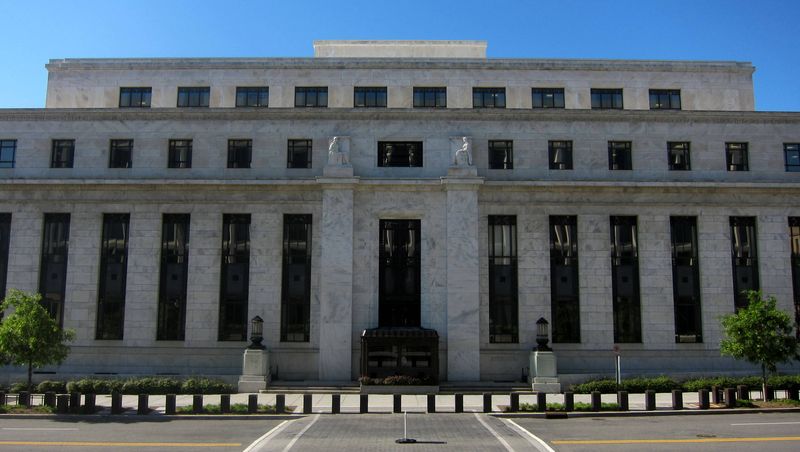
Stocks split the day; bonds rendered a clearer verdict. The yield on the 10-year Treasury rose to 4.97 percent from 4.91 percent at Monday's close, the 30-year yield hovered around 5.30 percent, and the two-year yield pushed above 4.60 percent. Yields rise when investors demand more compensation to hold government debt — and on Election Day, with federal deficits large under either party's plans and traders even pricing some chance that the Federal Reserve, which held rates at 3.75 to 4.00 percent last week, could raise rates again in December, the bond market's message was that money is getting more expensive, not less. A 10-year yield at the edge of 5 percent is the number that reaches furthest into ordinary life: mortgage rates, auto loans and credit-card APRs all key off it, directly or indirectly.
The rest of the cross-asset picture told a story of aftershocks settling. West Texas Intermediate crude rose 0.3 percent to $96.75 a barrel — a stabilization, not a recovery, after Monday's 8 percent plunge on hopes that Washington would pursue a diplomatic solution to the Iran war rather than new strikes after the midterms; Brent crude held around $103. Gold futures fell about 1 percent to roughly $3,930 an ounce, giving back part of Monday's surge after the metal hit its lowest level since September of last year on Friday. Bitcoin traded near $77,800, up from an overnight low around $76,400, even as U.S. spot bitcoin funds recorded about $399 million of outflows on Monday — including the largest single-day withdrawal since June from BlackRock's IBIT — a sign that institutional crypto demand is cooling alongside the broader appetite for risk. The dollar was little changed, with the dollar index near 101.7.
What it means for your 401(k), your mortgage and your savings
For readers who own the market rather than trade it, Election Day's split decision carries practical meaning. Your 401(k): the two-day whipsaw — a 1.07 percent Nasdaq fall on Monday, a 0.83 percent rise on Tuesday — is what index investing now feels like when a handful of technology giants dominate the benchmarks; the S&P 500 remains up about 10 percent for the year, and history offers measured comfort without promising anything, with the market higher between midterm Election Day and year-end 68 percent of the time since 1950, according to Zacks data. Your mortgage and borrowing costs: the day's most important number for households was not any stock index but the 10-year yield at 4.97 percent — as long as it sits near 5 percent, mortgage rates stay elevated and the refinancing window stays shut for most borrowers. Your savings: cash still pays historically meaningful yields precisely because rates are high, while gold's round trip — a 13-month low on Friday, a surge on Monday, a slip on Tuesday — is a reminder that even haven assets are volatile assets. None of this is a reason to trade on election-night headlines; it is a reason to understand which numbers actually touch your household, and the bond market's number touched it most.
What to watch next
The week now runs on two clocks. Politically, election results arrive overnight and into Wednesday, and the market's reaction will depend less on which party wins than on whether the outcome matches what prediction markets priced in — a result in line with expectations can calm markets even when it changes Washington, while a surprise in either direction reprices everything from bank stocks to clean energy. On the data clock, ADP's private-payrolls report lands Wednesday, the Bank of England decides rates Thursday with a hike expected, and the U.S. jobs report closes the week on Friday — each one feeding the December Federal Reserve odds that have become the market's master variable. Watch whether AMD's after-hours surge holds at Wednesday's open and pulls the chip sector with it, whether oil's post-plunge stabilization survives the week's Iran headlines, and above all whether the 10-year yield crosses 5 percent. Stocks can rally through an election. They have a harder time rallying through 5 percent money — and that, more than any single result on Tuesday night, is the line the rest of November will be traded against.
Sources: Investopedia, markets closing report, November 3, 2026; EconCurrents closing data via Google Finance, November 3, 2026; Morningstar and Dow Jones Newswires, November 3, 2026; AMD third-quarter 2026 results release, November 3, 2026; FXStreet, AMD earnings coverage, November 3, 2026; CoinDesk, bitcoin ETF flows, November 3, 2026. Closing levels as of the 4 p.m. Eastern close on Tuesday, November 3, 2026. This article is reporting and analysis, not investment advice.