Vance defends Ramaswamy attack ad: Vice President JD Vance, campaigning in Cincinnati on Wednesday, October 21, with Republican nominee Vivek Ramaswamy and Senator Jon Husted, defended the campaign's $4 million attack ad against Democratic nominee Dr. Amy Acton and told Republicans criticizing it — in his own party — to stop whining and go win the Ohio governor race.
U.S. Politics — thirteen days before Election Day, the vice president turns the Ohio governor race into a national fight over one 60-second commercial
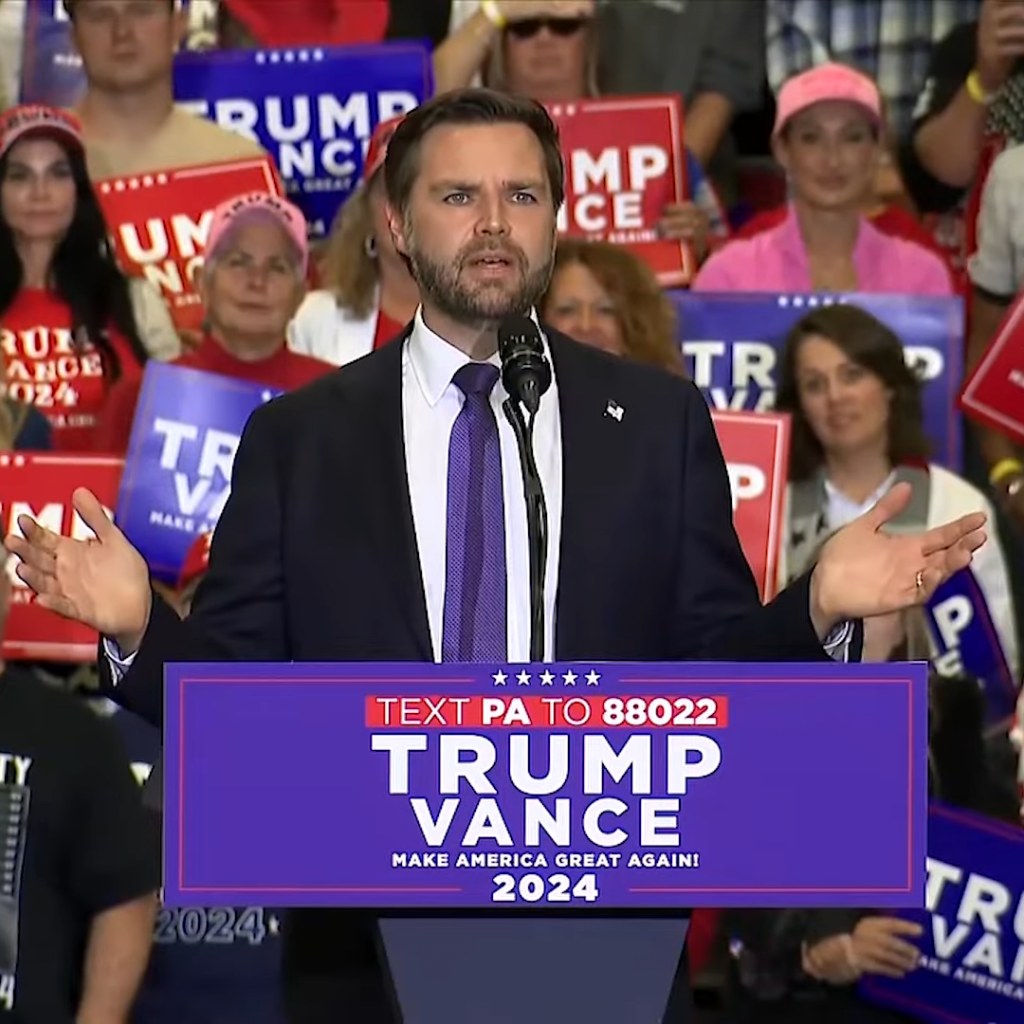
Vice President JD Vance came to Cincinnati on Wednesday and walked directly into the ugliest fight of the Ohio governor's race — not to calm it, but to pick a side in it. Campaigning with Republican nominee Vivek Ramaswamy and Senator Jon Husted ahead of a midterm rally in Sharonville, Vance defended Ramaswamy's attack ad against Democratic nominee Dr. Amy Acton — a 60-second spot built around Acton's estranged mother calling her daughter a liar — and turned his sharpest language not on Democrats but on Republicans who have condemned the ad, telling them to stop whining about an advertisement and go win the race in the 13 days that remain. He also stopped by a Cincinnati Bengals practice during the visit. Whether the ad itself was appropriate, Vance made clear, was not his concern; winning Ohio's governor and Senate races was.
What Vance said in Cincinnati
Stop whining about an advertisement and go win the race
Vance's defense, delivered in front of the home-state crowd, was unqualified. “Vivek Ramaswamy had the audacity to run a TV commercial which calls it out like it is and calls Amy Acton a liar,” he said, according to Reuters and USA Today. He then broadened the point into an instruction to his party: “Whatever you think about any of the TV advertisements, focus on the substance and focus on the facts.” And he named the audience he was really addressing — Republicans around the country who had spent two days distancing themselves from the spot. He said he was “a little bit disgusted when I see Republicans across the country who are whining more about that advertisement than they are about what the congressional Democrats and other Democrats want to do to the United States of America.”
“Politics is a tough business,” Vance said — a line that functioned less as an observation than as a closing argument. The message, repeated across the day's coverage by Reuters, USA Today, the Cincinnati Enquirer, the Columbus Dispatch, The Times and Newsmax, was consistent: the vice president was not asking his party to like the ad; he was telling it that litigating the ad in public, 13 days before the Ohio governor election on November 3, 2026, was a waste of the only resource the campaign cannot recover, which is time. In the space of one Cincinnati stop, the Ramaswamy Acton attack ad stopped being a story about one campaign's judgment and became a test of party discipline, set by the second-highest official in the country.
The ad at the center of the fight
The Amy Acton mother ad: 60 seconds, a $4 million buy, and a mother not paid
The advertisement runs 60 seconds and features Acton's estranged mother — Donna Arthur, also reported as Donna Stearns Arthur — speaking against her own daughter. In the spot, Arthur calls Acton a liar, disputes the account of childhood hardship Acton has told throughout her public life — a childhood Acton says included living in a tent and being sexually abused — and urges Ohioans not to vote for her. The spot surfaced on social media without identifying its source. Ramaswamy's campaign then confirmed that it produced the ad, said Arthur was not paid for her appearance, and said it is spending $4 million to air it statewide before the November 3 election — a Ramaswamy $4 million ad buy that guarantees the spot will be inescapable in Ohio's media markets for the remainder of the race.
This is the second chapter of a story Signal Post News has been following since the video first spread on Monday night. Our earlier report set out how the clip circulated through conservative accounts, how Acton's brother answered it, and what a new round of polling showed in the same hours: Amy Acton mother video ignites Ohio governor race as her brother fires back at Ramaswamy. What changed on Wednesday is that the anonymous-seeming video of Monday is now, by the campaign's own confirmation, an official, fully funded television advertisement — and it now has the sitting vice president as its most prominent defender.
Acton's account, and her family's answer
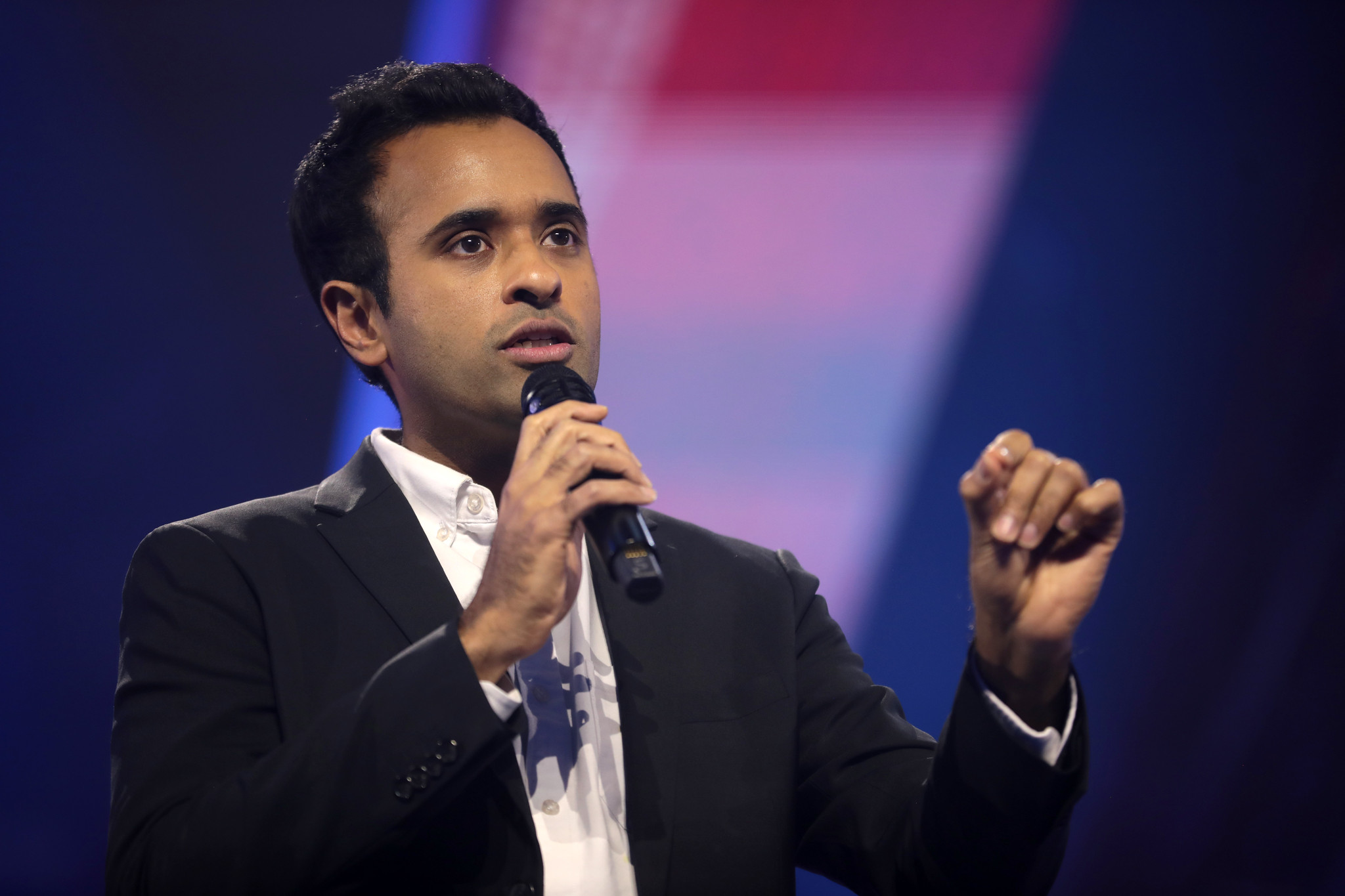
Amy Acton brother Philip Stearns calls the ad a “desperate, disgusting attack”
Acton's account of her childhood has been part of her public biography for years, and it is specific. She says she was sexually abused at 12 by her stepfather, Cledith Arthur. He was charged with rape, fled the state, was never tried, and died in 2004. Her mother stayed married to him. Acton says she has not seen her mother since 1978 — a span of 48 years that predates her entire adult life, her medical career and her time running Ohio's health department. Against the mother's on-camera denial, Acton's brother Philip Stearns supports her account, and he answered the ad in the bluntest terms of the week, calling it a “desperate, disgusting attack.” Acton campaign spokesperson Addie Bullock called Ramaswamy's decision to promote it “both despicable and entirely predictable.”
Acton herself has accused Ramaswamy of exploiting an unwell woman, and said of her birth mother that she “did nothing to protect me.” Those are the two family accounts now before Ohio voters, and they cannot both be true: a mother who says the hardship story is fabricated, and a daughter and son who point to a rape charge, a flight from prosecution and a half-century of estrangement as the record underneath it. What is not in dispute is the sequence of the last three days — the video's appearance without a sponsor's name attached, the campaign's confirmation, the family's response, and now the vice president's intervention. Each side is asking voters to draw a conclusion about character from that sequence; they simply disagree, completely, about whose character it describes.
Republicans who broke ranks
Nikki Haley on Ramaswamy: “He's a bad guy”
The backlash Vance was answering came substantially from inside his own coalition. Nikki Haley, the former South Carolina governor and United Nations ambassador who ran against Ramaswamy in the 2024 Republican presidential primaries, said the ad proved the warning she issued about him during that campaign: “He's a bad guy.” Meghan McCain called the spot “a dastardly ad.” Alyssa Farah Griffin, a former Trump White House communications director, and CNN's Anderson Cooper also condemned it. The criticism crossed the usual lines — it was bipartisan in the plain sense that prominent Republicans and Democrats were making versions of the same argument, that a campaign ad built on an estranged parent's repudiation of a candidate's account of her own childhood abuse crosses a boundary that ordinary negative advertising does not.
That is the split Vance flew in to close. His argument to the critics was not that the boundary does not exist; it was that policing it, publicly, in the final 13 days, costs more than it protects. It is a familiar hierarchy in his telling — substance over advertising, the opponent's agenda over one's own discomfort — and it now carries the weight of the White House behind it. Whether Republican critics escalate or fall in line in the coming days will be the first measurable answer to Wednesday's speech.
Background: the race Vance stepped into
JD Vance Ohio governor race stakes: a state that moved right, and a contest that has not followed
Ohio has moved right through the Trump years, electing Republicans up and down the ballot and sending Vance himself to the Senate in 2022 before the vice presidency. Yet the governor's race is competitive. Acton is the former Ohio health director who became a household name as the face of Governor Mike DeWine's daily COVID-19 briefings — a Democrat whose public identity was built inside a Republican administration. Ramaswamy is a biotech entrepreneur and former 2024 presidential candidate, backed by President Trump and the Ohio Republican Party, seeking his first elected office. The Vivek Ramaswamy Amy Acton polls have refused to settle into the pattern Ohio's recent statewide results would predict: the Marist poll reported in our earlier coverage of the mother video — 1,176 registered voters surveyed October 15–18 — put Acton ahead of Ramaswamy 50% to 43% among likely voters, a lead inside a race that other recent surveys have also shown to be close, with results on both sides of the line.
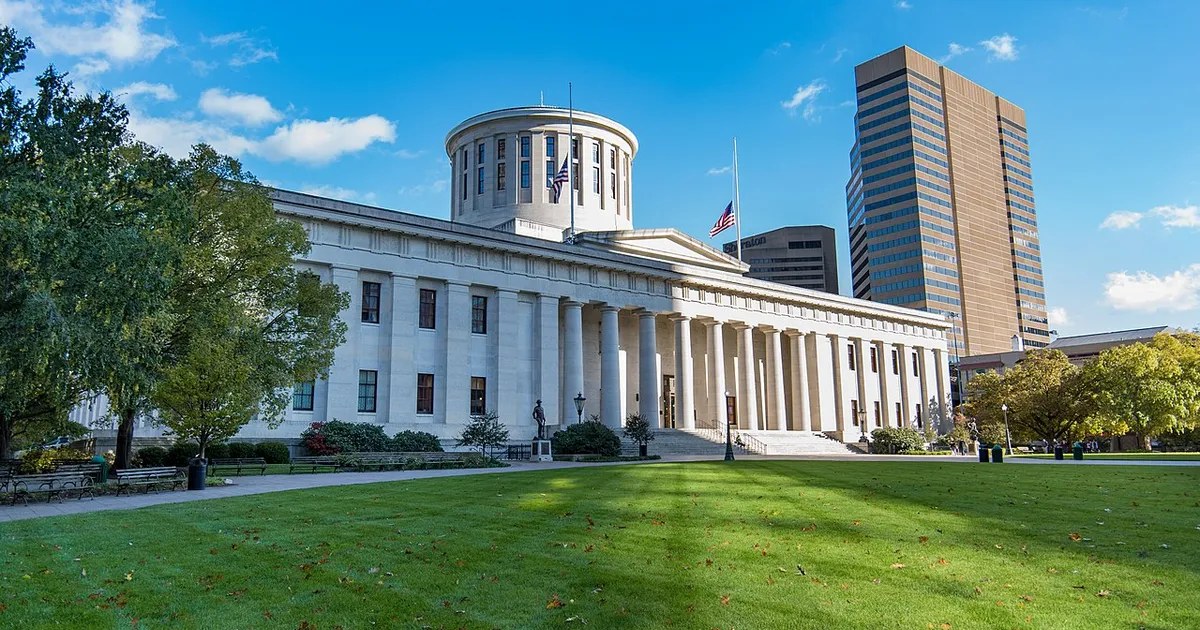
There is one more layer to Vance's presence in this particular fight, and Reuters noted it on Wednesday. Vance rose to national fame with “Hillbilly Elegy,” his memoir of his own childhood amid neglect and addiction in Middletown, Ohio — a book that made a candidate's account of a damaged childhood into the foundation of a political career. On Wednesday, that same politician stood in Cincinnati and defended an advertisement whose premise is that his party's nominee should be believed when she says her rival's account of a damaged childhood is a lie. Supporters hear consistency — biography, in Vance's long-standing argument, is fair game when a candidate builds a campaign on it. Critics hear the opposite. Both readings were available in the room, and Vance did not try to reconcile them; he told the audience which one he had chosen.
Why this matters
First, the intervention nationalizes the race. A governor's contest in Columbus is now, in part, a referendum conducted by the vice president in person: Vance's defense signals that the White House is all-in on Ramaswamy with 13 days left, and it attaches the administration's credibility to a candidate — and an advertisement — that some of the party's best-known figures have publicly disowned. If Ramaswamy wins, Wednesday will read as the day the national party closed ranks and the closing argument landed. If he loses, the same day will be cited as evidence that Washington misread how Ohio voters would judge the ad.
Second, the ad itself is a live experiment in where the boundary of negative campaigning now sits, and analysts quoted by Reuters on Wednesday warned it could backfire — that voters who see the spot as exploiting an estranged elderly parent and a child-abuse allegation may punish the campaign that paid $4 million to put it in front of them. The risk is asymmetric. Ramaswamy's campaign plainly calculates that Acton's biography is her central credential, and that damaging it damages everything built on it. Acton's campaign calculates that the ad says more about its sponsor than its subject, and that every airing re-opens a story — a rape charge, a fugitive stepfather, a mother who stayed — in which her account has the documentary record and her opponent has a casting decision. The $4 million buy means Ohio will run this experiment at saturation level, and the late polling will be its first readout.
Third, Wednesday clarified what the final 13 days will be about. Vance's instruction — focus on the substance and the facts, stop whining, go win — is an attempt to move the race's closing argument off the ad and onto the records of the two nominees and the direction of the state. Whether that is possible, when the single most-discussed object in the race is the ad itself, is the open question of the campaign's last fortnight. What is already settled is the cast: a vice president who wrote the book on hard Ohio childhoods, defending a nominee's ad about his rival's.
What happens next
Four things will decide how Wednesday is remembered. The first is saturation: $4 million buys a great deal of television in Ohio, and the ad will now run statewide, repeatedly, into an electorate already voting early ahead of November 3. The second is Acton's response — whether her campaign answers with advertising of its own, with the documentary record of the 1978 case, or with the discipline of a candidate whose polling lead the ad was presumably built to erase. The third is the Republican split: Haley's “bad guy” verdict is on the record and will not be withdrawn, but whether other national Republicans join her, or take Vance's instruction and go quiet, will shape how the ad is covered in its second week. The fourth is the late polling in the Ohio governor race 2026 — the first surveys conducted entirely after the ad and Vance's defense will show whether the experiment is working, and both campaigns will read them as instructions for the final spend.
For readers following the wider midterm map on Signal Post News, the Ohio fight is one of several late-October tests of the same question — how much national weight helps, and how much it costs — including the North Carolina Senate race, where Republican groups have pulled back from their own nominee's advertising, and the Reuters/Ipsos polling on the midterm enthusiasm gap between the parties. Ohio's answer arrives on November 3, when the state chooses between a former health director running on the biography the ad attacks and a first-time candidate whose campaign — and now his vice president — have decided that biography is exactly where the race should be fought.
Sources
Reuters (October 21, 2026): Vance defends Ramaswamy's explosive attack ad in Ohio governor race — Vance's Cincinnati remarks alongside Ramaswamy and Senator Jon Husted, the ad's contents and the campaign's confirmation that it produced the spot and is spending $4 million to promote it, Acton's account (abuse at 12, the stepfather's rape charge, flight and death in 2004, no contact with her mother since 1978), Philip Stearns's “desperate, disgusting attack” statement, Addie Bullock's “despicable and entirely predictable,” analysts' warnings that the ad could backfire, and Reuters' note on Vance's own “Hillbilly Elegy” biography. USA Today (October 21, 2026): JD Vance 'disgusted' by GOP backlash to Vivek Ramaswamy's ad — the “disgusted” and “whining” remarks and USA Today's review of records supporting Acton's estrangement account. Cincinnati Enquirer (October 20–21, 2026): Ramaswamy confirms ad featuring Acton's estranged mother is from his campaign — Ramaswamy's confirmation to the USA Today Ohio Statehouse Bureau that the ad is his campaign's, that Arthur was not paid, and his case against Acton's record. Columbus Dispatch (October 20–21, 2026): Ramaswamy confirms ad featuring Acton's estranged mother is from his campaign — the Dispatch's account of the confirmation, the estrangement dating to 1978, and the reaction in Ohio. The Times (October 21, 2026) — coverage of Vance's Cincinnati campaigning, the Sharonville rally and the Bengals practice visit. Newsmax (October 21, 2026) — coverage of Vance's defense of the ad and his criticism of Republican detractors. Polling figures (Marist, October 15–18) are as reported in Signal Post News' earlier coverage of the mother video. Statements by campaigns, officials and family members are reported as their own claims.