One day before the most expensive Van Gogh ever offered at auction was due to go under the hammer in New York, Sotheby’s settled the Nazi-era claim that threatened to stop the sale — a five-day dispute over a 1936 exile sale in Berlin, resolved in talks that ran into the early hours of Tuesday, on terms that will stay secret.
NEW YORK, November 17, 2026 — The Van Gogh $180 million auction that Sotheby’s has built its New York season around will go ahead on Wednesday night after all. The auction house announced on Tuesday, one day before the Wednesday evening sale on November 18, that the Blaquier-Arrieta family and all legal descendants of Hedwig and Samuel Fischer had reached a “mutually satisfactory resolution” of the Nazi-era claim hanging over Vincent van Gogh’s Châtaigniers en fleurs (Blossoming Chestnut Trees), and that the painting “will be sold pursuant to their agreement.” The claim, filed by the heirs of the Berlin Jewish publisher who owned the canvas before the Second World War, had asked Sotheby’s to stop the sale outright. The terms of the settlement were not disclosed, and it is not known whether the Fischer heirs will receive financial compensation.
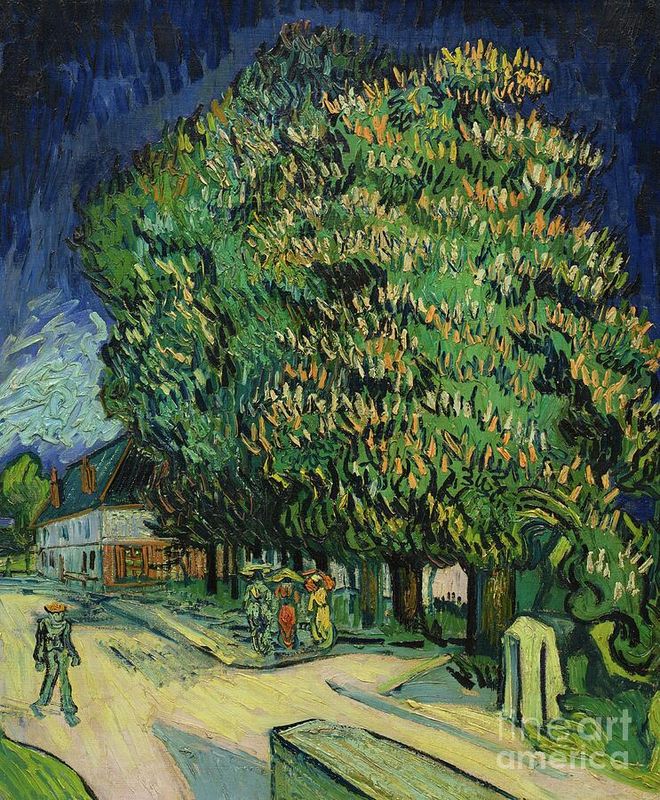
A deal announced a day before the sale
The announcement ends a standoff that began last Thursday and consumed the final weekend before the biggest week of the New York auction calendar. The Fischer heirs’ lawyer contacted Sotheby’s on November 12 asking that the sale be halted while the family’s account of the painting’s 1936 sale was examined. Negotiations between the sides ran through Monday and into the early hours of Tuesday. By Tuesday, the three parties — Sotheby’s, the selling family and the heirs — had a joint position they could announce: the dispute was resolved, and the star lot of the season would be offered as planned.
The language of the settlement was carefully shared. The Fischer heirs said they were “grateful for the trusting and fair negotiation” that had made it “possible to acknowledge the suffering of the Fischer family during the Nazi era” and to honour the history of Gisela Bermann Fischer, the family member whose long pursuit of justice for the Fischers’ losses the heirs invoked. The Blaquier-Arrieta family, for their part, said they were “pleased to have reached an amicable resolution.” What neither side would say is what the resolution contains. No figure was published, no apology was quoted, and no statement was made about whether money changes hands. The Fischer heirs Van Gogh settlement is, publicly, an agreement to let the sale proceed — and nothing more that anyone outside the negotiating room can inspect.
The painting: a last-spring Van Gogh, hidden for fifty years
Blossoming Chestnut Trees Van Gogh painted weeks before his death
Châtaigniers en fleurs was painted in May 1890 in Auvers-sur-Oise, the village north of Paris where Van Gogh spent the final weeks of his life. He had arrived there shortly after his release from a psychiatric facility, and he painted the picture about two months before his death. It shows people walking down a street lined with chestnut trees in full bloom — an ordinary, sunlit scene from the most feverishly productive period of his career, when he was completing canvases at a rate of more than one a day. Works from the Auvers months carry a particular charge in the market: they are the paintings of an artist at the very end, made with nothing left to prove and no time left to waste.
Châtaigniers en fleurs at Sotheby’s: the $180 million estimate
Sotheby’s has estimated the painting at around $180 million — roughly $207 million once buyer’s fees are added — and has guaranteed the sale, meaning the seller has been promised a minimum price regardless of what happens in the room, though the floor of that guarantee has not been disclosed. A Sotheby’s spokesperson said that if the painting sells on the night, it will likely set a record for the artist. It has been shown publicly ahead of the sale, including on display in Hong Kong, after decades in which almost nobody outside its owners’ circle had seen it at all.
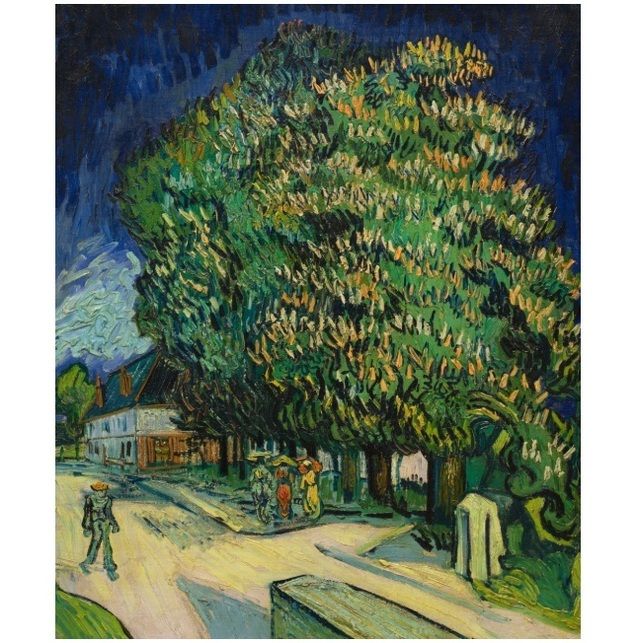
The record it has to beat
A Van Gogh auction record price more than 50 percent below the estimate
To grasp what Wednesday night is being asked to do, start with the standing Van Gogh auction record price: $117.2 million, set in 2022 when Christie’s sold Verger avec cyprès (Orchard with Cypresses, 1888) from the collection of Microsoft co-founder Paul Allen. The $180 million estimate for Châtaigniers en fleurs sits more than 50 percent above that record. Auction estimates are arguments as much as valuations — a number chosen to frame the bidding before it starts — but an estimate pitched this far beyond the artist’s previous ceiling is a statement of intent: Sotheby’s is not merely hoping for a record, it has priced the picture as one. If the hammer falls anywhere near the estimate, this becomes the most expensive Van Gogh painting ever sold at auction, by a margin of tens of millions of dollars.
The Blaquier Arrieta collection auction anchors a $2 billion week
The Van Gogh is the star of 12 works from the Blaquier-Arrieta collection, offered alongside paintings by Monet, Renoir and Cézanne and expected to fetch more than $450 million combined. Sotheby’s has guaranteed all 12 lots. The collection was assembled by the Argentine businessman Carlos Pedro Blaquier, who died in 2023, and his wife Nelly Arrieta de Blaquier, who died in 2020; the couple bought the Van Gogh in 1975, and it had rarely been seen publicly in the five decades since. The sale sits inside roughly $2 billion of New York November auctions this week — the concentrated season in which the trade tests, in public, what the very top of the art market is worth. It is a market that still produces startling numbers in unexpected places: only last month, a Kobe Bryant high school jersey sold for a record $2.2 million at Sotheby’s, and the autumn fair season opened under its own pressures when Art Basel Paris closed early amid protests. But no lot this season carries a number like $180 million, and none carried a legal risk like this one.
The Fischer claim: a 1909 purchase, a 1936 sale, a family in flight
Samuel Fischer was one of the great publishers of the German-speaking world: his Berlin house published Thomas Mann’s Buddenbrooks, and he and his wife Hedwig acquired the Van Gogh in 1909, when the artist’s reputation was still being built. In 1932 or 1933, Fischer deposited the painting with the dealer Paul Cassirer in Amsterdam. What that deposit meant is the first of the dispute’s contested facts: the heirs say the painting was placed there for safekeeping, as the family’s position in Nazi Germany deteriorated; Sotheby’s says it was consigned to be sold.
In June 1936, the painting was sold in Amsterdam to the Paris collectors Henriette and Marcel Kapferer for 68,000 Swiss francs — about $22,000 at the time. The date is the heart of the heirs’ case. The sale came about three months after the Fischer family had fled Berlin into exile in Vienna. The heirs argue that the family sold because Nazi persecution left them little real choice: the publishing house had suffered financial losses under the regime, Jews fleeing Germany faced strict restrictions on what they could take with them, and a punitive “Reich flight tax” was levied on those who left. On that account, a sale made by exiles, of an asset parked abroad, in the shadow of confiscation, was not a free transaction in any meaningful sense — it was, in the phrase at the centre of so many restitution disputes, a sale made under the pressure of persecution.
Five days to save the sale: the November 12 email
The claim arrived at Sotheby’s last Thursday, November 12, when the US-based Fischer heirs, represented by the Berlin lawyer Gunnar Schnabel, emailed Marco Toracca, the auction house’s head of restitution, and asked that the sale be stopped. Schnabel’s argument was framed explicitly “in the spirit of” the 1998 Washington Principles on Nazi-Confiscated Art — the non-binding international framework under which museums, governments and the trade commit to seeking “just and fair solutions” for art lost or sold under Nazi persecution. The heirs set the burden high: Schnabel asked Sotheby’s to prove beyond doubt that the painting had been sold at fair market value in 1936, and that the Fischer family would have sold it even if the Nazis had never come to power. Those are counterfactuals no archive can fully settle, which is precisely the point of asking them in that form: under the Washington Principles approach, the moral weight sits with the seller’s circumstances, not only with the paperwork.
Was this a Van Gogh painting sold under duress? Sotheby’s said its research found otherwise
Sotheby’s did not concede the premise. The auction house said its extensive provenance research had not established that the 1936 sale was made under duress, and it pointed to the price as evidence in its favour: 68,000 Swiss francs, it argued, was a fair price for the time. As a benchmark, it noted that an 1888 Van Gogh, Orchard with Cypresses, had sold at auction in 1935 for $15,000 — less than the Kapferers paid for the Fischers’ picture a year later. On Sotheby’s reading, a family that consigned a painting to a leading dealer, left it on the market for several years and achieved a price above a comparable auction result was engaged in an ordinary art transaction, however dark the surrounding politics.
That is where the Sotheby’s Van Gogh Nazi claim stood when the talks began on Monday: two incompatible readings of the same 90-year-old transaction. The heirs read the 1936 sale through the family’s flight, the flight tax and the collapsing world of German Jewish publishing. The auction house read it through the consignment records and the price. The Washington Principles exist for exactly this impasse — cases where the documents are real, the persecution is real, and the line between a sale and a forced sale cannot be drawn from paperwork alone. What the principles ask for is not a verdict but a negotiation, and a negotiation is what happened, at speed, through Monday and into the early hours of Tuesday.
Why this matters
The first lesson of this week is that provenance is no longer a scholarly footnote to a big sale; it is a financial risk priced into the very top of the art market. A single email, sent five days before a $180 million auction, was enough to put the season’s star lot in doubt — a lot Sotheby’s had guaranteed, inside a 12-lot collection it had guaranteed in full, inside a $2 billion week built on the assumption that Wednesday night would proceed. Restitution research used to be something auction houses did quietly, years ahead, to keep sales clean. The Fischer claim shows the other direction of travel: heirs and their lawyers now understand the calendar as leverage, and the days before a guaranteed, heavily publicised sale are when a claim carries maximum force. Every party at the table knew what delay would cost, and that knowledge shaped the speed of the settlement.
The second lesson concerns the Washington Principles themselves. They are non-binding: no court enforces them, and no auction house is legally required to follow them. Yet in practice they are increasingly decisive, because they define what the market treats as a legitimate claim and what a “just and fair solution” is supposed to look like. The Fischer heirs did not sue. They invoked the principles, demanded a standard of proof the paperwork could not meet, and obtained a negotiated outcome within five days. In the long-running argument over Nazi looted art restitution, auction rooms have become a front line precisely because sales are public, dated and valuable — three things litigation rarely is.
Who benefits, and what the critics will say
The beneficiaries of the settlement are easy to identify. Sotheby’s and the Blaquier-Arrieta family keep the season’s star lot, its guarantee and its record attempt intact. The Fischer heirs win formal acknowledgement of their family’s suffering during the Nazi era — language they quoted with evident care in the joint statement — without years of litigation in a foreign court, against a seller who bought the painting in 1975, nearly four decades after the disputed sale. A negotiated outcome also spares everyone the binary risk of a courtroom: a judge might have found the 1936 sale valid, or might have stopped a $180 million sale on the eve of the auction.
The costs are quieter but real. Because the terms are undisclosed, the public cannot judge whether the settlement matches the claim — whether it is substantial compensation, a token gesture, a charitable arrangement or simply an agreement to stop arguing. Critics of how the trade handles restitution make a structural point that this episode illustrates neatly: in a case like this, the auction house is simultaneously the researcher who investigated the provenance, a party negotiating the claim, and the seller who profits from the sale going ahead. Those roles sit uneasily together, and secrecy around the outcome does nothing to separate them. The settlement resolves the dispute; it does not resolve the question of who should adjudicate the next one.
A week when provenance risk is everywhere
The Van Gogh was not the only lot this week to run into its own history. Hours before its own planned auction, Christie’s postponed the sale of a Frida Kahlo painting that had previously been reported missing from a Mexico City museum, CNN reported. Two houses, two star paintings, two provenance problems in the same sale week: whatever happens on Wednesday night, the season has already delivered its verdict on where the art market’s sharpest risks now sit — not in the bidding, but in the paperwork behind the pictures.
Wednesday night: what to watch
All of it now converges on a single evening. The first threshold is $117.2 million: the moment bidding passes it, the Van Gogh auction record price falls, and every increment after that is new territory for the artist. The second question is what the last five days have done to the room. A public dispute can chill bidding — some collectors dislike buying into controversy, however settled — or it can fuel it, by fixing the world’s attention on one canvas and turning its purchase into a statement. The painting’s scarcity argues for heat: a major Auvers Van Gogh, unseen in public for five decades, does not come to auction on a schedule. The third question reaches beyond this lot: whether other heirs, watching a five-day claim produce a settlement at the top of the market, come forward on other paintings with other 1930s histories — in this week’s sales or the next season’s.
By Wednesday night, the argument over 1936 will be replaced, at least for an evening, by arithmetic. But the Fischer heirs’ settlement has already changed what this sale means. The most expensive Van Gogh ever offered will be sold, as the joint statement puts it, “pursuant to their agreement” — with the consent of the family that lost it in the age of flight taxes and exile, on terms the rest of us will never see. The hammer will tell us the price. It will not tell us the cost.
Sources
- CNN, November 17, 2026 — Van Gogh sale to proceed after Nazi-era settlement: the Tuesday announcement that the Blaquier-Arrieta family and the Fischer heirs had reached a “mutually satisfactory resolution” and the painting would be sold pursuant to their agreement; the undisclosed terms; the Fischer family’s 1936 sale, flight from Berlin and the Reich flight tax argument; and the Christie’s postponement of the Frida Kahlo sale the same week.
- Artnet News, November 17, 2026 — “With Time Running Out, Sotheby’s Announces Agreement on $180M Van Gogh”: the last-minute negotiations running Monday into the early hours of Tuesday; the November 12 email from Gunnar Schnabel to restitution head Marco Toracca; the Washington Principles framing; and Sotheby’s position that its provenance research had not established a sale under duress.
- The Art Newspaper, November 17, 2026 — “Sotheby’s makes last-minute deal with Jewish heirs to sell $180m Van Gogh painting”: the provenance history — the Fischers’ 1909 acquisition, the Cassirer deposit in Amsterdam in 1932/33, the June 1936 sale to Henriette and Marcel Kapferer for 68,000 Swiss francs; the 68,000-franc price and the 1935 Orchard with Cypresses comparison advanced by Sotheby’s; and the joint statement language from both families.
- The Times, November 17, 2026 — Van Gogh $180 million sale and the Nazi-era claim: the $180 million estimate (about $207 million with fees), the Sotheby’s guarantee, the $117.2 million standing record from the 2022 Paul Allen sale at Christie’s, the 12-work Blaquier-Arrieta collection expected to fetch over $450 million, and the painting’s purchase by Carlos Pedro and Nelly Arrieta de Blaquier in 1975.