Culture / France — Art Basel Paris will end at 7 p.m. on Friday, October 23, cancelling its Saturday and Sunday public days, after organisers concluded they could not guarantee the safety of visitors, exhibitors and artworks worth billions as France braces for another weekend of demonstrations.
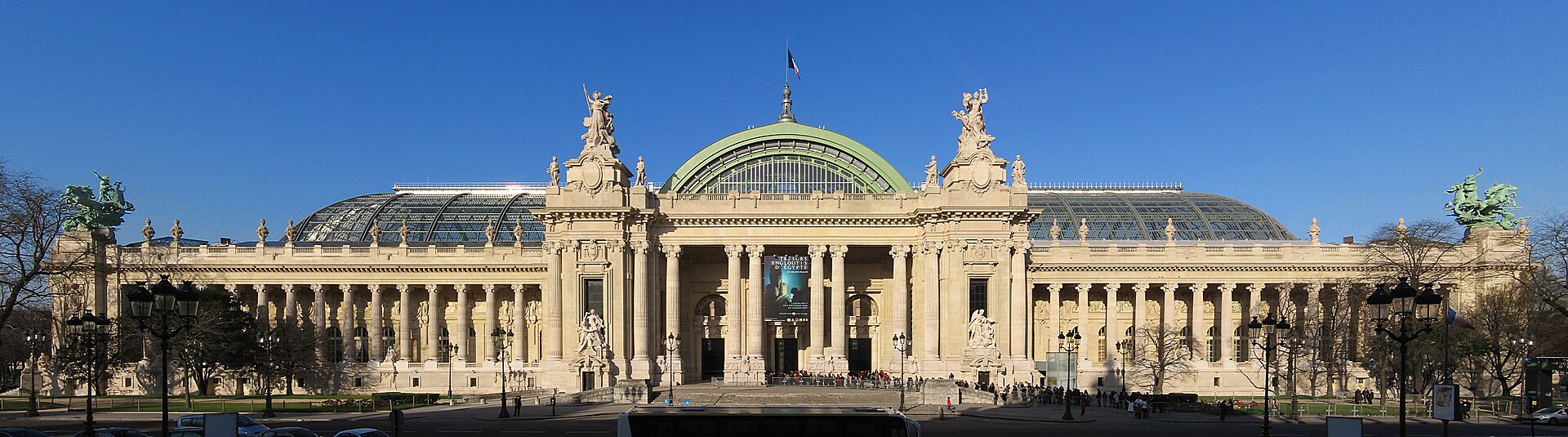
Art Basel Paris closes early. That is the decision the world's most powerful art-fair organisation announced on Thursday, October 22, telling the 211 galleries gathered at the Grand Palais that its 2026 edition will conclude at 7 p.m. on Friday, October 23 — two days ahead of schedule — and will remain closed on Saturday, October 24 and Sunday, October 25. The fair cited "potential demonstrations across Paris this weekend, and in the interest of safeguarding our visitors, exhibitors, partners, staff and artworks," in a letter to exhibitors reported first by Artnet News and confirmed by Art Basel on its website and Instagram.
The message to VIP guests, co-signed by Karim Crippa, the director of Art Basel Paris, was blunt about the disruption: "We deeply regret that we will not be able to welcome you over the weekend and recognise the disruption this may cause to your plans. This decision has not been taken lightly, and the safety of everyone involved in the fair remains our utmost priority." A separate exhibitor email from Crippa and Vincenzo de Bellis, Art Basel's chief artistic officer, urged galleries to keep their stands intact until the Friday close and not to begin moving out until access and removal instructions are issued. Holders of Saturday and Sunday tickets will be contacted directly, the fair said.
One public day instead of three
The arithmetic of the closure is stark. The fair's fifth edition opened on Tuesday, October 20 with its invitation-only Avant Première, a super-VIP opening first introduced last year, followed by further preview days for collectors, curators and museums. The general public was always scheduled to get the weekend tail of the fair. That tail has now been cut to a single day: Friday, October 23 is the first — and now only — public day, after three days of VIP previews. For the 211 galleries from 41 countries taking part, the lost weekend is not a footnote. As gallery owner Nathalie Obadia told Le Monde: "I completely understand closing the fair on Saturday — we had anticipated it for two days — but remaining closed on Sunday makes no sense and is a major blow for the fair. We always do very well on weekends with collectors from the regions, as well as Belgians and Germans who work during the week." Philippe Charpentier, president of the French art dealers' committee, made the same point about Saturday and said he had no information about possible compensation. Some exhibitors paid more than €100,000 for their stands, according to Le Monde.
The closure does not stop at the Grand Palais doors. By Thursday evening, Hyperallergic reported that every outdoor sculpture installed on Avenue Winston Churchill for the fair's public programme — works by Simone Fattal, Carmen Herrera, Marcello Maloberti, Keita Miyazaki, Manfred Pernice, Niki de Saint Phalle, Yinka Shonibare and Alicja Kwade, on view since October 21 and scheduled to run to October 25 — will be dismantled, some as early as Thursday night, October 22. Kwade's nearly 15-foot sculpture L'Élévation des Mondes (2026) will come down on Friday. "Protest is good, but why everything has to be smashed and destroyed is beyond me," Kwade wrote on Instagram. In a later statement to Hyperallergic she added: "I strongly support the legitimate concerns behind these protests, particularly the demands for better education, social justice and fair living conditions. It is therefore especially sad to see these important causes overshadowed by violence and destruction." Galleria Raffaella Cortese confirmed Maloberti's CIEL (2026) was scheduled for dismantling on Thursday night, and London's gallery rosenfeld said Miyazaki's A Symbiotic Form (2025) would come down on Friday. An Art Basel spokesperson told Hyperallergic that arrangements for the wider public programme — which also spans Place Clemenceau, the Petit Palais and other sites — were being assessed site by site. The Fondation Louis Vuitton also announced a Saturday closure, and other Paris fairs began adjusting: the alternative fair Post-Fair shortened its Saturday hours to 10 a.m.–1 p.m., Design Miami Paris said it was monitoring developments, and Paris Internationale and Asia NOW had announced no changes at the time Artsy published.
The sales the fair is walking away from — and the ones it already banked
What makes the early closure commercially painful is that, by every reported measure, the fair was working. White Cube reported 16 sales in the previews, including two Julie Mehretu paintings — Rise of the New Suprematists (2001) and Mumbaphilia (J.E.) (2018) — at $7.85 million each. Hauser & Wirth sold Gerhard Richter's Rokokotisch (Rococo Table) (1965) and Georg Baselitz's Der Hirte (The Shepherd) (1965) for around $10 million each. Pace Di Donna Schrader unveiled what was believed to be the fair's most expensive work, Amedeo Modigliani's Nu étendu (Lolotte) (1917), valued in excess of $100 million and unseen in public for about a century. Gagosian sold a 1987 Willem de Kooning for an eight-figure sum, David Zwirner placed a Richter at $8.5 million, and Thaddaeus Ropac reported 15 preview sales including four Picassos. "Despite a rather turbulent weekend, we've felt a genuine enthusiasm for art from the very start of the fair," dealer Xavier Hufkens, who reported 10 sales, wrote — quoting the Paris motto Fluctuat nec mergitur, "tossed by the waves but not sunk."
That is precisely the tension at the heart of this story. The money in a modern art fair is overwhelmingly made in the VIP days, which Art Basel completed. The weekend is where the public, the regional collectors, the smaller galleries without a global client list on speed-dial, and the fair's claim to be a cultural event rather than a private trading floor get their turn. Cutting the weekend therefore protects the part of the fair that had already happened, and sacrifices the part that had not.
Why this matters
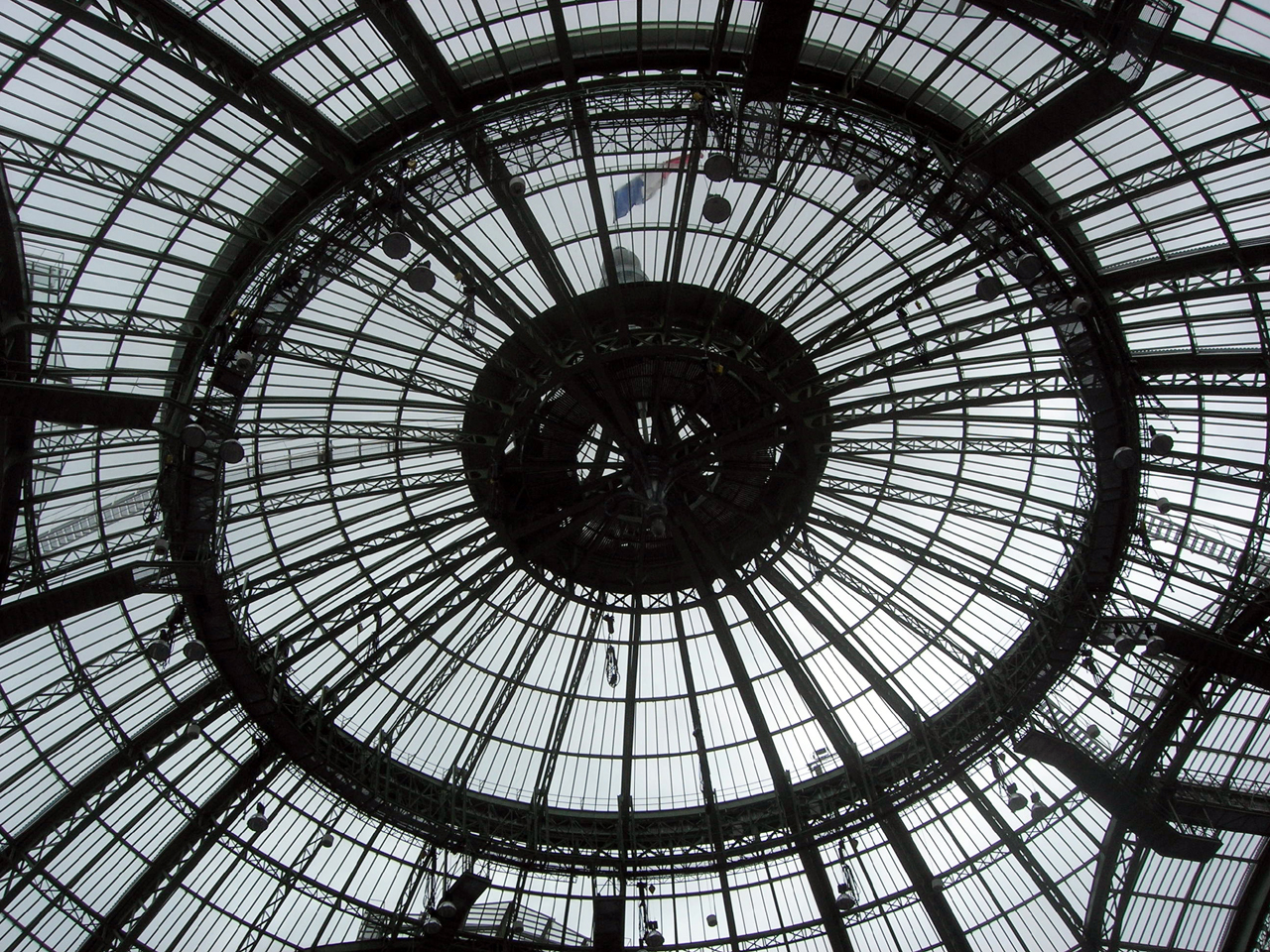
Art fairs do not cancel weekends lightly, and Art Basel does not cancel anything lightly. This is an organisation that ran fairs through a pandemic reopening, through Hong Kong's political transformation and through Miami hurricane seasons. Its decision tells you two things at once. First, the organisers' private assessment of this weekend's risk in central Paris — with a protest called for 4 p.m. on Saturday directly in front of the Grand Palais, according to Le Monde — was materially worse than the public reassurance usually offered to exhibitors who have paid six figures for a stand. Second, the insurance and security logic of a glass-domed palace full of nine-figure artworks is unforgiving: the Grand Palais is also hosting a Paul Cézanne exhibition, and Le Monde noted insurance values at the venue running into the billions of euros. A single incident inside that building would not be a bad weekend; it would be a generational loss to the art itself.
There is a wider signal here about France's autumn of unrest. The protests that began over education and the cost of living have already closed schools, triggered curfews, sent French borrowing costs to their highest since 2002 and forced the government into an extraordinary security posture. When the unrest starts cancelling the flagship events of Paris's cultural calendar — the week when the global art market flies into the capital — it has moved from a domestic political problem to an international reputational and economic one. Paris sells itself to the world as the city where culture is safest from politics. This week, politics walked straight up to the Grand Palais doors.
How we got here: a fair that had already been locked down once
The early closure was the second security escalation of this fair, not the first. During installation on October 17, the Grand Palais went into a temporary lockdown amid nearby protests, Hyperallergic reported, before organisers proceeded with the original schedule. Hypebeast reported the fair had added concrete anti-ram barriers and 24-hour patrols for the VIP previews, and Galerie noted organisers said they were working with the Paris Police Prefecture. Last weekend's nationwide demonstrations — against the high cost of living and school conditions — were in places overshadowed by rioting and looting; at least 2,500 people have been arrested across France, according to figures cited by The Art Newspaper from the BBC. President Emmanuel Macron has said only authorised union protests will be allowed in French towns and cities on Saturday. Prime Minister Sébastien Lecornu has said military forces from Operation Sentinelle — the anti-terrorism deployment created after the January 2015 Charlie Hebdo and Hyper Cacher attacks — rather than police alone, will be deployed over the weekend, in what Hyperallergic described as a "massive" security operation. French authorities have also enforced localised curfews ahead of the weekend, as Signal Post News has reported in its coverage of the curfews and the Lecornu government's weekend security plan and the nationwide protests that drew hundreds of thousands.
The Saturday protest outside the Grand Palais is not only about education or living costs. Artist advocacy groups and labour unions, including the Syndicat National des Artistes Plasticiennes, pledged to join a 4 p.m. Saturday demonstration, and a flyer circulating online denounced the "privatisation of culture and a market-driven art that accompanies the extreme right-wing shift in our country," according to Hyperallergic. Pakistani Art's summary of the organisers' case noted the protest partly targeted Art Basel itself over its corporate ties, framing the fair as a symbol of economic inequality. In other words, the fair was not merely near the protest route. For at least part of the crowd, it was the point.
Who loses, who is protected, and what critics on each side say
The protected are clear: the artworks, the venue, the staff and the visitors who will not be inside a glass hall if a demonstration turns violent, and the insurers whose exposure ends on Friday night. The losers are equally clear. Smaller and mid-sized galleries, for whom a Paris stand is the year's biggest bet and whose buyers are disproportionately the weekend's regional and first-time collectors, lose the two days they could least afford to lose — Obadia's complaint was precisely that Saturday and Sunday bring the collectors from the French regions, Belgium and Germany who cannot attend VIP previews. Paris's hotels, restaurants and satellite fairs lose a weekend that was supposed to be one of the art market's busiest weeks in the city. And the public loses its only real access: one Friday, with government-issued ID required to enter, according to reporting on the revised arrangements, after three days reserved for the trade.
Critics of the closure argue the fair surrendered the weekend too completely — that a Saturday-only closure, matching the protest day, was anticipated and defensible, while also cancelling Sunday reads as an institution choosing total safety over the city that hosts it. Defenders answer that organisers do not control when a crowd disperses, what a Saturday night leaves behind, or whether Sunday's transport and security picture is workable — and that no gallery director wanted to be the one explaining a damaged Cézanne. Both arguments can be true at once, which is why the compensation question Charpentier raised matters so much: Art Basel had, at publication, said nothing publicly about refunds or credits for stands that cost some galleries more than €100,000.
What the numbers say
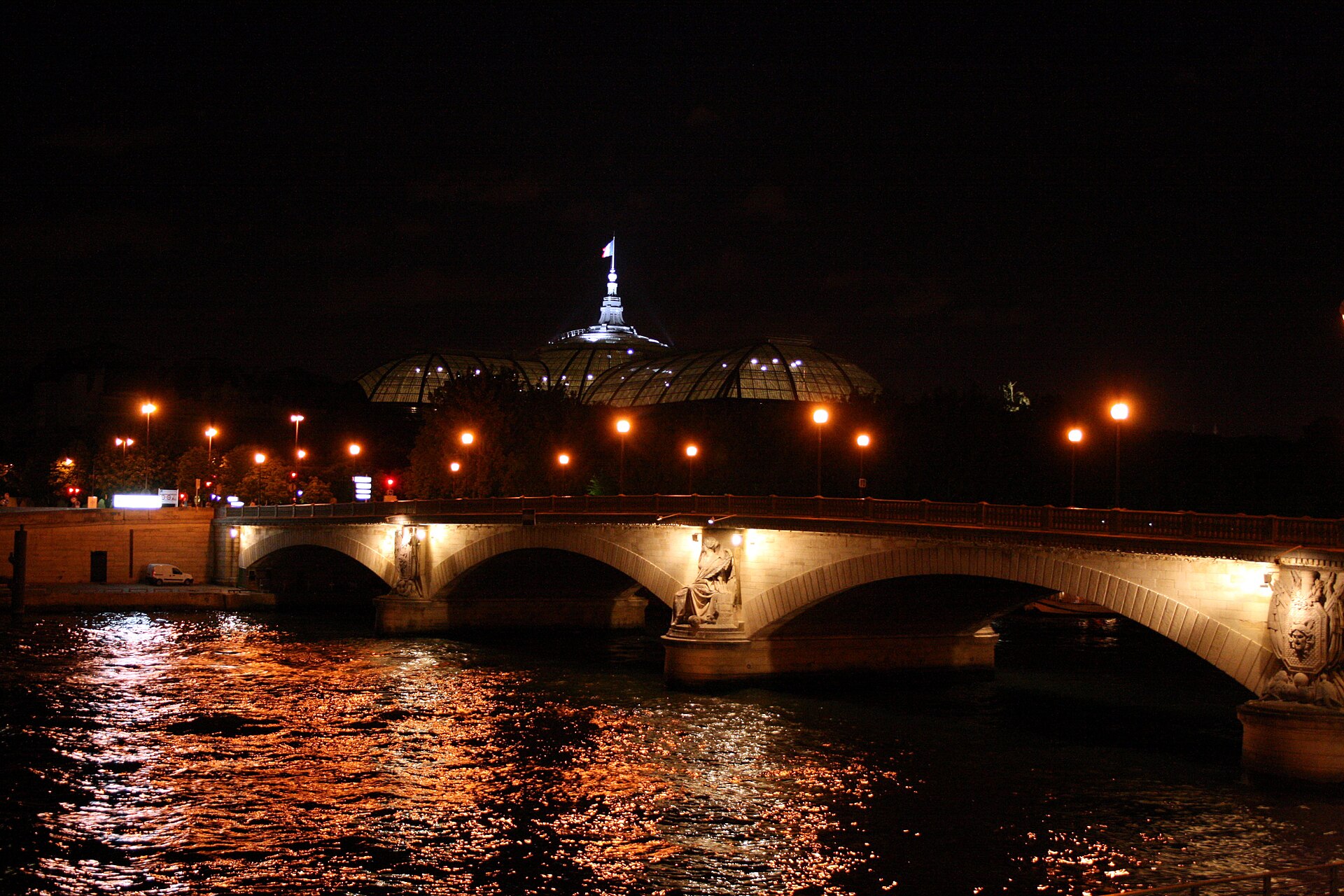
Put the week's figures side by side and the shape of modern Paris art week emerges. Five editions in, the Paris fair drew 211 galleries from 41 countries — 64 of them operating in France and 32 first-time participants, according to Artlyst's preview reporting — for a run that was supposed to span six days from Avant Première to Sunday close. It will now span four. Reported preview sales already include at least four works at or around $8–10 million and a $100 million-plus Modigliani still seeking a buyer; that Modigliani, unseen for a century and the centrepiece of the fair's publicity, will now lose its weekend audience entirely. Against that, set the other ledger of this French autumn: 2,500 arrests last weekend, a 10-year French bond yield at 5 percent for the first time since 2002 as investors price the unrest — the market reaction Signal Post News covered in France's bond sell-off — and a government deploying soldiers to police a weekend of demonstrations. The art market can move its trading to private rooms and phone calls in an afternoon. It cannot move Paris.
What happens next
Friday, October 23 is now the whole fair: the only public day, the last chance to see the Mehretus, the Richter and the Modigliani in person, and the day galleries will try to compress a weekend of meetings into a single session before the 7 p.m. close and the controlled move-out that follows. Expect the argument over compensation and credits for exhibitors to run for weeks, and expect rival fair cities — Miami in December above all — to make quiet hay from Paris's lost weekend. The deeper question is whether this becomes a precedent. If a flagship fair can lose its weekend to a protest calendar once, every future Paris art week will be planned against the demonstration schedule as carefully as against the auction schedule. For now, the fair that Hufkens said felt like Paris's motto — tossed by the waves, not sunk — has chosen to leave the water early. Whether that was prudence or retreat will be argued in Paris long after the last sculpture comes down on Avenue Winston Churchill.
Sources: Le Monde (October 22, 2026); The Art Newspaper (October 22, 2026); Artsy / Artnet News (October 22, 2026); Hyperallergic (October 22, 2026, both reports); Galerie Magazine (October 22, 2026); Hypebeast (October 22, 2026); ARTnews sales reporting via Artsy (October 21, 2026); Art Basel statements to exhibitors and VIP guests as quoted by those outlets.