Sports · NBA · Memorabilia · Auctions
The maroon Lower Merion No. 33 from Bryant's junior season — photo-matched, from his mother Pamela Bryant's collection — drew 26 bids and nearly doubled LeBron James's high-school record. In 2013, the same jersey sold for $51,400.
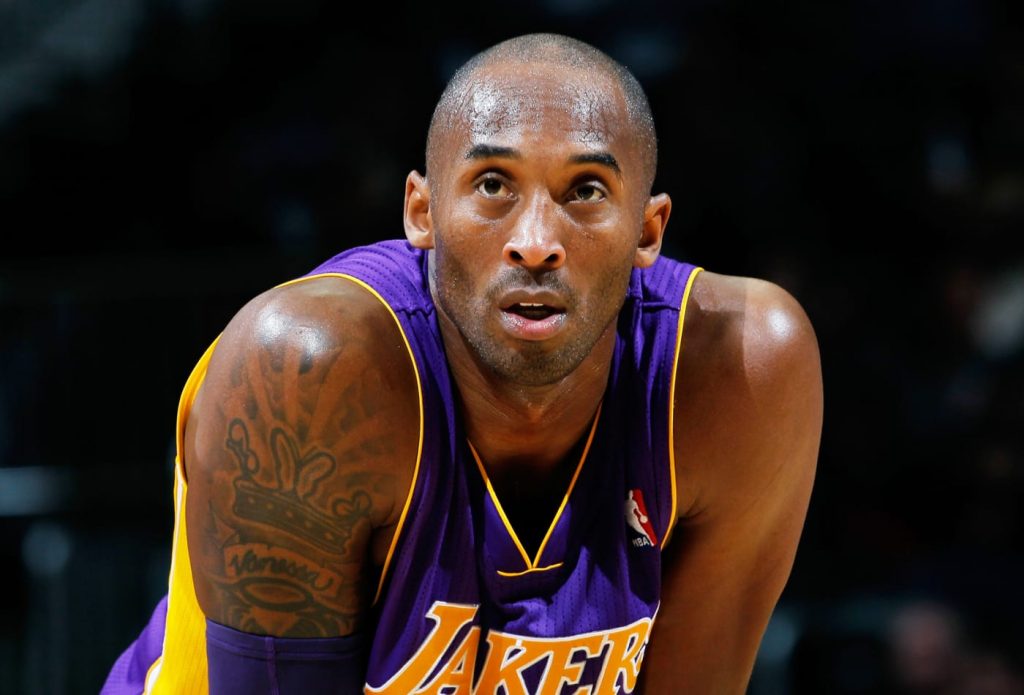
NEW YORK, October 31, 2026 — A Kobe Bryant high school jersey has become the most expensive prep jersey ever sold, after Sotheby's auctioned Bryant's game-worn No. 33 Lower Merion High School jersey for $2,176,000 — reported as $2.2 million — in a sale that concluded on Wednesday, October 28. The jersey, worn during Bryant's junior season in 1994–95, drew 26 bids from seven bidders against a pre-sale estimate of $1 million to $2 million, Sotheby's reported on Friday. It is the only competitive uniform Bryant ever wore without “Lakers” or “Los Angeles” across the chest — a fact that sits at the heart of both its story and its price.
The sale, by the numbers
Three comparisons frame the result. Against its own past: the same jersey previously sold in 2013 for $51,400 — Friday's price is roughly 42 times that, a rise of about 4,133% in thirteen years. Against its category: the previous high-school record was the $1.3 million paid in 2024 for LeBron James's St. Vincent–St. Mary jersey, the one from the Sports Illustrated “The Chosen One” cover; Bryant's jersey nearly doubled it. And against its own estimate: at $2,176,000 it cleared the top of the $1–2 million range. Sotheby's framed the lot in beginnings: “This Lower Merion jersey is where Kobe's story starts, before the rings, the records, and the Mamba Mentality, when he was just a kid in a gym outworking everyone. This jersey symbolizes that greatness has a beginning, and this jersey was there for it.”
The jersey itself
The No. 33 carries its own history. Bryant began at Lower Merion wearing No. 24 and switched to 33 — the high-school number of his father, Joe “Jellybean” Bryant. The jersey comes from the collection of Bryant's mother, Pamela Bryant, with her letter of provenance, and was photo-matched by SIA Photo Match to his 1995 junior season, including the March 1995 matchup against Hazleton Area. That season ended on March 18, 1995, in a 64–59 overtime playoff loss to Hazleton despite Bryant's 33 points and 15 rebounds. The following year he led Lower Merion to the state title, finished with 2,883 career points — passing Wilt Chamberlain's Southeastern Pennsylvania record — and entered the 1996 NBA draft directly from high school. A balanced note belongs in the record: a debate circulates among collectors, rounded up in online coverage of X posts, claiming the photo-match was to a photoshoot and that conclusive game use is unproven. That claim is presented here as exactly what it is — an attributed collectors' debate. Sotheby's sold the jersey as game-worn, with the Pamela Bryant provenance letter and the photo-match, and no evidence contradicting the attribution has been established.
Why this matters: prep artefacts now price like fine art
A high-school jersey has no championship attached to it — no Finals moment, no title. What sold for $2.2 million is scarcity plus provenance plus narrative: a single surviving artefact from before the fame, authenticated by family provenance, representing the beginning of one of basketball's defining stories. That is the logic of the fine-art market, not the memorabilia trade, and the 42-times rise since 2013 says the market has fully made the transition. Bryant's wider memorabilia economy shows both the headroom and the hierarchy: his most expensive item remains the 2007–08 Upper Deck dual-autograph card with Michael Jordan, at $12.6 million (August 2022) — and game-worn NBA jerseys sit higher still, as this newsroom's coverage of the Michael Jordan jersey that sold for a record $14 million set out this month. The prep category, once a curiosity, now has its own record ladder — James at $1.3 million, Bryant at $2.2 million — and ladders in this market exist to be climbed.
Context: the market that grief and scarcity built
Bryant's death in January 2020 froze the supply of everything he touched while demand compounded — the standard, uncomfortable economics of memorabilia after an early death. What distinguishes the Lower Merion jersey within his market is that it predates the machinery: no NBA licensing era, no Finals stage, a school gym in Pennsylvania and a number borrowed from his father. Collectors interviewed across this market consistently pay the highest premiums for origin artefacts — the first chapter, verifiably present at the beginning. A junior-season jersey with a mother's letter is close to the purest form of that category that can exist.
The wider market: where $2.2 million sits
For scale, set the Lower Merion result against the memorabilia market’s current landmarks. Game-worn NBA jerseys from iconic Finals moments now trade in eight figures — the Jordan record at $14 million — while the card market’s peak, the $12.6 million Bryant–Jordan dual autograph, shows the same bidders pricing narrative and scarcity across categories. Trading-card and memorabilia indices have cooled and reheated in cycles since the pandemic boom, but game-worn, photo-matched pieces with family provenance have proved the most correction-resistant segment of the market: supply is fixed, authentication keeps improving, and every record sale advertises the category to the next bidder. A high-school jersey reaching $2.2 million would have been unthinkable in that market a decade ago; in this one, it cleared its estimate’s top end before the sale closed.
What happens next
The obvious question is whether prep-era records keep falling. The ingredients say yes, eventually: a fixed supply of authenticated origin pieces, a global bidder pool that treated $1–2 million as a floor-clearing exercise (26 bids, seven bidders), and a demonstrated appetite for narrative over silverware. The ceiling-setter remains the Jordan market — the $14 million jersey and the $12.6 million Bryant–Jordan card mark the altitude at which even legends' prices currently level off. Watch the next major Bryant lot and the next LeBron prep piece: if the $2.2 million is treated as a comp rather than an outlier, high-school gyms have officially become the art world's newest provenance. The debate over the photo-match, meanwhile, will follow the jersey — and in this market, even the argument is part of the artefact's story now.
Related coverage: Michael Jordan Jersey Sells for Record $14 Million · NBA Cup Opening Night Puts a Tournament Spotlight on the Early Season
Sources
- New York Post (October 31, 2026) — Sotheby's sale of the Lower Merion No. 33 at $2.2 million; the March 1995 Hazleton game; the 2013 sale at $51,400; the LeBron James $1.3 million comparison; the $12.6 million Bryant–Jordan dual-autograph card.
- Bleacher Report / Cllct (October 29, 2026) — $2.2 million as the highest price ever for a high-school jersey, nearly double the previous record (Darren Rovell / Cllct).
- Hypebeast (October 30, 2026) — The exact $2,176,000 result; Pamela Bryant provenance; SIA photo-match to the 1995 junior season; the No. 33 family history; 2,883 career points past Wilt Chamberlain's regional record.
- EssentiallySports (October 30, 2026) — The ~4,133% rise since the 2013 Goldin sale; the March 18, 1995 overtime loss to Hazleton with Bryant's 33 points and 15 rebounds; the state title the following year.