War · World · Ukraine
Russia investment fund sanctions relief — long treated as unthinkable while the war in Ukraine continues — is now openly under discussion between Washington and Moscow, Kremlin aide Yuri Ushakov confirmed on Wednesday. The talks centre on the Russian Direct Investment Fund and its chief, Kirill Dmitriev. Nothing has been lifted, no timetable has been announced, and the fund’s request remains inside a formal US review.
Track it live: Ukraine war map — live tracker

Washington and Moscow are actively discussing Russia investment fund sanctions relief, a senior Kremlin aide has confirmed in public for the first time, in the clearest sign yet that the Trump administration’s economic opening to Russia is moving beyond energy and into the heart of the sanctions regime built after the full-scale invasion of Ukraine. Yuri Ushakov, President Vladimir Putin’s foreign policy aide, told Russian news agencies on Wednesday that discussions on lifting US sanctions on the Russian Direct Investment Fund — the RDIF, Russia’s sovereign co-investment vehicle — have been under way for some time. His remarks, reported by Reuters, convert what had been a single newspaper report about a Treasury review into an acknowledged, two-sided negotiation.
Precision matters here, because the story is easy to overstate. What exists, on the public record, is a set of discussions and a pending application moving through what one US official described as established procedures. No sanctions have been lifted. The RDIF remains designated, its assets within US jurisdiction remain blocked, and no official on either side has announced a timetable or an outcome. Ushakov himself declined to predict one: “What the outcome will be, I do not know.” A fund Washington once described as a slush fund for Putin is being talked about, by both capitals, as a candidate for rehabilitation — and the talking, at this stage, is all that has happened.
What Ushakov confirmed: the Ushakov Dmitriev sanctions talks
Ushakov’s comments came on Wednesday, October 28, in remarks carried by TASS and other Russian state agencies and reported by Reuters on October 29. He said the discussions about lifting the sanctions on the fund have been “going on for some time” — a formulation that places their start well before this week’s headlines and suggests a channel operating quietly while public diplomacy over the war has stalled and lurched. He added that Kirill Dmitriev, the RDIF’s chief executive, “is active in his contacts,” confirming that the fund’s own head is personally running the file on the Russian side.
Dmitriev’s role is itself a large part of the story. A Harvard-educated former investment banker, he has served for more than a year as Moscow’s most visible economic envoy to the Trump circle. A US official, in the reporting first published by The New York Times, praised Dmitriev as a helpful envoy to Jared Kushner, the president’s son-in-law, and Steve Witkoff, the administration’s special envoy — the two men who have carried much of Washington’s Russia diplomacy. The man asking for his institution to be delisted is thus also one of the men the administration credits with keeping the wider negotiation alive. Supporters of the review call that pragmatism: the channel that might end the war runs through Dmitriev, so his fund’s status is inevitably on the table. Critics call it a conflict built into the process, in which access itself becomes the concession.
How the story emerged: a Treasury review, not a decision
The public sequence began on Tuesday, when The New York Times first reported that the administration was considering lifting the sanctions. A US official told the Times that the fund’s application is being assessed through established procedures, framing the review as part of an effort to “improve U.S.-Russia relations and help end the war.” CNN, reporting on Thursday, sought comment from the White House and the State Department. The administration has announced no decision, and neither government has published terms.
The phrase “established procedures” carries a specific legal meaning, and it defines what would have to happen for US lifting sanctions on Russia 2026 to move from headline to fact. Delisting is not a handshake. A designated entity must demonstrate that the grounds for its designation no longer apply — that the circumstances that led to the sanction have changed. The Treasury’s sanctions administrators review the evidence, and the decision is theirs to make and defend. For the RDIF, that standard is unusually demanding, because the original designation was not about a single transaction or executive. It was about what the fund is: an arm of the Russian state, created by the Kremlin, run by a presidential appointee, and described by the Treasury itself in the language quoted below. Reviewers would have to conclude that this description no longer fits — or the administration would have to reach for a broader political waiver of the kind it has used elsewhere this month. Neither step has been announced.
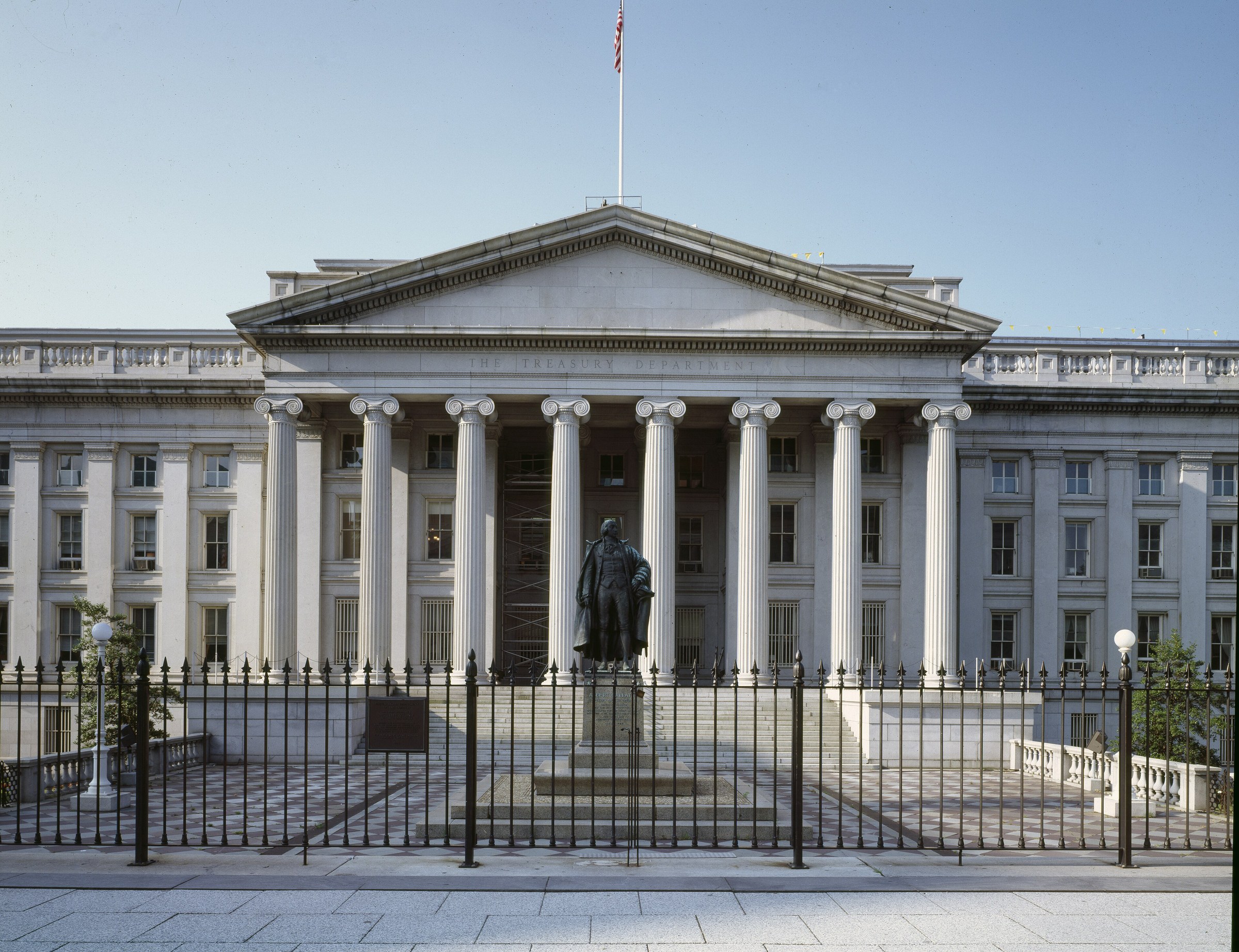
Russian Direct Investment Fund sanctions: what the RDIF is, and why it was designated
The Russian Direct Investment Fund was created in 2011 as the Kremlin’s co-investment platform: a state-backed fund designed to invest alongside foreign partners — sovereign wealth funds and institutions from the Middle East and Asia prominent among them — in Russian companies and projects. Where a Gulf or Asian fund wanted exposure to a Russian logistics company, pharmaceuticals producer or technology firm, the RDIF would invest beside it, supplying local knowledge, political cover and matching capital. Over the following decade it invested billions of dollars in Russian companies on that basis, becoming one of the most internationally connected institutions in Russian state finance — precisely the quality that later made it a target.
The RDIF was sanctioned on February 28, 2022, four days after Russia launched its full-scale invasion of Ukraine, in the first great wave of Western designations. The US Treasury’s language was not bureaucratic: it described the fund as widely considered a slush fund for President Vladimir Putin and emblematic of Russia’s broader kleptocracy. Eric Green, then the National Security Council’s director for Russia, later explained the logic of moving so early: targeting the RDIF was a priority because its access to Western finance and foreign partners could help Moscow raise and move money that would, in effect, finance the war. Freezing the fund out of the dollar system was meant to sever one of the Kremlin’s most polished interfaces with global capital.
That history is why the discussions carry weight far beyond one institution’s balance sheet. The RDIF designation was not marginal or clerical. It was a flagship measure, imposed in the war’s first week, justified in the strongest language the Treasury used about any Russian financial entity, and maintained for more than four and a half years. Reversing it — if it is reversed — would be a statement about the war and about what Moscow can obtain through negotiation while its army is still in Ukraine. That is analysis, not reportage; but it is the analysis every government watching this file is performing.
Why this matters
The first reason is sequencing. Sanctions relief has always been the currency in which a Ukraine settlement would partly be paid, and the argument in Western capitals since 2022 has been about when to spend it: only after a ceasefire, in tranches tied to verified steps, or up front as an inducement. What the RDIF discussions suggest — on the evidence of the diesel licence and the Graham Act waiver described below — is that relief is being explored before any ceasefire exists, item by item, each item small enough to defend and cumulatively large enough to change the structure of pressure on Moscow. Whether that is shrewd inducement or leverage spent for nothing is the central argument, and it is genuinely contested. The administration’s stated rationale, per the US official quoted by the Times, is that steps like this improve relations and help end the war. The counter-argument is that relief granted in advance of any Russian concession simply lowers the price Putin pays for continuing.
Who benefits if RDIF sanctions are lifted — and who loses
The beneficiaries of delisting are identifiable. The RDIF would regain the ability to transact in dollars, court the Middle Eastern and Asian co-investors who were its historical partners, and present itself again as Russia’s respectable window for foreign capital. Dmitriev would convert a year of envoy work into an institutional trophy. Russian companies in the fund’s portfolio would find a channel to foreign money reopened. And Moscow would gain something arguably worth more than the capital: proof that designations imposed at the height of Western unity can be negotiated away one by one, which reprices every remaining sanction.
The losers are equally identifiable. Ukraine, not quoted in either capital’s accounts of these talks, would watch a measure imposed in response to the invasion of its territory traded in a negotiation it does not control, while the war continues. European governments, which maintain their own Russia sanctions and have tied relief to a settlement, would face a transatlantic regime coming apart at different speeds — a fund delisted in Washington but still designated in Brussels and London is a fund with an arbitrage, and arbitrage is where sanctions leak. And the officials who built the 2022 designation on a “slush fund” theory would see it set aside without any public account of what changed — unless the review produces one.
Trump Russia sanctions concessions: the diesel licence and the Graham Act waiver came first
The RDIF talks do not arrive in isolation. They follow two concrete steps this month. On October 9, Washington issued the diesel arrangement built around General License 135, which authorizes transactions involving Russian-origin diesel through April 7, 2027 — a carve-out the Atlantic Council’s analysts described as the first ask in a longer Russian list rather than a one-off. Russian Deputy Prime Minister Alexander Novak said on Tuesday that a fourth diesel tanker under the arrangement would depart on Wednesday: the licence is not theoretical, and cargo is moving under it. The second step was covered by Signal Post News in its reporting on Trump’s waiver of the Russia sanctions Congress passed in the Graham Act — an executive order shelving penalties that had been scheduled to take effect, leaving the law on the books but deliberately unused.
The Atlantic Council has also reported that the administration confirmed it is reviewing Moscow’s RDIF request, and it notes a connective detail: Dmitriev has promoted the RDIF as a channel through which diesel transactions could be processed. The pattern the Council describes is one of linked asks — energy first, finance next, each concession making the following one easier to argue because a precedent exists and a channel is open. The earlier economic diplomacy between the two camps, including the energy and investment ideas explored by Kushner and Dmitriev, was covered by Signal Post News in its account of the Nord Stream gas deal discussions between Kushner and Dmitriev. The RDIF request, in short, sits inside a sequence — and sequences are how sanctions regimes actually unwind: rarely by dramatic repeal, usually by defensible exceptions that accumulate into a new normal.
What critics say: relief “only emboldens Putin”
The opposition, so far, has been led from Congress. Representatives Marcy Kaptur and Rosa DeLauro condemned the prospect of relief as a question of war financing rather than financial technicality. Relief, they said, “only emboldens Putin and gives him the resources to prolong this conflict,” pointing to the war’s continuing cost: “Ukrainian families are still living under Russian attacks.” Their argument is the mirror image of Eric Green’s in 2022 — that a state investment fund with global reach is not a neutral financial utility but a resource of the state waging the war, and restoring its reach restores capacity.
The administration’s public defence, so far, has been procedural rather than substantive: the application is being assessed through established procedures, the purpose is to improve relations and help end the war, and Dmitriev has been a helpful envoy. Notably, it does not claim the RDIF has reformed, that its relationship to the Kremlin has changed, or that the 2022 findings were wrong — the things a delisting on the merits would ordinarily assert. That gap may reflect a review still in progress. Or it may indicate that any delisting would rest on foreign-policy grounds rather than on a finding that the designation’s basis has evaporated. The distinction will matter legally, in Congress, and in allied capitals if a decision comes.
The numbers behind the fund: a data-driven context
Strip the politics away and the file reduces to a handful of dates and figures. The RDIF was founded in 2011 and spent a decade building a co-investment book worth billions of dollars in Russian companies, much of it alongside Middle Eastern and other foreign partners. It was designated on February 28, 2022 — day four of the full-scale invasion — and has now been under US sanctions for more than four and a half years. The review surfaces alongside a diesel licence, General License 135, that runs to April 7, 2027, and a Russian statement that a fourth tanker under it was due to sail this week. Together those data points describe the speed of the shift: an architecture assembled in days in 2022, maintained intact for years, is being renegotiated in pieces within weeks — while no ceasefire date, no withdrawal schedule and no timetable for the RDIF decision itself has been announced by anyone.
What happens next
Four scenarios cover the plausible range. The first is delisting on the merits: the Treasury concludes that the grounds for designation no longer apply and removes the fund through the ordinary process — the cleanest outcome legally, and the hardest to square with the Treasury’s own 2022 language unless the review publishes reasoning explaining what changed. The second is relief by waiver or licence: the designation stays on paper while a licence authorises the transactions Moscow wants — the diesel model applied to finance. The third is indefinite review: the application stays pending and the talks themselves serve both sides — Moscow can tell its partners relief is coming, Washington can hold the prospect over the wider negotiation — without either capital paying the price of a decision. Ushakov’s “going on for some time,” paired with his refusal to predict an outcome, fits this scenario as comfortably as any other. The fourth is rejection, quiet or announced: for the administration, evidence the process was genuine; for Moscow, evidence that normalisation requires concessions elsewhere.
What would change the picture is specificity: a published Treasury determination, a licence number, a date. Until one appears, the accurate summary is the narrow one — the United States and Russia are discussing sanctions relief for the Russian Direct Investment Fund, the fund’s chief is working his contacts, the Treasury is reviewing an application under a demanding standard, critics in Congress are on the record against it, and the war the sanctions were imposed to punish continues. Signal Post News will update this story if the review produces a decision.
Sources
- Reuters, October 29, 2026 — Kremlin aide Yuri Ushakov said discussions with the Trump administration on lifting US sanctions on the Russian Direct Investment Fund have been “going on for some time”; “What the outcome will be, I do not know”; RDIF chief Kirill Dmitriev “is active in his contacts”; the fund’s February 28, 2022 designation and the Treasury’s description of it as a slush fund for President Vladimir Putin.
- CNN, October 29, 2026 — reporting on the discussions and the delisting standard, including that a designated entity must show the grounds for its designation no longer apply, and that CNN sought comment from the White House and the State Department; The New York Times first reported on Tuesday that the administration was considering lifting the sanctions, and a US official said the application is being assessed through established procedures to improve US-Russia relations and help end the war.
- Atlantic Council, October 2026 — “For Russia, Trump’s diesel deal was just the first ask”: the October 9 diesel arrangement and General License 135; the administration’s confirmation that it is reviewing Moscow’s RDIF request; and Dmitriev’s promotion of the RDIF as a channel to process diesel transactions.