Nord Stream gas deal
World / Europe / Energy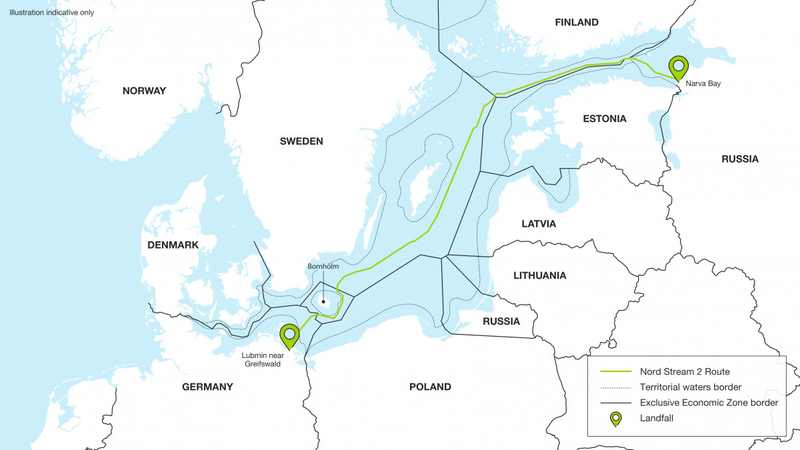
For the first time since the 2022 sabotage, Washington and Moscow are quietly discussing what a post-war Europe looks like with Russian gas flowing again — and this time, with an American hand on the valve. Reuters reported on October 8 that top Russian and US officials, including President Trump's special envoy Jared Kushner and Vladimir Putin's economic adviser Kirill Dmitriev, have held talks about bringing a US investor into the Nord Stream pipelines, the twin conduits that once carried Russian gas to Germany beneath the Baltic Sea. The Nord Stream gas deal now on the table would let American investors profit from energy flows to Europe once the Ukraine war ends — a commercial logic Kushner reportedly sees as central to peacemaking itself.
What was actually reported — and what wasn't
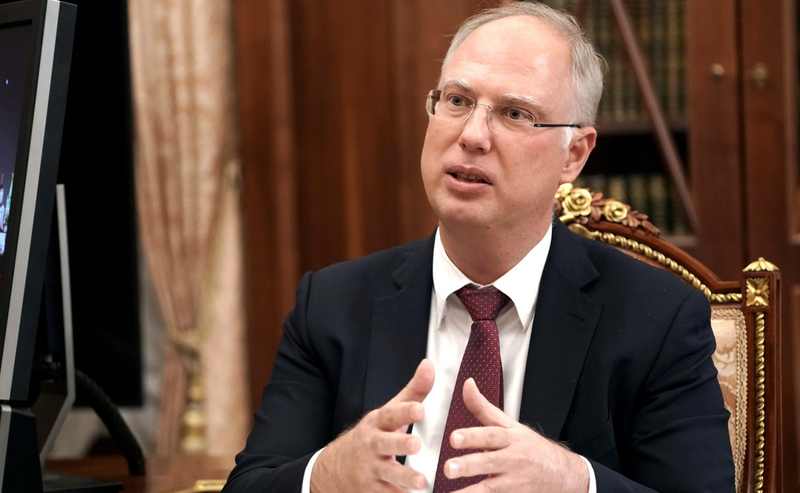
The Reuters exclusive, built on five people with knowledge of the discussions, says Kushner and Dmitriev have met in Moscow and New York in recent weeks, and that Nord Stream "remains on the agenda," in the words of two of the sources. The shape of the idea: a US investor takes a stake in the pipelines, and Russian gas resumes flowing to Germany — Europe's biggest energy consumer — under American-linked ownership once the war ends. Dmitriev, who heads Russia's sovereign wealth fund, has been openly campaigning for a resumption of Russian gas sales to Germany, and met last month with US Energy and Treasury Department officials to discuss potential US-Russia energy initiatives.
But read the fine print. Reuters is careful: it is "unclear to what degree" Nord Stream came up in the Kushner-Dmitriev meetings specifically. A White House official pushed back, telling Reuters there had been "no Nord Stream discussions recently," and that any deals would have to be negotiated by Russia with the US International Development Finance Corporation and Treasury — and "must benefit United States taxpayers and companies." A separate US official added that a deal is unlikely in the medium term, because the pipelines are sanctioned by both the US and the EU, making any restart illegal today. Neither Kushner's team nor Dmitriev's office confirmed the talks on the record. So what we have is a well-sourced report of exploratory discussions — not a deal, not even a negotiation. The distinction matters, because everything that follows hinges on obstacles neither Washington nor Moscow can clear alone.

Why this matters
Start with what would be reversed. For four years, the West's energy policy has rested on a single sentence: no more Russian pipeline gas. Europe spent billions building LNG terminals, rewiring supply contracts, and paying a premium to keep the lights on without Gazprom. A US-brokered return of Russian gas would be the largest reversal of that policy since the invasion — and it would arrive wearing an American flag, with Washington taking a cut.
Second, consider the signal to Kyiv. Ukraine's leverage in any negotiation partly rests on Europe's willingness to endure economic pain rather than fund Moscow's war machine. If the US is quietly sketching the plumbing for post-war Russian gas sales while Ukrainian cities are still being bombed, Kyiv will read it as the clock running out on Western resolve.
Third, the timing is not accidental. Winter is approaching, Europe is straining under a fuel crisis sharpened by the war with Iran and Ukraine's systematic strikes on Russian refineries, and the US midterm elections are weeks away. Energy prices are a kitchen-table issue, and cheap gas is a political argument. The White House knows it; Moscow knows it; and the calendar is doing quiet work in the background of every meeting Kushner takes.
How we got here: four years of pipeline intrigue
Before 2022, Russia supplied more than half of Germany's natural gas and over a third of its crude oil. Nord Stream 2 — a 1,230-kilometer, 55-billion-cubic-meter-per-year pipeline — was completed but never certified when the invasion froze it in place. Then, in September 2022, explosions ripped through the Nord Stream system in the Baltic Sea. Three of the four lines were destroyed; one Nord Stream 2 line survived intact. Nobody has been held responsible, though a Ukrainian man was arrested in Italy last year on suspicion of coordinating the attacks.
The idea of American ownership is older than this week's headlines. In 2024, the Wall Street Journal reported that Miami financier Stephen P. Lynch had asked the US government for permission to bid on Nord Stream 2 in its Swiss bankruptcy proceedings, arguing an American owner would serve US interests. Last December, the Journal reported the Kremlin had pitched the White House directly on investments and industry cooperation to end the war — including reviving Nord Stream. In March, Russian Foreign Minister Sergei Lavrov claimed publicly that Washington "wants to take over the Nord Stream pipelines." And just last month, Reuters reported that Dmitriev and Germany's AfD leadership were preparing talks on restarting gas supplies to Germany — a party Reuters described as Germany's most popular with voters. This week's Kushner story is not a bolt from the blue. It is the latest, most official-looking chapter in a long-running courtship.
What a deal would actually take
Strip away the diplomacy and the engineering is almost the easy part. The hard part is legal and political, and it comes in layers. First, US sanctions: Trump could waive or soften them on his own authority — but if Democrats take Congress in November, that path narrows sharply, as Reuters noted. Second, EU sanctions: lifting those requires unanimity among member states, including Poland and the Baltic countries, which treat Russian gas as a security threat, not a commodity. That is a far steeper climb than a presidential waiver. Third, the Swiss bankruptcy proceedings around the Nord Stream 2 operating company, where any ownership transfer would have to survive creditor claims and court approval. Fourth, physical reality: the damaged lines would need inspection and repair, and German regulators would have to certify whatever flows — a process that took years the first time. The US official who called a deal unlikely "in the medium term" was not being pessimistic. He was reading the checklist.
Who wins, who loses
If it ever happened, the winners' list is easy to draw. American investors — and, by the White House's framing, US taxpayers through the development finance apparatus — would take a cut of one of the world's great energy arbitrages: cheap Russian gas sold into a premium European market. European industry and households would get lower energy bills, which is why the idea has quiet sympathizers in Berlin's business class even among people who would never say so publicly. Russia would regain revenue and, just as valuable, a measure of legitimacy — gas flowing again means the isolation is over. And Trump would get to tell voters he ended a war and cut their energy costs in the same breath, weeks before the midterms.
The losers' column is longer. Ukraine would lose its last great piece of economic leverage over Moscow — and watch its Western backers profit from the very trade Kyiv has begged them to shun. American LNG exporters, who spent four years building the terminals and contracts that replaced Russian gas, would suddenly compete against cheap pipeline molecules undercutting their prices. Poland and the Baltic states would see a security nightmare: the pipelines that once funded the war machine, rebuilt with Washington's blessing. And the European Union itself would face a unity test it might fail — a German-Russian-American energy bargain cut over the heads of the member states most exposed to Moscow.
The critics' case — and the caveats
The objections write themselves, and they deserve a hearing. European Commission President Ursula von der Leyen has made opposition to returning to Russian energy a matter of stated policy. Critics call the concept appeasement with a commission attached — rewarding the invasion's architect with market access while the war is still being fought. There is also the Kushner question: the president's son-in-law negotiating energy deals with Moscow will strike many as a conflict of interest wearing a diplomat's suit, whatever the official title says. And the sourcing caveat from the top of this article still applies: five anonymous sources and two on-the-record denials do not make a negotiation. The White House says no recent discussions happened. It is possible the talks are further along than the denials suggest; it is equally possible this is trial-balloon diplomacy, floated to test reactions in Berlin, Brussels, and Kyiv. Treat it as a window into intent, not a done deal.
What the numbers say
The scale is what makes this more than a diplomatic curiosity. Nord Stream 2 alone was designed to move 55 billion cubic meters of gas a year — and the surviving intact line represents roughly half of that capacity, sitting on the seabed waiting. Before the invasion, Russia supplied more than half of Germany's gas and over a third of its oil; replacing that volume cost Europe a historic premium in LNG and infrastructure. Even a partial resumption — one line, one winter — would move enough volume to bend European wholesale prices, which is precisely why the idea terrifies US LNG producers and thrills German manufacturers in equal measure. The numbers also explain Moscow's patience: every winter that Europe pays crisis prices is an advertisement for the cheap alternative sitting in the Baltic.
Three ways this could go
Scenario one: the midterm hinge. If Democrats win control of Congress in November, sanctions relief becomes legislatively toxic, European capitals read the signal, and the talks quietly die — another what-if in the long file of almost-deals.
Scenario two: the waiver route. Trump waives US sanctions unilaterally, an American investor moves in the Swiss proceedings, and Berlin — under industrial and voter pressure as heating bills bite — finds a face-saving formula. Flows stay a distant prospect, but the taboo breaks, and every subsequent negotiation starts from a different place.
Scenario three: the grand bargain. A Ukraine settlement includes an energy chapter; a US-linked entity takes a Nord Stream stake as part of the reconstruction architecture; limited flows resume under American oversight, sold to Europe as the price of peace. This is the outcome Kushner's "business as peacemaking" logic points to — and the one Kyiv fears most, because it would mean the war ended with Moscow's main economic artery not just intact but American-guaranteed.
The bottom line
Strip this story to its frame and it is Trump-era foreign policy distilled: peace pursued not through alliances and communiqués but through deals, with America taking a carry. There is a coherent argument for it — mutual economic entanglement has, at times, underwritten durable truces, and Europe's voters are tired of paying war premiums. There is also a coherent argument that it sells out the victim, rewards the aggressor, and teaches every future strongman that pipelines outlast principles. Which argument wins will not be decided in Moscow or Washington. It will be decided in Berlin and Brussels, by people who have spent four years and a fortune proving they could live without Russian gas — and who must now decide whether they still want to.
Sources
- Reuters, “US, Russia explore gas sale to Europe amid Ukraine war, say sources,” October 8, 2026
- Reuters, “Exclusive-Putin envoy and far-right AfD prepare talks to get Russian gas back for Germany, sources say,” September 18, 2026
- Reuters, “Russia's Lavrov says US wants to take over Nord Stream gas pipelines,” March 27, 2026