World · War · Energy
Envoys Jared Kushner and Steve Witkoff floated Russian gas flowing through Ukrainian pipelines — sold via an American intermediary — as part of an energy ceasefire before winter. Kyiv's resumed refinery strikes have given the idea new urgency, and Europe's answer, so far, is no.
Track it live: Ukraine war map and live tracker
The United States is backing a rapid resumption of Russian gas sales to Europe through the pipelines that cross Ukraine — the wartime enemy of the country that produces the gas — as part of negotiations aimed at securing an energy ceasefire before winter, The Wall Street Journal reported on Sunday, citing US, European and Ukrainian officials. Reuters, which reported the Journal’s account on Monday, said it could not immediately verify the report, and no government in Washington, Kyiv, Moscow or Brussels has publicly confirmed the proposal. What is on the record is the shape of the idea, the men who carried it, and the flat European refusal it has already run into.
If it ever happened, it would be the single largest reversal of Western energy policy since Russia’s full-scale invasion: Russian molecules flowing west again, across Ukraine, before the war has ended — this time with an American intermediary taking a position in the middle of the trade.
What the plan would actually do
According to the Journal, the idea was broached by US envoys Jared Kushner and Steve Witkoff during trips to Moscow and Kyiv in September. Russian gas would be sold to Europe through a US intermediary — a structure intended to circumvent European sanctions, which currently bar the purchases the plan would revive — and one that could create a lucrative opportunity for American investors, people who attended the discussions told the Journal.
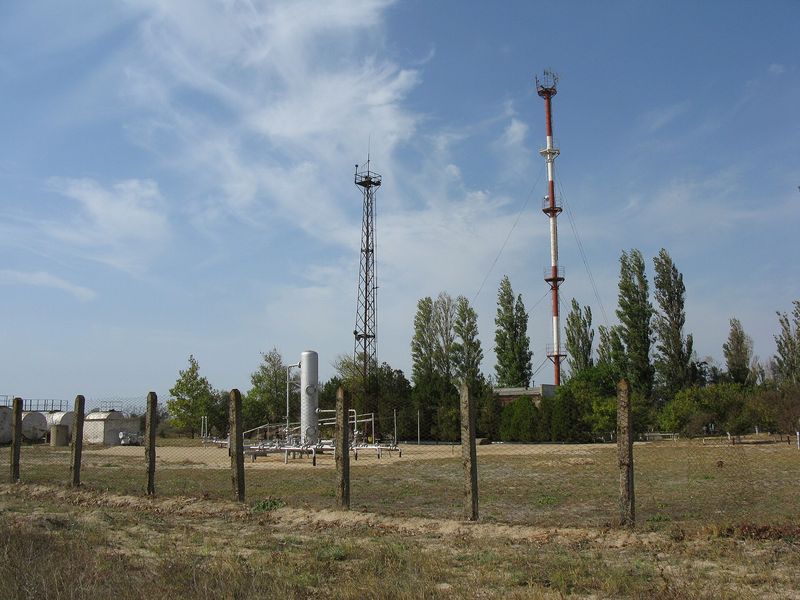
The physical route already exists. The Soviet-era corridor from the Urengoy fields in Siberia runs across Ukraine through the Sudzha metering point and west to Slovakia and beyond; Ukraine’s transmission network, at some 38,000 kilometres of pipeline and Europe’s largest underground storage system, was built for exactly this trade. Flows stopped on January 1, 2025, when the five-year transit contract expired and Kyiv declined to renew it. Restarting them would also restore something Ukraine has done without for nearly two years: transit fees worth roughly $1 billion a year before the cutoff.
The proposal was put on the back burner last month, the Journal reported, after Ukraine unilaterally stopped striking Russian refineries under pressure from President Donald Trump, who has blamed those strikes for fuel-price increases. An energy ceasefire, in Washington’s apparent design, would trade the gas restart for a halt to the energy war on both sides — no more refinery strikes by Kyiv, no more grid strikes by Moscow.
Why it is back on the table now
Kyiv resumed its air campaign on Friday, launching three attacks on three major Russian refineries in the past three days, according to the Journal — and the weekend’s strike data, reported independently by Reuters, shows how quickly the energy war has re-escalated. Ukraine said it hit the Kamensky plant in Russia’s Rostov region, which President Volodymyr Zelenskyy said is involved in manufacturing Russian missiles, and Russian officials reported major damage to an industrial site in the Nizhny Novgorod region, home to the NORSI refinery, after a large-scale overnight drone attack; Russia’s Defence Ministry said it downed 235 Ukrainian drones. In the other direction, Ukraine’s air force said Russia launched 433 long-range drones from Saturday evening, of which 371 were shot down or suppressed, and Zelenskyy said Russian strikes on power infrastructure in four regions cut electricity to hundreds of thousands of households. Russia, he said, is “seeking to maximally exploit the deficit of ballistic missile interceptors.” Russia’s deputy prime minister Alexander Novak, meanwhile, said Ukrainian strikes on Russian refineries were adding to global fuel-market imbalances and affecting prices — the precise pressure point that moved Trump earlier this autumn.
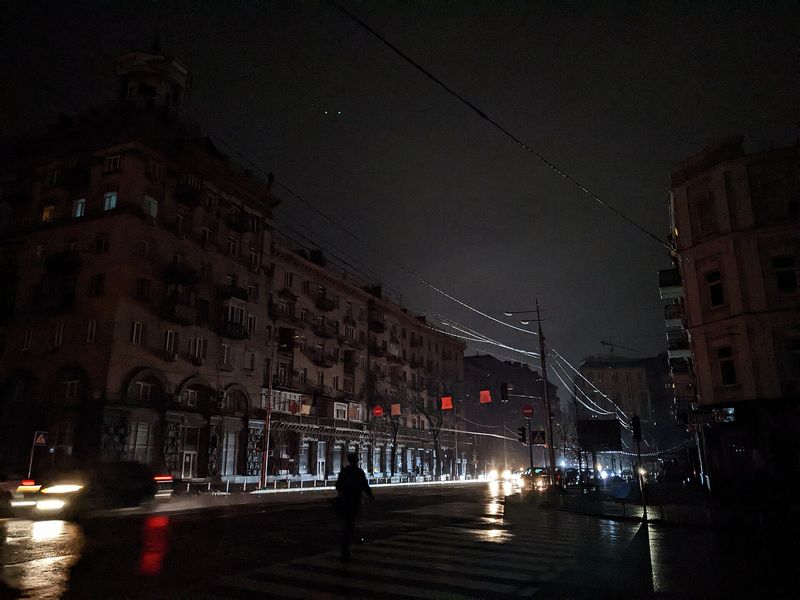
That escalation, the Journal reported, has brought new urgency to the pursuit of a more comprehensive energy ceasefire ahead of three-way peace negotiations between the US, Russia and Ukraine planned for mid-November in Abu Dhabi. Russia has so far rebuffed American attempts to strike such a deal.
How we got here: a trade Europe spent four years killing
Before the invasion, Russia supplied about 45 percent of the European Union’s gas imports, much of it through Ukraine. By 2025 that share had fallen to about 13 percent, replaced by Norwegian pipeline gas and seaborne LNG. The ENTSOG winter review records that winter 2025/26 was the first full winter season following the end of Russian gas transit via Ukraine, with TurkStream the only remaining route for Russian pipeline gas into the EU — and that by the end of January 2026, EU storage sat at around 41 percent full, well below recent years. EU legislation now phases out all purchases of Russian natural gas by the end of 2027: under the Council’s regulation, the ban on Russian LNG under long-term contracts takes effect on January 1, 2027, and the pipeline-gas ban on September 30, 2027.
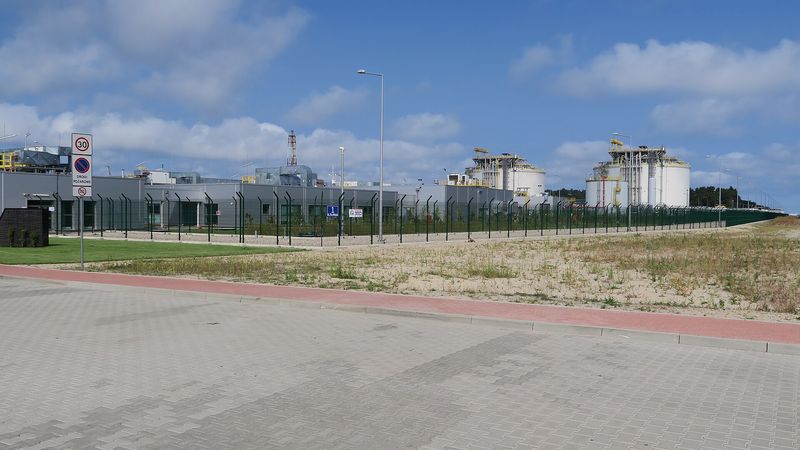
The Ukraine transit route is not the only Russian gas channel Washington has explored. As Signal Post News has previously reported, a parallel Kushner–Dmitriev channel has discussed the Baltic pipelines — see our coverage of the reported US–Russia Nord Stream gas deal involving Kushner and Dmitriev. The Ukraine proposal would go further than the Baltic talks: it would run the gas across the territory of the country Russia invaded, while the war is still being fought.
Why this matters
Three things are being negotiated at once, and only one of them is gas. The first is a winter reprieve: an energy ceasefire is the one form of de-escalation both armies have repeatedly circled, because it maps onto things civilians can feel — heat, light, water. The second is money: restored transit revives revenue for Moscow, fees for Kyiv, and — under the reported structure — a margin for American intermediaries, which would make sanctions policy something Washington profits from bending. The third is the signal to Kyiv. Ukraine’s leverage rests partly on Europe’s willingness to bear economic pain rather than fund Moscow’s war machine; sketching the plumbing for Russian gas sales while Ukrainian cities are being struck tells Kyiv the clock on that resolve may be running. The gas idea sits inside the wider Kushner–Witkoff negotiating track that Signal Post News has covered since the autumn — including the Witkoff–Kushner Miami Ukraine peace plan — in which energy, territory and money are being bargained as parts of a single package.
Who benefits, who loses
Russia gains revenue and, as valuable, legitimacy — gas flowing again means the isolation is ending. Ukraine gains transit fees and, if the ceasefire holds, a survivable winter grid — but loses a core piece of leverage and watches its own territory become the conduit for its enemy’s exports. European industry gains cheaper, steadier supply; the EU’s security policy loses four years of carefully built separation. American LNG exporters, who spent those years building the terminals that replaced Russian gas, would face cheap pipeline competition. And the reported intermediary structure hands US investors a stake in the trade itself — the feature critics will seize on first.
The European answer, so far, is no
The Journal reports that the current official European position is that the EU will not resume purchases of Russian gas even after a full peace agreement with Russia, let alone as part of a tenuous energy ceasefire that lets President Vladimir Putin continue the war while receiving funding for his military. EU Energy Commissioner Dan Jorgensen, in an interview with a Hungarian newspaper in October that his office confirmed, said the ban on Russian gas imports should be permanent. Supporters of exploring the idea answer that monitored, capped flows — with transit fees directed to Ukraine and volumes conditioned on ceasefire compliance — could buy a quieter winter without surrendering the phase-out law. Both arguments are now headed for the same room.
What happens next
Watch Abu Dhabi in mid-November: if Russia engages on an energy ceasefire there, the gas proposal gains a real negotiating forum; if Moscow rebuffs it again, the idea returns to the shelf while the refinery-and-grid war escalates into winter. Watch, too, whether any government confirms the proposal on the record — until one does, it remains what Reuters’ caveat says it is: a reported plan, attributed to officials, that the capitals involved have not owned. And watch Washington’s calendar: US midterm elections on November 3, with fuel prices a live issue, are part of the pressure that put this idea on the table in the first place.
Sources
Wall Street Journal, “U.S. Pushes to Restore Russian Gas Sales to Europe Via Ukraine” (November 1, 2026) — wsj.com; Reuters, “US pushes to restore Russian gas sales to Europe via Ukraine, WSJ reports” (November 2, 2026; noting Reuters could not immediately verify the report) — reuters.com; Reuters, “Russian strikes cut power to thousands in Ukraine as drones damage Russian facility” (November 1, 2026) — reuters.com; ENTSOG, Winter Supply Review 2025/26 (October 2026) — entsog.eu; Council of the European Union, regulation phasing out Russian gas imports (LNG ban January 1, 2027; pipeline gas ban September 30, 2027).