Sudan refugees Chad surge
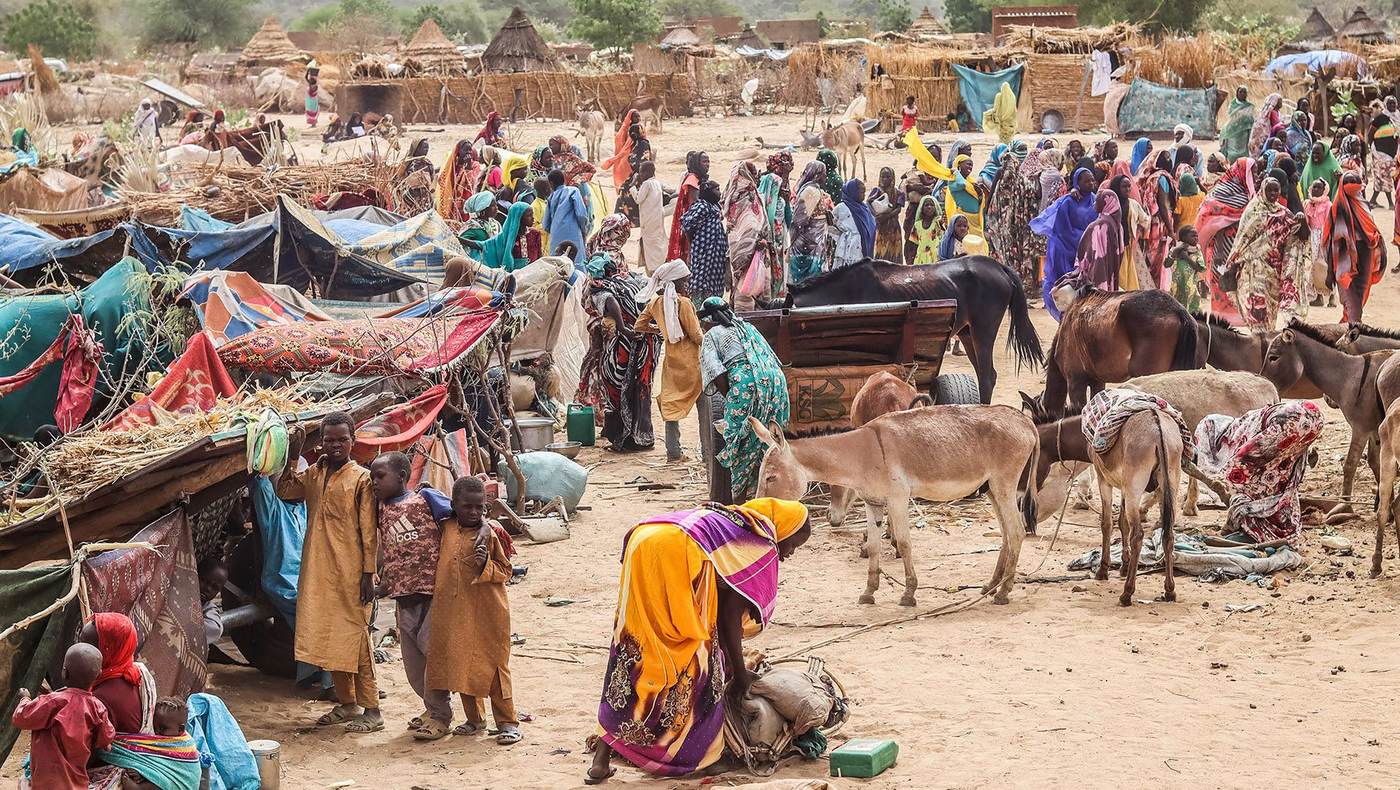
The number of Sudanese people crossing into Chad has risen twenty-fold from recent-month levels, with more than 400 arriving each day during the previous week, the UN refugee agency said. The increase is a border-level measure of worsening conflict: people reported fleeing fighting, bombardment and drone attacks across Darfur, Kordofan and Blue Nile.
The acceleration lands on a response already short of food, shelter, water and health services. Only 18% of a $1.6 billion regional need had been funded, according to the September 25 reporting snapshot. That gap turns a movement of people into a second emergency after they cross: safety from immediate violence does not guarantee a stable place to live.
What the 20-fold increase does—and does not—show
A jump from the recent average to more than 400 daily arrivals signals abrupt deterioration, but one week is not a long-term forecast. At that pace, simple arithmetic would produce roughly 12,000 arrivals over 30 days. That is a projection only if the current rate continued; border flows can rise or fall quickly as routes, fighting and transport change.
The wider scale is already severe. United Nations estimates put displacement linked to Sudan's war as high as 14 million people. Nearly one million refugees have entered Chad since the conflict began, while more than 55,000 arrived during 2026. These figures measure different populations and periods and should not be combined into one total without checking for overlap.
Why eastern Chad is carrying the pressure
Eastern Chad is geographically close to violence in Darfur and has long hosted Sudanese refugees, but many reception areas have limited infrastructure. New arrivals join communities facing their own food-price, water and public-service pressures. The burden is therefore shared unevenly by refugees, humanitarian agencies and Chadian towns whose capacity was constrained before the latest surge.
The immediate winners in a humanitarian response are difficult to describe because even adequate aid restores only a minimum. Better funding would help agencies move families from exposed border locations, reduce ration cuts, expand health care and protect children. Without it, women, children, older people and those arriving with injuries face the highest risk, while host communities can see scarce services stretched further.
Funding shortfalls change migration decisions
UNHCR warned that repeatedly failing to meet basic needs can contribute to onward movement toward Europe. That statement is not a prediction that any particular group will travel, nor does it reduce refugee decisions to aid levels alone. Security, family ties, legal routes, smuggling networks and prospects for work all shape movement.
But the mechanism is credible: when a supposedly safe destination cannot provide enough food, shelter, education or health care, remaining there becomes less viable. Underfunding can therefore shift costs rather than eliminate them, leaving frontline countries to absorb the first impact and encouraging riskier journeys later.
The conflict behind the crossings
Sudan's war between the Sudanese Armed Forces and the Rapid Support Forces has fragmented into multiple fronts and produced competing claims that are often difficult to verify independently. The reports from new arrivals—fighting, bombardment and drone attacks—show how violence beyond one city can converge at a single border.
The displacement story is not separate from battlefield tactics. Drone strikes and shelling can make roads, markets and settlements unsafe far beyond front lines; territorial changes can close one route and open another. Humanitarian planning must therefore respond to sudden spikes rather than assume a steady monthly flow.
What happens next
The first test is whether donors close enough of the 82% funding gap to prevent further cuts to essentials. The second is whether access routes from Sudan remain open and civilians can cross safely. The third is whether fighting in Darfur, Kordofan and Blue Nile produces another sustained rise after this one-week surge.
Even if arrivals fall, the pressure will not disappear: nearly one million refugees in Chad need durable services, and return cannot be assumed while conflict continues. The most honest reading of the latest number is therefore a warning, not a forecast—the border is registering a sharp escalation, while the system receiving people has only a fraction of the resources requested.
Related reporting: the reported RSF drone campaign in North Kordofan · Sudan's dispute with Washington over legitimacy · UN condemnation of attacks in El Fasher
Reporting basis: Fixed September 25, 2026 snapshot. The 12,000-per-30-day figure is a simple projection if the one-week pace continued, not a UNHCR forecast.