Sudan rejects US legitimacy remarks
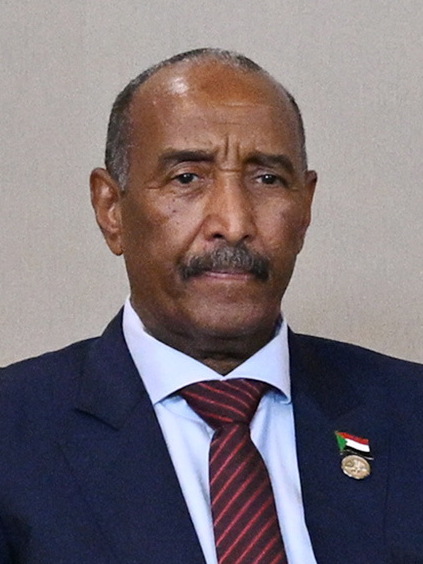
Sudan rejects US legitimacy remarks at a moment when Washington is trying to turn diplomatic access into leverage for a ceasefire. Sudan’s Ministry of Foreign Affairs and International Cooperation said Wednesday, September 23, that it “strongly rejected” a State Department statement declaring that neither the Sudanese Armed Forces, the Rapid Support Forces nor either force’s leader represents legitimate constitutional government. Khartoum said it “upholds its national sovereignty” and called on the United States to engage positively with the government.
The ministry’s central argument was broader than protocol. “Any peace initiative intended to succeed and endure must be grounded in respect for Sudan’s sovereignty, unity, territorial integrity, and legitimate national institutions,” it said, adding that negotiations must address the causes prolonging the conflict—“foremost among them, negative foreign interference.” The response contests Washington’s claim to judge who may legitimately govern while leaving open the possibility of talks conducted on terms Khartoum considers respectful.
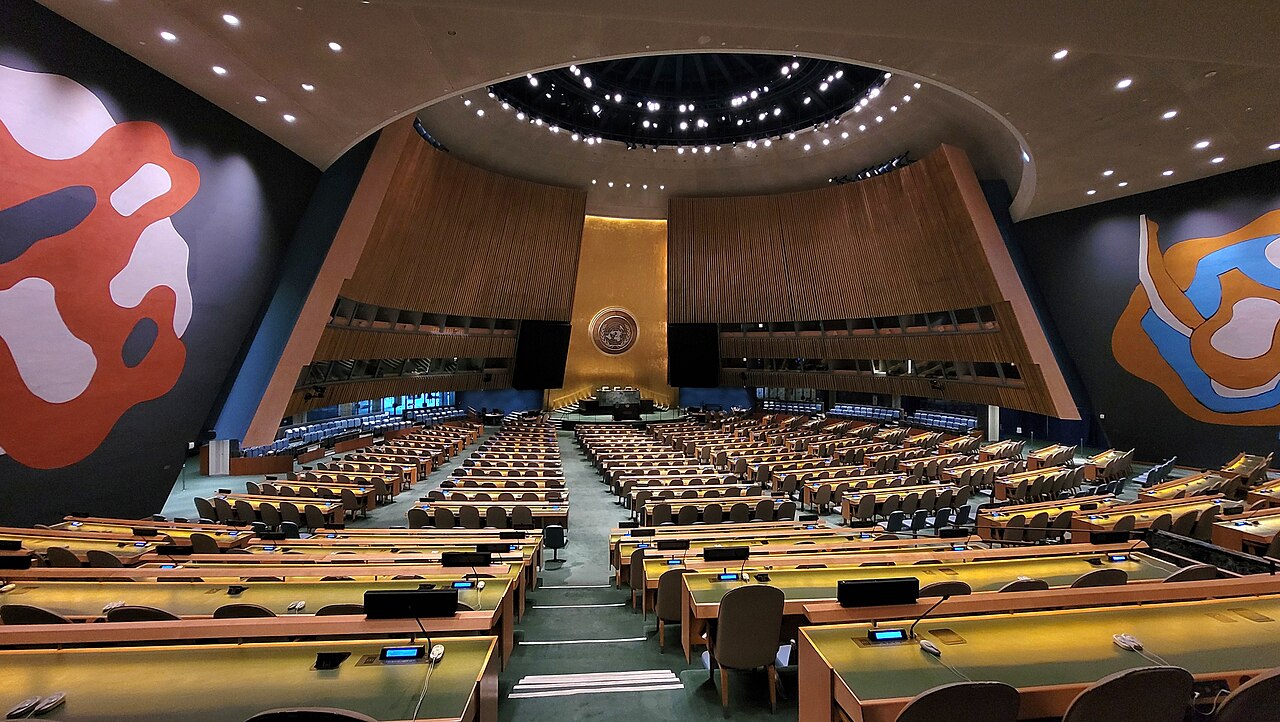
The dispute is connected to a concrete deadline. Reuters reported that the United States had withheld an entry visa for army chief Abdel Fattah al-Burhan before his scheduled address to the U.N. General Assembly on Thursday, September 24. Sources told Reuters that his attendance was contingent on agreeing to a 90-day ceasefire proposed by U.S. senior adviser Massad Boulos. U.N. spokesman Stéphane Dujarric said Secretary-General António Guterres was “deeply concerned.”
Source note: The official statements, visa reporting and ceasefire linkage in this analysis come from Reuters and the IANS wire report. The visa condition was attributed by Reuters to sources; it had not been publicly detailed by the State Department at this reporting cutoff.
Why this matters
This is a confrontation over the architecture of peace, not only over diplomatic language. Washington is separating military control from constitutional legitimacy and arguing that neither Burhan nor RSF commander Mohamed Hamdan Dagalo, known as Hemedti, is entitled to convert battlefield power into permanent rule. Khartoum is answering that a peace process which begins by denying the government’s institutional standing cannot expect that government to cooperate.
Both positions carry a logic and a risk. The U.S. position tries to protect the principle that Sudan’s future government should emerge from a civilian-led constitutional process rather than from whichever armed faction survives. But treating the SAF-led authorities and the RSF as equally illegitimate can obscure differences in territorial control, state institutions and international recognition. Sudan’s sovereignty argument can defend national ownership of negotiations; it can also be used to resist external pressure over civilian protection, humanitarian access and the conduct of the war.
The visa question sharpens the stakes because it transforms a formal statement into immediate leverage. If Burhan’s appearance in New York depends on accepting the Boulos proposal, Washington is using access to the world’s most visible diplomatic forum as a bargaining instrument. That may accelerate a decision, but an agreement reached under public humiliation can be harder to sell to commanders and supporters who must implement it.
How we got here
Sudan’s war began in April 2023 after a power struggle between the SAF and RSF erupted into fighting. The conflict spread from Khartoum into Darfur, Kordofan and other regions, displacing more than 14 million people and producing one of the world’s gravest humanitarian crises. Both forces have been accused of serious abuses; they have disputed or denied various allegations, and independent verification remains difficult in active combat zones.
On Tuesday, State Department spokesman Tommy Pigott said “neither the Sudanese Armed Forces, the Rapid Support Forces paramilitary nor either of their respective leaders represent legitimate, constitutional governance for Sudan.” The formulation placed the two armed camps on the same constitutional plane even though the SAF-led authorities operate Sudanese ministries and maintain the country’s seat in international organizations.
That statement followed an intensification of U.S. diplomacy around a 90-day humanitarian ceasefire. Our earlier analysis of the Trump administration’s Sudan peace plan and its rejection of military rule explains the shift from urging talks to publicly questioning both commanders’ fitness to govern. The new Sudanese response is the first direct institutional pushback to that legitimacy claim.
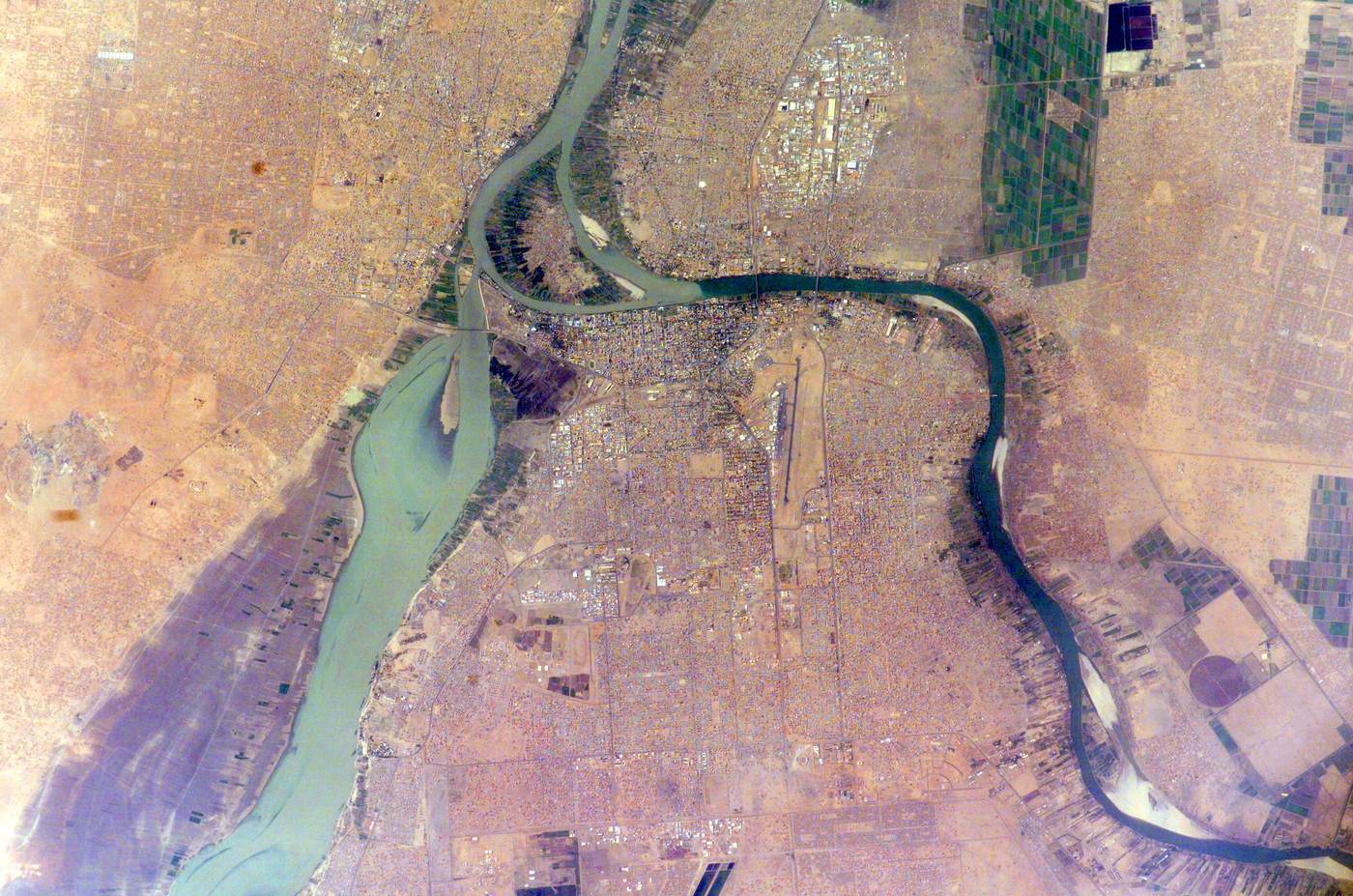
The diplomatic fight is unfolding alongside a fluid battlefield. The SAF has claimed gains across North Kordofan, trying to extend the corridor west from El Obeid toward Darfur, while the RSF retains important positions and the ability to strike far beyond fixed front lines. Our report on the Sudan army’s North Kordofan offensive separates geolocated evidence from broader territorial claims that remain only partly verified.
Secretary of State Marco Rubio described the mediation problem in blunt terms on Wednesday. “We’ve had people agree to things, sign to things, and the commitments are never met,” he said in New York. “Every time it seems like we’re on the verge of making progress, one side or the other will back off because they think they’re winning or they think they could win. And there are external actors.” His remarks identify the core implementation problem: signatures are not the same as orders followed across fragmented forces and supply networks.
The fault lines: who gains, who loses
Sudan’s SAF-led authorities gain a rallying argument. By framing the U.S. statement as an affront to sovereignty, the government can unite constituencies that disagree about Burhan but resist foreign determination of Sudan’s political order. The price is that sovereignty rhetoric may narrow room for a compromise publicly linked to a withheld visa.
Washington gains leverage but risks losing a negotiating channel. The prospect of denying Burhan a U.N. platform creates an immediate incentive to engage with the 90-day proposal. Yet if Khartoum concludes that the mediator has already decided the legitimacy question, U.S. pressure could produce defiance rather than compliance. Mediation requires leverage; it also requires enough trust that each side believes commitments will be applied consistently.
The RSF may benefit from political symmetry without receiving legal recognition. Pigott’s language denies legitimacy to both camps, which prevents the army from presenting itself internationally as the only constitutional actor. But the same statement also denies Hemedti any claim to rule. The RSF can exploit the dispute rhetorically while remaining subject to Washington’s warning that the costs of continued war will rise for all belligerents and their support networks.
Civilian groups face a double exclusion. The U.S. emphasis on neither armed leader governing is meant to preserve a civilian future, but the immediate negotiation is still dominated by commanders, envoys and outside states. Sudanese civilian coalitions gain little if military legitimacy is rejected in principle while civilians remain absent from the mechanism that decides ceasefire terms and political sequencing.
Displaced people and aid-dependent communities carry the downside. Every delay prolongs exposure to violence, hunger, disease and interrupted services. A poorly monitored ceasefire can also fail them: if access routes, civilian protection and violations are not independently tracked, a 90-day pause can become time for rearmament rather than relief.
What the numbers actually mean
- 90 days
- The length of the ceasefire proposal reportedly advanced by Massad Boulos. It is long enough to test humanitarian access and command compliance, but not itself a political settlement.
- 14 million+
- The number of people displaced by the war, according to the reporting cited here. It describes forced movement at extraordinary scale, not a count of people already safely resettled.
- Two armed camps
- The SAF and RSF were both denied a claim to constitutional government in Pigott’s statement. Equal treatment in that sentence does not mean equal capacity, territorial position or responsibility for every alleged violation.
- One U.N. deadline
- Burhan was scheduled to address the General Assembly on Thursday, September 24. The visa decision therefore compresses diplomacy into hours rather than an open-ended negotiation.
The 90-day figure should be read as a test period. A truce of that length could create repeated opportunities to verify whether roads open, aid reaches communities and attacks decline. It could also reveal where command structures are too fragmented to enforce commitments. The decisive measures would be observable conduct—cessation of strikes, access for humanitarian agencies, freedom of civilian movement and consequences for violations—not the calendar alone.
The displacement total is a measure of accumulated human disruption, not a bargaining chip. It spans people displaced inside Sudan and those who have crossed borders, with different legal status and needs. A ceasefire that reduces headline violence but does not restore access to food, water, health care and livelihoods would leave much of that emergency intact.
What happens next: three scenarios
1. A conditional truce opens the door to New York. Khartoum could accept the 90-day framework, allowing the visa to be issued and Burhan to use his address to present acceptance as a sovereign Sudanese decision rather than a concession. The test would come immediately: whether both sides publish matching orders, permit monitoring and open humanitarian routes. A speech and a signature would be only the start.
2. The visa and ceasefire tracks are separated. The United States could grant access after U.N. engagement without securing full acceptance of the Boulos plan, while negotiations continue through envoys. This would reduce the host-country dispute and preserve Burhan’s speaking slot, but Washington would lose some short-term leverage. It could compensate by specifying targeted costs for obstruction rather than leaving “raise the cost” undefined.
3. The standoff hardens and the battlefield decides the tempo. If the visa remains withheld and Khartoum rejects the ceasefire condition, each side may conclude that military gains will improve its later bargaining position. The SAF would press its Kordofan campaign; the RSF could answer through counterattacks, drones or pressure in Darfur. Rubio’s description of parties backing away whenever they think they can win would then become the conflict’s operating logic again.
The immediate indicators are procedural and verifiable: whether a visa is issued; whether Burhan appears in the General Assembly hall; whether Khartoum formally accepts, rejects or proposes changes to the 90-day plan; whether the RSF gives a matching commitment; and whether any monitoring and humanitarian-access mechanism is named. Without those details, claims of a breakthrough should be treated cautiously.
The deeper contest will outlast the U.N. week. Washington is trying to prevent armed power from becoming constitutional legitimacy. Sudan’s authorities are insisting that peace cannot be imposed by treating national institutions as equivalent to a paramilitary force. A durable settlement will have to resolve both problems: it must constrain the belligerents while giving Sudanese civilians a credible route back to legitimate government.
Sources
- Reuters: Sudan rejects U.S. remarks questioning government legitimacy.
- IANS: U.S. says Sudan’s warring leaders cannot govern.
Reporting cutoff: September 23, 2026 at 6:40 p.m. PDT. The reported visa condition is attributed to Reuters sources; no visa issuance or ceasefire acceptance is assumed. Analysis of leverage, beneficiaries and scenarios is Signal Post News synthesis.