World / Kyiv — This Ukraine war Day 1704 briefing tracks a day when drones closed Moscow's airports, a factory strike killed three people in Oryol and a front-line satellite link suddenly sped up again.
Track it live: Ukraine war map · Live Global Wars tracker
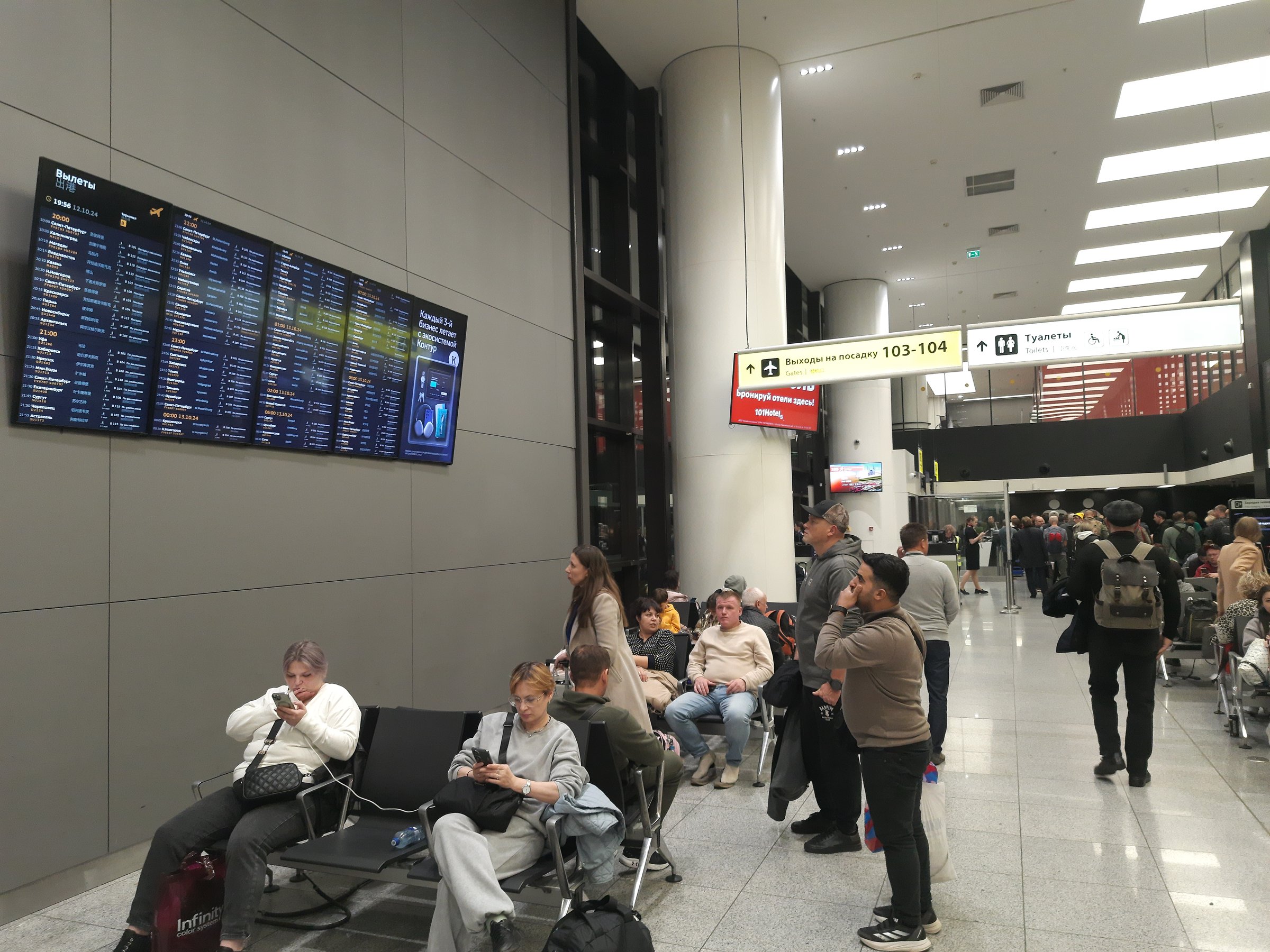
This Ukraine war Day 1704 briefing begins with a contrast that captures where the war now stands. On Friday, October 23, Ukrainian drones reached the Russian capital in sufficient numbers to shut all four of Moscow's airports, while on Saturday, October 24, Ukraine's defence minister said a satellite communications system used by its forces had recovered speeds lost for more than a week. One development showed Ukraine's ability to impose disruption deep inside Russia. The other showed how dependent modern battlefield operations have become on a commercial satellite network, decisions taken far from the front and technology that neither army fully controls.
The full-scale invasion began on February 24, 2022, which was Day 1. October 23 was Day 1703, covered in yesterday's Ukraine war Day 1703 briefing, and October 24 is Day 1704 — a war approaching its fifth calendar year, its effects extending from trenches to airport departure boards hundreds of miles away.
Drones close all four Moscow airports
Reuters reported on October 23 that Ukrainian drones shut Sheremetyevo, Domodedovo, Vnukovo and Zhukovsky, the four airports serving Moscow. Flightradar24 counted 85 cancelled flights and 229 delayed flights at Sheremetyevo alone. Across the Moscow hub, more than 340 flights were delayed or cancelled, according to the figures reported that day. Twenty-five flights were diverted to Pulkovo Airport in St Petersburg and another 13 to Nizhny Novgorod, forcing airlines, crews and passengers into unscheduled journeys far from their intended destination.
Moscow Mayor Sergey Sobyanin said 17 drones were shot down over the capital, while later reports put the number at 21. The difference illustrates a recurring problem in wartime reporting: officials update figures as debris is identified and air-defence units file reports, but independent verification in real time is limited. What was not in dispute was the scale of the disruption. Passengers at Sheremetyevo sheltered inside the airport while restrictions were in force. An all-clear came at about 5 p.m. local time, restrictions were reimposed during the evening and were later lifted again.
For fuller detail, see our separate report on how Ukrainian drone attacks shut Moscow's airports. Airlines cannot simply resume a normal schedule when an airport reopens, because aircraft and crews are in the wrong cities and connecting passengers have missed onward flights. A few hours of closure can therefore produce a full day of cancellations.
The incident also reached the centre of government. The IQ-Quarter tower, which houses Russia's ministries of Digital Development, Economic Development and Industry and Trade, was evacuated during the alert. TASS and emergency services later described the evacuation as a false alarm — but even a false alarm shows how a drone threat can interrupt ordinary administrative work as well as aviation.
A lethal strike in Oryol, and two accounts of its purpose
The same day, Ukraine struck the Proton plant in Oryol. Ukraine's General Staff, cited by the Kyiv Independent on October 23, said the facility produced semiconductor and electronic components for weapons, including missile systems. Governor Andrey Klychkov said three people died in a fire resulting from the strike. Full standalone coverage of the Oryol attack is already published on this site, and this briefing does not repeat that reporting in full.
The two accounts focus on different parts of the same event. Kyiv presents the plant as a node in Russia's weapons supply chain. Russian regional authorities emphasised the human cost of the fire and the deaths. Both points can be considered without accepting either side's wider framing: a factory can be strategically relevant to weapons production, and an attack on it can still kill people and create risks beyond the intended machinery.
Ukraine has increasingly used long-range drones against energy, transport and defence-industrial targets, arguing that Russia's ability to sustain attacks depends on infrastructure well behind the front. Russia has repeatedly struck Ukrainian power and industrial sites and says its operations target military objectives. Each side accuses the other of endangering civilians. The contest is now also over production capacity and the cost of keeping complex weapons supplied.
Starshield speeds climb back above 400 kph
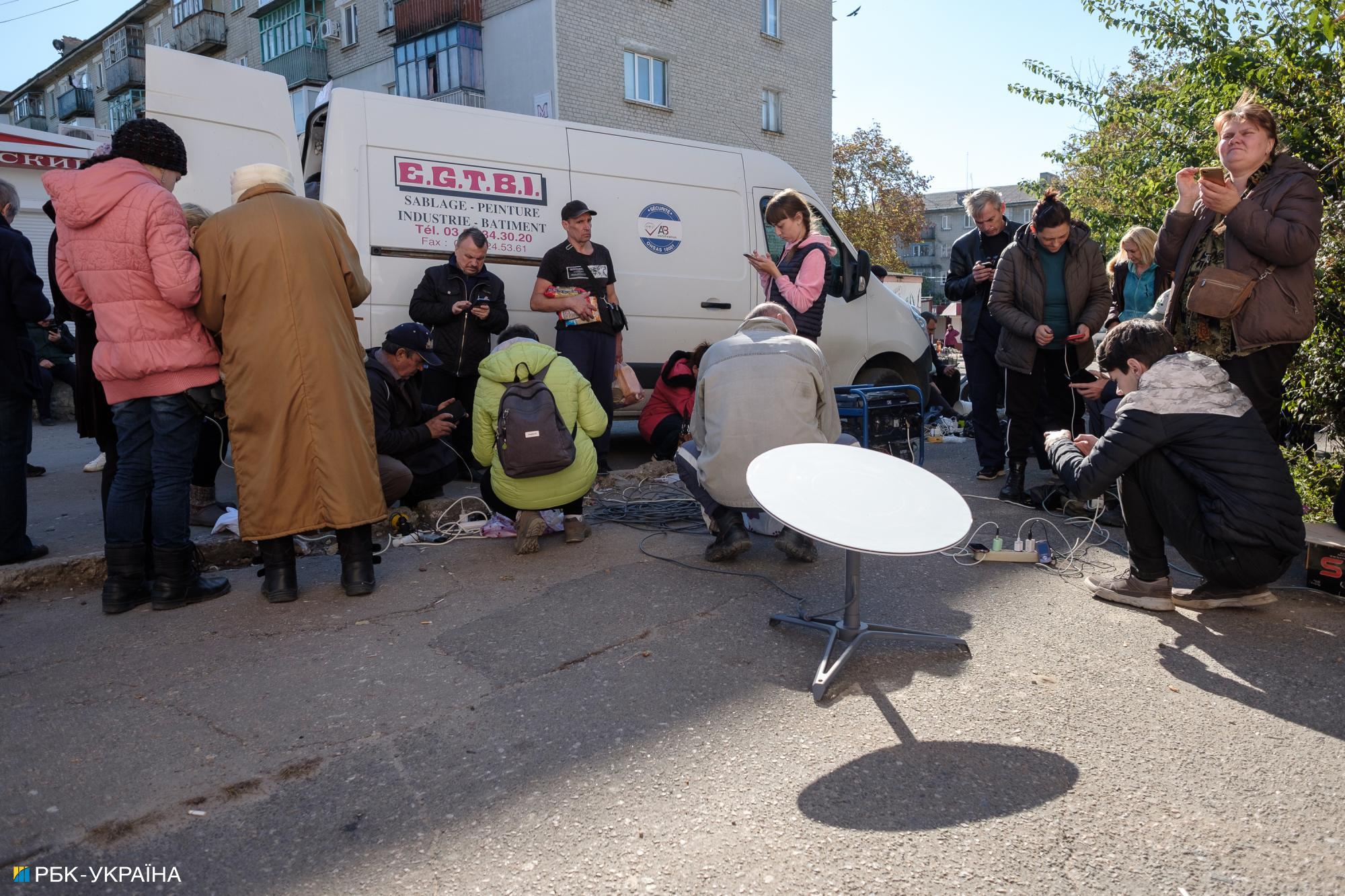
Reuters reported on Saturday, October 24, that Defence Minister Evhenii Khmara said Starlink and Starshield speeds were back above 400 kph after more than a week of restrictions. During the slowdown, speeds had fallen to about 160 kph or less, disrupting drone interception and front-line communications, according to Ukrainian officials quoted by Reuters. The figure is not a household broadband speed. It is a velocity threshold connected to terminals moving at high speed, a capability relevant to drones and other fast-moving systems.
The cause remains publicly unresolved. Neither SpaceX nor its chief executive, Elon Musk, nor the United States government acknowledged responsibility, Reuters reported. Reuters had previously reported that the throttling order came from inside the White House. President Donald Trump said on Friday that he would "get it straightened out" if problems persisted. What is clear from Ukraine's account is the operational effect, and the speed of the recovery once the limit was lifted.
The episode exposes a structural vulnerability. Satellite communications give dispersed units resilient links when cables and towers are damaged. Yet a system supplied by a private company and shaped by another government's decisions can become a single point of political and technical failure. Ukraine gains capability it could not quickly reproduce alone, but not complete control. The broader lesson applies to every modern military: software settings, export rules and corporate terms can now alter battlefield performance as quickly as the movement of a battalion.
Why this matters
Day 1704 matters because three forms of leverage appeared at once. First, drones imposed a visible cost on Russia's capital without requiring Ukraine to hold ground near Moscow. Closing four airports does not decide the war, but it forces air-defence deployments, disrupts business and travel, and reminds residents that the conflict can reach them directly. Second, the Oryol strike targeted the industrial base that sustains precision weapons, a slower form of pressure whose effect may appear in production schedules rather than headlines. Third, the Starshield restoration showed that access to data and communications can be tightened or loosened from outside the country doing the fighting.
Those forms of leverage point in different directions. Ukraine can embarrass and inconvenience Russia, and can damage selected facilities, but its communications still depend on decisions in Washington and at a private provider. Russia retains far larger industrial and manpower resources, but must defend an enormous territory and critical infrastructure spread across many regions. The United States can influence Ukraine's operations not only by supplying or withholding weapons, but also by shaping the digital services those weapons and units use. That makes diplomacy and technology policy part of the battlefield, even when no shot is fired.
Critics of Ukraine's deep strikes argue that attacks on the capital risk escalation and divert resources from the front. Supporters answer that Russia's own long-range campaign made rear-area infrastructure a central theatre long ago. Critics of satellite restrictions warn that sudden changes endanger soldiers who built tactics around the service; defenders of tighter controls argue governments must prevent sensitive technology from being misused. On this episode's public record, no responsible party has offered a complete explanation, so readers should separate the documented slowdown and recovery from claims about motive.
A ceasefire proposal with no agreed start
Diplomacy produced its own uncertainty. A proposed ceasefire around Oleshky was brokered by Melania Trump, according to the White House. Its start timing remains disputed. The White House has pointed to October 29. Russia's Ministry of Defence has described a start from October 27 at 04:00 Moscow time. The Kremlin says the dates are still being worked out. October 29 is therefore not jointly confirmed, and it should not be reported as an agreed start date.
In a ceasefire, timing is substance. Commanders need to know when firing must stop, and observers need a baseline against which to judge violations. If each side works from a different clock, the first incident after one proposed start but before another can be described by one party as a breach and by the other as action before the agreement took effect. Precision is what makes a commitment testable.
What happens next
In the coming days, the tests are practical. Moscow's airlines must clear backlogs, and Russia must decide whether the attack changes air-defence deployments around the capital. Ukraine will watch whether Starshield performance remains above the restored level, and whether officials in Washington or at SpaceX explain the earlier restriction. More detail on the Oryol deaths and damage may follow, though both governments release information selectively.
The Oleshky timetable requires a single, jointly stated start time if it is to carry weight. Until that exists, October 27 and October 29 remain competing positions attributed to different parties, not a settled schedule. Day 1705 will begin with the same underlying equation: Ukraine seeking leverage through reach and technology, Russia relying on scale and endurance, and outside partners holding tools that can change conditions on the ground without being present on it. The airport boards in Moscow and the satellite speeds reported by Kyiv are different measures of the same war, now defined as much by networks and production lines as by lines on a map.