Ukraine drone attack Moscow
War / Ukraine–Russia / Energy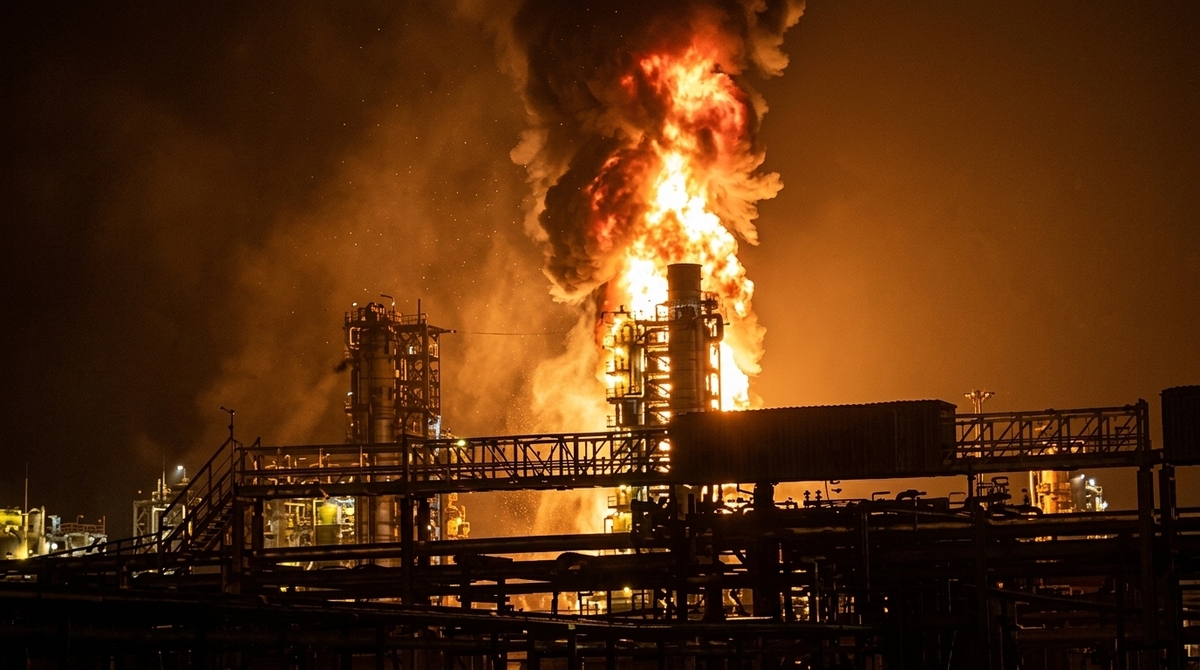
MOSCOW — A Ukraine drone attack on Moscow unfolded for roughly eight and a half hours overnight, forcing all four airports serving the Russian capital to suspend operations while air defenses engaged waves of aircraft approaching the region. Moscow Mayor Sergei Sobyanin said at least 650 drones flew toward the capital and 105 were destroyed on their final approach.
The most consequential claim came from the monitoring channel Exilenova Plus, which reported that drones struck the Volodarsk Linear Production and Dispatch Center near Konstantinovo, about 40 kilometers from central Moscow. Eyewitness video circulated online showing flames and smoke. That footage was consistent with a major industrial fire, but the Kyiv Independent said it could not immediately verify the location or cause. The strike on the oil hub should therefore be treated as a reported event, not an independently confirmed fact.
Russian state media described the operation as the largest assault on the Moscow region in two years. The scale, duration and disruption were clear even as the competing drone totals remained unresolved: airspace closed, hundreds of flights were delayed or canceled, and passengers at Sheremetyevo were instructed to shelter below ground.
What happened overnight
Sobyanin's 650-drone account and the confirmed disruption
Sobyanin's public updates said most incoming drones were intercepted at a distance from Moscow, with 105 destroyed as they approached the capital. Another reported total put the wider wave at 679 aircraft. The two figures may describe different geographic or operational windows, but neither has been independently audited. They should not be combined or treated as a precise measure of launch volume.
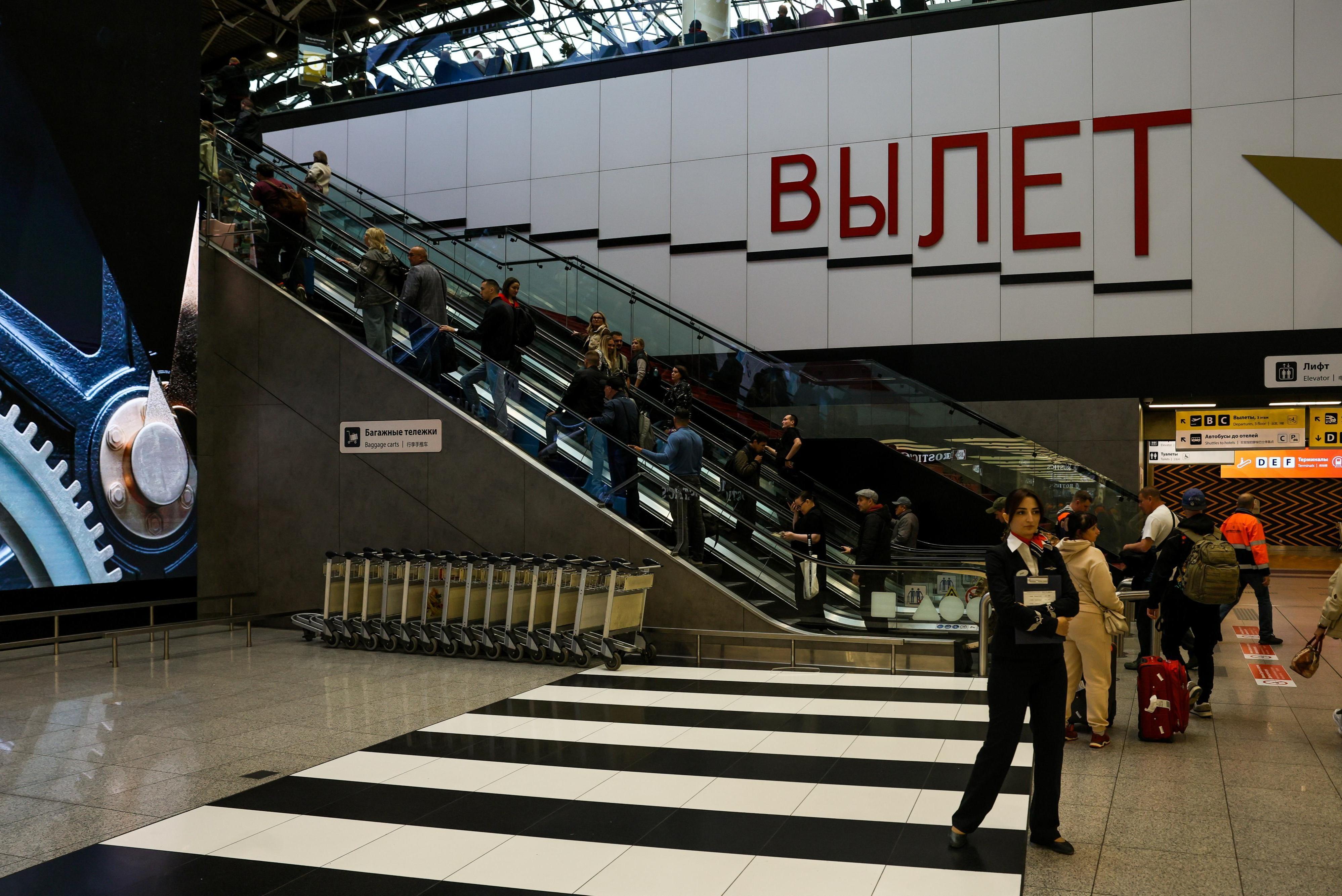
What can be stated with greater confidence is the civilian-aviation effect. Sheremetyevo, Vnukovo, Domodedovo and Zhukovsky all halted flights during the attack. Airport restrictions are a standard Russian response to approaching drones, because both the aircraft and falling interceptor debris can threaten commercial traffic. The shutdowns caused a cascade of delays and cancellations across the network. At Sheremetyevo, passengers were directed toward underground shelter areas.
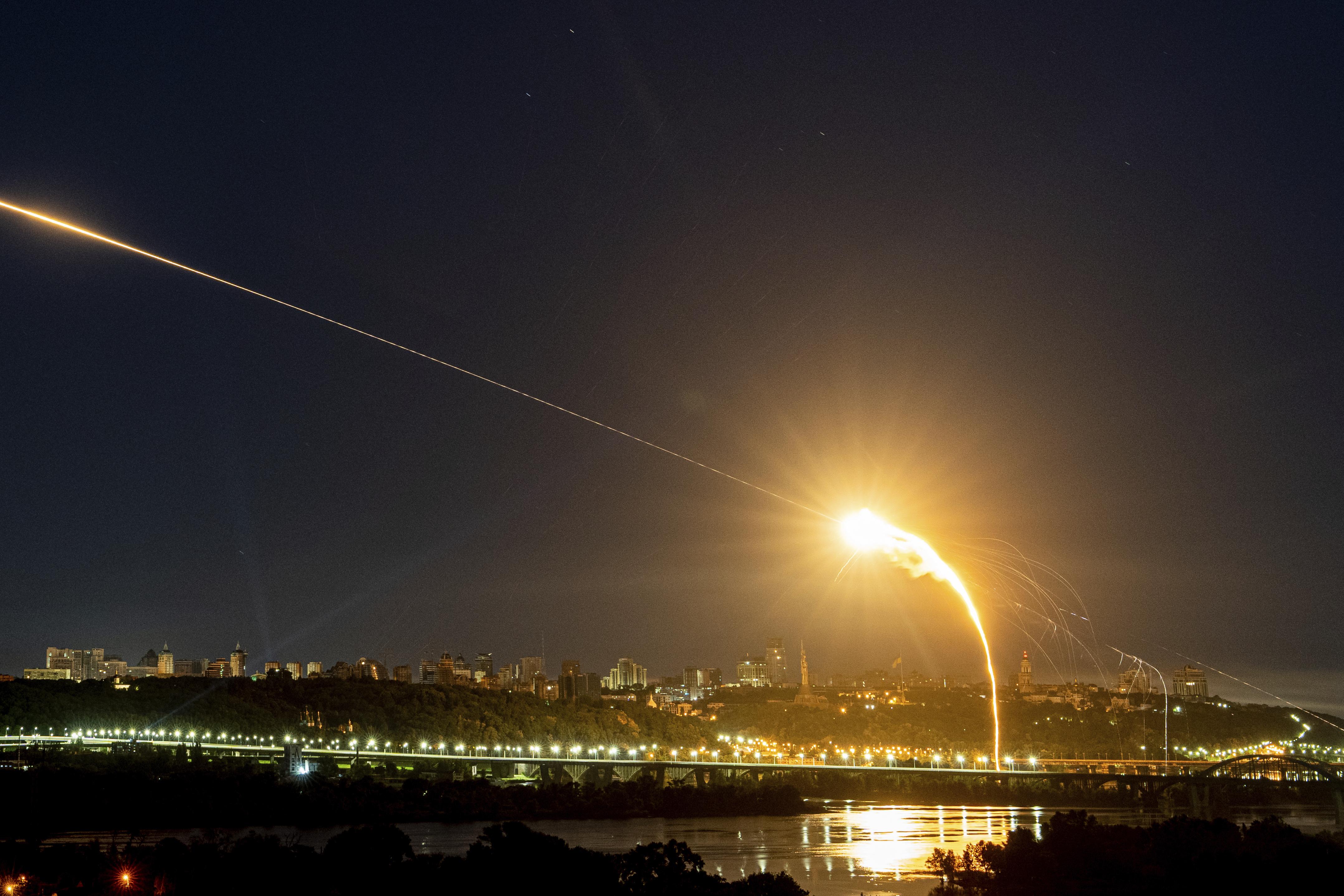
Russia also launched drones at Kyiv late on October 5. Ukrainian officials reported debris in the capital's Pecherskyi district. The timing illustrates the reciprocal character of the long-range air war: each side is attempting to impose costs far behind the front, while describing its own operations as responses to the other's campaign.
The target: why Volodarsk matters
A Volodarsk oil depot strike would reach aviation-fuel logistics
The Volodarsk complex is described in the reporting as the Moscow region's largest petroleum facility, with annual output of roughly 3 million tons. Its importance is not only storage volume. Pipeline links connect the site to Sheremetyevo, Vnukovo and Domodedovo airports, placing it inside the capital's aviation-fuel logistics chain.
If the reported Volodarsk oil depot strike damaged pumps, control systems, loading equipment or power infrastructure, the immediate effect would depend on redundancy and repair time. A dramatic fire does not necessarily translate into a lasting reduction in throughput; industrial networks can reroute flows, draw down local stocks or restore limited operations before permanent repairs are complete. Conversely, relatively small damage to specialized equipment can create a longer bottleneck than the visible flames suggest.
The distinction between a refinery and a dispatch center also matters. Volodarsk moves and manages petroleum products; it is not simply another Russian refinery. A strike there would target distribution capacity close to the capital and its airports, extending Ukraine's energy campaign from production sites toward the network that delivers refined fuel to major users.
Why this matters
The Moscow drone attack October 2026 tests depth, defense and confidence
The operation's strategic significance lies in saturation. A very large formation forces defenders to detect, classify and engage many targets across a wide area. Even when interception rates are high, the attacker may need only a small number of aircraft to reach vulnerable components. The defender must protect the whole network; the attacker can concentrate on a few high-value points.
Moscow's air-defense belt is one of Russia's most protected. Sustaining an attack for eight and a half hours therefore carries a political message alongside any physical damage: the capital's airports, fuel logistics and civilian routines can still be disrupted. For Kyiv, that may demonstrate reach and impose recurring defensive costs. For Moscow, the fact that most drones were reportedly destroyed supports its counterargument that layered defenses prevented a much larger impact.
The humanitarian and legal risks do not disappear because an intended target supports wartime logistics. Drones and interceptors can fall in populated areas, fires can spread, and airport shutdowns affect civilians. The legality of each attack turns on target selection, proportionality and precautions, not on whether one side labels the operation retaliatory.
How we got here
Russian oil refinery attacks became a declared strategy
Ukraine has expanded long-range attacks on Russian oil infrastructure in an effort to reduce fuel output, raise repair costs and pressure the revenue stream supporting Moscow's war. On October 4, Ukraine's Defense Ministry claimed that 51% of Russian refining capacity had been disabled. That figure has not been independently verified and likely measures nominal capacity affected at some point rather than a continuously offline share. Signal Post News examined the limits of that claim in our analysis of Ukraine's 51% refinery-capacity assessment.
At an October 3 briefing, President Volodymyr Zelenskyy said Kyiv would intensify energy strikes in response to Russian attacks on Ukrainian infrastructure. “We have to respond in any way,” he said. “First of all, oil refiners: what gives money to them for this war.” Our earlier report on Zelenskyy's refinery-strike doctrine details the strategic and legal argument.
President Donald Trump, meanwhile, had urged Kyiv to curb strikes on Russian oil installations, arguing that refinery outages were contributing to higher U.S. diesel prices before the November elections. That pressure exposed a real policy conflict: Washington wants Ukraine to retain leverage against Russia, but it also wants to limit an energy shock that reaches American consumers.
The United States has proposed renewed talks with Russia by the end of October. A deeper strike campaign can increase Kyiv's bargaining leverage, but it can also harden Moscow's conditions or prompt new retaliation before negotiations begin. The military and diplomatic clocks are now running together.
Who gains, who loses
Ukraine's potential gains
Kyiv may gain leverage if repeated strikes force Russia to disperse air defenses, spend more on interceptors, slow fuel distribution or divert repair crews. The operation also demonstrates domestic long-range capability at a time when restrictions on some Western weapons still shape target choices.
Russia's costs—and Moscow's counterclaim
Russia bears direct security and economic costs from airport closures, fuel-network repairs and the need to defend a vast approach corridor. Moscow can still argue that the interception figures show the capital remained protected and that the attack chiefly disrupted civilians. Without independently verified damage at Volodarsk, claims of a decisive strategic blow would be premature.
Civilians, airlines and fuel markets
Passengers and airlines lose immediately through shelter orders, missed connections and aircraft repositioning. Russian consumers could face pressure if distribution damage accumulates. Buyers outside Russia can also be affected if refinery outages tighten diesel supply. Critics of Kyiv's campaign say those spillovers weaken allied support and increase escalation risks; supporters argue that Russia's war economy cannot be separated from the energy system that finances and supplies it.
What the numbers really say
650, 679 and 105 describe different claims
The headline figure of at least 650 drones comes from Sobyanin. A separate 679 figure appeared in reporting on the wider assault. The 105 count refers specifically to drones said to have been downed while approaching Moscow, not the total number intercepted across all regions. These numbers cannot establish how many were launched, how many were decoys, or how many reached intended targets.
Sobyanin also said that roughly 10,000 drones flew toward the Moscow region between September 1 and October 5, with 862 destroyed while approaching the capital. That broader total suggests a sustained campaign, but the large gap between “toward the region” and “approaching the capital” shows why categories matter. Geography, tracking thresholds and official definitions can all change the count.
Saturation tactics versus the September 20 strike
The September 20 operation was previously described by Ukraine as its largest Moscow-directed drone attack. Our account of that earlier Moscow drone operation documented the same verification problem: launch claims, regional interception totals and damage reports were not directly comparable. The latest wave appears to have lasted longer and caused broader aviation disruption, but available public evidence does not yet support a precise operational success rate.
Saturation is not simply a contest of totals. Attackers may mix routes, altitudes and decoys to expose radar coverage and exhaust interceptors. Defenders may engage targets far from the capital, jam navigation or close airspace before a drone reaches the final ring. A single confirmed hit can matter strategically; a triple-digit interception count can matter defensively. Both can be true in the same night.
What happens next
Russian energy retaliation
Moscow could answer with larger attacks on Ukrainian electricity, heating, fuel or transport infrastructure. Russia has repeatedly described such operations as retaliation, while Ukraine says they are part of a longer campaign against civilian resilience. The immediate indicators will be launch volume, target selection and whether attacks concentrate on systems essential for winter.
A winter energy war
Both governments now frame energy infrastructure as central to military endurance. Ukraine is trying to degrade Russian refining and distribution; Russia is trying to weaken Ukraine's grid and urban services. Repeated damage on either side can compound faster than repairs, making redundancy, spare parts and air-defense ammunition as important as the number of individual strikes.
Talks under pressure
If end-of-October talks proceed, Washington may press for an energy ceasefire or limits on deep strikes. Kyiv will want any restraint to cover Russian attacks on its power system, not just Ukrainian attacks on oil. Moscow may demand a halt to operations inside Russia while reserving what it calls retaliatory rights. The Volodarsk episode, if the damage is confirmed, gives every side a new bargaining fact—and a new reason to mistrust partial deals.
The next evidence to watch is practical rather than rhetorical: independently geolocated imagery from the Volodarsk site, operating notices from Moscow's airports, verified repair activity, and any change in fuel movements. Until then, the strongest conclusion is limited but significant: Ukraine mounted a sustained, large-scale assault that disrupted the Russian capital's aviation system, while the reported hit on its most important regional oil hub remains unconfirmed.
Sources and reporting notes
- EA WorldView: Kyiv's mass attack across the Moscow region
- Europe Says / Kyiv Independent report aggregation on the Moscow-region attack
- The U.S. Sun: reporting on the drone wave, oil hub and airport disruption
- Zamin.uz: report on a drone interception in the Moscow region
Reporting note: Drone totals, interception claims and damage reports are attributed to the officials and outlets that published them. The reported Volodarsk strike and fire had not been independently confirmed at publication. Analysis of logistics, saturation tactics and possible next steps is Signal Post News assessment, not a prediction.