Trump denies Starlink Ukraine cut: President Donald Trump said on Friday that he did not order a slowdown of Ukraine's Starshield satellite service, did not believe Elon Musk was responsible either, and questioned whether the service had been slowed at all.
Trump Denies the Starlink Cut: 'I Didn't Do That'
Track it live: Ukraine war map and live tracker · Live Global Trackers — wars
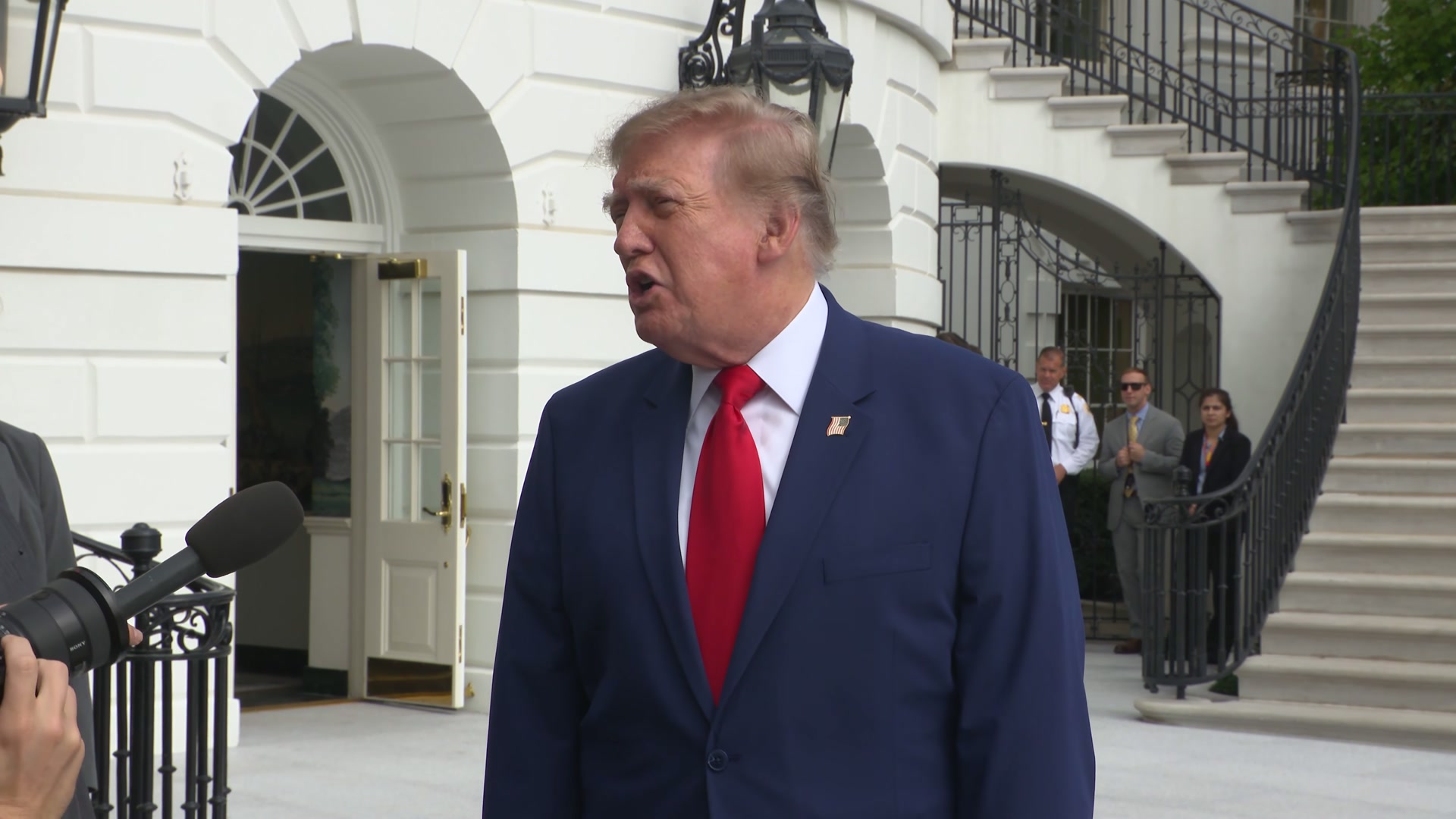
WASHINGTON — President Donald Trump denied on Friday that he ordered Ukraine's access to Starshield — the military version of SpaceX's Starlink satellite system — to be slowed this week, telling reporters he did not think the service had been slowed at all and that he had only learned of the reported disruption from the news media. Asked about the reports as he left the White House on Friday afternoon for a campaign trip to Georgia, Trump said he had checked that morning and understood the system to be functioning. Reuters reported that he added that he did not think either he or Elon Musk was responsible for Ukraine losing Starlink access, that any limit on the Starshield system was not imposed by the United States, and that he has a good relationship with Ukrainian President Volodymyr Zelenskyy.
The remarks are the president's first on-the-record response to a Reuters report on Thursday evening, sourced to two U.S. officials and a Western official, that the White House had ordered the slowdown. A congressional source separately confirmed that account to the New York Post, while an administration official told the Post the White House had given no such instruction and attributed the move to what the official described as Pentagon freelancing. A senior U.S. official had already denied on Thursday that Trump personally requested any restriction — a denial that, notably, did not rule out an order from someone else inside the administration. Friday's statement went further: the president denied the premise itself.
What happened this week, day by day
The disruption surfaced on Tuesday, in the middle of an already open rupture between Washington and Kyiv. Ukrainian officials said access to Starshield — the encrypted, government-controlled offshoot of Starlink that Ukraine uses for drone operations, artillery coordination, logistics and missile warning — was abruptly degraded, at a moment when Russia was launching some of its heaviest drone attacks of the autumn. On Wednesday, Musk pointed away from SpaceX, noting that Starshield is owned and controlled by the U.S. government and that limits on its use are set by the Pentagon and, ultimately, the president. By Thursday, Ukrainian diplomats in Washington said speeds were improving and they hoped service would return to its previous level, and in Brussels on Friday Zelenskyy confirmed that access was being restored. What has never been supplied, by anyone, is a name: no official in Washington, Kyiv or at SpaceX has publicly claimed the decision to restrict the service, explained its purpose, or explained its reversal.
A denial that sits inside a larger fight
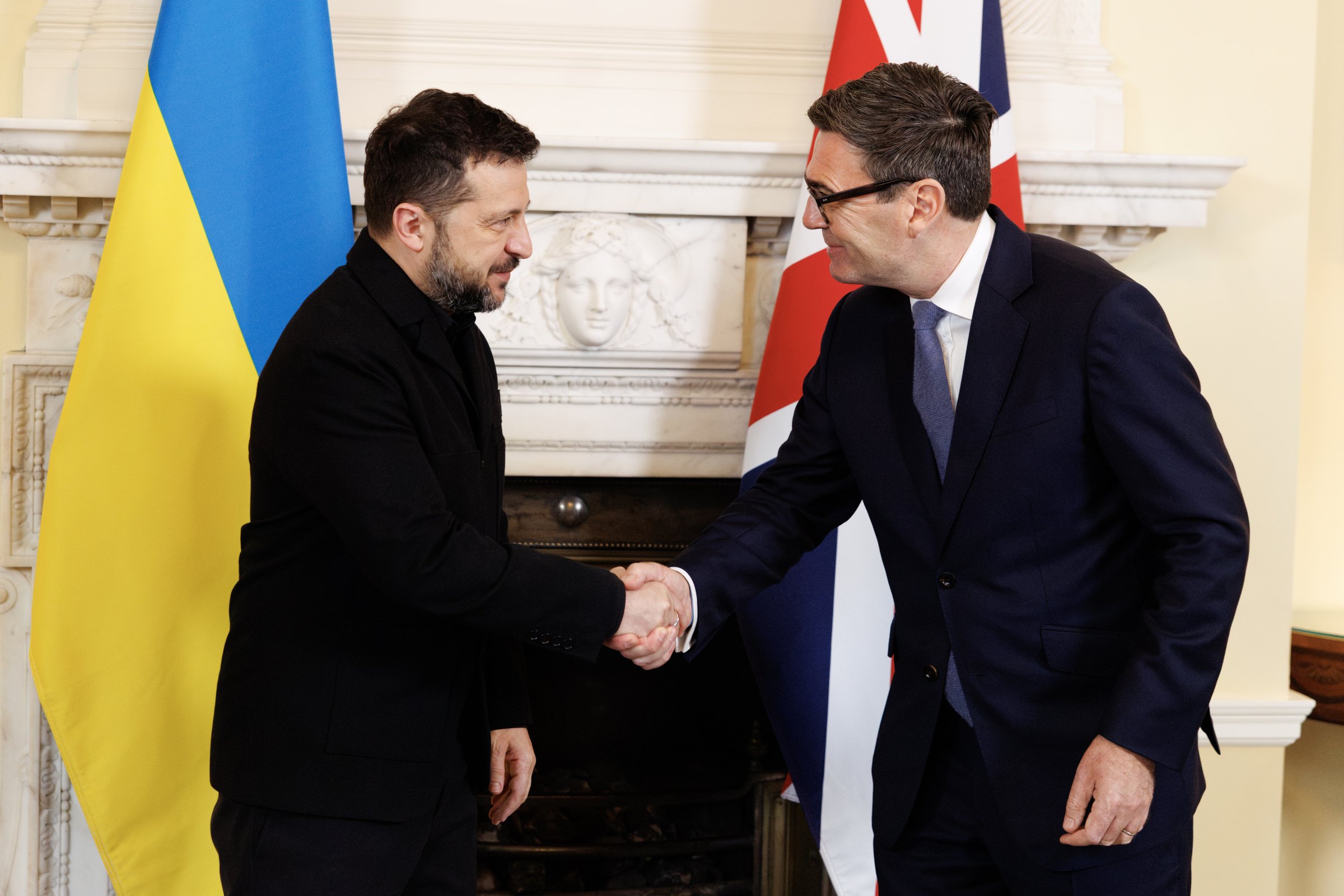
The Starshield episode cannot be separated from the argument that produced it. Last Friday the Trump administration waived sanctions to allow purchases of Russian diesel, a move the White House presented as a way to bring down fuel prices ahead of next month's midterm elections. Zelenskyy called the move weak and a gift to Moscow, resumed Ukrainian strikes on Russian oil refineries after a three-day pause, and said the energy ceasefire Trump had announced was over because Russia had not honoured it. Trump responded by calling the renewed refinery strikes a disgrace, saying they push world oil prices higher, and telling Newsmax on Thursday that he finds Zelenskyy more difficult to deal with than Russian President Vladimir Putin. Against that timeline, Friday's insistence that he has a good relationship with Zelenskyy — delivered hours after European leaders publicly rallied around the Ukrainian president in Brussels — reads less like a description of the week than an attempt to close it down.
Both explanations of the slowdown remain on the record, and they cannot both be right. If officials who spoke to Reuters were accurate, an instruction affecting an ally's battlefield communications originated inside the White House at the height of a policy dispute with that ally, and the president either did not know about it or is denying knowledge of it. If the president and the officials denying his involvement are accurate, then either a consequential restriction was imposed somewhere in the Pentagon without White House direction — the freelancing theory — or a disruption with another cause entirely was widely misread, in Kyiv and in Washington, as a deliberate American squeeze. Each version carries its own problem, and the administration has so far declined to say which one it believes.
Why this matters
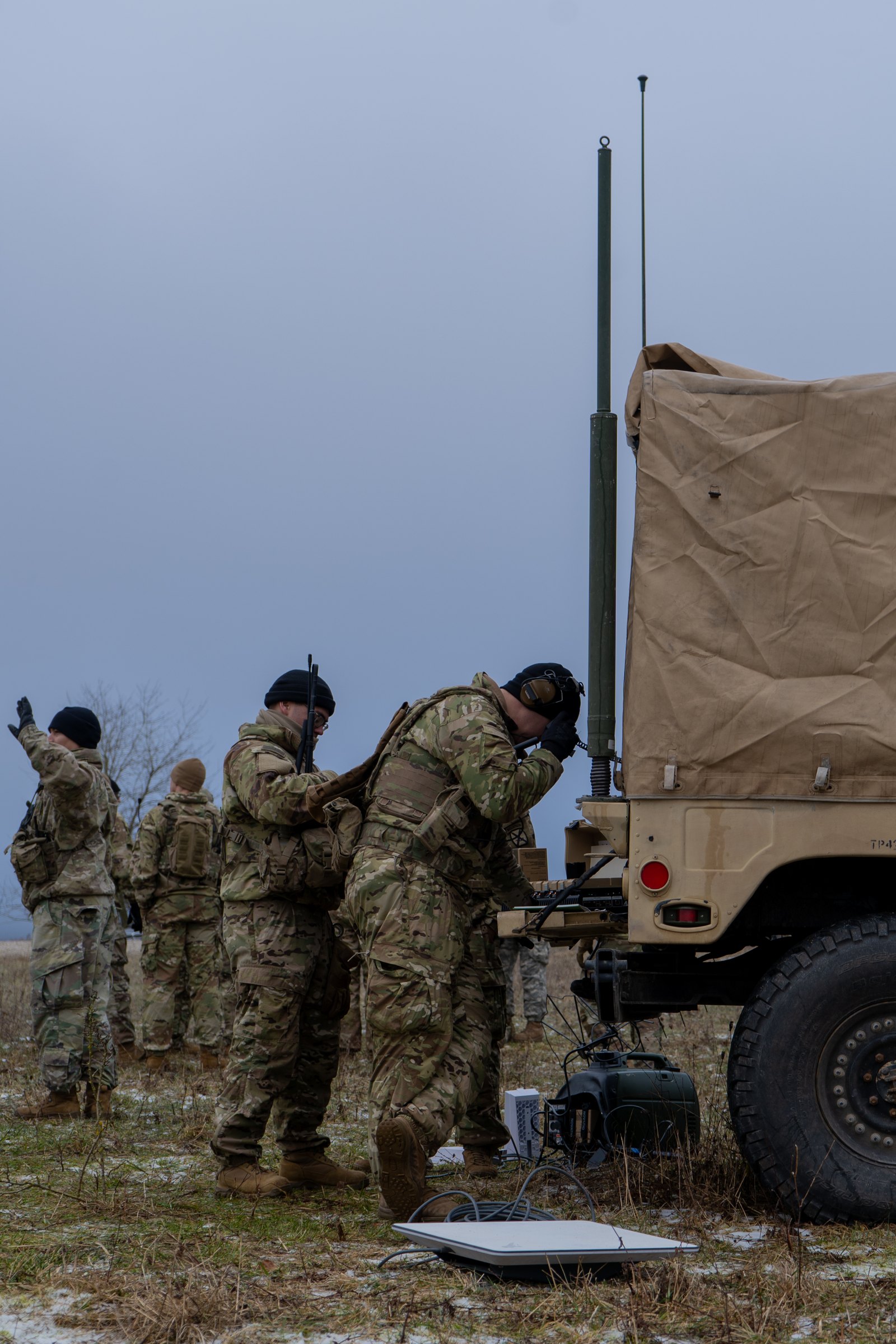
Starshield is not a commercial convenience for Ukraine; it is infrastructure. Ukrainian units use the network to fly and intercept drones, pass targeting data and receive warning of incoming strikes, which is why a slowdown measured in days still landed during one of the heaviest Russian drone barrages of the season and why Kyiv treated it as a strategic event rather than a technical fault. The deeper issue the denial exposes is accountability for a new kind of leverage. A satellite link can be throttled quietly, deniably and reversibly, in a way a cancelled arms shipment cannot — there is no announcement, no congressional notification fight, no signature. When service was restored, there was no announcement either. For European governments that have helped pay for Ukraine's satellite access and were in Brussels on Friday being asked for tens of billions more in support for Kyiv, the unanswered question of who touched the switch — and whether it could be touched again during the next dispute — is now part of their own planning, whether Washington answers it or not.
Who gains, who loses, what critics say
Supporters of the president's approach argue that pressure on Kyiv is the point: that Ukraine's refinery strikes raise the fuel prices American voters feel, that Washington is entitled to use every lever it funds, and that a short, reversible disruption that ends with service restored and talks continuing is leverage working as intended. Critics — including European officials who spoke in Brussels and members of Congress who confirmed the Reuters account — argue the opposite: that restricting an ally's defences during Russian attacks, then denying it, damages American credibility more than any single shipment dispute could, and hands Moscow evidence that U.S. support can flicker without warning. Ukrainian officials, notably, have mostly confined themselves to the practical point: service is back, discussions about why it went away are continuing, and the winter — with Russian strikes on energy infrastructure intensifying — is coming either way.
What happens next
Three things will test Friday's denial. First, whether the White House answers the narrower question it was asked after the Reuters report — not whether the president ordered the slowdown, but whether anyone in his administration did. Second, whether Congress, where at least one source has already corroborated the White House-order account, pursues the Pentagon-freelancing claim or lets it drop. Third, whether Starshield service holds steady through the next round of the refinery argument, which has not ended: Zelenskyy left Brussels with European backing and no commitment to stop striking Russian energy targets, and Trump left for Georgia with fuel prices still at the centre of his midterm case. If the link stays up while the argument continues, Friday may be remembered as the end of the episode. If it flickers again, the denial will be the first document everyone reaches for.
Related coverage: Starlink disruptions at the front lines as Zelenskyy took the fight to Brussels · White House ordered Starshield limit, sources say · Trump calls Ukraine's refinery strikes a disgrace
Sources
- Reuters, October 16, 2026 — Trump says neither he nor Musk was responsible for Ukraine losing Starlink access; any Starshield limit was not imposed by the United States; Trump says he has a good relationship with Zelenskyy.
- Reuters, October 15–16, 2026 — Officials say the White House ordered a slowdown of Ukraine's Starshield service.
- New York Post, October 16, 2026 — Trump's South Lawn remarks in detail; congressional source confirmation; administration official attributing the move to Pentagon freelancing.
- CNN, October 16, 2026 — Zelenskyy in Brussels praises European support as relations with Trump deteriorate.
- The Times, October 16, 2026 — Zelenskyy confirms Starshield access was being restored; European leaders rally around Ukraine in Brussels.