War / Ukraine — The Kramatorsk Sloviansk evacuation children order became total on Thursday, October 22: Donetsk governor Vadym Filashkin expanded the mandatory evacuation zone for families with children to every settlement in both communities, the largest cities in the Donetsk region still under Ukrainian control.
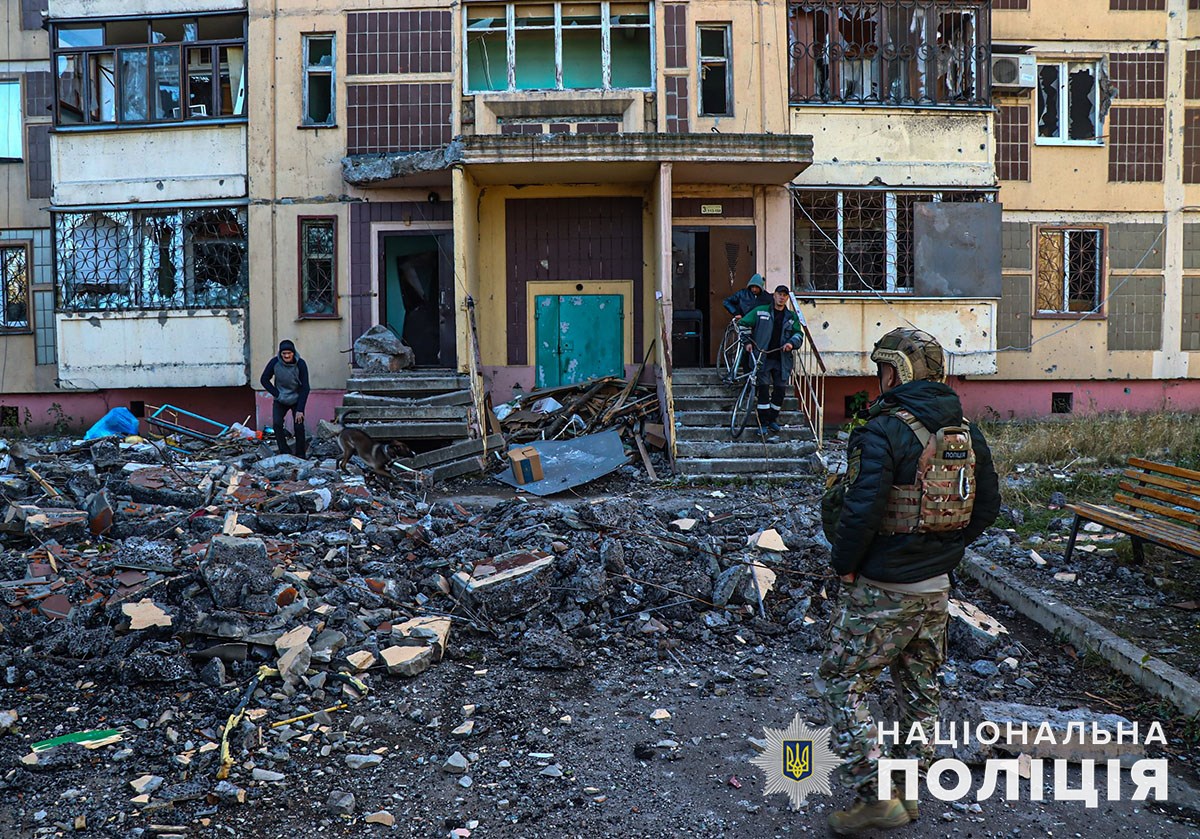
The Kramatorsk Sloviansk evacuation children order now covers all settlements of the Kramatorsk and Sloviansk communities, Donetsk regional governor Vadym Filashkin announced on Telegram on Thursday, October 22. "We are expanding the mandatory evacuation zone for families with children — it now covers all settlements of the Kramatorsk and Sloviansk communities," Filashkin said, in remarks reported by Kyiv24 and by NewsCentral TV. "The Russians attack Kramatorsk and Sloviansk every day, hitting residential neighbourhoods, civilian transport, and places where people gather. Staying there with children is an unjustified risk." Specialized National Police and State Emergency Service (DSNS) units are carrying out the evacuation, and families arriving at transit points are being helped to relocate to safer regions of Ukraine, the Donetsk Regional Military Administration said.
Track it live: Ukraine war map — live front lines and strikes · Live wars tracker
What changed on Thursday
Thursday's announcement is an expansion, not a first order. In August, Donetsk authorities imposed mandatory evacuation of children from the most dangerous areas of Kramatorsk, including the villages of Krasnohorivka and Bilenke in the Kramatorsk community, Kyiv24 reported. Parts of both cities were already under evacuation orders earlier in October, NewsCentral TV reported. What is new is the removal of the remaining geography: there is no longer a part of either community where a family with children is outside the mandatory zone.
The numbers still inside that zone are not small. Ukraine's Suspilne broadcaster reported earlier this month that hundreds of children remained in both cities as of mid-October, citing a regional official — a figure reported by NewsCentral TV and not independently updated since. Kramatorsk had a pre-war population of about 150,000 and has served as a key supply and administrative hub for the Ukrainian military in the east. Neither report published a deadline for compliance, a count of families who left on Thursday, or a breakdown of how many children remain in each city; those figures will matter, and they are not yet available.

Why this matters
Evacuation orders are one of the most honest signals in this war, because they are costly to issue and impossible to walk back quietly. A mandatory child evacuation covering two entire urban communities tells residents, soldiers and negotiators the same thing at once: the authorities responsible for protecting these cities no longer believe they can keep children safe anywhere inside them. That is a different statement from a warning about a single district. It converts Kramatorsk and Sloviansk, in official terms, from damaged frontline cities where civilian life continues under risk into places the state is actively emptying of their most vulnerable residents.
The timing sharpens the signal. The expansion was announced on the same day Russia launched one of its heaviest overnight barrages of the war on Kyiv — 21 ballistic missiles and hundreds of drones, hours after Moscow agreed in principle to resume U.S.-brokered peace talks (see our coverage of the Kyiv strikes and the resumption of peace talks). Donetsk is the territory at the centre of those talks: Russia claims the region as its own and has threatened to seize it by force if Ukraine does not surrender it through negotiations, NewsCentral TV reported. A Ukrainian order emptying the region's two largest remaining cities of children therefore lands in the middle of a diplomatic argument about who will govern Donetsk — and it underlines that, whatever is said at the table, the military pressure on the ground is still rising.
The fortress belt, and what October has done to it
Kramatorsk and Sloviansk form the northern anchor of what Ukrainian commanders call the fortress belt — the chain of defended cities in Donetsk region that Kyiv is fighting to retain as Russian forces advance in the east. NewsCentral TV reported that Ukrainian media put Russian forces within about 10 kilometres (six miles) of the cities' outskirts; that distance is a media report, not an official Ukrainian military figure, and Signal Post News has not independently verified it. What is documented is the strike tempo Filashkin cited. Russian attacks on the two cities have killed dozens of people since early October, NewsCentral TV reported — a toll consistent with incidents this newsroom has covered individually, including the Kramatorsk bus stop bombing that killed at least 30 people on October 8 and the October 20 strikes that killed four people in Kramatorsk, three of them heating-company workers checking the network before winter.
Read together, those incidents explain the logic of Thursday's order better than any map line. The bus stop strike hit civilian transport; the heating-workers strike hit the crews who keep a winter city habitable; Filashkin's own list on Thursday — residential neighbourhoods, civilian transport, places where people gather — is a description of ordinary urban life, not of a front line. When the targets a governor names are buses, heating networks and gathering places, the remaining policy question is not whether children are at risk but whether the state will keep asking families to carry that risk. On Thursday, Donetsk's answer changed.
Who benefits, who loses, what critics say
What each side says
Ukrainian officials frame the expansion as protection, full stop: Filashkin urged parents not to put their children in danger and to evacuate as soon as possible. Russia had not commented on the evacuation order itself in the reporting available on Thursday. Russia's standing position is that it claims Donetsk as Russian territory, that its strikes target military and military-linked infrastructure, and that it denies intentionally targeting civilians; Moscow has also said it will take the region by force if Kyiv refuses to cede it in a settlement. Those positions cannot both describe the October record in Kramatorsk — guided bombs on a bus stop and on heating crews are documented facts, while the intent behind them remains contested — and this article keeps that distinction: the strikes and the casualties are established; each side's explanation of them is attributed.
The costs run in both directions
For families, evacuation is safety bought with everything else: homes, schools, work, and the possibility that "temporary" becomes permanent, as it has for earlier waves of Donetsk evacuees since 2022. For Ukraine's military, a city emptied of children is easier to defend and simpler to supply — but it is also a visible admission that feeds the opposing narrative that the fortress belt is becoming untenable, a narrative Moscow uses in the negotiations now restarting. For Russia, each expansion of the evacuation zone is evidence its pressure is working; it is also a reminder that the population it claims to be liberating is being ordered out of its path by its own government, at Ukrainian police — not Russian — direction. Critics of mandatory evacuations, in Ukraine and elsewhere, raise a consistent point that applies here: an order is only as real as the housing, transport and money waiting at the transit point, and Thursday's announcement, as reported, described help at transit points without publishing capacity figures. Whether families actually leave — and how fast — will be the first test of the order.
What happens next
Three things will show whether Thursday's expansion is a precaution or a prelude. First, compliance: updated counts of children remaining in the two communities, against Suspilne's mid-October figure of hundreds, will reveal whether families are moving or staying despite the mandate. Second, the strike record: if daily attacks on the two cities continue at October's pace after the zone emptied of children, the argument that they serve a military purpose becomes harder to sustain in public; if they slacken, Moscow will say the cities were the shield. Third, the talks: with trilateral negotiations pencilled in for after November 10 and Donetsk's status at their centre, the sight of Ukraine evacuating its own largest Donetsk cities will be used by every delegation in the room — as proof of Russian pressure, as proof of Ukrainian weakness, or as the human backdrop against which a territorial bargain would be struck. The families boarding police and DSNS transport this week are not waiting for that argument to finish. That, in the end, is what a mandatory evacuation means: the diplomacy is still talking about these cities in the future tense, and the people who live in them are already leaving.
Sources
Kyiv24, October 22, 2026 — Donetsk Regional Military Administration / Governor Vadym Filashkin announcement expanding the mandatory evacuation of families with children to all settlements of the Kramatorsk and Sloviansk communities; police and DSNS role; August partial order background. Read the Kyiv24 report
NewsCentral TV (Al Jazeera-credited reporting), October 22, 2026 — Filashkin Telegram announcement and quotes; the two cities as the largest in Donetsk still under Ukrainian control; dozens killed in Russian attacks since early October; Suspilne mid-October count of hundreds of children remaining; Kramatorsk pre-war population and fortress-belt context; Russia's claim to Donetsk and threat to seize it by force. Read the NewsCentral TV report