War · Ukraine · Energy
One coordinated wave, three regions, three different kinds of target: a refinery city in the Urals where one person was killed, a pipeline pumping station in Tatarstan hit for the second time in four days, and an oil products plant in Rostov region attacked for more than three hours. Russia says it downed 192 drones overnight — and fires still burned in all three regions.
Track it live: Ukraine war map — live tracker
PERM / ALMETYEVSK / NOVOSHAKHTINSK, November 23, 2026 — Ukrainian drones struck oil infrastructure in three Russian regions overnight in one of the broadest single-night waves of Kyiv’s long-range campaign, according to Reuters, The Moscow Times, France 24’s live coverage with AFP, and Sweden Herald reporting with TT. In Perm region, Governor Dmitry Makhonin said several industrial facilities were damaged and one person was killed and two injured. In Tatarstan, the Kaleykino oil pumping station — a key node feeding the Druzhba pipeline — was hit again and burning, four days after a previous strike. In Rostov region, the Novoshakhtinsk oil products plant came under an attack that lasted more than three hours. Russia’s Defence Ministry said air defences downed 192 Ukrainian drones overnight across Russian regions and Crimea — a claim that sits alongside confirmed fires in three widely separated regions.
What happened in Perm
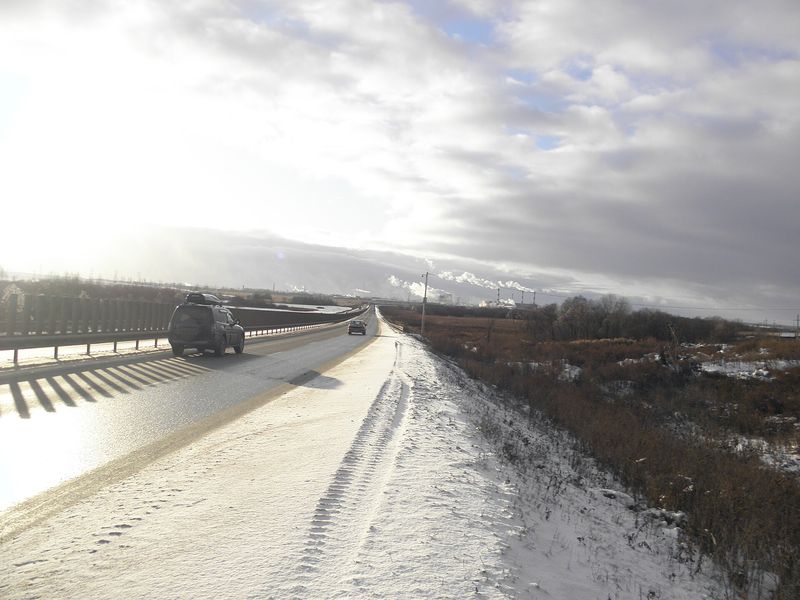
The deadliest of the night’s strikes was also the deepest. Perm region lies roughly 1,700 km (1,050 miles) from Ukrainian-held territory, in the foothills of the Urals, and hosts an oil refinery that has been repeatedly targeted during the war, Reuters reported. Governor Dmitry Makhonin said on Telegram that several industrial facilities were damaged in the overnight attack and that one person was killed and two injured. Reports citing the governor said 56 Ukrainian drones were downed over Perm Krai.
What Makhonin did not do is as important as what he said: he did not name the facilities that were damaged. The identification of the site as Lukoil’s Permnefteorgsintez refinery — one of Russia’s largest, with capacity of more than 13 million tonnes a year — comes from Astra, the exiled Russian outlet, whose analysis of eyewitness footage located fires in the plant’s primary oil processing, or crude-distillation, area. That attribution matters and is carried throughout this report: the refinery identification is Astra’s, based on geolocated video, and is not governor-confirmed. A strike on a crude-distillation unit is, in refinery terms, a strike on the plant’s front end — the equipment through which every barrel the refinery processes must first pass — which is why analysts watch the location of refinery fires as closely as their size.
The 1,700-kilometre problem
Perm’s distance from the front is the strategic fact of the night. A drone that reaches the Urals has crossed most of European Russia, and every kilometre of that route is airspace Russia must either defend or accept as exposed. One death and two injuries, on the governor’s account, also mark the human edge of a campaign Kyiv usually describes in purely industrial terms: whatever was hit in Perm, the casualties Makhonin reported were people, and their presence in the toll is part of why the refinery campaign draws criticism as well as analysis — a debate taken up in the angles section below.
A second hit on Kaleykino in four days
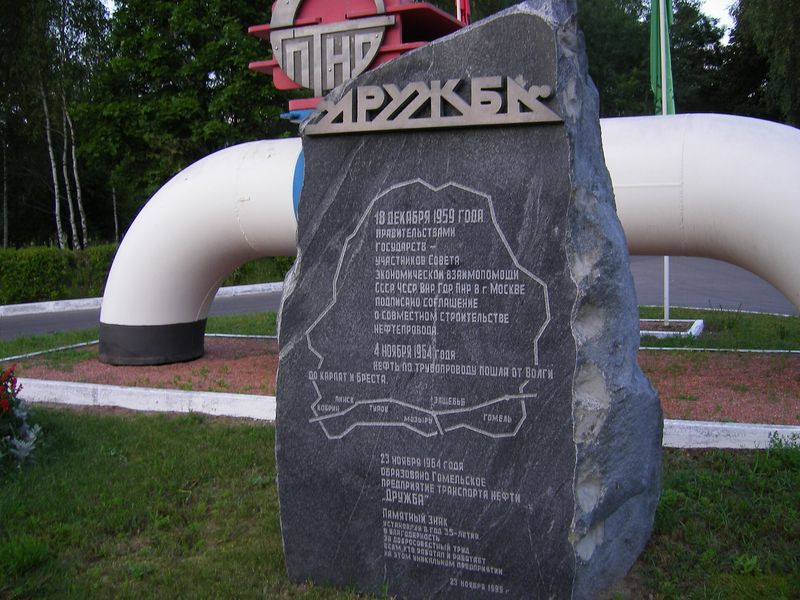
In Tatarstan, the target was familiar. The Kaleykino oil pumping station near Almetyevsk — a key Transneft-Prikamye node that gathers crude for the Druzhba pipeline system — was hit again and was burning on November 23, according to Astra’s analysis of eyewitness video. Tatarstan’s head, Rustam Minnikhanov, confirmed an attack on oil infrastructure in the region, Sweden Herald reported with TT. Drone alerts and flight restrictions were reported at Kazan, Nizhnekamsk and Bugulma airports as the wave crossed the republic.
It was the second strike on Kaleykino in four days. In the November 19 attack, covered in our report on Ukraine’s drone strike on Tatarstan oil storage, the fire was contained by automatic fire systems, according to authorities at the time; Ukraine’s General Staff later confirmed that three 50,000-cubic-metre tanks had been hit. A pumping station is not a refinery: it does not process crude, it moves it. But Druzhba is not an ordinary pipeline. It is one of the world’s largest crude networks, carrying Russian oil west toward refineries in central Europe, and Kaleykino is one of the points where Volga-region crude enters that system. Hitting the same node twice in four days — once while its fire systems and crews are still working through the first repair — is a different kind of pressure from hitting it once: it attacks the repair cycle itself.
Fire at Novoshakhtinsk
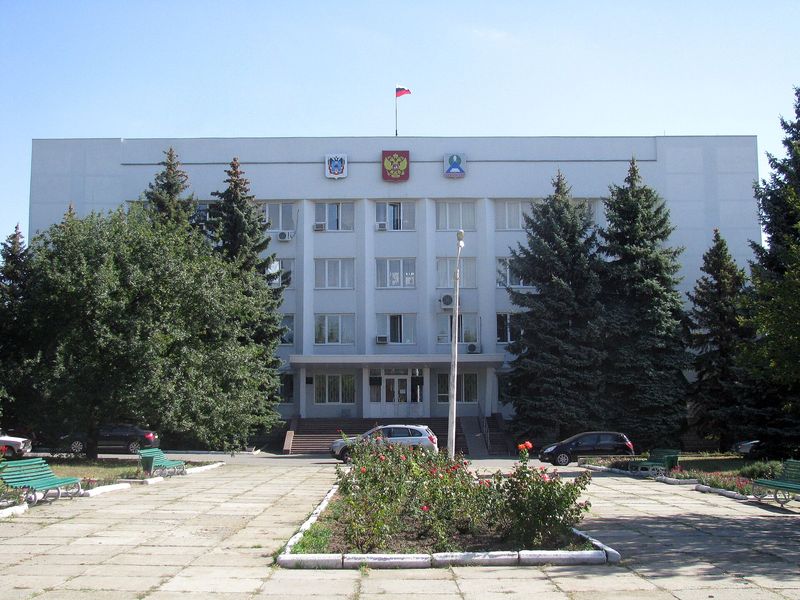
The night’s longest attack unfolded in the south. The Novoshakhtinsk oil products plant in Rostov region — a plant with capacity of about 7.5 million tonnes a year — was attacked from about 01:00 for more than three hours, and eyewitness video analysed by Astra showed a large fire and a storage tank ablaze, possibly also affecting the neighbouring TATA-GAZ fuel site. No casualties were reported in Rostov region.
Here, too, the official account is narrower than the footage. Governor Yury Slyusar confirmed a fire in the Krasnosulinsky district — the district where Novoshakhtinsk sits — which he attributed to falling drone debris, and described a “massive” attack in which more than 80 drones were downed over the region. He did not name the plant. The Novoshakhtinsk refinery drone strike therefore rests, as an identification, on Astra’s video analysis, while the governor’s own words confirm a major attack, a debris fire in the plant’s district and an interception count that implies a very large incoming wave. A three-hour attack window is itself a data point: it suggests successive groups of drones arriving over time rather than a single salvo, a pattern that stretches air-defence crews and fire services across an entire night shift.
The wider night
The three oil strikes were the centre of the night, not the whole of it. In Bryansk region, the governor said a 65-year-old man was killed in the locality of Brajlov in a separate drone attack, according to Europa Press reporting via Demócrata. Russia’s Defence Ministry said air defences downed 192 Ukrainian drones overnight across regions and Crimea, Europa Press reported; Sweden Herald put the ministry’s figure at “nearly 200.” The ministry’s totals are claims, presented here as such: they cannot be independently reconciled with the regional governors’ own counts — 56 drones reported downed over Perm Krai and more than 80 over Rostov region alone — and they coexist with fires in three regions that the drones were meant to prevent.
The wave also landed in a 24-hour period that had already redrawn the war’s map twice. Hours earlier, Ukraine’s sea drones had struck the Russian corvette Merkury at Benghazi, Libya — an operation President Zelenskyy publicly claimed, as our follow-up on Ukraine’s claim that its sea drones sank the Merkury set out. And on the same night as the refinery wave, Russian strikes around Kyiv killed at least 14 people, including 11 in the town of Dymer, where rescuers pulled a young boy alive from the rubble of an apartment block — the story told in our report on the Russian strikes on Dymer in the Kyiv region. Taken together, the 24 hours describe an exchange that is widening in both directions at once: Ukraine reaching further into Russia’s industrial rear and, at Benghazi, beyond the war’s theatre altogether, while Russia’s own strike campaign continues to land on Ukrainian towns and energy infrastructure. Each side’s claims in that exchange are attributed in this report to the side that made them.
Why this matters
The logic of the refinery campaign
Kyiv’s campaign against Russian oil infrastructure, pursued through 2025 and intensified since, rests on three linked calculations. The first is fuel: refineries supply the Russian military and the domestic market, and damage to distillation capacity tightens both. The second is revenue: oil and products are the largest single stream of export income funding Russia’s war, and every week a major plant spends in repair is a week of output the state cannot sell. The third is dilution: a country that must defend refineries from the Baltic to the Urals — a span that Monday’s strikes stretched to some 1,700 km — cannot concentrate its air defences anywhere, including over the front. A coordinated wave that touches Perm, Tatarstan and Rostov in one night is that third calculation made visible: three regional air-defence commands, three sets of fire crews and three repair queues, all engaged simultaneously.
Repeat strikes and the repair cycle
The Kaleykino strike adds a fourth element: tempo against repair. Refineries and pumping stations are not destroyed or spared in a single night; they are damaged, assessed, patched and returned to partial operation over days and weeks, often with scarce specialised equipment and crews. A second strike four days after the first lands inside that window, when tanks are drained or opened for work, temporary lines are in place and stock has been drawn down to cover the shortfall. Whether or not the second hit causes more physical damage than the first, it resets the repair clock — and it tells planners in Moscow that no node can be treated as repaired-and-done. Russia’s answer, throughout the war, has been its own infrastructure campaign against Ukraine’s power grid, pursued with particular weight as winter approaches; the Dymer strikes of the same night are the human face of that parallel campaign. The two campaigns now run as a matched pair, each side pricing the other’s infrastructure by the week.
Context and background
Ukraine’s refinery campaign has been building since 2025, when long-range drones first began reaching major Russian plants in sustained numbers and the target list widened from border-region fuel depots to the big Volga and Urals refineries. Background: Kaleykino itself is a repeat target across a longer arc as well — the station was struck earlier in the war, in February 2026, before the November 19 and November 23 hits made it three visits in the station’s war. The November diplomatic track forms the other piece of context. A short-lived November pause in refinery strikes, discussed alongside the month’s summit diplomacy, collapsed as both sides returned to infrastructure targeting — a sequence this newsroom has followed through the resumption of strikes on plants including Novokuybyshevsk and the rejection of an energy ceasefire. Monday’s three-region wave is what the post-pause campaign looks like at full tempo: not a single symbolic hit, but a coordinated night across the depth of Russia’s oil map.
What the numbers imply
Start with distance. Perm at roughly 1,700 km from Ukrainian-held territory and Tatarstan at roughly 1,200 km are not border raids; they are deep-strike operations that consume most of a long-range drone’s radius and most of a night’s darkness. Add capacity: the Permnefteorgsintez refinery identified by Astra processes more than 13 million tonnes a year and Novoshakhtinsk about 7.5 million tonnes — together, nameplate capacity on the order of 20 million tonnes a year was under attack in a single night, before counting the Kaleykino node’s role in moving crude rather than refining it. Then set the ministry’s claim against the map: 192 drones downed, on Moscow’s count, is a very large interception effort — and fires were still reported in three regions, with governors in Perm and Rostov each reporting dozens of drones over their own regions. Interception percentages and damage are not the same ledger, and Monday’s numbers sit in both columns at once. Finally, Druzhba: because Kaleykino feeds a pipeline system supplying refineries in central Europe, a pumping-station fire in Tatarstan is also, potentially, a flow question in Europe — which is why traders watch Druzhba nominations after strikes like this even when the flames are 1,200 km from the nearest border.
Multiple angles
Kyiv’s stated rationale
Ukraine’s stated case for the campaign is that Russian oil infrastructure is a legitimate and necessary target set: it fuels the invasion force, funds the state waging the war, and — in Kyiv’s framing — answers Russia’s own systematic strikes on Ukrainian energy. On that reading, Monday’s wave is cost-imposition with a map attached: every region Russia must defend is a region where its defences are not somewhere else.
Moscow’s framing
Moscow’s framing, expressed through the Defence Ministry’s interception totals and governors’ emphasis on debris and downed drones, presents the night primarily as a mass attack largely defeated — 192 drones downed — with damage localised and, in Rostov’s case, caused by falling wreckage rather than direct hits. The casualty reports from Perm and Bryansk, in Russian official statements, are attributed to the attacks themselves. Readers should note where the two framings agree: a very large number of drones was launched, and people died. They diverge on effect, and the verified middle ground — fires in three regions, named by an exiled outlet’s video analysis and only partly described by officials — is narrower than either side’s headline.
The critics’ case
Critics of the campaign, including voices in allied capitals at earlier points in the war, raise two objections that Monday’s toll sharpens. The first is civilian risk: one person killed and two injured in Perm, on the governor’s account, at facilities embedded in a major city’s industrial zone. The second is escalation and blowback — that deep strikes invite heavier Russian retaliation against Ukrainian cities, of which the same night’s Kyiv-region toll is a standing reminder, and that attacks touching Europe-facing pipelines complicate the politics of Ukraine’s support coalition. Supporters answer that the targets are military-economic infrastructure, that Russia’s grid campaign long predates the refinery campaign’s current tempo, and that the civilian toll of the two campaigns is not comparable in scale. Both arguments are live, and Monday supplied fresh evidence to each.
The energy-market view
Markets read nights like this through two dials: Russian product supply and Druzhba flows. Refinery outages in Russia have repeatedly tightened domestic fuel supply and export availability, and a crude-distillation fire at a 13-million-tonne plant — if Astra’s identification and damage location hold — is the kind of outage measured in weeks, not days. The Druzhba dial moves more slowly: pumping-station damage matters when it interrupts nominations to European refiners, and no interruption was confirmed in the reporting available on Monday morning. The market significance of the night is therefore provisional in exactly the way the damage reports are: large if the Perm fire is in the distillation train and if Kaleykino’s second hit in four days stops flows, modest if both sites return to partial operation within days.
What happens next
Four watch points follow from Monday’s wave. First, repair timelines: watch for official or trade reporting on whether Permnefteorgsintez and Novoshakhtinsk restart units this week, and whether Kaleykino’s pumps return to service — the speed of those restarts is the real measure of the night. Second, repetition: the campaign’s recent pattern is to revisit damaged nodes inside their repair windows, so a further strike on any of the three sites in the coming days would confirm tempo as doctrine rather than coincidence. Third, air-defence redeployment: sustained deep strikes force choices about where Russia stations its limited high-end systems, and any visible thinning around the front or around Moscow would signal that the dilution strategy is biting. Fourth, flows and prices: Druzhba nominations to central Europe and Russian product export offers will show, in commercial data, what the governors’ statements do not. The scenarios branch from there — a campaign that settles into a weekly rhythm of deep waves, a Russian response concentrated on Ukraine’s grid as winter deepens, or a diplomatic track that revives the November pause idea under new terms. What Monday established is the baseline against which all three will be measured: in one night, drones reached the Urals, the Volga and the Don, and the distance between the front line and Russia’s oil heartland effectively disappeared.
Related coverage: Ukraine drone strike Tatarstan: oil storage facilities hit overnight, November 19 · Ukraine claims Benghazi sea drone strike sank the Merkury, Zelenskyy says · Russian strikes on Dymer, Kyiv region: 11 killed, boy rescued
Sources
- Reuters, November 23, 2026 — Governor Dmitry Makhonin said on Telegram that several industrial facilities were damaged in Perm region and one person was killed and two injured; Perm region lies about 1,700 km (1,050 miles) from Ukrainian-held territory and hosts a repeatedly targeted oil refinery. Makhonin did not name the facilities.
- Sweden Herald (TT), November 23, 2026 — Ukraine attacked oil facilities in Tatarstan, Perm and Rostov regions; Tatarstan head Rustam Minnikhanov confirmed an attack on oil infrastructure in the region; Russia’s Defence Ministry figure reported as nearly 200 drones downed.
- France 24 liveblog (AFP), via Europe Says, November 23, 2026 — live coverage of the overnight wave across the three regions; Russia’s Defence Ministry said air defences downed 192 Ukrainian drones overnight across regions and Crimea; Bryansk’s governor said a 65-year-old man was killed in Brajlov, via Europa Press reporting.
- The Moscow Times, via Europe Says, November 23, 2026 — reporting on the coordinated overnight strikes on oil infrastructure in Perm, Tatarstan and Rostov regions.
- Astra (exiled Russian outlet), November 23, 2026 — analysis of eyewitness footage identifying the Lukoil-Permnefteorgsintez refinery fires in the primary oil processing area at Perm, the Kaleykino pumping station burning near Almetyevsk, and the Novoshakhtinsk plant fire and ablaze storage tank in Rostov region. These identifications are Astra’s and are attributed to Astra throughout this report; Governors Makhonin and Slyusar did not name the facilities in their statements.
Analysis in this article — including the sections on the refinery campaign’s logic, repair cycles, market effects and scenarios — is Signal Post News’ own and is distinguished from the reported facts above.