World / Defence — UK large calibre weapons manufacturing has restarted after a gap of two decades. Rheinmetall UK has begun production at its new gun hall in Telford, making barrels and breeches for 120mm and 155mm weapon systems, in a move the government is presenting as both a military milestone and an industrial one — and that arrives while bigger questions about the pace of Britain's defence spending remain unanswered.
Track it live: Live war and conflict tracker — Signal Post News
Britain is making the heavy end of its own artillery again. Rheinmetall UK has begun production at its gun hall in Telford, Shropshire, restoring a capability — the domestic manufacture of large-calibre barrels and breeches — that the country has not had for 20 years, according to the Ministry of Defence. The plant will manufacture barrels and breeches for 120mm and 155mm weapon systems, including for the British Army's incoming RCH 155 self-propelled howitzer and for future artillery platforms, GOV.UK said in its announcement on October 22, 2026. The opening was performed by Defence Secretary Wes Streeting, alongside the Chief of the General Staff, General Sir Roly Walker, and Armin Papperger, the chief executive of Rheinmetall AG.
The symbolism is deliberate, and the government is not hiding it. A gun hall is not a missile factory or a drone plant; it is nineteenth-century heavy industry — forging, boring and rifling steel tubes that must survive enormous pressures shot after shot — rebuilt for a twenty-first-century army that has spent the years since Russia's full-scale invasion of Ukraine relearning how quickly artillery consumes barrels, and how exposed a country is when it cannot make its own. Whether Telford becomes the foundation of a broader sovereign manufacturing base, or remains a single bright facility inside a programme still shadowed by spending uncertainty, is the real question hanging over the opening ceremony.
What is actually being made at Telford
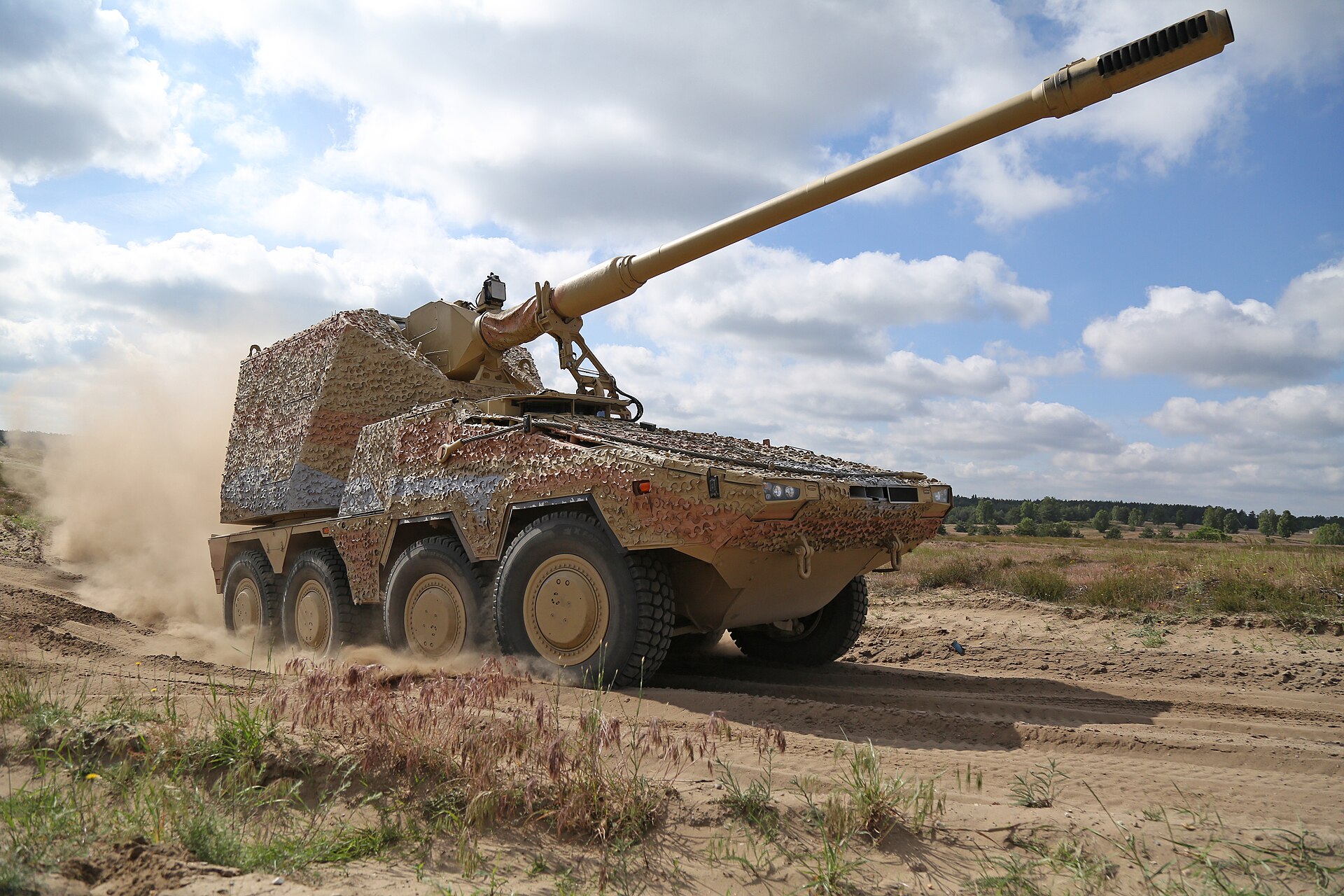
The gun hall's product list is specific, and it matters. Barrels and breeches are the pressure-bearing heart of a gun: the barrel contains and directs the explosion that throws the shell, and the breech seals it. They are also wear parts. A barrel's accurate life is measured in hundreds to thousands of rounds depending on charge and calibre, after which accuracy degrades and the tube must be replaced. An army that fires artillery at wartime rates therefore does not merely need guns — it needs a continuing supply of barrels, and for two decades Britain's supply of new large-calibre tubes depended on foreign production lines.
Telford changes the address, if not yet the scale. GOV.UK says the facility supports 100 highly skilled jobs — that figure is the gun hall's own workforce, not a programme-wide total — and that the workforce will expand as production ramps up, with partnerships alongside British small and medium-sized enterprises. Specialist local workers have been recruited and trained for the plant, the government said, and British workers have been trained at Rheinmetall's Unterlüß site in Germany in precision manufacturing, quality assurance and specialist weapon production. The government also stresses the speed of the stand-up: Rheinmetall took over the facility in autumn 2025 and, in the government's wording, took it from an empty site to full production in eight months. No production volumes or rates have been published, and it would be wrong to invent any: how many barrels a year Telford will turn out, and how quickly that number grows, has not been disclosed.
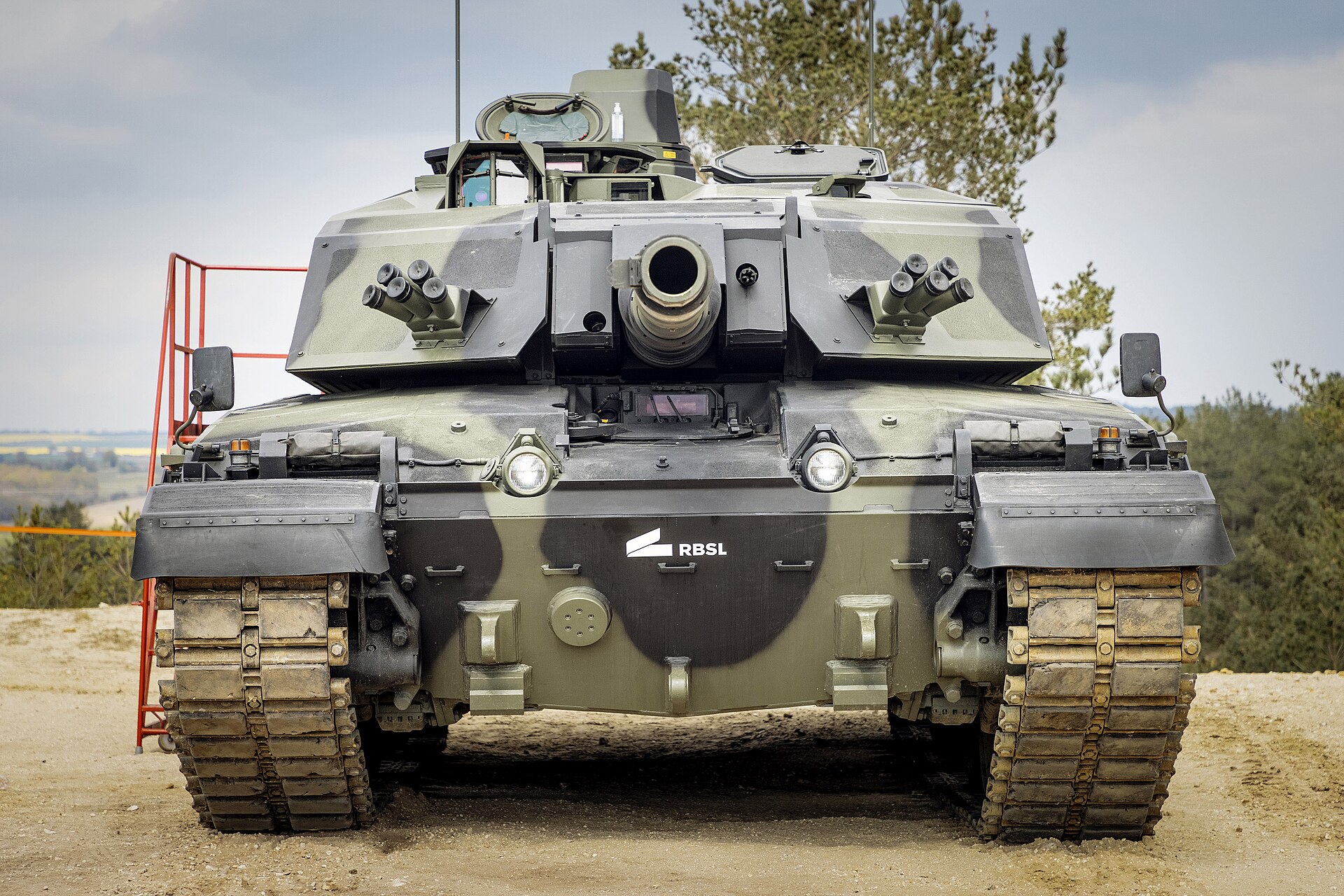
The anchor customer is already contracted. Rheinmetall announced on July 31, 2026, that it had won a contract in the low three-digit million-euro range to supply the weapon systems — 72 elevating masses — for the British Army's 72 RCH 155 howitzers, manufactured at Telford. The UK ordered the 72 RCH 155 vehicles in May 2026. The RCH 155 combines the Boxer 8×8 drive module with an automated, unmanned turret derived from the PzH 2000 weapon system, and can fire on the move — a capability the British Army has never fielded in a wheeled howitzer. GOV.UK says the Telford restart also builds on the Boxer and Challenger 3 programmes, the Army's other two big land-equipment efforts, both of which lean on the same Anglo-German industrial axis.
The capability Britain let go — and why it came back
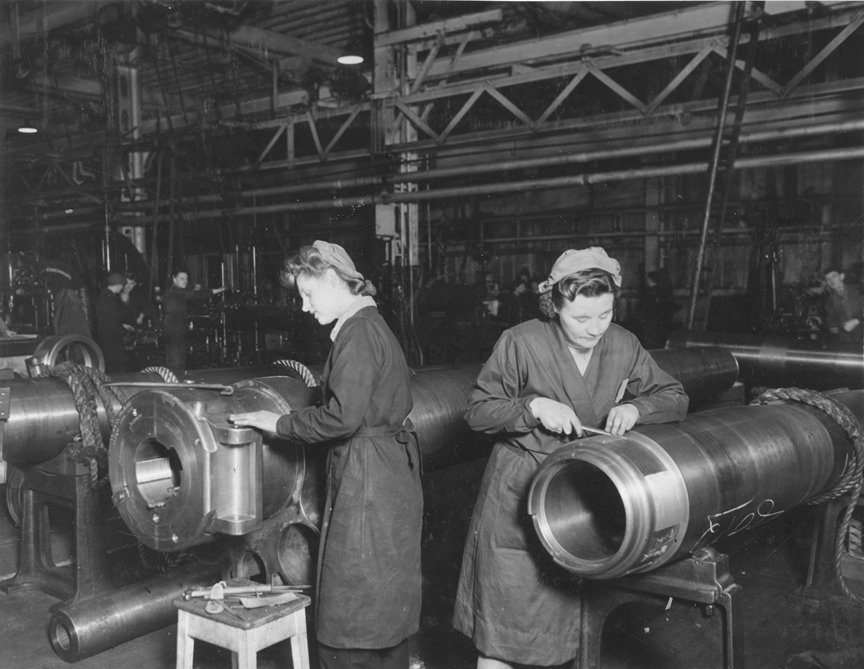
For most of the industrial age, making gun barrels was something Britain simply did. The great ordnance works — Elswick on the Tyne among them — forged and finished the tubes that armed the Royal Navy and the British Army through two world wars, and breech mechanisms were a signature British engineering craft. The capability did not vanish in a single decision; it ebbed away across the post-Cold War decades as the Army shrank, artillery fleets were cut, and the economics of keeping a sovereign large-calibre line alive for small, intermittent orders stopped adding up. Twenty years ago, the last of it went, and Britain settled into the assumption that barrels, like so much else, could be bought from allies when needed.
The war in Ukraine stress-tested that assumption in public. Artillery returned to the centre of land warfare at an industrial scale: guns firing daily at rates peacetime planning treated as impossible, barrels wearing out and needing replacement mid-war, and shell consumption running far ahead of Western production. The lesson drawn in London — and in Berlin, Paris and Warsaw — was not simply "buy more shells." It was that the unglamorous depths of the supply chain, the forges and boring machines and the people who know how to run them, are themselves a strategic asset, and one that cannot be reconstituted in a hurry once the skills retire. Telford is best understood as Britain paying to reverse one specific line item of that long hollowing-out: the tube at the centre of the gun.
An Anglo-German gun: Trinity House made physical
There is a reason a German company's British subsidiary is the vehicle for this revival, and a reason British workers trained at Unterlüß. The Telford gun hall sits inside the UK–Germany Trinity House Agreement, signed in October 2024, which GOV.UK describes as enhancing NATO's collective deterrence and which has made defence-industrial cooperation the load-bearing wall of the London–Berlin relationship. Boxer is built under that logic, Challenger 3's turret and gun technology draw on it, and the RCH 155 is an explicitly joint programme. Papperger, at the opening, framed Telford in sovereignty terms: sovereign manufacturing capability of this kind strengthens Britain's defence industrial base — a notable pitch from a German chief executive, and one that captures the bargain precisely. Britain gets the capability, the jobs and the security of supply on its own soil; Rheinmetall gets an entrenched position at the heart of British land programmes for a generation.
Streeting's language at the opening made the domestic half of the bargain explicit. "Britain is back in the business of making the weapons that our Armed Forces need," he said, tying the plant to the government's wider doctrine of defence as an engine for growth — the argument that rearmament spending, done deliberately, doubles as regional industrial policy: skilled jobs in places like Telford, SME supply chains behind them, and exportable capacity at the end of it. It is a politically convenient doctrine, and also a testable one: 100 jobs at the gun hall is a real but modest start, and the doctrine will be judged on whether the promised expansion — of the Telford workforce as production ramps, and of the SME partnerships around it — actually materialises.
Why this matters
The deepest significance of the Telford opening is not the barrels themselves — at least not yet. It is the admission, now cast in steel, that the post-Cold War model of British defence industry has been formally abandoned. For thirty years the model was: keep design expertise and final assembly, buy the heavy and the expendable from a globalised market, and assume allies' production lines would be there in a crisis. Ukraine demonstrated the flaw in sequence — first shells, then barrels, then the machine tools and skilled hands behind both turned out to be the binding constraints. A gun hall is a small, concrete repudiation of that model: slow to build, useless as a headline, and exactly the kind of capacity that decides whether an army can keep fighting in month eighteen of a war rather than month two.
It also matters for NATO's internal geometry. The Trinity House axis is quietly becoming the alliance's land-warfare engine room: German designs, British orders, shared programmes in armour and now artillery, and a deterrence argument — GOV.UK's own framing — built on industrial depth rather than declarations. If Telford delivers, the model is exportable: sovereign finishing capacity in the customer country, underwritten by the prime's home technology base. If it stalls, it becomes one more entry in the long British catalogue of announced capabilities that arrived late, small, or both. The eight-month stand-up from empty site to production — the government's figure, and by any standard brisk — is the strongest early evidence for the first outcome. The absence of any published production rate is the strongest evidence that the jury is still out.
What the numbers say
Set Telford against the wider figures and both its value and its limits sharpen. The government has committed £298 billion over four years in its Defence Investment Plan — the envelope inside which programmes like this one compete. Reuters, reporting the opening on October 22, placed it in the context of Britain's plan to boost domestic defence capacity in response to a growing security threat from Russia — and noted, in the same report, that some UK defence projects are facing delays amid uncertainty about the timing of the move to raise defence spending to 3 percent of GDP, itself a milestone on the way to the NATO target of 3.5 percent by 2035. In other words: the direction of travel is agreed, the destination is agreed, and the timetable — the thing factories actually run on — is not.
The programme arithmetic is similarly double-edged. Seventy-two RCH 155 howitzers is a meaningful fleet — a full replacement class for the Army's self-propelled artillery rather than a token purchase — and 72 contracted weapon systems give Telford a guaranteed first production run rather than a speculative one. But 100 jobs, one site, and an undisclosed barrel rate is a beginning, not a rebuilt industrial base. A single wartime month of heavy artillery use can consume barrel life at a pace no one has yet shown Telford can match, because no one has published the number that would let anyone check. That is not a criticism of the plant; it is a statement about what an opening ceremony can and cannot prove.
The critics' case, stated fairly
Sceptics make three points, and none of them is frivolous. First, sequencing: a gun hall solves the barrel problem, but Britain's most-discussed artillery vulnerability has been ammunition — shell stocks and the energetics and filling capacity behind them. New barrels for guns that cannot be fed at wartime rates would be an elegant partial answer. Second, money: Reuters' reporting on delays elsewhere in the portfolio, and the unresolved timing of the 3 percent commitment, suggests a programme set running ahead of its funding profile — a pattern that has historically ended in stretched timelines and quietly reduced numbers. Third, dependence: the sovereign capability at Telford is sovereign in location, not in ownership or underlying technology. The training pipeline runs through Unterlüß, the designs are Rheinmetall's, and the strategic bet is that the Anglo-German relationship remains as warm in a crisis as it is at an opening ceremony. Supporters answer, reasonably, that this is what alliance means — and that a barrel made in Telford by British workers is a barrel Britain does not have to queue for abroad, whatever the badge on the factory gate. Both things are true, which is precisely why the arrangement deserves scrutiny rather than either celebration or dismissal.
What happens next
Watch three things. The first is Telford itself: whether the workforce grows on the trajectory GOV.UK describes as production ramps, whether British SME partners are named and contracted, and whether any production figures are ever published — the single data point that would convert this story from industrial symbolism into measurable capability. The second is the RCH 155 programme: the 72-vehicle fleet's delivery and entry into service will test whether the Anglo-German model produces fielded artillery on schedule, and Telford's weapon systems are on its critical path. The third is the money: the path to 3 percent of GDP, and toward NATO's 3.5 percent by 2035, will decide whether Telford is the first of several such revivals — ammunition, energetics and other lost depths of the supply chain are the obvious candidates — or an isolated monument to a doctrine the Treasury never fully funded.
For now, the narrow fact stands, and it is not nothing. After 20 years, a British factory is making large-calibre gun barrels and breeches again, British workers trained for the purpose are on its floor, and the first contracted output is already spoken for by name and number. Wars are not won by opening ceremonies. But they are not sustained without factories either — and Britain, at Telford, has one more factory than it had last year.
Sources
- GOV.UK — "British jobs boost as tank barrel production returns to the UK for first time in 20 years," October 22, 2026 (Telford gun hall opening; 100 jobs; 120mm and 155mm barrels and breeches; RCH 155 and future platforms; Streeting, Walker and Papperger at the opening; autumn 2025 takeover and eight-month stand-up; Unterlüß training; Trinity House Agreement; £298 billion Defence Investment Plan). https://www.gov.uk/government/news/british-jobs-boost-as-tank-barrel-production-returns-to-the-uk-for-first-time-in-20-years
- Reuters — "UK restarts large calibre weapon manufacturing after 20 years in defence push," October 22, 2026 (first large-calibre manufacturing in two decades; domestic capacity push amid the security threat from Russia; project delays and uncertainty over the timing of the move to 3 percent of GDP, toward the NATO target of 3.5 percent by 2035). https://www.reuters.com/business/aerospace-defense/uk-restarts-large-calibre-weapon-manufacturing-after-20-years-defence-push-2026-10-22/
- Rheinmetall — press release, July 31, 2026 (contract in the low three-digit million-euro range to supply weapon systems — 72 elevating masses — for the British Army's 72 RCH 155 howitzers, manufactured at Telford; UK order of 72 RCH 155 in May 2026; RCH 155 combining the Boxer 8x8 drive module with an automated unmanned turret derived from the PzH 2000 weapon, able to fire on the move).
Related coverage on Signal Post News: Britain's Home Guard defence programme and its volunteers · Ukraine War, Day 1700 — the daily briefing