Britain's new Home Guard plan — a Home Defence Programme that would recruit thousands of civilian volunteers to protect power stations, water supplies, telecoms and food networks in wartime — was revealed in reports on Tuesday, October 20, days after the Army chief told 700 troops "our nation is going to need you" and as an Ipsos poll shows 48 percent of Britons say they would never fight for their country under any circumstances.
London / The Home Defence Programme would put locally recruited civilians on guard over Britain's critical infrastructure — 85 years after the original Home Guard stood watch against invasion, and days after the Army chief warned troops the nation will need them
Track it live: follow the wars and military flashpoints shaping Britain's threat picture on the Signal Post News Live Global Wars Tracker.
LONDON — The details surfaced across several reports on Tuesday. BritBrief, publishing that morning, laid out the Home Defence Programme (HDP) as an "evolving" programme that would combine civilian and military efforts in wartime, with thousands of Britons potentially recruited to help the Army protect critical infrastructure. London Business News reported the same day that the Ministry of Defence is developing the proposals, with one option a locally recruited volunteer force, possibly modelled on the Army Reserve and led by the Army. The Sunday Express splashed on Britain's plans for a "new Home Guard" as what it called WW3 conscription fears erupted, and a wave of explainers followed through the day: who would serve, doing what, and — the question underneath every one of them — whether volunteering would ever stop being voluntary.
Precision matters here, because the story is easily inflated. No force has been raised. No recruitment has opened. The Home Defence Programme is a proposal inside the government's Strategic Defence Review, its plans still under development, with the precise responsibilities, recruitment arrangements and training requirements yet to be established. What is new on Tuesday is not a policy launch but the clearest picture yet of what ministers are building towards: a standing framework that, in a war, would tell the military what civilian help it needs and tell civilians where they fit. Former Cabinet Office minister Dan Jarvis told Parliament last year that the programme would provide a baseline understanding of what help the military would need and how roles may be filled during a conflict. The Review is tasked to the Ministry of Defence to lay out what form the new force will take.
What the volunteers would actually do
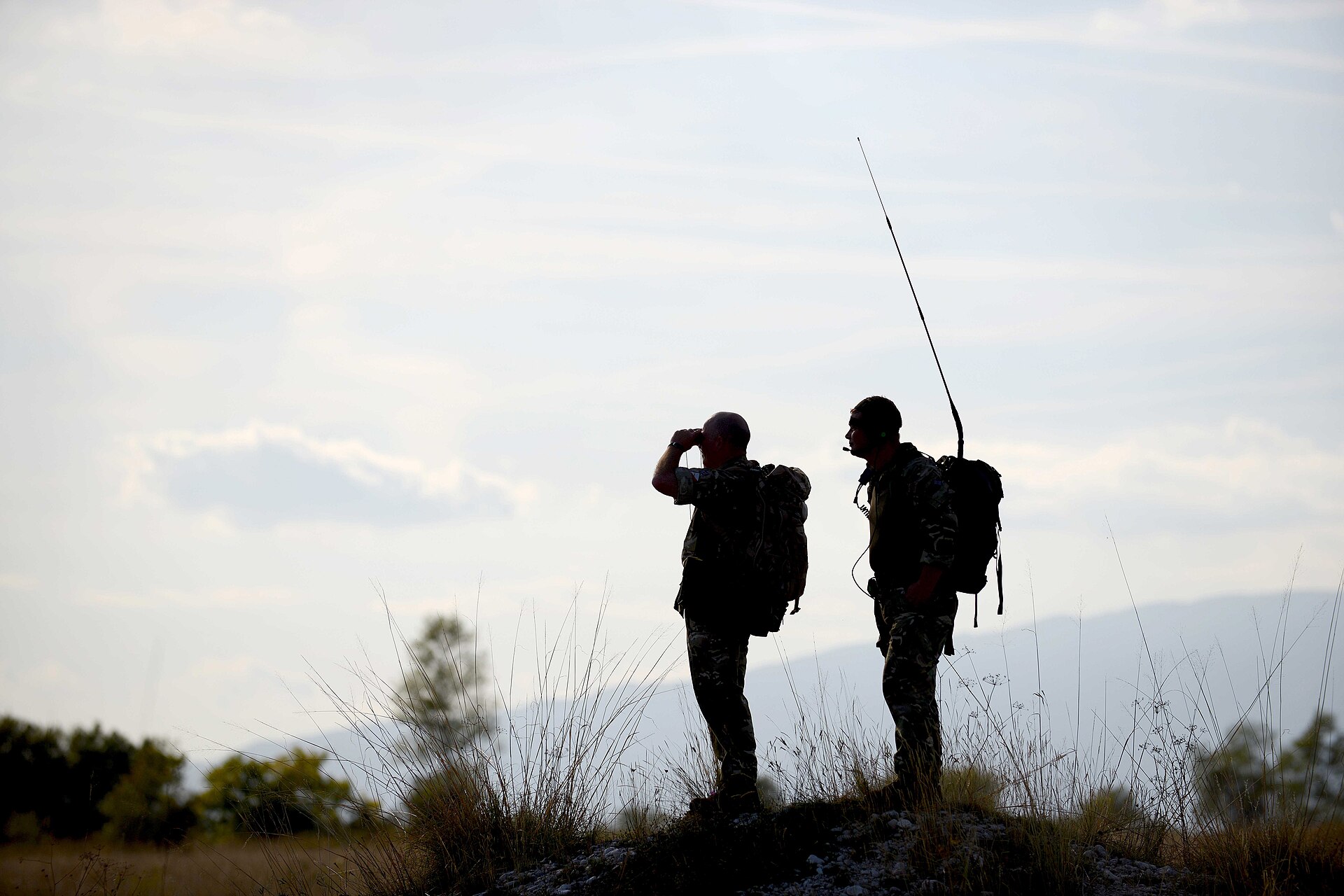
The Strategic Defence Review's framing is a collective national effort — galvanising industry, civil society and the population at large — with the protection of critical national infrastructure at its centre. The sectors named are the ones a modern state bleeds from if they stop: energy, telecommunications, food production and water. A new force of volunteers, recruited locally, could be tasked with guarding those sites so that regular soldiers are not tied down protecting power stations and reservoirs hundreds of miles from any fighting. According to the Review's suggestions, reported by BritBrief, such a force could be modelled on the Reserves, be led by the Army, bear arms, and be equipped with basic communications kit and drones — the modern sentry's tools being a radio and a quadcopter rather than a pitchfork at a roadblock.
The logic is written in Ukraine, where Russia's war has been fought as much against substations, ports and grain terminals as against trenches, and in the string of hybrid incidents — severed cables, airspace incursions, sabotage investigations — that has run underneath European politics for two years. A small professional army cannot simultaneously deploy abroad and stand guard over every pylon, pumping station and data centre at home. The Home Defence Programme is the paperwork answer to that arithmetic: identify the sites, identify the people who live near them, and organise both before they are needed rather than during the first frightening week of a crisis.
The general's warning that set the stage
The programme did not arrive in a quiet news cycle. It landed days after the professional head of the British Army delivered the bluntest public warning of his tenure — to his own soldiers, on camera. General Sir Roly Walker, the Chief of the General Staff, addressed some 700 troops of 1 (UK) Division at Catterick Garrison in a speech filmed by BFBS Forces News, delivered last week and reported across British media on October 16–17. "You didn't know this, but our nation is going to need you," he told them. "Indeed, very soon, the political leaders of this country will start to have a frank conversation with the citizens of this country about just what is going on, and where the risk lies."
Walker said citizens would be told they "have got to consent to sacrifices to prioritise defence and security," that people "for whom we are not necessarily at the front of their mind" would be asked to "play a part in the defence and security of this country," and that the public would ultimately need to back soldiers "to take the fight to the enemy." He described "extreme jeopardy in the world at the moment" and a time when "the business of soldiering is coming back into the nation's psyche." Signal Post News covered the speech in full last week: UK Army Chief Warns Public to Prepare for War: 'Frank Conversation' on Sacrifice Is Coming. The Home Defence Programme is, in effect, the first concrete artefact of the frank conversation Walker promised — the moment the warning acquires a form, a recruiting pitch and a set of guard posts. A UK government spokesperson, responding to Walker's remarks in The Independent's coverage, said the General's comments showed that threats "move closer to home," and pointed to the Home Defence Programme as part of the answer.
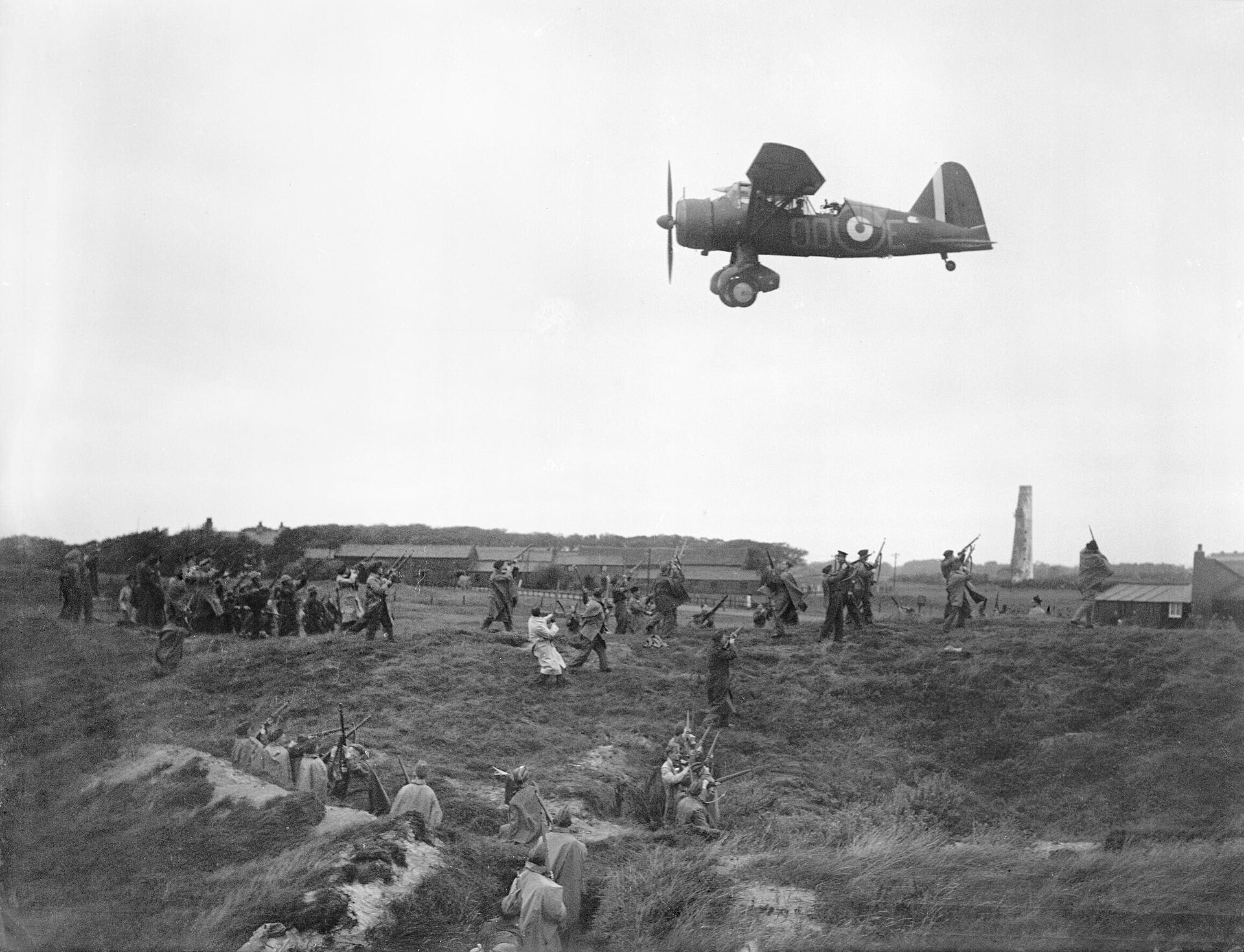
1940: the original Home Guard
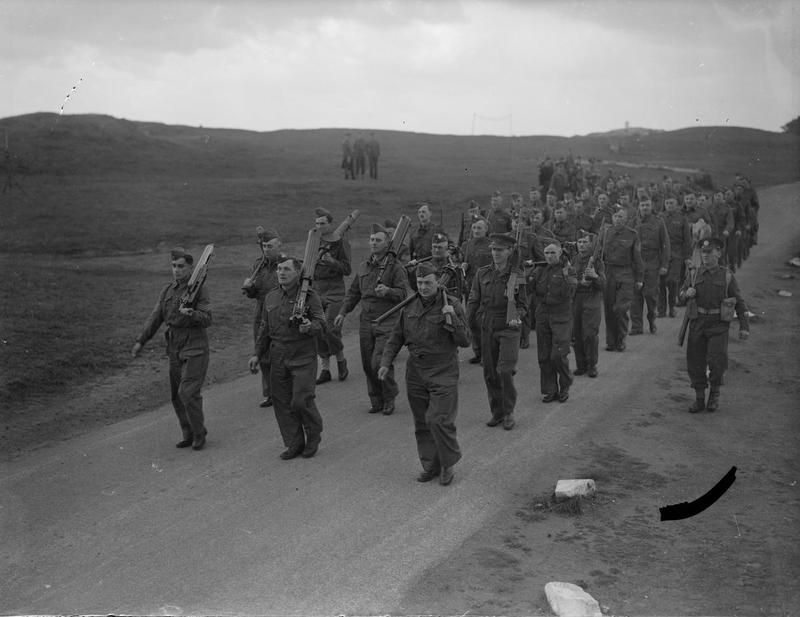
The parallel ministers are reaching for is the most potent in British home-front memory. In May 1940, with France collapsing and invasion expected, Anthony Eden broadcast an appeal for men who were not already in the forces to enrol as Local Defence Volunteers. Within weeks, roughly a million and a half men had come forward — teenagers, veterans of the First World War, men in reserved occupations whose jobs kept them home — and the force, soon renamed the Home Guard, stood watch over factories, airfields, beaches and road junctions for four years. At its peak about 1.5 million served. It was stood down in December 1944, when the invasion threat had passed.
The comparison illuminates and misleads in equal measure. It illuminates because the strategic problem rhymes: a small regular army, an island state, critical sites scattered across every county, and a threat that arrives at infrastructure before it arrives at beaches. It misleads because 1940's volunteers faced an enemy whose intentions were unmistakable and whose armies were visible across the Channel; 2026's would be asked to prepare, indefinitely, against a threat that is real but largely invisible — drones, sabotage, cyberattack, a cable cut in the night. Holding a volunteer's commitment for years against a danger they cannot see is a different organisational problem from holding it for a summer against an invasion fleet. The other difference is cultural, and it is the one the polling measures: the Britain of 1940 had living memory of mass mobilisation as a normal act of citizenship. The Britain of 2026 has not conscripted anyone since National Service ended in 1960 — and nearly half of it, asked directly, says it would not fight at all.
The numbers problem: 51 percent for the guns, 48 percent who would never fight
The Ipsos polling that has shadowed this story since it broke — 1,090 British adults surveyed September 29 to October 1 and published October 14 — deserves to be read whole rather than in fragments, because the fragments contradict each other and the whole does not. Fifty-one percent of Britons support increasing defence spending, up from 28 percent in June 2022, a near-doubling driven by the return of war to Europe. But when the spending is attached to themselves, support thins fast: opposition rises to 44 percent if the money comes from their own higher taxes, and to 44 percent if it comes from cuts to public services. And on the question the Home Guard plan ultimately asks — would you, personally, serve? — the country divides into three unequal camps: 36 percent say there are circumstances in which they would take up arms for Britain, 16 percent are unsure, and 48 percent say there are no circumstances in which they would fight. That 48 percent figure has not moved since April 2025. It is not a reaction to Walker's speech. It is the settled position of half the country, recorded before he spoke.
Read together, the numbers describe a public that wants the country defended, doubts it should pay very much for the defence, and in half of cases would not do the defending. That is not hypocrisy so much as the arithmetic of a volunteer state that has spent sixty years telling its citizens that war is a professional service delivered by other people. It is also precisely the gap a Home Defence Programme is designed to work inside: guard duty at a waterworks is a smaller ask than a rifle in a trench, the commitment is local and part-time, and the volunteers the plan imagines are not being sent anywhere — they are being asked to stand somewhere, near home, so that the professionals can go where they are needed. Whether a programme built on a modest ask can attract thousands when the maximal ask repels half the country is the empirical question the next year will answer.
Both sides: "finally honest" versus "fearmongering"
The case for the programme, made by its supporters, is that honesty is overdue. Lord Peter Ricketts, a former national security adviser, told the BBC that ministers must do more to inform the public about the threat from Russia, warning that eventually "people are going to land up being killed somewhere." On this view, resilience is not militarisation but housekeeping: Sweden and Finland never dismantled their total-defence habits, much of Europe is rebuilding them, and a state that cannot protect its own power grid and water supply in a crisis has outsourced its survival to luck. The volunteer framing is the point — nobody is conscripted, nobody is compelled, and a country that asks politely in peacetime will not have to improvise desperately in wartime.
The case against, audible in the day's reaction, runs on suspicion. A government reaching for the most evocative name in home-front history, critics argue, is borrowing 1940's moral authority for 2026's spending argument — manufacturing a mood of emergency in which taxes, borrowing and defence budgets expand without the scrutiny they would face in calmer language. The "send the politicians' children first" objection, crude as it sounds, encodes a real distributional question: whose streets the guard posts stand on, whose sons and daughters fill them, and whether the sacrifices Walker described will be consented to by the people asked to make them or merely announced to them. There is also a practical scepticism: volunteers need vetting, training, insurance, legal status and equipment, and a programme that is still — by the government's own account — at the stage of proposals may generate more headlines than readiness. Both sides are arguing about the same fact from opposite ends: the programme is, at this point, an intention. Supporters call that a start. Critics call it a press release with a famous name.
Why this matters
Strip away the famous name and the programme marks a doctrinal shift that has been building across the Western alliance since 2022: the return of the home front as a military problem. For thirty years after the Cold War, British defence planning assumed wars would be expeditionary — fought abroad, by professionals, watched on television. The assumptions underneath that model have collapsed in sequence: a major land war in Europe, an adversary that treats civilian infrastructure as a target set, undersea cables and energy interconnectors that a handful of people can sever, and drones that make the distance between a front line and a power station a matter of software. In that world, the security of a substation in Yorkshire is not a police matter that occasionally borrows soldiers; it is a layer of national defence that has to be organised, staffed and rehearsed like one. Britain is not alone in reaching that conclusion — it is late to it, behind the Baltic and Nordic states that rebuilt societal defence years ago — and the Home Guard name is best understood as an attempt to give an unfamiliar doctrine a familiar uniform.
The deeper stakes are civic. Walker's "frank conversation" is a negotiation over what citizenship now includes. The post-1960 settlement — the state defends you; you owe it taxes and a vote — is being reopened by the state's own Army chief, who is asking, publicly, for consent to sacrifices and for citizens to "play a part." The Home Defence Programme is the mildest possible version of that ask, structured to be nearly impossible to refuse politely: local, voluntary, defensive, protective. That is exactly why its reception matters. If even the mild version cannot recruit, the conversation Walker promised will turn quickly to harder instruments, and the conscription explainers flooding Tuesday's coverage will stop being explainers and start being preparations. If it can recruit — if the 36 percent who would serve and some of the 16 percent who are unsure step forward to guard the places they live — then Britain will have demonstrated something no poll can measure in advance: that consent, asked for plainly, is still available.
What happens next
The Ministry of Defence must now set out what form the force will take — the unanswered questions are the substance of the thing: who is eligible, what training is promised, whether volunteers are armed at their posts and under what rules, what happens to their civilian jobs while they serve, and what legal status a volunteer holds when guarding critical infrastructure. Expect the argument over compulsion to run ahead of the programme itself; every ministerial answer that rules out conscription will buy a news cycle, and every ambiguous one will cost several. Expect, too, the first recruitment signals to be watched absurdly closely — early sign-up numbers, if any pilot is announced, will be treated as a referendum on Walker's warning. And watch the Budget and the defence settlement: a programme asking citizens for time while the state argues about money will be judged on whether the state is making sacrifices of its own. The Home Guard of 1940 was raised in a fortnight because the danger was visible from the cliffs. The new one is being raised on paper, in peacetime, against a danger most people will never see — which is either the programme's fatal weakness or, as its authors would say, the entire point of raising it now.
Sources
- BritBrief, October 20, 2026 — "Britain's Home Defence Programme: New Home Guard Plans Revealed": the HDP as an evolving programme combining civilian and military efforts; thousands potentially recruited to protect critical infrastructure; Dan Jarvis's earlier statement to Parliament; the Strategic Defence Review's volunteer-force suggestions (locally recruited, modelled on the Reserves, Army-led, possibly armed, basic communications and drones); Walker's Catterick remarks and Lord Ricketts's BBC comments.
- London Business News via EuropeSays, October 20, 2026 — "Britain prepares for a new Home Guard as army chief warns public must be ready for war": Ministry of Defence developing the proposals; critical infrastructure sectors (energy, telecommunications, food supplies, water); plans under development with responsibilities, recruitment and training yet to be established.
- Signal Post News, October 17, 2026 — Walker's Catterick Garrison speech to some 700 soldiers of 1 (UK) Division, filmed by BFBS Forces News and reported October 16–17: "our nation is going to need you"; the coming "frank conversation"; "consent to sacrifices to prioritise defence and security"; "play a part in the defence and security of this country"; "take the fight to the enemy"; a UK government spokesperson's response in The Independent's coverage (threats "move closer to home"). Quotes carried by The Independent, Sky News, LADbible and Classic FM.
- Ipsos, published October 14, 2026 (1,090 British adults, September 29–October 1): 51 percent support increasing defence spending (28 percent in June 2022); 44 percent oppose if funded by their own higher taxes and 44 percent if funded by cuts to public services; 36 percent would take up arms in some circumstances; 48 percent would never fight under any circumstances (unchanged from April 2025); 16 percent unsure.
- Sunday Express front page, reported October 20, 2026 — "new Home Guard" plans as conscription fears erupted; historical background on the 1940 Home Guard (Local Defence Volunteers appeal, May 1940; about 1.5 million served at peak; stood down December 1944) and the end of National Service in 1960.