Economy / Britain — Britain’s private sector grew at its fastest pace in eight months in October, the flash UK PMI showed on Friday: the composite index rose to 53.1, beating every forecast, new orders expanded at their sharpest pace in 25 months, and companies hired for the first time since the 2024 Autumn Budget. The catch sits in the same release — cost inflation is the strongest since June, and S&P Global’s chief economist says a Bank of England rate hike on November 5 is now “a near certainty.”
Track it live: Stock markets and indexes, live — Signal Post News tracker
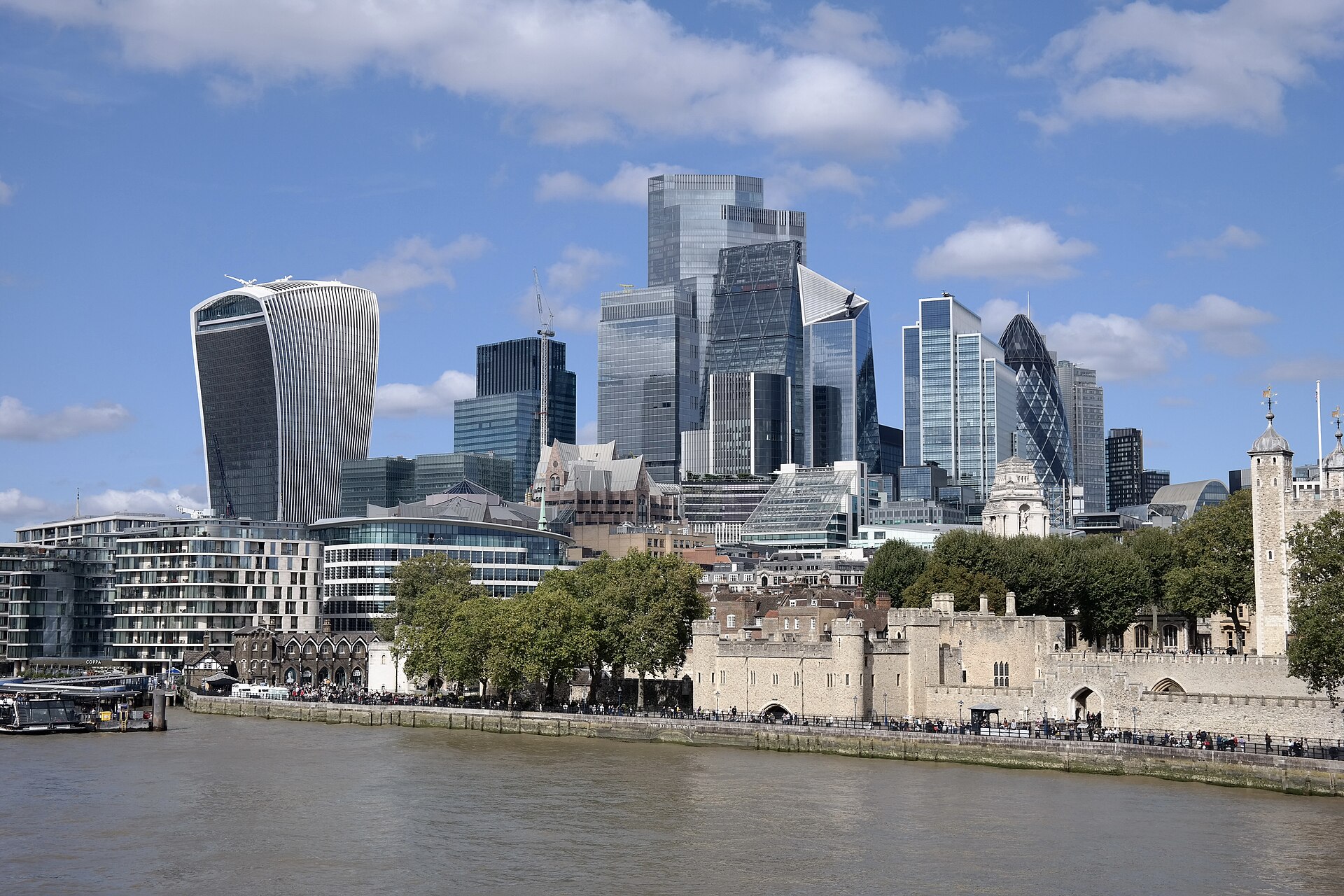
LONDON — The UK PMI for October 2026 delivered the kind of upside surprise British economic data has rarely managed this year. The preliminary S&P Global UK Composite Purchasing Managers’ Index rose to 53.1 in October, up from 52.0 in September and higher than any forecast in a Reuters poll of economists, who had expected a reading around 51.8, Reuters reported on Friday. It is the strongest rate of private-sector growth since February — an eight-month high — and it arrived despite the energy price shock from the Iran war that has been squeezing British firms’ costs all autumn. Both halves of the economy accelerated together: the services PMI rose to 53.1 from 52.1, also an eight-month high, and the manufacturing PMI climbed to 52.8 from 51.9, its best level in five months, with factory output increasing at its strongest pace in more than two years.
The detail underneath the headline is what makes this release matter. Total new work across the private sector expanded at the sharpest pace for 25 months in October, led by a marked improvement in new orders for service providers, S&P Global said. Firms reported a general recovery in customer demand in both domestic and export markets; a number cited a sales boost from AI investment spending and rising demand for technology services, while others pointed to receding risk aversion and resilient global conditions. And companies took on extra workers — employment returned to growth, albeit only marginally, for the first time since hiring was hit by the tax increase in former finance minister Rachel Reeves’ 2024 Autumn Budget, ending a two-year run of private-sector job cuts that September’s survey had extended to a 24th consecutive month of falling services employment. The flash reading is based on responses from a panel of around 650 manufacturers and 650 service providers, covering 80 to 90 percent of the final sample; final October manufacturing data follows on November 2, with services and composite finals two days later.
The paradox in the release: growth is back, and so is the case for a rate hike
Ordinarily, a growth beat like this would be uncomplicatedly good news. October’s is not, because the same survey that shows demand recovering also shows the inflation pipeline reheating. Input cost inflation accelerated at its sharpest pace since June, led by manufacturers, whose respondents blamed higher energy, raw material and transportation costs. Prices charged by companies rose less sharply than in September — a small mercy — but S&P Global’s chief business economist, Chris Williamson, drew the monetary conclusion explicitly: price pressures remain “worryingly elevated,” he said, “not only making a rate hike from the Bank of England at its upcoming policy meeting a near certainty but also likely shortening the odds of further rate hikes into 2027.” The Bank’s Monetary Policy Committee meets on November 5, and the Bank — worried that the energy price surge will bleed into broader inflation — is expected to raise interest rates for the first time in more than three years. UK inflation already rose to 3.5 percent in September, as this site reported earlier this week, with government borrowing at £24.5 billion in the same month and public debt past £3 trillion.
That is the trap the October data sets for policymakers. The growth is real but it is being bought at prices that push the central bank in the opposite direction: every month the economy proves it can grow through an energy shock, the case for tolerating above-target inflation weakens. Businesses feel both sides at once. Their expectations for the year ahead edged up in October but stayed below the long-run average, with firms citing the wars in Ukraine and the Gulf, the cost of living, and the shift to higher borrowing costs. Williamson also noted reports of spending paused for lack of clarity on domestic policy ahead of the Budget — which cuts the other way: if Chancellor John Healey avoids measures that hurt business on October 28, the PMI’s “encouraging base” could carry growth through the winter. If he does not, October may be remembered as the month the recovery and the rate-hike cycle arrived together.
Why this matters: the UK just diverged from Europe — in the opposite direction to usual
The single most striking feature of Friday’s PMI round is the divergence. On the same morning, the eurozone’s flash composite PMI fell to a four-month low, Germany’s growth softened, and France’s business activity contracted outright, its composite sinking to 48.4 with business confidence at a six-and-a-half-year low. Britain — the economy that has spent a decade being lectured about its post-Brexit underperformance — accelerated to an eight-month high while its largest neighbours stalled. Currency markets noticed the split even if they did not reward sterling outright: the pound held around $1.3380 against the dollar, little changed on the day, while the euro slipped against the pound, extending a decline that traders attributed directly to the PMI divergence. Divergence of this kind is not supposed to persist in an integrated trading bloc’s neighbourhood, and it poses an awkward question for both central banks: the Bank of England is being pushed toward raising rates into a recovery, while the European Central Bank confronts fading growth with the same energy-driven cost pressures.
The composition of Britain’s growth also matters more than the headline. This was not a consumer splurge or a housing bounce. The strongest new-orders reading in 25 months was led by services and explicitly tied, in firms’ own responses, to AI investment spending and demand for technology services — the one global spending wave large enough to move national statistics. Manufacturing, written off for years, posted its best output growth in over two years even while absorbing the worst of the energy and transport cost surge. There were soft spots, and the survey named them: sales headwinds from geopolitical uncertainty and weak consumer confidence, and subdued demand from construction and real estate clients. But an expansion led by tradable services, technology demand and export orders is a healthier animal than one led by credit-fuelled consumption — it is the kind of growth that raises productivity rather than just prices, provided the cost side does not eat it.

Who gains, who pays: a recovery with an invoice attached
The winners, first. Workers are the clearest: a two-year stretch of private-sector job cuts has ended, and it ended because order books, not sentiment, forced firms to hire — September’s survey recorded services employment falling for a 24th straight month, the longest decline since records began in 1997, so even a marginal return to hiring marks a genuine turning point rather than noise. Exporters and technology suppliers gain from the demand mix. The government gains too, at least for a week: a chancellor preparing a difficult Budget could hardly have ordered better timing than an eight-month growth high, a hiring turn and a forecast-beating headline landing five days before he stands up on October 28.
The invoice, though, is already itemised. Borrowers pay first if Williamson’s “near certainty” is right: a November 5 hike would be the Bank’s first increase in more than three years, resetting mortgage and business-loan pricing just as firms’ own borrowing costs were already listed among their top worries. Manufacturers pay twice — once through the fastest input-cost inflation since June, and again if higher rates strengthen sterling against a weakening euro and make British goods pricier in their biggest market. And the Treasury pays in a subtler way: growth flatters the public finances, but the same 3.5 percent inflation and £24.5 billion monthly borrowing that accompanied this week’s data are what make the Bank’s decision so tight. A cynic would say Britain has finally produced a good news story whose every paragraph contains the reason it cannot last; the fairer reading is that the economy has shown it can grow through a shock, and the question has moved from whether there is a recovery to who is allowed to keep it — firms, workers, or the central bank charged with strangling the inflation the shock left behind.
What happens next: Budget, Bank, then the finals
Three dates now decide whether October was a turning point or a head-fake. October 28: Healey’s Budget. The PMI explicitly recorded spending paused pending clarity on domestic policy; a Budget that avoids new burdens on business converts that pause into the winter growth Williamson described, while a business-hostile Budget hands the sceptics their counterfactual. November 2 and 4: the final PMI readings, which will confirm or revise the flash numbers — flash estimates cover most, but not all, of the panel, and October’s margin over forecasts leaves room for a revision in either direction. November 5: the Bank of England. Markets and S&P Global alike now treat a hike as close to settled; the real news that day will be the vote split and the guidance — whether the Bank frames November as a single insurance move against energy inflation or, as Williamson warned, the first of a series extending into 2027. Watch, too, whether hiring survives contact with higher rates: the jobs turn is one marginal month old, and the 2024 Budget’s tax increase is the standing reminder of how quickly British employers stop hiring when costs jump. Friday’s numbers say the recovery is real. The next fortnight decides its price.
Sources: Reuters (October 23, 2026 — “UK businesses report strongest month since February, PMI shows”: composite PMI 53.1 vs 52.0 in September, above every Reuters-poll forecast; first hiring since the 2024 Autumn Budget tax increase; manufacturing output strongest in more than two years; AI and technology demand; cost inflation strongest since June; Bank of England expected to raise rates on November 5 for the first time in more than three years; Williamson quotes on paused pre-Budget spending, year-ahead expectations and a hike as “a near certainty”); S&P Global flash UK PMI release via Alliance News / London Stock Exchange (October 23, 2026 — services PMI 53.1 from 52.1, eight-month high; manufacturing PMI 52.8 from 51.9, five-month high; total new work sharpest in 25 months; employment returned to growth, marginally, ending two years of job cuts; input cost detail — energy, raw materials, transport; construction and real estate softness; panel of ~650 manufacturers and ~650 service providers, flash = 80–90% of responses; final manufacturing November 2, services and composite November 4); FXStreet and InvestingLive market coverage (October 23, 2026 — consensus expectation 51.8 for composite and services; GBP/USD around 1.3380, down about 0.1% on the day; euro extending its decline against the pound on the UK–eurozone PMI divergence); Reuters September PMI report (October 5, 2026 — September services PMI 52.1, composite 52.0, services employment falling for a 24th consecutive month, prices charged highest since May); S&P Global via Reuters eurozone flash PMIs (October 23, 2026 — Germany composite 52.8, France composite 48.4 in contraction, sentiment at a six-and-a-half-year low).