UK inflation rises to 3.5% in September and government borrowing hits £24.5 billion in the same month, with public debt passing £3 trillion for the first time — one week before Chancellor John Healey delivers his first Budget.
Economy / Britain — fuel prices drove inflation to an 11-month high, debt interest cost a record £10.9 billion in a single month, and the two numbers now feed each other
The inflation number: a war, delivered through the fuel pump
The Consumer Prices Index (CPI) rose 3.5% in the 12 months to September 2026, the ONS said, up from 3.1% in August, above the 3.4% most economists had forecast, and the highest annual rate since the 3.6% recorded in October 2025. The ONS’s preferred measure including housing costs, CPIH, rose to 3.6% from 3.3%, and the older Retail Prices Index (RPI) measure — the one that matters for the government’s own borrowing costs, as we will see — jumped to 3.9% from 3.4%.
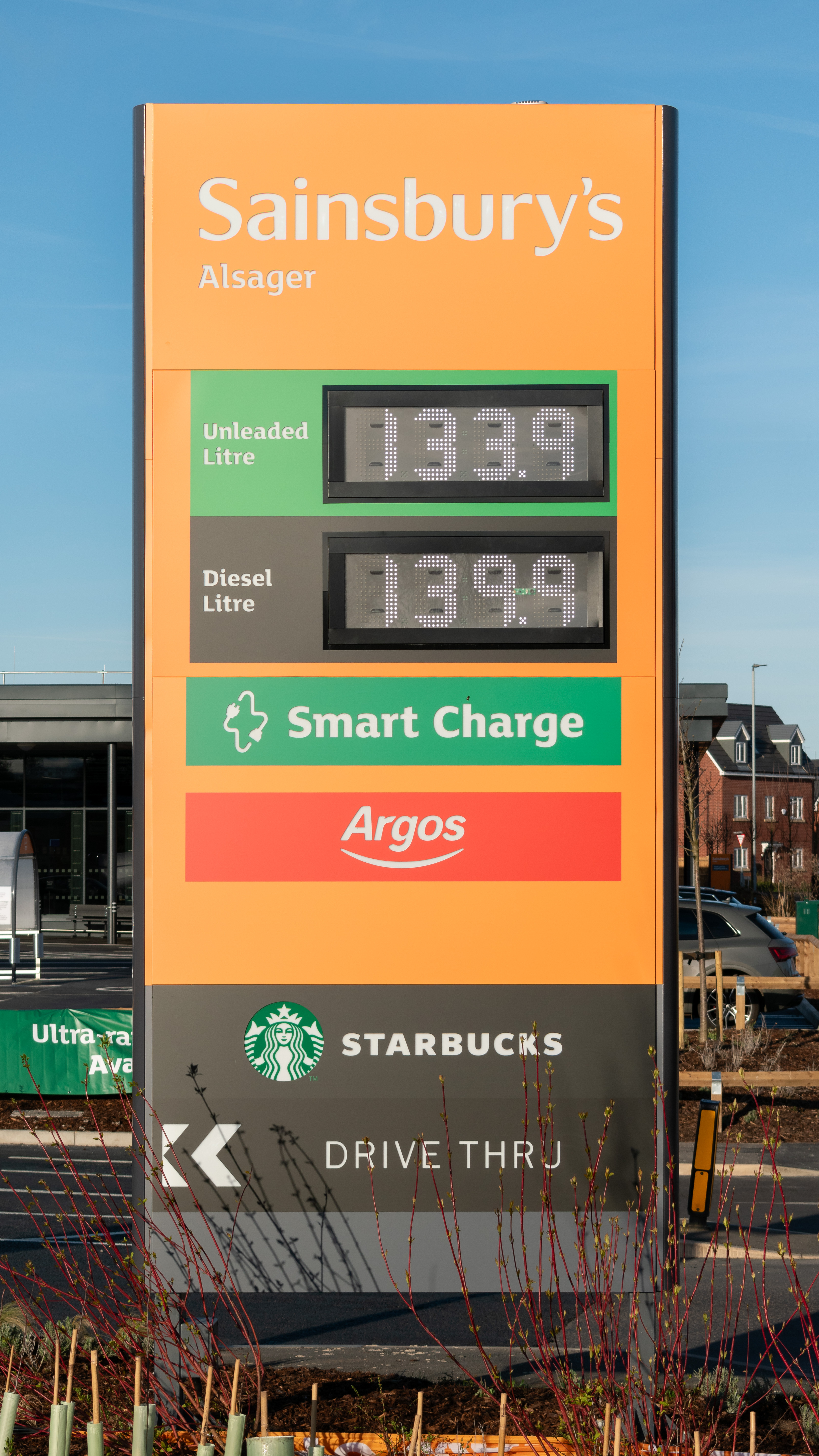
The driver was not mysterious, and it was not home-grown. Transport was the biggest contributor, and within transport it was motor fuel: prices at the pump soared by about 30% in the year to September, up from a 23% annual rise in August. Average petrol prices rose 8.2p in a single month to 169.5p a litre, the highest in around four years; diesel rose 10.7p to 192.5p a litre, its highest since July 2022. According to RAC figures cited by the Press Association, average diesel prices then surpassed 200p a litre for the first time ever at the beginning of October — meaning October’s inflation reading, published next month, starts from an even higher fuel base.
ONS chief economist Grant Fitzner was direct about the cause: “Inflation climbed notably in September to its highest annual rate in almost a year. Increased fuel prices were again the main driver, with the cost of diesel the highest since July 2022. Other upward pressures included airfares and, to a lesser extent, computer games and live events, which are often volatile. These were partially offset by the cost of hotel stays, where prices rose by less than this time last year. The annual cost of both raw materials and goods leaving factories continued to rise, driven by higher crude oil and petrol prices, respectively.” That last sentence matters: factory-gate prices rising means the fuel shock is still moving through supply chains and has not finished landing on shop shelves.
Responding to the figures, Chancellor John Healey acknowledged the transmission channel openly: “We know that price rises from conflicts in the Middle East and Europe are hitting Britain and countries worldwide.” He pointed to the government’s decision on Wednesday to consent to drilling at the Jackdaw gas field in the North Sea as investment “in our clean energy future and supporting British workers”, and promised: “In my Budget next week, I will keep up this momentum — maintaining our fiscal discipline and drive for growth in every postcode, while giving businesses and families some breathing space.”
The borrowing number: £24.5 billion in one month, and a £3 trillion milestone
The public finances release, published alongside the inflation data, was worse than forecast in a different way. Public sector net borrowing was £24.5 billion in September 2026 — £24.52 billion in the ONS figure reported by Reuters — up £1.8 billion, or 7.7%, on September 2025, above the £23.85 billion median forecast in a Reuters poll of economists, and £1.9 billion ahead of the Office for Budget Responsibility’s (OBR) forecast, according to the Press Association’s reading of the data. Government spending rose about 7% in September while tax receipts rose 5.2%, the ONS said via Reuters; net spending on social benefits rose by £1.6 billion to £30.6 billion for the month.
Over the first six months of the 2026/27 financial year, borrowing stood at £97.8 billion. That figure cuts both ways, and both ways were argued within hours. It is £4.4 billion lower than the same period last year, because receipts have grown — the point Fitzner stressed: “Borrowing in the first six months of the current financial year remained below the same period last year, thanks to higher receipts, although it was still above the official forecast.” But it is also £6 billion above the OBR’s forecast, which was made before the Iran war began — and forecasts, not last year, are what Healey’s fiscal rules are measured against.
Then there is the milestone. Public sector net debt was estimated to have exceeded £3 trillion for the first time, up £91.7 billion on a year earlier. In cash terms, Britain has never owed this much. As a share of the economy, however, the picture is less dramatic: debt fell 0.7 percentage points to 94% of GDP, because the economy itself grew. “Preliminary figures suggest that although debt in cash terms continues to rise, as a proportion of GDP it has fallen over the year,” Fitzner said. “On this latter basis it remains at levels last seen in the early 1960s.” Both things are true at once, and which one leads the headline tells you more about the headline writer than the data: the £3 trillion figure is a record stock of debt that must be serviced every single month, while the 94% ratio is the measure economists actually watch for sustainability — and it is very high by post-war standards even as it edges down.
Why this matters: inflation and borrowing are no longer two stories — they are one loop
The reason Wednesday’s double release is worse than the sum of its parts is a mechanism that rarely makes headlines: a large share of Britain’s government debt is index-linked, meaning the interest paid on it rises automatically with RPI inflation. So when fuel prices push inflation up, the Treasury’s debt interest bill rises in the same motion. The ONS figures show the loop turning in real time: central government debt interest was £10.9 billion in September alone, up £1.6 billion on a year earlier, the largest September figure since records began in 1997 and only the eighth month ever above £10 billion. Reporting of the ONS data put the inflation-linked uplift at about £4 billion of that single month’s interest bill. Across the first half of the financial year, debt interest totalled £60.8 billion, up nearly 4% on the year. The state is now spending on debt interest, every month, sums comparable to entire departmental budgets — and the worse the Iran-war fuel shock gets, the bigger that bill becomes, regardless of anything Healey announces next week.
The second turn of the loop runs through the Bank of England. Inflation at 3.5% is drifting further from the Bank’s 2% target, and September’s rise was larger than expected. Martin Sartorius, lead economist at the Confederation of British Industry, said the rise means an interest rate hike is “firmly on the table” at the Bank’s November meeting, because rate-setters will want to guard against headline inflation feeding into shop prices and wages. Suren Thiru of the Institute of Chartered Accountants in England and Wales put the combined effect plainly: inflation is “deepening the financial squeeze on households and businesses”, and rising inflation is “turning the Budget into a perilous high-wire act for the Chancellor, increasing pressure for cost-of-living support while pushing up government borrowing costs, which is shrinking fiscal headroom and narrowing his policy options”. A Bank rate rise would raise mortgage costs for households, raise gilt yields for the government, and shrink Healey’s headroom further — the loop again, one level up.
The third turn is quieter but just as binding: September’s inflation rate is the figure traditionally used to set the following April’s increases in working-age benefits such as universal credit and tax credits, and it feeds the state pension triple lock alongside earnings growth and a 2.5% floor. On current wage figures, pensions are widely expected to rise by about 3.9% next April, set by earnings rather than inflation. Either way, Wednesday’s number mechanically raises the state’s spending commitments for next year before the Budget has even been written. Greg Thwaites, interim chief economist at the Resolution Foundation, summarised the trap: “Rising inflation and record levels of debt illustrate the double dilemma facing the Chancellor — how to ease cost of living pressures for families while keeping a lid on Government borrowing. Borrowing is already off track this year, debt has hit £3 trillion, and markets are closely scrutinising government’s ability to keep on top of the public finances. The Chancellor must confront this double dilemma head on in his Budget next week rather than duck reality.”
Who gains, who loses, and what the numbers actually imply
Start with households, because the fuel numbers are regressive in a way the headline CPI rate hides. A 30% annual rise in motor fuel costs falls hardest on people who drive furthest for work and have the least choice about it — rural workers, tradespeople, carers, delivery drivers — while diesel at 192.5p feeds directly into the cost of moving food and goods, which is why factory-gate and raw-material prices are rising behind it. Households on benefits will see some compensation in April’s uprating, but April is six months of higher prices away. Mortgage holders face the sharpest near-term risk: if the Bank hikes in November, anyone remortgaging meets both higher fuel-driven living costs and a higher interest rate in the same winter. Savers and pensioners are the relative winners — the triple lock protects pension incomes, and a rate rise lifts savings returns — although pensioners who drive pay the same fuel prices as everyone else.
For the government, the arithmetic is brutal in its simplicity. Healey’s main fiscal target is to balance day-to-day spending with tax revenue by 2029/30. The day-to-day (current) budget deficit over the first half of this year was £64 billion, down more than 8% on last year — genuine progress on the measure he is judged by. But his margin for error against that rule — his “headroom” — has been eroded by the rise in global borrowing costs since the Gulf conflict began. Matt Swannell, chief economic adviser to the EY ITEM Club, estimated higher gilt yields have likely left Healey between £10 billion and £15 billion of margin, against the roughly £24 billion buffer his predecessor Rachel Reeves held at the spring forecast: “The public finances remain in a fragile position, and next week’s Budget looks set to be a relatively low-key affair. With little room for manoeuvre, any giveaways are likely to be modest and temporary.” Capital Economics reached the same conclusion from the borrowing data: the figures “reinforce our view that the chancellor will deliver a cautious budget on 28th October that has little net impact on the economy and leaves the toughest fiscal choices for next year”.
Banks sit in a particular place in this story: they are among the few sectors visibly profiting from higher interest rates, and Healey is expected — Reuters and The Times both report — to raise taxes on banks in the Budget to help stay inside his rules. Expect the argument to run both ways in the next week: the Treasury will frame it as asking a windfall sector to contribute; the banks will frame it as a tax on lending capacity at exactly the moment the economy needs credit. Neither framing changes the underlying fact that a chancellor with £10–15 billion of headroom, a £6 billion forecast overshoot and a record debt-interest bill does not have many places left to look.

How Britain got here — and why the comparison points matter
Put Wednesday’s figures against their own recent history and the direction is unmistakable. Inflation was supposed to be the problem Britain had already solved: it has now risen for two consecutive months, from 3.1% to its highest in eleven months, and most economists expect it to rise further in the months ahead, with October’s increase in Ofgem’s household energy price cap landing on winter bills. Diesel has not been this expensive since July 2022 — the last energy shock, after Russia’s full-scale invasion of Ukraine — and has since gone through £2 a litre for the first time. Debt interest has never cost this much in a September in the three decades the series has run. None of these are the worst readings Britain has ever recorded; inflation at 3.5% is not 2022’s double digits, and a debt ratio of 94% of GDP, while at early-1960s levels, has been higher in wartime. But the trend across every gauge in Wednesday’s release points the same way, and it points against a chancellor delivering his first Budget.
The deeper structural point is the one this site’s market coverage has been tracking all month: Britain now imports its inflation through energy, and pays for it twice — once at the pump, and once through index-linked debt interest and gilt yields. Our October 14 market report showed the same mechanism working on the United States, where a hot CPI print put a Federal Reserve rate hike back in play; Switzerland’s inflation hit a two-year high in September on the same energy shock; and Monday’s market session showed oil still setting the tone for global assets. Britain’s version of the shock is distinguished mainly by how little fiscal room it has to absorb it.
What happens next
Three dates now decide how this story develops. First, the Budget on Wednesday, October 28: Healey has promised fiscal discipline with “breathing space” for families and businesses, and the reporting consensus — bank taxes up, giveaways modest and temporary, the toughest choices deferred — will be tested against the OBR’s new forecasts published the same day, including the first official estimate of his remaining headroom and projections that debt interest will exceed £100 billion a year into the 2030s. Second, the Bank of England’s November meeting: a rate hike, unthinkable a few months ago, is now openly priced as a serious possibility, and the Bank must weigh a fuel-driven headline rate it cannot control against the risk that 3.5% becomes embedded in wage settlements. Third, October’s inflation data next month: with diesel already through £2 a litre and the energy price cap risen, another increase is the base case — which would tighten every screw described above before Christmas.
There is a scenario in which Wednesday is the peak: if the Gulf conflict eases and fuel prices retreat, inflation falls mechanically, the index-linked interest bill falls with it, gilt yields soften, and Healey’s caution looks like prudence. There is an equally visible scenario in which it is not: fuel stays high, the Bank hikes, headroom vanishes, and the “toughest choices” Capital Economics expects to be deferred arrive anyway, in a worse market, next year. What Wednesday’s numbers settled is that Britain no longer gets to choose between fighting inflation and protecting the public finances. The two fights are the same fight now — and the bill for the first month of it was £24.5 billion.
Sources
Office for National Statistics, Consumer Prices Index and Public Sector Finances releases, October 21, 2026 (primary data, including CPI 3.5%, CPIH 3.6%, RPI 3.9%, motor fuel and pump prices, borrowing of £24.52 billion, debt above £3 trillion at 94% of GDP, debt interest of £10.9 billion and £60.8 billion for the half-year). Reuters, “UK borrowing and £3 trillion debt herald tough budget for Healey”, October 21, 2026. Press Association reporting of both ONS releases, October 21, 2026 (inflation detail, Fitzner and Healey quotations, CBI/ICAEW/Resolution Foundation/ITEM Club reaction, RAC diesel figures). The Times, “UK inflation and borrowing hit highest level this year”, October 21, 2026. The Guardian’s report of the ONS borrowing release, October 21, 2026 (debt interest detail).