Ireland Israel spitting UEFA investigation
Sports / Football
UEFA has appointed an ethics and disciplinary inspector to investigate an alleged spitting incident during Sunday's Nations League match between the Republic of Ireland and Israel, European football's governing body announced on Tuesday.
An Irish coach alleged that an Israel player spat at him as the teams left the pitch at half-time of the 1–1 draw on October 4. The match was played behind closed doors in Backa Topola, Serbia, and the accusation remains unproven while the inspector examines the record.
UEFA said the appointment followed "a review of the official reports which contained an allegation of an incident in or around the tunnel at half-time." The deliberately narrow language matters. UEFA has confirmed that an allegation entered the official process; it has not said that spitting occurred or identified any player as responsible.
The half-time confrontation
Ireland fitness coach Damien Doyle exclaimed, "he spat on me," as the teams went down the tunnel, according to reporting on the incident. The Football Association of Ireland quickly confirmed Doyle's allegation and said a Serbian security guard had witnessed what happened.
Ireland manager Heimir Hallgrimsson drew a clear line around what he personally knew. He said he had not seen the alleged act and declined to go further, telling reporters that "it is something that a disciplinary committee will have to look at." His distinction — between backing a colleague and claiming direct knowledge — is central to a fair reading of the case.
Israel had not issued an immediate public response to the spitting allegation. Its camp had, however, made separate complaints about Ireland's conduct during the week, including an accusation that Irish players engaged in "trash talk." Those claims and Doyle's allegation are distinct matters, and none should be treated as proof of another.
Why this matters
Football's disciplinary codes treat spitting as one of the game's most serious personal offences. Historically, proven cases have attracted multi-match bans that can exceed punishments for some violent-conduct incidents. If UEFA brings a charge and establishes the allegation, the player involved could miss a significant stretch of international football spanning the Nations League and World Cup qualifying cycle.
Yet the consequences reach beyond a suspension. This double-header was already among the most politicised fixtures in recent European football. A proven offence would deepen a rupture between the delegations and make future meetings harder to manage. If the allegation is not sustained, the FAI will face questions about how a week of escalating grievances was handled and communicated.
The investigation therefore has two audiences: the people directly involved, who need a reliable finding, and a wider football public already primed to see the fixture through the politics surrounding the war in Gaza. UEFA's task is to separate evidence from atmosphere.
Context: a week of spite and rancour
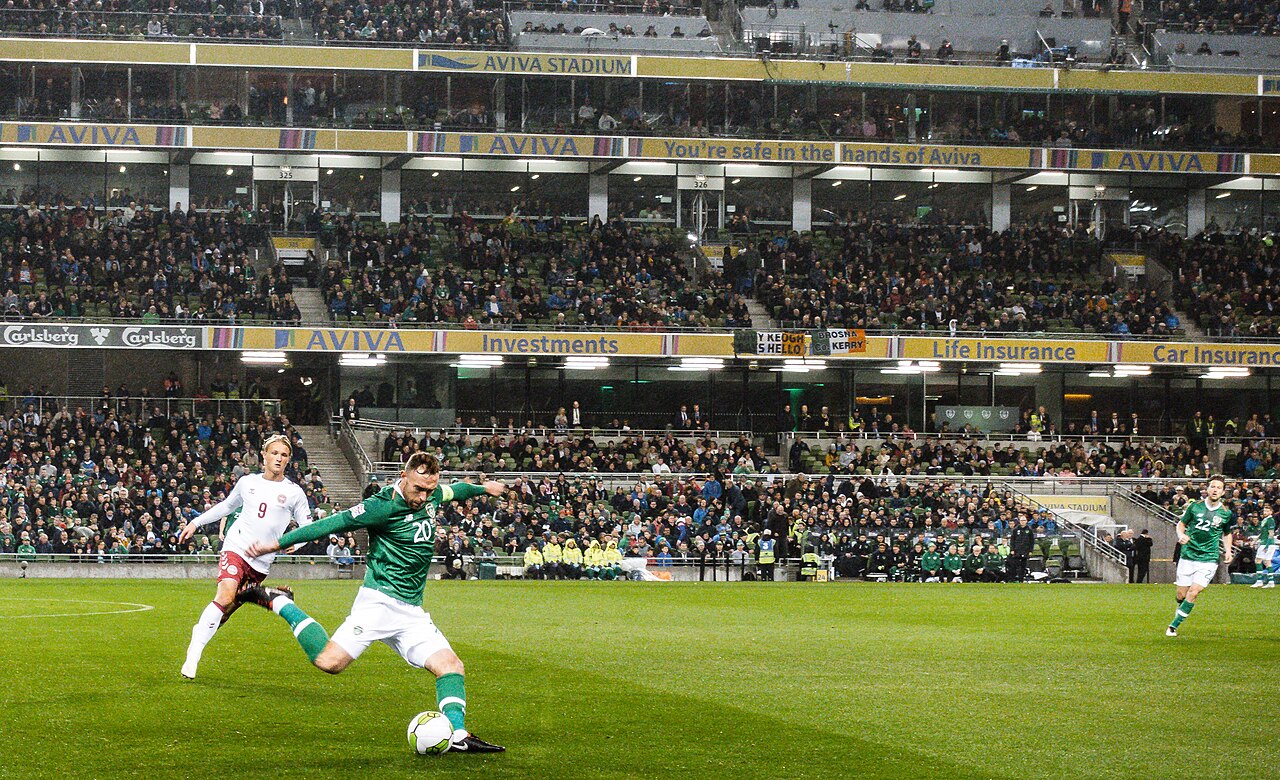
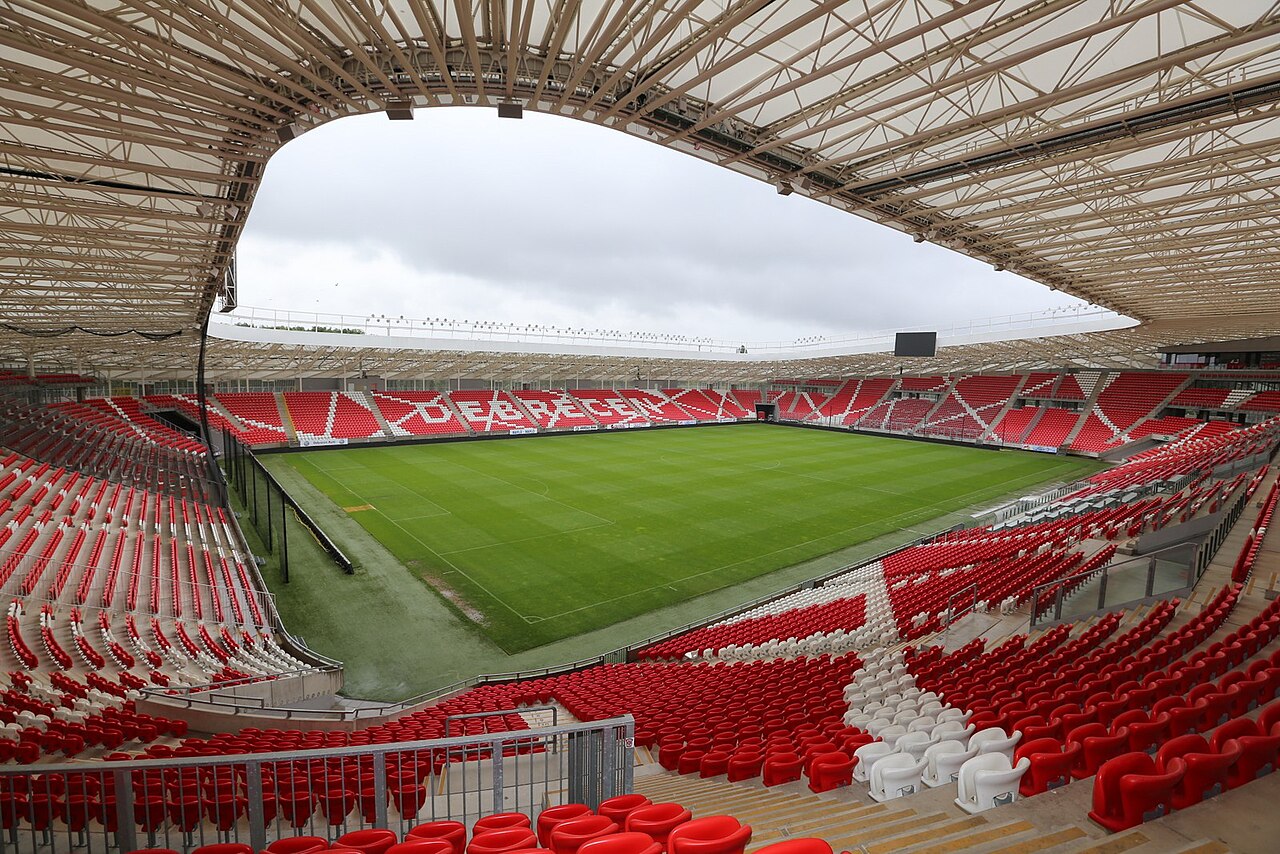
Ireland and Israel met twice in seven days. Ireland won the first match 3–0 in Debrecen, Hungary, before the return fixture ended 1–1 in Serbia. The nominal Irish home match was moved to a neutral venue and played without spectators after protests in Ireland over whether the fixtures should be fulfilled because of the war in Gaza.
The arguments had reached the squad before a ball was kicked. Goalkeeper Gavin Bazunu withdrew on ethical grounds, and Ireland's players held a vote on whether to play. Signal Post News covered the earlier Ireland–Israel boycott debate and Bazunu's withdrawal as the team chose by majority to continue with the fixtures.
At the Serbia match, both sides wore black armbands, but for different commemorations. Ireland said its armbands honored all victims of the conflict in Gaza; Israel said its armbands marked the October 7 attack. The teams did not exchange handshakes or pennants before kickoff.
The unease extended beyond the pitch. Ireland's pre-match press conference was cut short after two Israeli journalists accused Irish players of supporting murder. UEFA later barred those two reporters from the post-match briefings. Separately, the FAI opened an internal investigation into alleged racial abuse of striker Adam Idah by a small group of Israel supporters in Debrecen. That claim, like the tunnel allegation, requires evidence and a formal finding.
Hallgrimsson had used the word "genocide" when speaking about Gaza. After the 1–1 draw, he said he would not wish another national team to endure the same environment and answered, "no, they shouldn't," when asked whether Ireland and Israel should be drawn together again.
Midfielder Finn Azaz, who has mixed Irish-Israeli heritage, was left out of Ireland's starting lineup, adding another intensely personal layer to a fixture already carrying political weight. The wider international window offered little sporting relief: Ireland also lost 1–0 to Kosovo and drew 2–2 with Austria.
What each side says
The FAI moved quickly to stand behind its staff member. It confirmed Doyle's account and said there was a witness: a Serbian security guard. That gives UEFA a specific allegation to test rather than an anonymous complaint, but the association's statement is still one side's account, not a verdict.
Israel's camp had not publicly answered the spitting claim when UEFA announced its inspector. During the week, it countered with allegations of its own about Irish players' behavior, especially the claim of "trash talk." Israel's position therefore cannot fairly be reduced to silence; it had been publicly objecting to the tone and conduct of the encounters even before the tunnel case became official.
UEFA is taking its familiar institutional route: an inspector under its ethics and disciplinary framework, a review conducted largely out of public view, and a decision only after the reports and available testimony are assessed. The pace may frustrate both camps, but it also offers a chance to keep the finding tied to evidence rather than the temperature of the rivalry.
Winners, losers and the cost of another flashpoint
There are no obvious winners in an investigation born from a match both sides wanted behind them. Ireland's staff may feel vindicated that UEFA considered the allegation serious enough to appoint an inspector. Israel, meanwhile, is entitled to the presumption that an unproven accusation is not a finding of guilt.
The immediate losers are sporting credibility and trust. Every additional dispute pulls attention away from two competitive results and toward the conduct surrounding them. UEFA also inherits a difficult governance problem: whether future draws can be administered safely and fairly when neither camp appears confident that football alone can contain the encounter.
The case also lands against the broader Gaza backdrop covered in Signal Post News reporting on the stalled ceasefire and its human cost and the eight-nations diplomatic roadmap. Those political and humanitarian disputes cannot be resolved by a football disciplinary panel, but they explain why every gesture in this pairing has carried amplified meaning.
What happens next
The ethics and disciplinary inspector is expected to review the official match reports, the observations of the UEFA delegate and referee team, and witness accounts from around the tunnel. The inspector can then recommend whether UEFA should open formal disciplinary proceedings against a player.
If a charge is brought and the player is found guilty of spitting, a lengthy suspension could follow under UEFA's disciplinary regulations. If the available evidence does not establish the allegation, UEFA may close the matter without a charge. Until one of those outcomes is reached, the accusation should remain described exactly as UEFA describes it: an allegation under investigation.
There is a second question for the governing body. The FAI wants the countries kept apart in future draws. Granting that request would amount to an acknowledgement that match administration alone could not contain the rivalry; rejecting it would leave UEFA responsible for a much more demanding security and conduct plan if the teams meet again.
Ireland return to action next month. Hallgrimsson framed that return as a release from the week's strain: "I just felt the second half was not a good match... I'm happy that this is finished and we can concentrate on next month." Whether the disciplinary case is finished by then is now in UEFA's hands.
Sources
- Reuters — UEFA investigates alleged spitting incident during Ireland v Israel game
- The Times — Ireland–Israel Nations League report and aftermath
Reporting note: The alleged spitting incident has not been proven. This report distinguishes the FAI's account, Israel's separate complaints and UEFA's confirmed investigative step.