War · Türkiye · Saudi Arabia · Pakistan
Turkey’s parliament has ratified the Mecca Joint Defence Agreement with Saudi Arabia and Pakistan by 279 votes to 119, completing Ankara’s side of a collective-defence pact that treats an external attack on any one of the three countries as an attack on all of them — and committing NATO’s second-largest military to a partnership born in the middle of a regional war.
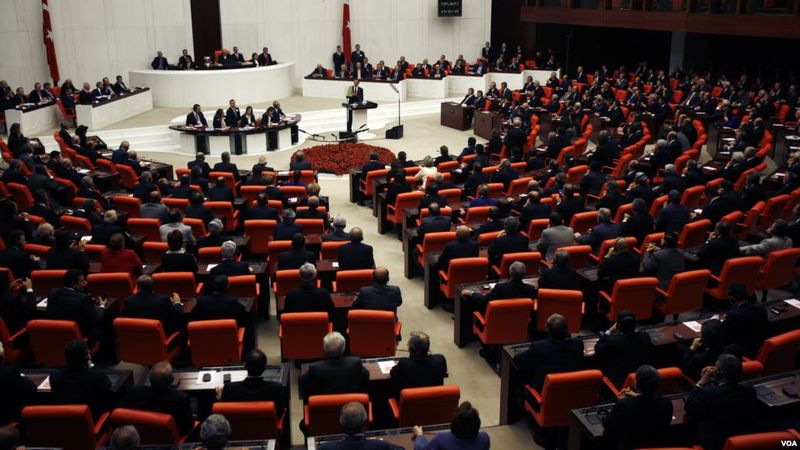
ANKARA, November 6, 2026 — It took two days of debate, a split that cut across the usual party lines, and a warning from the opposition benches that Turkish soldiers could one day be asked to fight somebody else’s war. But on Thursday evening the Grand National Assembly did what the government of President Recep Tayyip Erdoğan had asked of it: it ratified the Mecca Joint Defence Agreement, the trilateral pact Turkey signed with Saudi Arabia and Pakistan in August, by 279 votes to 119, with 398 of the chamber’s 592 lawmakers taking part.
The vote, reported by Reuters, Al Jazeera and the Anadolu Agency, completes Turkey’s parliamentary ratification of the pact. Saudi Arabia and Pakistan had already completed their own domestic procedures, Pakistan’s Foreign Office announced on October 23. What remains is procedural — publication of the law in the Official Gazette, presidential approval, and deposit of the final ratification documents with the pact’s secretariat in Saudi Arabia — but the political decision has now been taken in all three capitals.
Track it live: Live Global Trackers — Wars
What the pact actually says
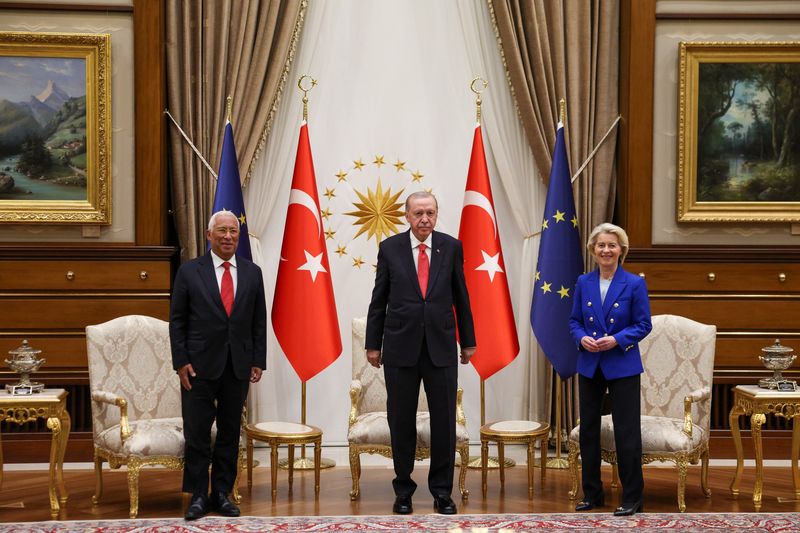
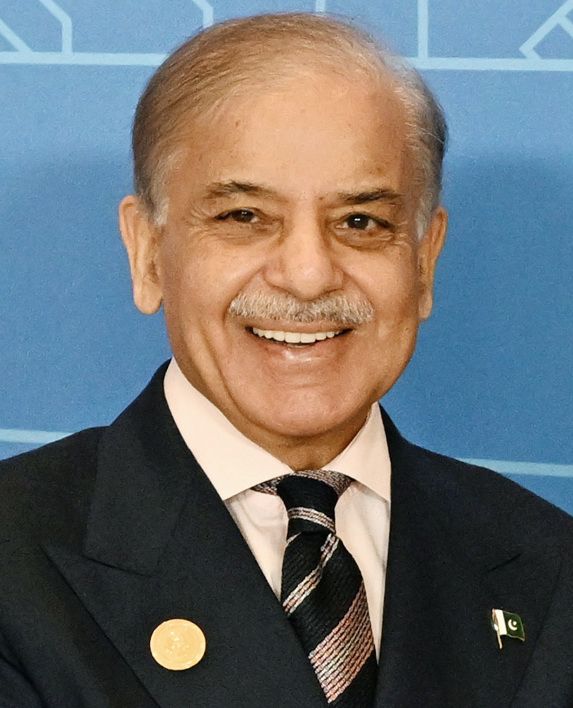
The agreement, signed in Mecca on August 7, 2026 by Erdoğan, Saudi Crown Prince and Prime Minister Mohammed bin Salman and Pakistani Prime Minister Shehbaz Sharif, contains 16 articles, according to the document submitted to the Turkish parliament and seen by Reuters. Its centrepiece is a collective-defence clause modelled in spirit on NATO’s Article 5: an external armed attack on any one of the three countries will be considered an attack on all of them, and the others commit to come to its aid.
Around that core, the pact provides for intelligence sharing, joint military exercises and training, logistical support, counterterrorism cooperation and closer defence-industry ties, including technology transfers, joint research and development and joint production. The draft approved in Ankara commits the member countries for 10 years, after which they may withdraw; other countries may join if all three founding members agree — a door Syria has already been publicly weighing, as Signal Post News reported when Damascus’s interest surfaced at the Manama Dialogue: Syria weighs joining the Mecca defence pact.
A vote that scrambled the party lines
Ratification bills are usually routine. This one was not. The ruling Justice and Development Party (AKP) and its nationalist ally the MHP backed the agreement, as expected — but so did lawmakers from the main opposition Republican People’s Party (CHP), while the New Party, the İYİ (Good) Party, the pro-Kurdish DEM Party and other opposition lawmakers voted against, Turkish media reported. Of the 279 votes in favour, reporting on the division attributes 222 to the AKP, 24 to the MHP and 25 to the CHP; the 119 against were led by the New Party and DEM.
The debate was really about one question: what, in practice, would Turkey be obliged to do if Saudi Arabia is attacked again? Riyadh is facing renewed strikes by Yemen’s Iran-backed Houthis, who have hit Saudi airports and energy infrastructure in recent months, and Pakistan’s defence minister has already said publicly that Pakistan will use “whatever means” to defend the kingdom — a pledge examined in Pakistan pledges ‘whatever means’ to defend Saudi Arabia. Opposition speakers warned the pact could draw Ankara into regional conflicts and put Turkish soldiers in harm’s way for foreign governments’ political ambitions; some went further and framed it as a trap laid by the United States and Israel.
The government’s answer, repeated through the debate, is that ratification is not deployment. Fuat Oktay, chairman of parliament’s foreign affairs committee, which approved the bill on October 27, has said Türkiye would “not be drawn into an uncontrolled process against its will,” and that any future deployment of Turkish troops would require parliament’s explicit, separate approval. Turkish officials have also stressed that the agreement is defensive and does not commit Turkey to offensive operations against the Houthis. A separate troop mandate — the mechanism Ankara would need to send forces to Saudi Arabia — has been discussed in parliament as its own track: Turkey’s parliament and the troop-mandate question.
Why this matters
Collective-defence clauses are only as meaningful as the wars they might be tested by, and this one was written in wartime. The pact was signed in August, in the shadow of the US–Israeli war on Iran that began in February and of a Houthi campaign that has repeatedly reached Saudi soil. Its logic is deterrence by arithmetic: an attacker considering a strike on Riyadh must now reckon not only with Saudi Arabia’s own forces and its American umbrella, but with Pakistan — a nuclear-armed state whose soldiers have a long history of serving in the kingdom — and with Turkey, a NATO member with the alliance’s second-largest military, a battle-tested drone industry and bases and deployments stretching from Qatar to Somalia.
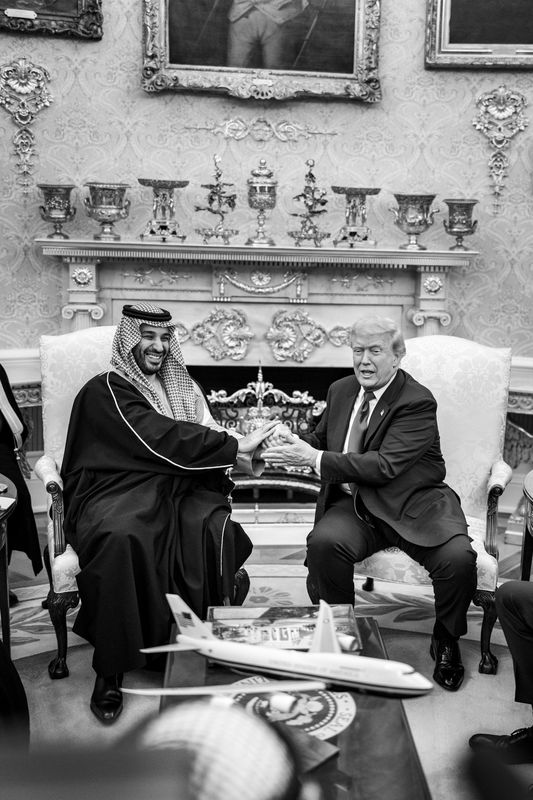
That is also why the ratification reverberates beyond the three signatories. For Saudi Arabia, the pact is insurance diversification: after years in which its security rested overwhelmingly on Washington, Riyadh has been assembling a lattice of partnerships — the September 2025 bilateral mutual-defence agreement with Pakistan first, then the trilateral Mecca framework — that gives it options if American guarantees ever look uncertain. For Pakistan, it converts a long, informal military relationship with the Gulf into a formal claim on relevance and, potentially, on Gulf financing and energy security. For Turkey, it is a statement of arrival: Ankara is no longer merely a NATO ally commenting on Middle East security, but a guarantor inside it.
There is a counter-argument, and it was heard in the chamber this week. A collective-defence promise that nobody expects to be tested is cheap; one that is tested is expensive. If Houthi missiles or drones kill Turkish-protected targets, or if a future Iran war draws a direct attack on Saudi Arabia, Ankara will face exactly the choice its opposition warned about — honour the clause and enter a war it did not start, or hesitate and devalue every guarantee it has signed. Iran, notably, has not reacted to the pact as an enemy would: in October, President Masoud Pezeshkian called Muslim unity a step forward and said Tehran was ready to participate in the process, and senior Saudi, Pakistani and Turkish security officials have travelled to Tehran under the pact’s umbrella. The alliance’s architects seem to intend it as leverage for a regional settlement, not simply as a war coalition — but intentions are not what get tested in a crisis.
How we got here
The Mecca agreement did not appear from nowhere. Saudi Arabia and Pakistan signed their bilateral strategic mutual defence agreement in September 2025. The three leaders then signed the trilateral Joint Defence Agreement in Mecca on August 7, 2026, and Ankara sent it to parliament for ratification in October, after the pact’s Strategic Political and Defense Committee had already begun meeting — its session in Riyadh on October 5 brought together the three countries’ foreign and defence ministers and chiefs of staff. Turkey’s foreign affairs committee approved the ratification bill on October 27. Article 1 of the bill was adopted on Wednesday, November 4, before Deputy Speaker Celal Adan adjourned the session; the remaining articles were debated on Thursday and the bill as a whole was put to the electronic vote that produced the 279–119 result.
The numbers, in context
The arithmetic of the vote tells its own story. The 279 votes in favour are a comfortable majority of the 398 cast, but they are notably short of the AKP–MHP bloc voting alone in a chamber of 592 — the government needed, and got, opposition CHP votes to widen the margin, which is politically useful cover for a commitment this large. The 119 against, roughly 30 percent of those voting, is a substantial dissenting bloc for a defence treaty, and it guarantees the pact will be re-argued in Ankara every time the region heats up. The 10-year lock-in matters too: whoever leads Turkey, Saudi Arabia or Pakistan in 2036 will inherit this clause, and withdrawal before then is not provided for in the draft Ankara approved.
What happens next
Three things to watch. First, the formalities: publication in the Official Gazette and presidential approval in Ankara, then deposit of the instruments with the secretariat, at which point the agreement enters into force. Second, the mandate question: if the Houthi campaign against Saudi Arabia intensifies, expect the separate debate over authorising Turkish military support to Riyadh — the debate Reuters reported in October was already being prepared by AKP lawmakers — to move from hypothetical to immediate, and with it the argument about what “aid” under the pact actually means: air defence crews, naval support in the Red Sea, intelligence, or combat troops. Third, expansion: with Syria publicly weighing membership and Iran publicly blessing Muslim unity, the pact could either grow into the nucleus of a wider regional security order or stall as a three-country statement. The difference will be decided, as it usually is, by the next crisis rather than by the treaty text.
For now, the fact stands on its own. On Thursday, the parliament of NATO’s second-largest military power voted, by a margin of 160 votes, to treat an attack on Saudi Arabia or Pakistan as an attack on itself. In a region where deterrence has been failing in public for two years, three governments have decided that a written promise is worth making — and worth being believed.
Sources: Reuters (vote result and pact text, via Al Jazeera and Turkish media syndication), Al Jazeera, Anadolu Agency, Turkish Minute, AnewZ and Associated Press reporting on the ratification debate; Pakistan Foreign Office statement of October 23, 2026 on completion of Pakistani ratification.