WAR · PAKISTAN-SAUDI
WAR / PAKISTAN-SAUDI
Pakistan Pledges 'Whatever Means' to Defend Saudi Arabia From Houthi Attacks
Defence Minister Khawaja Asif ties the pledge to the August Mecca Joint Defense Agreement with Turkey, as Houthi missiles and drones strike the kingdom with growing frequency.
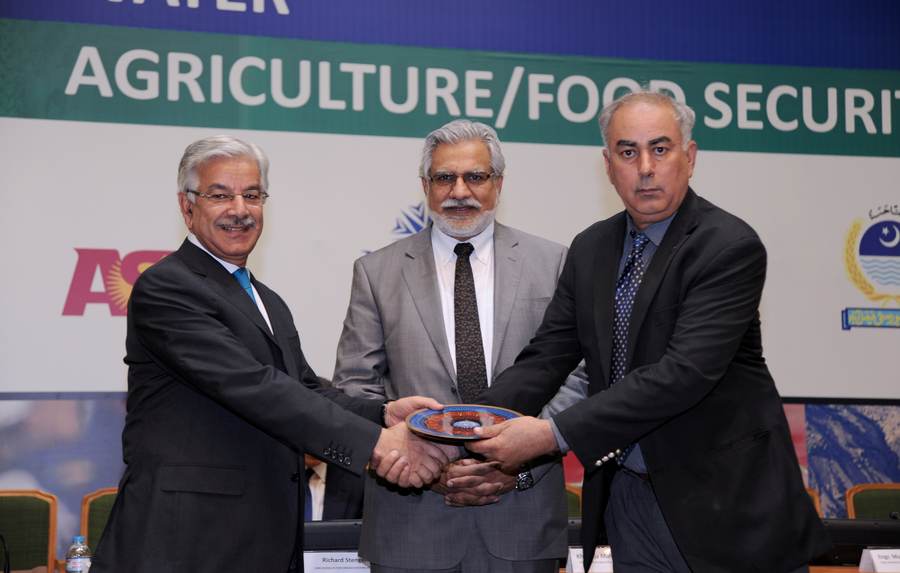
Pakistan will use "whatever means are available" to defend Saudi Arabia against Houthi attacks, Defence Minister Khawaja Muhammad Asif said on September 29 and 30, the clearest public signal yet that Islamabad could be drawn into direct military action under the trilateral defense pact signed in Makkah this summer. Speaking first to reporters in Rome and then in an interview with Al Jazeera, Asif tied the pledge to the Mecca Joint Defense Agreement with Saudi Arabia and Turkey, under which an attack on one member is treated as an attack on all.
What Asif actually said
In Rome on September 29, asked whether Pakistani forces had taken part in strikes against Iranian operators in Yemen, Asif declined to give details but left little doubt about the commitment. "I'm not going into detail, but obviously when I say that we are bound by this arrangement to defend Saudi Arabia, that means whatever means are available at our disposal, they'll be available to Saudi Arabia also. I think that's a categoric statement," he told reporters, according to the Associated Press. He stopped short of confirming Pakistani participation in any strikes, and did not say whether Riyadh had formally requested military assistance.
A day later, in an interview with Al Jazeera, he went further. "We are bound by this arrangement to defend Saudi Arabia, that means whatever means that are available at our disposal, they'll be available to Saudi Arabia also," he said. "Any enemy of Saudi Arabia is enemy of Pakistan. That should be very clear." He added: "We are there to help Saudi Arabia in any conflict, whether it is coming from the Houthis or a country or any other outfit which threatens Saudi Arabia's security. We will be there to defend them." There was, he said, "absolutely no doubt" in Pakistan's view that the Houthis were committing aggression against the kingdom.
Why this matters
Start with the language, because the language is the policy. "Whatever means" is the strongest formulation Islamabad has attached to the Mecca pact since it was signed — and in statecraft, deliberate ambiguity about capabilities is itself an instrument. Pakistan is a nuclear-armed state; when its defence minister says every means at the country's disposal is available to an ally, the sentence is aimed as much at Sanaa and Tehran as at Riyadh. It raises the perceived cost of escalation without committing Islamabad to any specific action. That is how deterrence is supposed to work — and also how miscalculation starts, when one side's signal is read by the other as a threat rather than a warning.
The timing is the second signal. The pledge landed four days after the senior military leadership of Pakistan, Saudi Arabia and Turkey met in Riyadh on September 25, condemned attacks targeting Makkah, and agreed to deepen military and intelligence cooperation. Asif's remarks read as the political-level follow-through to a military-level coordination meeting — the moment a paper pact started acquiring operational muscle.
The third signal is the battlefield. The Houthis have stepped up missile and drone attacks on Saudi territory in recent weeks — Saudi air defences intercepted two Houthi drones over Riyadh on September 26 — and the group has seized the port of Mokha and several Red Sea islands, extending its reach toward the Bab el-Mandeb Strait. A pledge like Asif's does not happen in a vacuum; it happens when the threat picture is worsening.
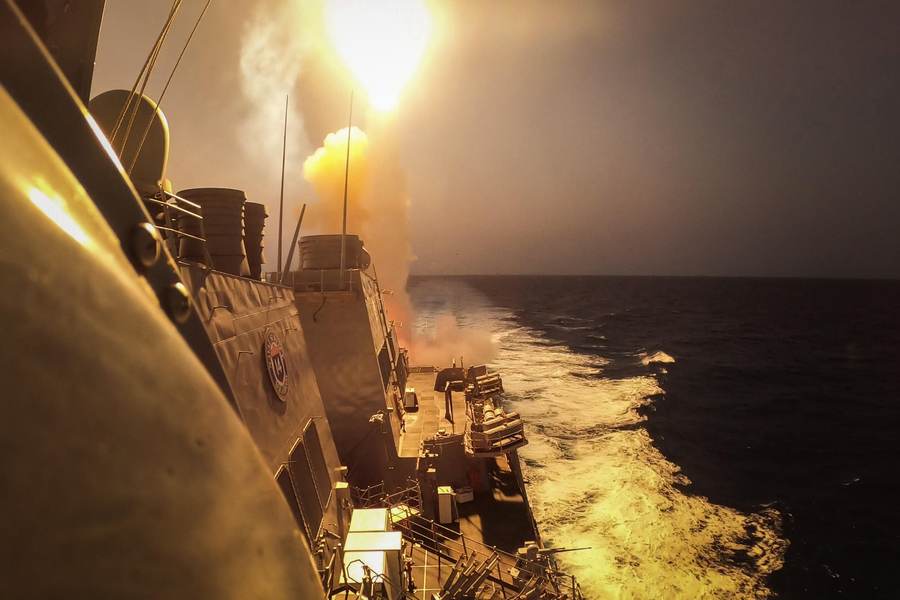
And then the necessary correction: what this is not. Asif did not announce an operation, confirm that Pakistani forces had struck anything, or say that Riyadh had asked for help. The pledge is conditional and declaratory. Treating it as an activation order would be reading beyond the evidence.
The pact behind the pledge
The Mecca Joint Defense Agreement was signed in Makkah on August 7, 2026, by Pakistan, Saudi Arabia and Turkey. Its core clause is simple: an armed attack against any one of the three is treated as an attack against all. Islamabad has described the agreement as defensive in nature — aimed at strengthening collective deterrence rather than targeting any particular country.
The road to Asif's pledge has been a steady drumbeat. On September 18, Lieutenant General Ahmed Sharif Chaudhry, the Pakistani military's spokesman, said Pakistan would go to "any extent" — diplomatically and physically — to defend the kingdom, including the holy sites in Mecca and Medina. On September 25, the three countries' military chiefs met in Riyadh, condemned attacks targeting Makkah, and reaffirmed their commitment to the kingdom's collective defence; Saudi Defence Minister Prince Khalid bin Salman then met Pakistan's Chief of Defence Forces and army chief, Field Marshal Asim Munir, on joint efforts against attacks on Makkah and on Saudi civilian and economic infrastructure. Pakistani forces are already deployed in the kingdom — a long-standing training and advisory presence that gives Islamabad a footprint to build on if Riyadh asks for more.
There is a ghost in this story, and its name is 2015. That year, Pakistan's parliament voted to stay out of the Saudi-led war in Yemen — a decision Riyadh never forgot and Islamabad's politicians still invoke. Asif's pledge moves in the opposite direction in tone, but the parliamentary question will return the moment any operational request arrives. That is the tension to watch: the executive can promise in Rome; the legislature remembers 2015.
Asif on Iran — a claim to handle with care
In the Al Jazeera interview, Asif offered an unusual gloss on the Houthis' relationship with Tehran: he said Iran does not accept the group as its proxy, and that proxy groups can develop agendas and capabilities of their own once armed. That is his assertion, and it should be read as such.
It sits uneasily with the widespread characterization of the Houthis as Iran-backed — including in the AP's own reporting of Asif's Rome remarks, which describes "Iran-backed Houthi rebels." Tehran denies directing Houthi operations; UN panels and Western governments have documented Iranian-origin weaponry reaching Yemen. Who commands what in Yemen is genuinely contested. But Asif's formulation is also a useful diplomatic device: it lets Islamabad condemn Houthi attacks without directly accusing Tehran — preserving the back-channel role Pakistan has cultivated between Riyadh and Tehran for years. Watch whether that channel survives the pledge.
Who gains, who is exposed
For Riyadh, the pledge is close to ideal: a public, on-the-record commitment from a nuclear-armed partner that raises the cost of Houthi escalation and reassures a domestic audience living under more frequent air-raid alerts. The cost to the kingdom, for now, is zero — unless it has to call the pledge in.
For Islamabad, the ledger is mixed. Deeper alignment with the Gulf state that has repeatedly thrown financial lifelines to Pakistan's fragile economy is valuable. But the exposure is real: Pakistan shares a roughly 900-kilometre border with Iran, cooperates with Tehran on border security, and an open-ended promise to fight Tehran's alleged proxies complicates the most delicate balancing act in Pakistani foreign policy. Asif's own careful words about Iran suggest Islamabad understands the risk it is taking.
Turkey, the third signatory, has been quieter. If the pact moves from declarations to operations, Ankara's air and naval capabilities — and its own equities in the Red Sea — become relevant. For now, Pakistan has taken the public lead, and Turkey the watching brief.
The Houthis may read the pledge as a provocation and answer with more strikes, or as a ceiling and test it. Their recent pattern — Mokha, the Red Sea islands, the Riyadh drones — suggests a movement that escalates when it senses momentum, not one that backs down at warnings.
The critics' case, in outline, is that "whatever means" is dangerously open-ended: it risks entrapping Pakistan in a war of Riyadh's choosing, and a commitment of this scale should be debated in parliament rather than announced on a foreign trip. The supporters' answer is that ambiguity is the point — deterrence works precisely because the other side cannot be sure where the line is. Both positions are coherent. The facts to watch are whether parliament gets a say, and whether Riyadh ever makes a formal request.
By the numbers
The Bab el-Mandeb Strait, toward which the Houthis are extending their reach, carries about 12 to 15 percent of global trade. A sustained threat to that chokepoint reprices shipping insurance and pushes traffic around the Cape of Good Hope — costs that land, eventually, on consumers everywhere. That is why a Yemeni militia's missile campaign registers in finance ministries far from the Red Sea.
On tempo: the Houthis have stepped up missile and drone attacks on Saudi territory in recent weeks, with Saudi Arabia reporting the interception of two Houthi drones over Riyadh on September 26. No casualties were reported in the developments covered in this article.
And the shadow over everything: the region is operating under the strain of the ongoing US-Iran war and the Strait of Hormuz crisis, which means every local escalation carries a premium of miscalculation. Oil and shipping markets will price the risk before the politicians do.
What happens next — four scenarios
First, the formal request. If Riyadh asks Islamabad for specific support — air defence, intelligence, advisers — the declaration becomes a decision, and Pakistan's parliament will have to confront the 2015 precedent head-on. This is the tripwire.
Second, Houthi retaliation. The group answers the pledge with a fresh wave of strikes on Saudi infrastructure or Red Sea shipping, testing whether "whatever means" has teeth or is only words.
Third, the escalation ladder. Intelligence-sharing and air-defence integration were already agreed on September 25; the rungs above that — an expanded advisory presence, then direct strikes — are each politically harder than the last, in Islamabad, in Riyadh, and in Ankara.
Fourth, the Iran channel. Tehran's response — whether it leans on Islamabad's back-channel or treats the pledge as a hostile act — will decide whether this stays a Gulf deterrence story or becomes a wider confrontation.
What to watch in the coming days: any formal Saudi request for assistance; debate in Pakistan's parliament; Houthi statements responding to Asif; the next meeting of the three countries' military chiefs; and the oil and shipping markets, which move first.
Sources
War Desk · Published September 30, 2026Back to War
Disclosure: Signal Post News may earn a commission from qualifying purchases made through links on this page, at no extra cost to you. Learn more.