
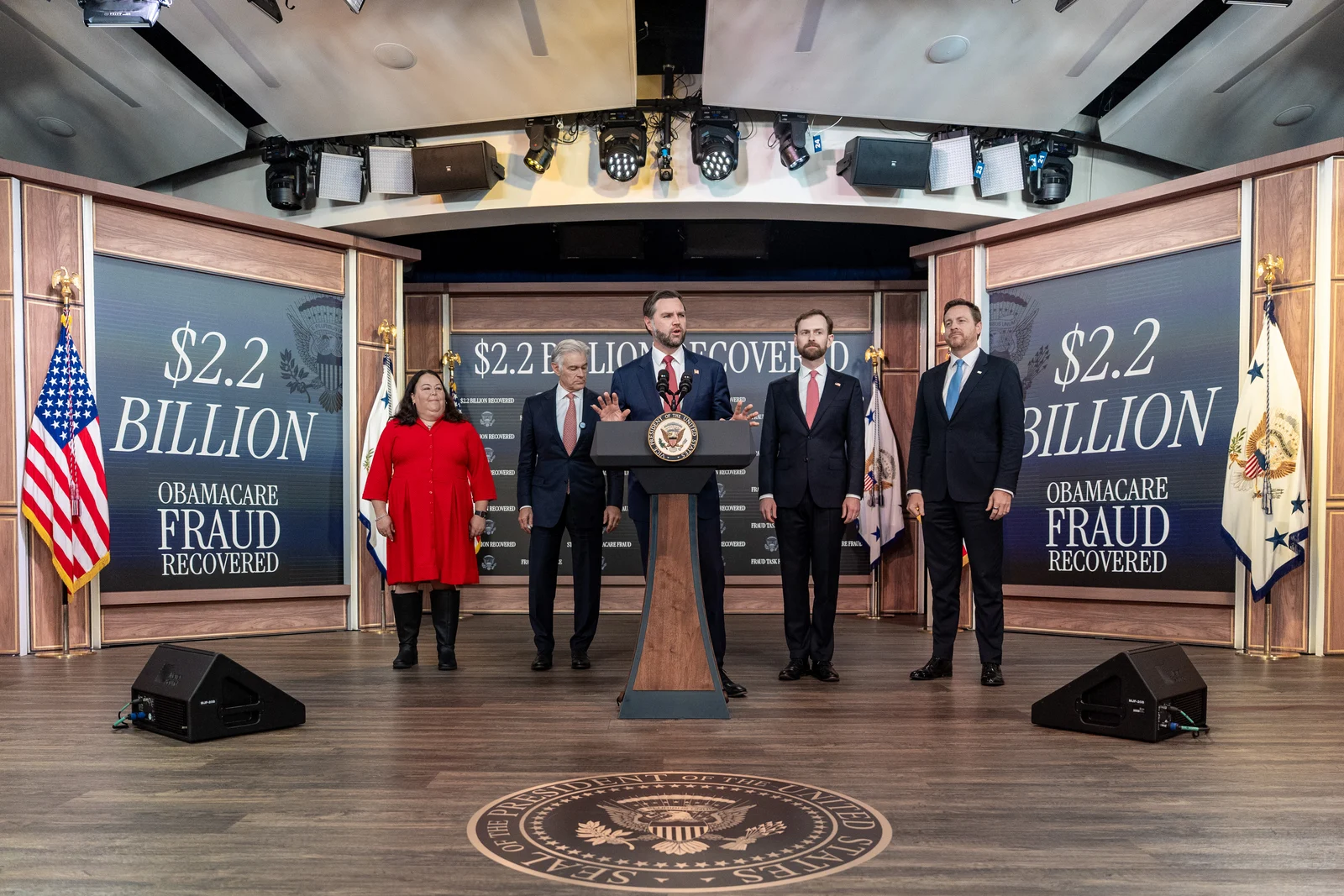
The 760,000 ACA enrollees removed from marketplace coverage are the center of a new Trump administration fraud crackdown with potentially large consequences for federal spending and for families who may discover that a plan has been canceled. Vice President JD Vance, appearing with Centers for Medicare & Medicaid Services Administrator Dr. Mehmet Oz, said the administration would terminate about 315,000 enrollments covering approximately 760,000 people and claimed the step would save taxpayers $2.2 billion.
The announcement presents two distinct questions. The first is whether improper or fabricated enrollment exists: government investigators have documented vulnerabilities in marketplace verification. The second is whether the administration's process reliably separates sham applications from real people who made paperwork mistakes, changed addresses, or did not understand that a broker had enrolled them. The evidence made public so far establishes the risk of fraud more clearly than it establishes the accuracy of every planned cancellation.
What the Obamacare fraud crackdown will do
Officials said the cancellations involve roughly 315,000 marketplace enrollments. Because a single enrollment can cover more than one household member, the administration put the number of people affected at about 760,000. It also said another 419,000 enrollments will be subjected to additional verification rather than immediately canceled.
The administration announced a six-month suspension on new agents and brokers entering the federal marketplace. That pause is intended to keep additional bad actors from signing up while officials examine enrollment practices. It may also constrain legitimate brokers who help people compare plans, understand subsidies and complete documentation, making implementation details important.
Vance and Oz framed the policy as protection for taxpayers and consumers. Their $2.2 billion savings figure is an administration estimate. No publicly described independent audit accompanied the announcement, and officials did not release enough case-level methodology for outsiders to test whether the removals precisely match the asserted fraud.
ACA marketplace fraud is real, but scale remains disputed
A Government Accountability Office covert-testing project exposed a serious weakness. Nearly all 24 fictitious applicants used during 2024 and 2025 obtained subsidized coverage. That finding shows the enrollment system can be manipulated and supports stronger identity and eligibility checks. It does not, by itself, prove that 760,000 actual people were fraudulently enrolled; 24 undercover applications demonstrate a vulnerability, not the national prevalence of abuse.
The distinction matters because the Affordable Care Act marketplace was serving roughly 19.2 million active enrollees in early 2026. The planned removal therefore affects about 4 percent of active enrollment if the figures are compared directly, a substantial enough share to warrant clear notice, an appeal route and transparent accuracy checks.
Fraud can take several forms. A broker may submit an application without meaningful consent, information may be fabricated to obtain subsidies, or a duplicate or outdated enrollment may remain on the books. Those are different problems requiring different evidence. Labeling them all “fraud” risks obscuring whether misconduct came from a beneficiary, a broker, an application assister or a system failure.
What critics want to know about ACA enrollment verification
KFF health-policy expert Cynthia Cox said genuinely fraudulent coverage should be canceled, while questioning how the administration identified the cases and whether everyone being removed was actually enrolled improperly. Former CMS official Ellen Montz similarly said the announcement did not provide enough detail about the selection process.
Those objections do not amount to a defense of fraudulent subsidies. They are a demand for an auditable process. A sound enforcement program should be able to explain the signal that triggered review, the evidence required before termination, how affected people are notified and how quickly an error can be reversed without interrupting care.
The administration's strongest case will be the cases with clearly fabricated identities, duplicate policies or documented broker misconduct. The hardest cases will involve incomplete records and mixed responsibility. Someone can be improperly enrolled without having knowingly committed fraud, particularly when an agent controls the application.
Who wins, who loses and what $2.2 billion means
If the cancellations are accurate, taxpayers and legitimate marketplace customers benefit. Removing subsidies attached to fake or unauthorized accounts preserves money for eligible enrollees and reduces opportunities for brokers to collect commissions on phantom coverage. Honest agents also benefit when enforcement removes competitors who rely on deception.
The losers are fraud operators and any insurers or intermediaries that profited from invalid enrollment. But eligible households wrongly swept into the action could lose far more than an insurance card. Interrupted coverage can delay prescriptions, specialist appointments or treatment, and reinstating a policy after an error may not undo the disruption.
The claimed $2.2 billion should be read as projected avoided spending, not cash already recovered. Its value depends on how long the policies otherwise would have remained active, how subsidies were calculated, and whether canceled coverage is later restored. Those assumptions were not fully detailed in the announcement.
Why the broker suspension is a blunt tool
A six-month halt on new agents and brokers may give CMS time to improve screening, but it addresses entry into the profession rather than the conduct of people already credentialed. Stronger controls could include verified consumer consent, rapid alerts when a policy changes, tighter commission monitoring and meaningful penalties for unauthorized switches.
At the same time, brokers are a practical part of the marketplace. Health insurance applications are complex, and many customers depend on assistance. A broad pause could reduce help during enrollment periods unless CMS communicates alternatives and ensures call centers and navigator programs can absorb demand.
What happens next
The decisive evidence will be operational: cancellation notices, the appeals process, the error rate and any enforcement cases brought against brokers or organizers. Congress and independent watchdogs can test the $2.2 billion estimate and ask CMS to publish aggregate categories explaining why enrollments were flagged without exposing private medical or identity information.
Consumers who receive a notice should verify it through the official marketplace channel listed on their existing account materials and preserve records of applications, payments and communications with agents. They should not assume an unsolicited call or message about the crackdown is genuine.
The policy can be both necessary and risky. The GAO work makes complacency impossible, while the scale of the removals makes due process indispensable. The administration will ultimately be judged not by the size of the number announced, but by whether it can prove that the people losing subsidies were ineligible and promptly correct the cases where it was wrong.
Sources
Associated Press via WCMU Public Radio, September 23, 2026: Trump administration to remove 760,000 Affordable Care Act enrollees over fraud claims
CNN, September 22, 2026: Coverage of Vance's Obamacare fraud announcement
Associated Press via Konk Life, September 23, 2026: Syndicated report on the planned cancellations and verification
Reporting basis: Fixed September 23, 2026 snapshot. The 760,000-person total and $2.2 billion savings estimate are administration claims. Public reporting had not yet described an independent audit of the full cancellation list.