Trump Ukraine new president
Politics / US Foreign PolicyOn Saturday, Donald Trump stood at the White House and said something no sitting U.S. president has said about Ukraine's wartime leader: it is time, he suggested, for the country to get a new president. “I suggest they get a new leader who can make a deal,” Trump said, adding that “for some reason (Zelenskyy) never does.” The Trump Ukraine new president remark — accompanied by the president's claims that Zelenskyy had “lost 30% of your country” and that more than two million people had died — is the sharpest rupture yet in the U.S.-Ukraine relationship. It landed while Russian bombs were still falling on Zaporizhzhia, one day after Trump announced a diesel deal with Vladimir Putin that Kyiv called a gift to the Kremlin.
Track it live: follow the war in Ukraine as it develops on our live Ukraine war map.
What Trump said
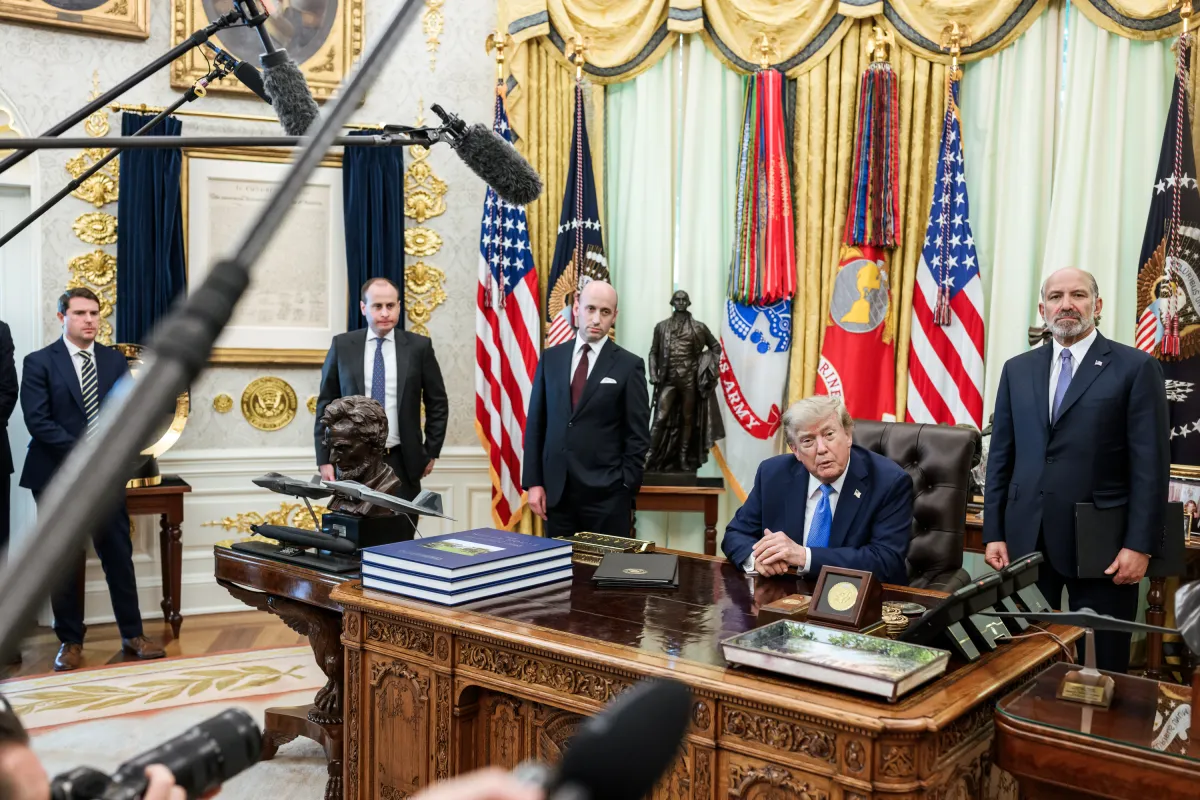
Trump's message was direct and personal. “I suggest they get a new leader who can make a deal,” he said of Ukraine. He followed by arguing that “for some reason (Zelenskyy) never does.” The Associated Press account by Susie Blann and Elise Morton described the remarks as Trump's contention that Zelenskyy had not done enough to end the war with Russia.
The president then revisited the origins and cost of the conflict. He said the 2022 invasion “would have never started” under different leadership and added, “It started due to incompetence.” He accused Zelenskyy of having “lost 30% of your country” and said “over 2 million people” had been killed between the two sides before concluding, “I think it's time for Ukraine to get a new president.”
Those casualty and territorial figures were Trump's stated estimates, not independently verified totals. Battlefield control and war losses are measured differently by governments and outside monitors, and the full military death toll is not publicly known. The significance of the remarks rests less on the precision of those numbers than on a sitting American president using them to argue publicly for a change in the leadership of an allied country at war.
The day it landed
The statement came against an especially violent backdrop. Ukrainian authorities said Russian aerial bombs struck residential buildings in Zaporizhzhia on Saturday, killing at least 20 people, including three children, and wounding more than 18. Kyiv Mayor Vitali Klitschko said daytime missiles wounded four people in the capital. The AP report put the toll from four days of bombardment above 60, based on Ukrainian official accounts. Signal Post News has not independently verified those figures.

The immediate political trigger was Friday's Trump-Putin diesel arrangement. Trump's post said Russia would provide 300,000 tons immediately, 500,000 tons in November, one million tons “immediately thereafter” and another three million tons “within a short period.” Separate reporting said Washington suspended relevant sanctions through April 2027. The announcement was framed around a national diesel price of about $6.28 a gallon and the November 3 midterm elections, when fuel costs are likely to be politically salient.
Zelenskyy answered Friday by calling the move “weak” and a gift to Putin; Trump replied with a one-word “Okay.” The Sun reported that Ukrainian negotiators then left Miami earlier than planned. Whether that departure was a formal walkout or a schedule change, the sequence showed the relationship deteriorating in public for a second consecutive day.
Why this matters
First, this is a major change in the language of U.S. policy. Washington has argued over weapons, ceasefire terms and the limits of support for Kyiv, but an American president openly urging an allied wartime government to replace its elected leader shifts the dispute from policy to political legitimacy. Ukraine has not held a national election under martial law, when elections are suspended, and Moscow has repeatedly questioned Zelenskyy's authority.
Second, it places Kyiv in a nearly impossible position. Reject the pressure and Ukraine risks worsening relations with its most important military partner. Accommodate it and Kyiv would appear to concede that Washington has a say in choosing Ukraine's leadership. Supporters of Trump's approach can argue that leverage is necessary to force negotiations; critics can argue that peace talks lose legitimacy when they are paired with demands about who may lead one side.
Third, the timing combines the leadership challenge with the diesel dispute. Zelenskyy had already accused Washington of investing in the continuation of Russia's war rather than its end. Trump's new statement questions the Ukrainian president's capacity to make peace. The Kyiv-Miami-Washington channel has moved from private pressure to open distrust.
How we got here
The rupture has been building. Trump and Zelenskyy clashed in the Oval Office in February 2025, when Trump accused him of “gambling with World War Three.” Their relationship later moved through periods of renewed contact and renewed pressure, including Trump's push for Kyiv to stop striking Russian energy infrastructure.
Energy prices pulled the conflict deeper into U.S. politics. Earlier this month, Trump blamed Ukrainian refinery strikes and Democratic-led state policies for high gas prices. On Friday he announced the Russian diesel supply deal while Ukrainian representatives were meeting U.S. officials in Miami. Zelenskyy called the arrangement a “gift to Putin”; on Saturday he described the Zaporizhzhia attack as Russia's “thanks” for eased pressure.
Each episode widened the dispute. A fight over battlefield strategy became an argument over fuel prices, then over sanctions relief, and finally over whether Zelenskyy should remain in office. That progression helps explain why the new-president statement is more than another harsh exchange: it is the culmination of months in which domestic economics, military leverage and personal mistrust became inseparable.
Who wins, who loses
Trump: A harder line toward Zelenskyy may appeal to voters frustrated by the cost and duration of the war and by fuel prices ahead of the midterms. It also carries risk: openly challenging a leader whose country is under attack can alienate pro-Ukraine voters and European partners.
Zelenskyy: His standing is now challenged publicly by Kyiv's most important backer. The same pressure, however, could rally domestic support and sympathy in Europe. Zelenskyy has already spoken with French President Emmanuel Macron and Finnish President Alexander Stubb as Kyiv looks for additional air-defense and aviation support.
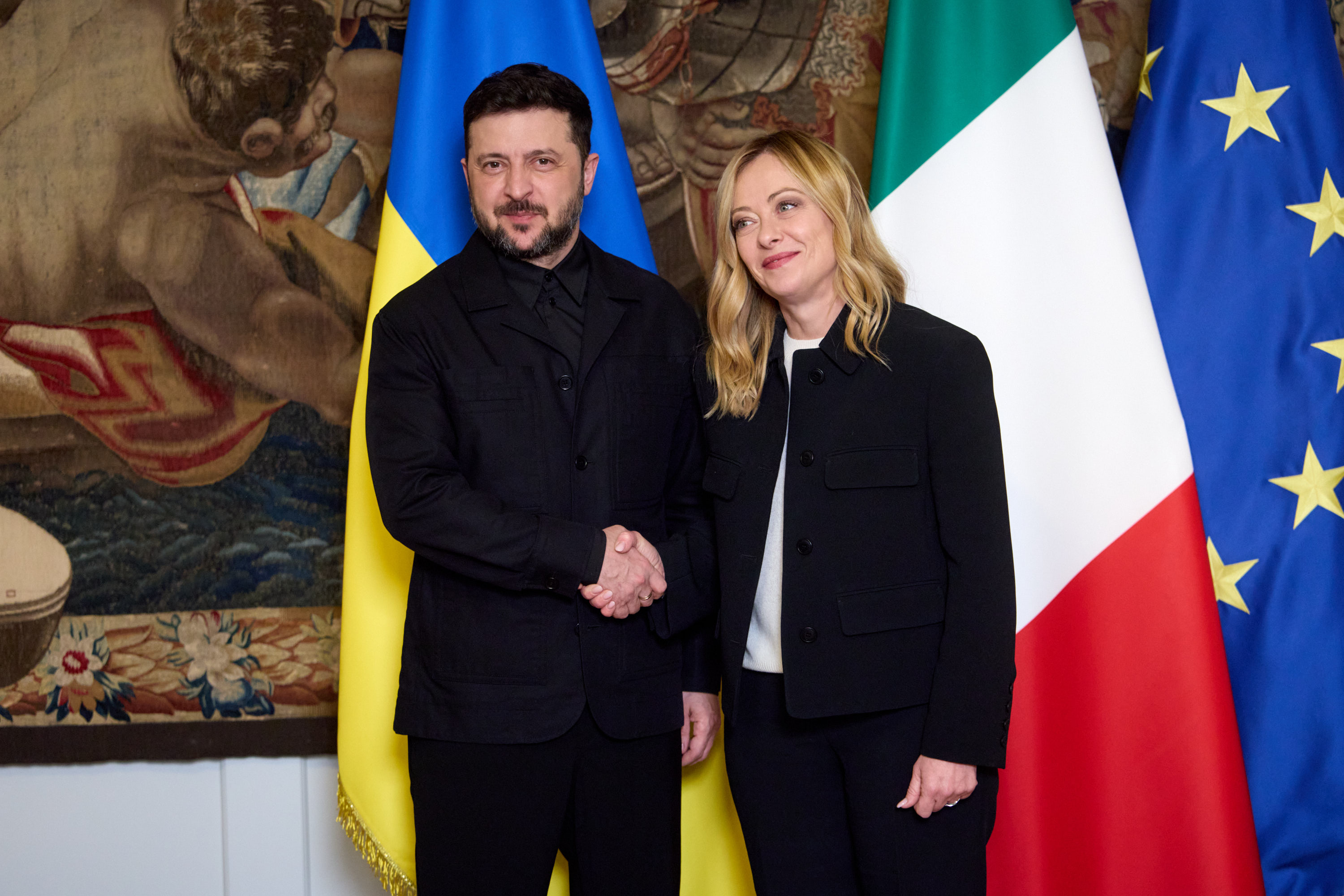
Putin: Any U.S.-Ukraine break is strategically useful to Moscow, which wants weaker coordination among Kyiv's supporters. The Kremlin described Friday's Trump-Putin call as “very substantive and friendly.” Russia can also point to the diesel trade as evidence that practical cooperation with Washington is possible without a ceasefire.
Europe and Ukrainian civilians: European governments face the prospect of carrying a larger share of Ukraine's military and financial support if Washington reduces its role. Civilians bear the most immediate cost regardless of the diplomatic argument: Ukrainian officials reported 20 deaths in Zaporizhzhia on Saturday alone.
What the numbers actually say
The most concrete numbers concern the current bombardment and the fuel agreement. Ukrainian officials, as reported by the AP, put the four-day civilian toll above 60. Emergency services said 20 people were killed in Saturday's Zaporizhzhia strikes, including three children. Those figures remain attributed claims from a war zone and may be revised as rescue work continues.
Trump's “30%” and “over 2 million” statements require a different label: they are the president's own framing. Russia occupies roughly one-fifth of Ukraine under commonly used estimates, including Crimea and other territory held before the full-scale 2022 invasion; exact percentages depend on the map and date used. Total military and civilian deaths on both sides are extraordinarily high, but governments withhold complete data and independent estimates vary. Trump's larger number cannot be treated as a settled verified count.
The diesel agreement begins with 300,000 tons promised immediately. Reporting tied the move to a national diesel average near $6.28 a gallon and a late-September record of $6.53. The White House's case is that new supply can ease freight and consumer costs. Zelenskyy's answer is that Russian export revenue is “an investment in a war that must be ended, not prolonged.” The economic benefit and the strategic cost are therefore the same transaction viewed from opposite sides.
What happens next
Washington doubles down: The statement becomes policy, with weapons, intelligence or diplomatic access used as leverage for a settlement. That would formalize the pressure already visible around the Miami talks and force Congress to decide how far it will support the White House's approach.
The White House walks it back: Officials recast the remark as negotiating pressure rather than a demand for regime change. That could keep military cooperation functioning, but the public challenge to Zelenskyy's legitimacy would remain part of the relationship.
Kyiv and Europe route around Washington: European governments accelerate air-defense deliveries, F-16 ammunition support and financing so Ukraine can absorb a smaller U.S. role. Zelenskyy's calls with Macron and Stubb suggest that contingency planning is already under way, though Europe cannot quickly replace every American capability.
The immediate markers are straightforward: a White House clarification, Zelenskyy's direct response to the leadership remark, the next round of Miami contacts, actual diesel cargoes and the fate of sanctions legislation in Congress. Any one of those could determine whether Saturday's words become a lasting policy break or a new low point in a relationship that still continues.
Sources
- Associated Press wire reprint via Eye on Dunn — Trump's remarks, White House context and reported casualties in Zaporizhzhia and Kyiv
- Daily Caller — diesel quantities, Zelenskyy's Friday post and Trump's “Okay” reply
- The Bridge Chronicle — shipment schedule, sanctions window, fuel prices and midterm context
- IBTimes Singapore — Zelenskyy's Saturday statement, Zaporizhzhia toll and the broader overnight attacks
Reporting note: Trump's remarks are quoted from the Associated Press wire report by Susie Blann and Elise Morton, filed from Washington on October 10, 2026, as carried by AP wire reprints. Casualty figures for Zaporizhzhia and Kyiv are attributed to Ukrainian officials via the AP and have not been independently verified by Signal Post News. Zelenskyy's statements are from his public X posts and Telegram. The Kremlin's characterization of the Trump-Putin call is from Russian state media via Interfax.