The Trump Russia sanctions bill of 2026 is now law. Named for the late Senator Lindsey Graham, it hands the president tariff authority of up to 100 percent on China, India and other top buyers of Russian energy — the most aggressive economic weapon Congress has aimed at Moscow since the invasion of Ukraine.
Why this matters
For more than a year, the single most consequential Russia sanctions proposal in Washington sat in limbo while President Trump pursued direct negotiations with Vladimir Putin. On September 18, that waiting ended. Trump signed the Lindsey O. Graham Sanctioning Russia and Iran Act of 2026 — designated H.R. 5334 — into law, giving the White House sweeping new authority to punish not just Russia, but any country that keeps buying Russian oil and gas.
The centerpiece is a tariff weapon without precedent in the sanctions era: the president may impose duties of up to 100 percent on goods from the five largest importers of Russian crude oil and natural gas. In practice, that list is topped by China — which buys roughly half of Russia's crude exports — and India, which accounts for about 37 percent, according to August data from the Centre for Research on Energy and Clean Air. Turkey, the European Union's remaining buyers, and Gulf intermediaries sit further down the exposure list.
The law also does something sanctions architects have wanted for years: it codifies the sprawling Russia sanctions regime into statute, making it far harder for any future president to unwind restrictions with the stroke of a pen. And for the first time, it directly targets Russia's "shadow fleet" — the aging tankers Moscow uses to move oil around existing restrictions — alongside Vladimir Putin personally, Russian banks, and the defense industrial base.
Whether the law actually cripples Russia's war machine or becomes another paper tiger depends almost entirely on one thing: how aggressively Trump uses the waiver authority the bill also hands him.
How we got here: a year of delays, then a death
Senator Lindsey Graham, the South Carolina Republican and one of Ukraine's staunchest supporters in Congress, championed the legislation for more than a year. Early versions were even more aggressive — proposing 500 percent tariffs on imports from nations buying Russian oil, natural gas, petroleum products or uranium, plus expanded restrictions on Russian sovereign debt.
But the bill kept stalling. Trump, who returned to the White House determined to negotiate an end to the Ukraine war, viewed sweeping new sanctions as an obstacle to talks with Putin. In January 2026, after a meeting with Graham, Trump officially endorsed the legislation — yet the timeline kept slipping as diplomacy took precedence.
Then came July 12, 2026. Graham's sudden death at 71 shocked Washington — and transformed the bill's politics overnight. Lawmakers from both parties rallied around the legislation as part of his legacy. His sister, Darline Graham, was appointed to fill his Senate seat the same month and introduced a revised version, though the Senate ultimately passed the original bill's framework.
The Senate acted first, passing the measure 86–11 on August 7 — a margin that signaled genuine bipartisan consensus in a chamber that agrees on little. The House followed on September 16 with a 262–159 vote: 203 Republicans and 58 Democrats in favor, 7 Republicans and 152 Democrats opposed. Two days later, Trump signed it in the Oval Office.
What's actually in the bill
The 100 percent tariff weapon
Section 113 is the provision everyone is watching. It authorizes — but does not require — the president to levy secondary tariffs of up to 100 percent on goods exported to the United States from the top five importers of Russian crude oil and natural gas, measured by volume over the previous 12 months, as well as countries deemed to be helping Russia evade energy sanctions.
The list is reassessed every 180 days by the U.S. Trade Representative in consultation with the secretaries of State and Energy. Crucially, the duties stack on top of existing tariffs. India, for example, already faces a 50 percent U.S. tariff (a 25 percent baseline plus a 25 percent Russia-linked penalty imposed in August 2025). A full 100 percent secondary tariff would be economically devastating for Indian exporters.
There is one notable escape valve: a country that imports less than 15 percent of Russia's natural gas exports — and has taken "significant steps" to reduce those imports — can avoid the secondary tariffs. The undefined phrase "significant steps" gives the administration wide discretion. The exception does not apply to crude oil importers or sanctions-evasion facilitators.
500 percent on Russia directly
Separately, the law authorizes tariffs of up to 500 percent on goods imported directly from Russia — a figure carried over from Graham's original draft. Direct U.S.-Russia trade is already minimal under existing sanctions, so this provision is largely symbolic. Its real value is as a negotiating threat.
Codifying the sanctions wall
Perhaps the most structurally significant provision has nothing to do with tariffs. The Act codifies and expands the existing Russia sanctions framework into law — covering blocking sanctions on Russian government officials and state-affiliated entities, Russian financial institutions, persons supporting Russia's defense industrial base, Russian energy projects, and foreign persons facilitating sanctions circumvention.
Why does codification matter? Since 2022, the bulk of U.S. Russia sanctions have rested on executive orders, which any president can revoke. Putting them in statute means unwinding them now requires an act of Congress. The Center for Strategic and International Studies called the Act "Congress's best opportunity since 2017 to reassert a role in Russia sanctions policy."
The shadow fleet, named at last
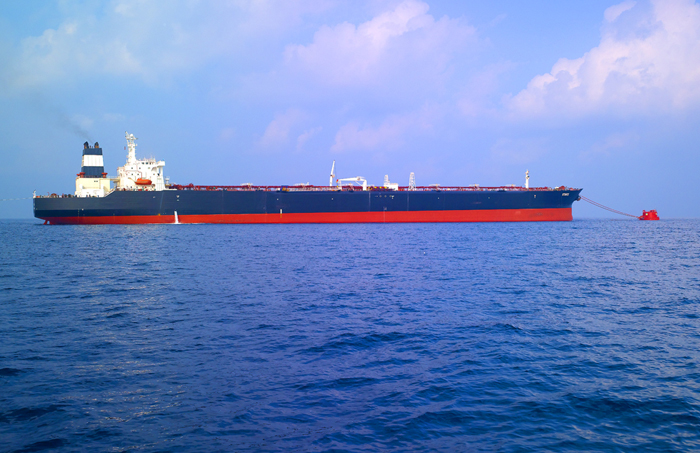
For the first time in U.S. law, the legislation directly targets the vessels involved in Russian energy trade — the so-called shadow fleet of older tankers, often sailing under flags of convenience with opaque ownership, that keeps Russian crude flowing to willing buyers. Combined with Australia's September move sanctioning 38 shadow-fleet vessels and the EU's 189 vessel designations in 2025, the noose around this logistics network is tightening from multiple directions.
Iran, extended to 2031
Despite the bill's Russia-first branding, it also extends the Iran Sanctions Act of 1996 through 2031 — a significant win for Iran hawks who feared the framework might lapse. The extension passed with comparatively little debate, folded into the broader package.
Winners and losers
Ukraine is the most obvious winner. President Volodymyr Zelenskyy called the legislation an "extremely powerful tool," and Kyiv has spent months lobbying for exactly this kind of secondary pressure on Moscow's energy customers. If the tariffs bite, every barrel Russia sells at a discount becomes harder to move.
U.S. leverage expands enormously. The bill gives the president what The Bulwark called a "tariff nuke" — authority to impose 100 percent duties on virtually any major Russian energy buyer, with legal authority the publication argued even the Supreme Court could not easily undo.
China faces the sharpest dilemma. Beijing buys roughly half of Russia's crude exports, and a 100 percent tariff on Chinese goods would land atop an already fraught trade relationship. But as Le Monde noted, it is "unlikely the White House would seek to start a trade war with Beijing, at a time of such strategic vulnerability" — which is precisely why the waiver authority matters so much.
India is the most immediately exposed. Russia is India's biggest oil supplier, and New Delhi has already felt U.S. pressure — Trump imposed a 25 percent Russia-linked tariff penalty in August 2025, later withdrawn as free-trade negotiations progressed. A proposed amendment by Rep. Steny Hoyer to explicitly name India (along with China, Türkiye, Azerbaijan, Hungary, Slovakia, the UAE, Singapore, Kazakhstan and the Kyrgyz Republic) was rejected 3–7 by the House Rules Committee, so no country is hard-coded into the law. But the math of the "top five importers" test points at New Delhi regardless.
American consumers could lose if tariffs are actually imposed. Duties of up to 100 percent on Chinese and Indian goods would raise prices across electronics, pharmaceuticals, textiles and machinery — the standard tariff passthrough the administration has downplayed in its trade wars.
Russia's war economy is the intended loser. Energy revenue funds the Kremlin's military; every discount forced on Russian crude, every tanker sanctioned, every bank cut off raises the cost of the war. Whether the pressure is decisive or merely painful depends on enforcement.
The critics' case: a paper tiger with a waiver?
The most pointed criticism comes from Jonathan Finer, the former principal deputy national security adviser under President Biden, who argued the bill "includes no sanctions authorities the president doesn't already have, lets him off the hook with a waiver to avoid using them, and gives him enormous authorities to tariff U.S. partners and allies up to 100%, largely at his discretion."
That captures the central paradox: the bill's mandatory provisions are real, but the president may waive sanctions, restrictions and duties by certifying to Congress that doing so is in the national interest. The scope and timing of implementation — due within 30 days of enactment, by October 18, 2026 — will depend heavily on what the administration actually does.
Democratic opponents raised related concerns. The 152 House Democrats who voted no — against only 58 who voted yes — suggest the party remains deeply divided on handing any president this kind of tariff power, even for a cause as popular as punishing Russia.
Supporters counter that the waiver is a feature, not a bug: it gives the president negotiating leverage. The threat of tariffs, wielded credibly, may extract concessions from Beijing and New Delhi without ever being imposed. Rep. Michael McCaul, the Texas Republican who helped shepherd the bill, put it bluntly: "This bill will cripple Russia's war machine and finally bring Putin to the negotiating table."
The numbers behind the pressure
The scale of the existing sanctions architecture is worth grasping. Since February 2022, the Treasury Department's Office of Foreign Assets Control has added more than 2,500 Russia-related targets to its Specially Designated Nationals list — including roughly 2,400 individuals and entities, 115 vessels and 19 aircraft. Over 80 percent of Russia's banking sector by assets is under U.S. sanctions, including the top ten Russian-owned banks. All 450 members of the State Duma and 170 Federation Council members have been sanctioned, along with 47 regional governors.
The European Union, meanwhile, maintains designations on more than 3,000 individuals and entities — a list it just renewed for three years in September after a fraught negotiation that saw billionaires Alisher Usmanov and Mikhail Fridman delisted.
On the energy front, the G7 oil price cap — set at $60 per barrel for Russian crude — has been the main tool for squeezing Moscow's revenue while keeping oil flowing. The Graham Act's tariff mechanism is a different animal entirely: instead of capping what Russia earns per barrel, it threatens the buyers themselves, aiming to shrink the customer base rather than just the margin.
Whether that works depends on a brutal arithmetic. China and India buy Russian crude at steep discounts — often $15 to $25 below Brent. A 100 percent U.S. tariff on their exports would need to outweigh those savings many times over to change behavior. For Beijing, the calculation is geopolitical as much as economic; for New Delhi, which has diversified suppliers before, the pain threshold may be lower.
What happens next
Three dates matter. First, October 18, 2026 — 30 days after enactment — is the deadline for the administration to implement the sanctions, tariffs and restrictions, subject to the waiver provisions. Watch whether Trump issues the top-five importer list on time, and whether any tariffs actually land.
Second, the 180-day review cycle means the importer list is a moving target. Countries can maneuver — trimming purchases just enough to fall out of the top five, or shifting volumes through intermediaries. Enforcement will be a cat-and-mouse game, and the Treasury's track record on sanctions evasion (more than 200 evasion-related designations since 2022, spanning Europe, Africa, Asia and the Middle East) suggests the administration knows the playbook.
Third, the waiver politics will define the law's legacy. If Trump waives broadly — certifying national-interest exemptions for China or India to protect trade negotiations — critics will call the bill hollow. If he imposes tariffs, even selectively, markets will convulse and the "tariff nuke" will have detonated for real. Either way, the decision sits entirely with the White House.
The deeper question is whether economic pressure can do what diplomacy has not: bring Putin to a genuine negotiating table. Graham believed it could — that was the premise of his year-long campaign. He did not live to see the bill become law. Its success or failure will now be the measure of his legacy.
Sources
- Wikipedia — Lindsey O. Graham Sanctioning Russia and Iran Act of 2026 (vote counts, legislative history)
- Le Monde — Trump signs Graham Bill, imposing new sanctions against Russia (September 19, 2026)
- Mondaq — President Trump Signs Graham Sanctions Act (September 2026)
- LexBlog — The Lindsey Graham Sanctions Act: What Businesses Need to Know (September 24, 2026)
- GovtSchemes — US Russia Sanctions Bill: 100% Tariff Threat to India Explained
- U.S. Treasury — Disrupting and Degrading: One Year of U.S. Sanctions on Russia (designations data)
- Reuters — EU renews Russia sanctions (September 22, 2026)
- trump russia sanctions bill 2026
- Lindsey Graham sanctions act
- 100% tariffs China India Russian oil
- Russia shadow fleet sanctions
- secondary sanctions Russia energy