Trump Russia plague China comparison
World / Russia / Health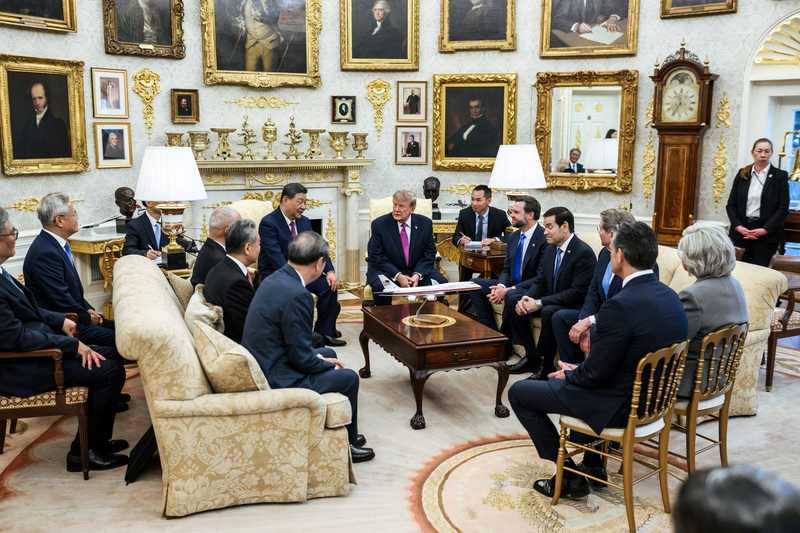
In the Oval Office on Wednesday, Trump was asked whether Darya Shipilova, a 28-year-old worker at the Irkutsk Anti-Plague Institute, had died because of a bioweapon. “Well, we don't think so. We're going to find out soon enough, but we don't think so,” he said. The answer rejected the most alarming interpretation while leaving the central factual question unresolved.
The sharper moment came when Trump was asked whether Russia's limited public disclosure resembled China's at the beginning of COVID-19. “China didn't say much, and Russia's not saying much either. But they do say they have it very much under control,” he said. He then warned, in substance, that governments have described other crises as controlled before events proved otherwise.
Trump said Russia was sharing a small amount of information with U.S. officials and that Washington expected much more. That formulation matters: it acknowledges a channel exists, but publicly declares the channel inadequate. It also gives Moscow a choice between disclosing more and appearing to confirm the president's criticism.
Why the Trump Russia plague China comparison matters
A U.S. president invoking China's early COVID response is not a routine request for data. It attaches a powerful political memory to a still-unconfirmed event: delayed disclosure, mistrust between governments and the fear that missing information can become more consequential than the original incident. The comparison does not establish that Russia is concealing an outbreak. It signals that Washington does not want to wait for certainty before making transparency the issue.
That distinction is essential. The public record described by officials remains narrow: one laboratory worker died, the cause has been disputed or left unconfirmed in public reporting, contacts were monitored, and no wider cluster has been announced. Russia's position is that the situation is under control. Rospotrebnadzor said testing found no plague among roughly 200 contacts and that most had been released from observation. The WHO's assessment that the international risk is very low supports restraint, not complacency.
Trump's rhetoric nevertheless changes the diplomatic stakes. Once the White House frames limited disclosure as a possible repeat of the pandemic's opening chapter, a simple assurance from Moscow is less likely to settle the question for foreign audiences. Russia may view that framing as politicization before the evidence is complete. Washington can argue that public-health verification is most valuable before a problem spreads, not after.
Russia plague secrecy: what Moscow says and what remains unknown
Russian authorities have given the clearest reassurance available: no plague was detected in the monitored contacts, most of those people have been released, and officials describe the situation as controlled. Those claims deserve to be reported as the Russian government's position, not dismissed simply because U.S. officials want more. They also do not answer every question that independent health authorities and foreign governments may ask.
The unresolved points include Shipilova's confirmed cause of death, the exact sequence of laboratory and clinical testing, what material she may have handled, and whether outside experts have reviewed the results. None of those gaps proves a biological release. Each gap, however, creates space for rumor, and public anxiety tends to grow fastest where official detail is thinnest.
Irkutsk anti-plague institute and Siberia's historic plague foci
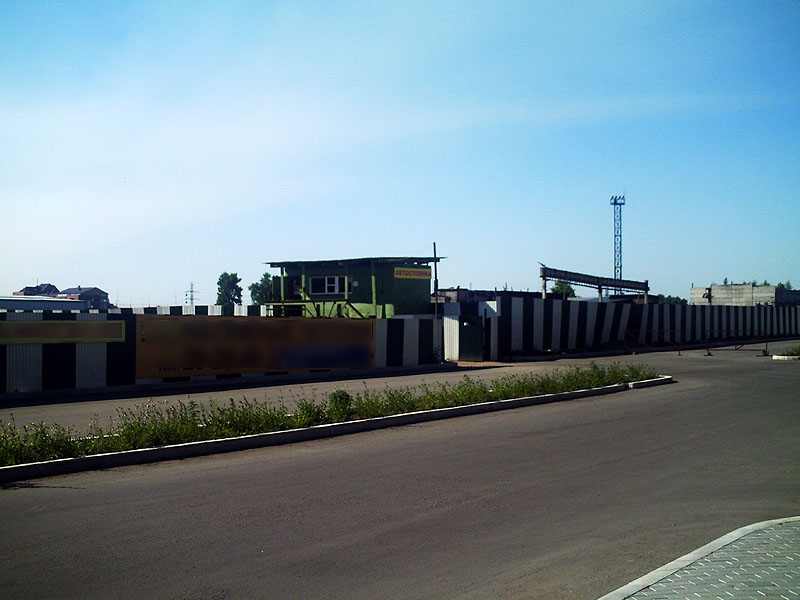
Anti-plague institutes are part of a long-standing disease-surveillance network built to study and contain especially dangerous infections. That mission is not itself suspicious. Parts of Siberia and neighboring regions contain historic natural plague foci, where Yersinia pestis circulates among wild rodents and fleas. Specialized laboratories therefore have a legitimate public-health reason to maintain expertise, test samples and monitor ecological risk.
The phrase “anti-plague institute” can sound sinister outside that context, but it describes an institution designed around prevention and response. The real oversight question is ordinary and exacting: were biosafety procedures followed, were exposures traced, and can the test record be independently assessed?
Soviet bioweapons history is context, not evidence in this case
The Soviet Union operated a documented biological-weapons research program that included work on Yersinia pestis during the 1980s. That history helps explain why any opaque incident involving a Russian anti-plague laboratory attracts intense attention. It does not establish that Shipilova's death involved a weapon, a modified strain or a continuation of that program.
Historical memory can sharpen legitimate scrutiny, but it can also distort present evidence. The responsible standard is to keep the two propositions separate: the Soviet program is documented history; a bioweapon connection to this death is not established. Trump's own answer reflected that separation when he said the administration did not think a bioweapon was involved but was still seeking facts.
Trump Putin call plague dispute adds a credibility problem
Trump said he had a call set up with Russian President Vladimir Putin. Kremlin spokesman Dmitry Peskov disputed that account, saying no call had been scheduled. Both statements can be accurately reported; neither should be silently treated as the settled version.
The disagreement could be procedural — one side may regard preliminary planning as a scheduled call while the other does not. It could also reflect a deliberate effort by Moscow to resist the impression that the White House can summon a leader-level explanation. Either way, the dispute is a poor opening for a conversation supposedly meant to reduce uncertainty.

A successful call, if it happens, would not itself verify anything. Its value would depend on whether it produces specific, shareable evidence: laboratory results, a traceable exposure timeline, clinical findings, a complete contact-monitoring record and permission for relevant international health specialists to examine the data. Diplomatic reassurance is useful; epidemiological documentation is stronger.
Rubio says information is “quite limited”
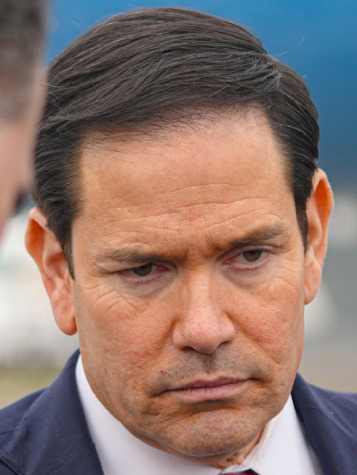
Secretary of State Marco Rubio, speaking in Reykjavik, said it was incumbent on Russia to share more information and described what the United States had received as “quite limited.” The State Department said it was monitoring the situation and reiterated its do-not-travel guidance for Russia.
The travel guidance is important but easy to misread. A do-not-travel advisory can reflect security, consular and geopolitical risks broader than this incident. Reiterating it does not amount to a finding that an international plague outbreak exists. It does show that Washington is treating incomplete information as an operational risk for Americans in Russia.
WHO plague Russia risk: reassurance with limits
The WHO's “very low” international-risk judgment is the strongest institutional reason not to overstate the story. Risk assessments weigh available evidence about transmission, exposure and cross-border spread. They can change as evidence changes, but the current assessment argues against portraying this as a confirmed international emergency.
The agency also has something to lose if the information base proves incomplete. WHO authority depends on both technical competence and member states' prompt reporting. If Moscow provides enough data to sustain the assessment, the agency's calm posture gains credibility. If critical facts emerge late, critics will again question whether international health systems can evaluate risks without timely state cooperation.
Who benefits — and who loses
The Kremlin's credibility
Moscow benefits most from fast, detailed confirmation that there was no plague in Shipilova's case and no secondary transmission. That would validate Rospotrebnadzor's containment message and expose the loudest speculation as premature. Continued sparse disclosure carries the opposite risk: even a benign outcome may be remembered as another episode in which the Kremlin asked the world to trust conclusions it would not fully document.
U.S. leverage and political risk
Washington gains leverage by making disclosure the standard rather than arguing immediately over blame. That posture can rally allies around a narrow demand for evidence. But the United States loses credibility if officials imply more than the evidence shows or turn every ambiguity into a geopolitical accusation. The strongest U.S. case is procedural: share the data, permit verification and let the evidence set the level of alarm.
Regional anxiety and the cost of uncertainty
Residents near Irkutsk bear the most immediate social cost. “Plague,” “laboratory” and “bioweapon” are words that can outrun the facts, disrupting daily life even when public-health indicators remain reassuring. Clear timelines, plain-language test results and consistent updates are not public-relations luxuries. They are part of outbreak control because they reduce the vacuum in which fear and misinformation spread.
China COVID cover-up comparison: useful warning or premature analogy?
The analogy is useful in one limited sense: early transparency matters, and delays can damage global trust for years. It is premature if treated as proof that the two events are epidemiologically comparable. COVID-19 became a sustained global respiratory pandemic. The Irkutsk episode, on the facts publicly described so far, is a suspected single death with monitored contacts who have not tested positive for plague.
That gulf in scale should remain visible. The lesson from 2020 is not that every uncertain laboratory report is the next pandemic. It is that credible information should be released early enough for others to assess the risk independently.
What happens next
Verification mechanics
The most useful next release would identify the diagnostic methods used, provide the cause-of-death conclusion, describe any exposure inside the institute, state when each contact's monitoring period ends and report whether any outside laboratory or WHO-linked expert reviewed the findings. Individual medical privacy can be protected while those aggregate facts are shared.
Watch also for whether a Trump–Putin call is formally announced by both governments, whether the White House describes concrete information received, whether Rospotrebnadzor publishes additional laboratory detail and whether WHO revises its risk assessment. Agreement on those basic procedural facts would matter more than another round of adjectives such as “controlled” or “limited.”
Three plausible scenarios
Contained incident: additional testing finds no plague and all remaining contacts complete observation without symptoms. This is the scenario most consistent with the current Russian and WHO statements.
Extended uncertainty: no secondary cases emerge, but Moscow releases little supporting data. The immediate health risk may stay low while the political fight over Russia plague secrecy grows.
Escalation: a confirmed plague diagnosis or linked illness prompts tighter monitoring, broader travel measures and demands for international technical access. Nothing in the current WHO assessment says that scenario is likely, but it is the contingency officials are trying to rule out.
The fairest conclusion is neither “nothing to see” nor “another COVID.” Russia has offered reassuring claims, and WHO sees very low international risk. The United States is justified in asking for enough evidence to test those claims. Trump's comparison has ensured that what might have remained a regional health inquiry is now also a contest over whether governments can still persuade one another — and the public — before suspicion hardens into certainty.
Reporting basis
This analysis is based on October 7 reporting by the New York Post, Washington Examiner, Fox News, LA Post and Newsmax, together with statements attributed to the White House, State Department, Kremlin, Rospotrebnadzor and World Health Organization.
Signal Post News World Desk