U.S. · Politics · Environment
The Army was two days from blowing up 68 barrels of one of the most sensitive explosives in its inventory, in place, in southeast Iowa. On Monday the president stopped his own Army's clock — and handed the decision, and the blame if it goes wrong, to a federal appeals court and a Democratic governor-elect who has not yet taken office.
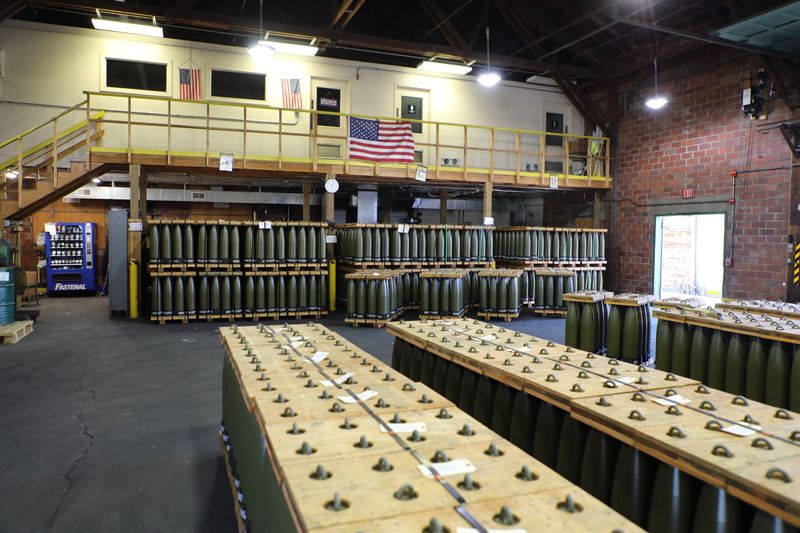
MIDDLETOWN, Iowa, November 23, 2026 — The material is 68 barrels holding nearly 10,000 pounds — about 9,500 pounds, or 4,500 kilograms — of degraded lead azide, a highly sensitive primary explosive used to detonate military munitions, stored at the Iowa Army Ammunition Plant, a roughly 19,000-acre World War II-era plant in Des Moines County near the Illinois border, about 160 miles southeast of Des Moines. The EPA says the compound has become dangerously unstable and cannot safely be moved, and it authorised a controlled detonation in place. Neighbours, farmers and environmental groups sued to stop it. On Monday, the president intervened — against his own Army's timetable.
Trump wrote: “I feel the proper course is to get rid of this longterm problem but, at the same time, have ordered the Military not to do so until such time as the Eighth Circuit agrees that we can go forward.” He warned he would hold Sand responsible if Sand or the courts block the operation and the material explodes spontaneously. CNN had reached out to Sand; no response was reported at publication time.
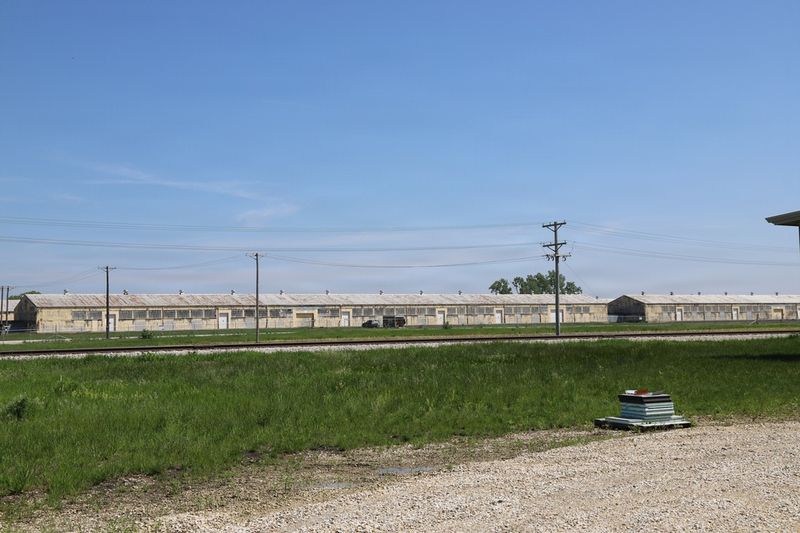
What is lead azide, and why can't they just move it?
Lead azide is not the main charge in a shell. It is the trigger: a primary explosive, valued because a small amount detonates readily and sets off a larger, more stable explosive. That sensitivity is the problem in Middletown — a compound designed to react to a sharp stimulus does not become safer with age.
The EPA says recrystallization during long-term storage has made the compound dangerously unstable, posing a risk of an uncontrolled explosion. The same instability is why officials fear moving it: loading degraded, shock-sensitive barrels onto trucks risks the very detonation everyone is trying to control. The EPA also warned of added risk as temperatures fall below 30°F (−1°C) this week.
So the EPA issued an emergency permit, effective November 13, authorising a controlled detonation in place, under earth and concrete. In the agency’s framing, the choice was never between an explosion and no explosion — it was between one on a chosen day, under engineered cover, and an unchosen one with no protections at all.
From a November 13 permit to a national fight in ten days
The speed of the escalation explains much of the anger around Middletown. What began as an emergency permit became, in ten days, a lawsuit, a frozen permit, a federal threat to proceed without one, and a presidential pause.
The permit and the first date
The permit took effect on November 13. The Army announced its plan on November 15, and the blast was first set for November 20 — five days' notice for residents and farmers that nearly five tons of unstable explosive would be deliberately detonated near their homes, fields and livestock. The date was then postponed amid public outcry from nearby communities.
The lawsuit and the freeze
On November 19, the Sierra Club's Iowa Chapter and the Iowa Environmental Council sued the EPA. On Thursday, the Eighth Circuit froze the EPA permit. That did not end the matter: in a Justice Department filing on November 21, the government said the Army would invoke emergency powers to detonate by November 24 without the permit if necessary — in effect, that the emergency was too urgent to wait for the court's permission.
The Wednesday plan, then the pause
The Army then said the blast would take place on Wednesday, November 25, timed for optimal weather. That date held until Monday, when Trump's post overrode it. The detonation is now paused with no deadline attached to either of the president's conditions — while the stockpile remains in storage, degrading, with colder weather arriving.
Trump pauses Army detonation Iowa: why this matters
Presidents overrule generals; that is civilian control. What is unusual is the method. Trump did not cancel the detonation. He paused his own Army’s emergency timetable, deferred to a court his Justice Department was preparing to bypass, and added a second veto-holder who does not yet hold office.
Consider what that means for Rob Sand. The Democrat won in a state Trump has carried comfortably — Signal Post News reported last month on Trump’s rally in Sioux City to defend his Iowa stronghold, where Sand led in polling. He has not been sworn in and did not create this problem. Yet the detonation cannot proceed without his agreement — and if he withholds it and the material explodes on its own, Trump has said in advance whose fault that will be.
The legal question survives the pause. The Justice Department’s November 21 filing treated environmental permitting as something an emergency can sweep aside. Whether an agency may detonate a stockpile over a court’s freeze, on its own declaration of emergency, remains unanswered — and will matter the next time an aging stockpile forces a fast decision.
Underneath the politics sits an honest dilemma. Residents who fear a lead-dust plume are not imagining a risk: state health officials issued sheltering guidance precisely because a detonation would put lead into the air. Officials who fear a spontaneous explosion are not imagining one either. Both risks are real; the argument is over which is larger, and who decides.
An 80-year-old plant and America's aging stockpiles
The plant is a product of the Second World War, built in the mobilisation that scattered ammunition plants across the American interior. For more than 80 years it has made artillery shells and warheads — through the Second World War, Korea, Vietnam and the wars that followed — across some 19,000 acres in farm country near the Illinois border.
Plants of this vintage accumulated materials across decades of production runs, and the country is now working through those legacy stockpiles. The EPA’s finding underlines the point: some of what was stored as a stable industrial input has quietly become, in storage, a hazard in its own right.
Who gains, who loses in the lead azide explosion Middletown Iowa fight
Residents and farmers
Residents and farmers gain time — for a court to examine the permit and for any blast to arrive with proper notice. They do not gain safety itself: every day of delay is a day the stockpile sits in storage in falling temperatures. They bear the risk in both directions.
Environmental groups
The Sierra Club’s Iowa Chapter and the Iowa Environmental Council won what litigation is meant to win: a pause and a judicial look at a fast-clock emergency permit. Their longer-term risk is political — if the delay ends in a spontaneous incident, the question of who stopped the cleanup will turn on them too.
The Army and the EPA
Both agencies lose control of their timetable — the Army publicly, by name, from its own commander-in-chief. If the EPA is right about the chemistry, the pause spends a safety margin it believed was already thin. If the agencies moved too fast on notice and consultation, the pause is the correction.
Rob Sand
Sand gains standing — a president has made his agreement a condition of a federal operation — at a price no incoming governor would choose. Agree, and he co-owns a detonation his party's environmental allies sued to stop. Refuse, and he owns whatever the stockpile does next. CNN reported no response from Sand at publication time, and no answer available to him is cost-free.
Donald Trump
Trump gains the appearance of the restraining hand — the leader who stopped a rushed blast near Iowa homes — while keeping the detonation available once a court and a governor-elect sign off. He also converts a federal emergency into a test of a Democratic successor, in a Congress where House Democrats have nominated Hakeem Jeffries for speaker. If the blast proceeds safely, he claims the pause and the cleanup alike.
The numbers: what 68 barrels and a 40-mile plume actually mean
Start with the stockpile: 68 barrels, about 9,500 to 10,000 pounds of lead azide — roughly the weight of three pickup trucks, of a substance whose job is to detonate other explosives, and which the EPA says can no longer be trusted to sit still.
The plant’s 19,000 acres are the buffer, absorbing energy and debris. The exposure question is what rides the wind afterward. University of Iowa public health professor Patrick O’Shaughnessy said a plume of lead dust could travel 40 to 50 miles southwest depending on weather — well into southeast Iowa’s farm towns — with inhalation risk mitigated by sheltering indoors.
Hence guidance measured in hours rather than evacuations. Iowa’s health department advises closed windows and doors for 24 to 48 hours after a detonation, HVAC drawing outside air switched off, surfaces cleaned, and blood lead testing considered. Agriculture officials advised moving livestock, feed and equipment indoors. The FAA restricted flights around the plant, and Governor Kim Reynolds launched an information website Sunday, with state agencies coordinating from the State Emergency Operations Center.
Set those numbers against the unmanaged scenario. A spontaneous explosion would come with no chosen weather window, no advance sheltering warning, no timed flight restrictions. The controlled case, at its worst, is a predicted plume over warned communities; the uncontrolled case is the same chemistry without the choreography. That asymmetry is the core of the Army and EPA position — and it has to be carried alongside residents' equally honest fear of the plume itself.
Rob Sand lead azide decision and the Eighth Circuit lead azide permit: what happens next
Three clocks are now running. The first is legal: the Eighth Circuit must decide whether the EPA’s frozen permit can support the detonation. Under Trump’s condition, the court’s answer is the gate any blast must pass.
The second clock is Sand’s. He must decide whether to agree to an operation he did not design, on a timetable he does not control, knowing the president has pre-assigned him the blame for refusal — under pressure from Washington to agree, from environmental allies to refuse, and from residents divided between fearing the blast and fearing the wait.
The third clock is the weather. The EPA warned of added risk as temperatures fall below 30°F this week. If the court lifts its freeze and Sand agrees, the Army detonates on a chosen day. If either condition stalls, the stockpile sits through worsening cold. And a long pause would revive the question the EPA has answered in the negative: whether any alternative to detonation in place exists.
What no one can honestly promise Middletown is that one of these paths is safe. The choice was never between danger and safety. It is between two dangers, one scheduled and one not — and as of Monday, by presidential order, the decision belongs to a court and a governor-elect.
Related coverage: Trump heads to Iowa to defend a stronghold that no longer looks safe · Hakeem Jeffries nominated for House speaker, 251-11
Sources
- Reuters, November 23, 2026 — “Trump orders US Army to pause lead azide detonation in Iowa” — Trump’s Truth Social pause order and its two conditions.
- Reuters explainer, November 2026 — “What to know about US Army plans to blow up a stockpile of lead azide in Iowa” — the stockpile, the EPA assessment and the planned detonation.
- CNN, November 23, 2026 — “Trump pauses Army's planned detonation of hazardous materials in Iowa” — the pause and the unanswered outreach to Sand.
- USA Today, November 23, 2026 — “Trump orders Army to halt lead azide explosion” — the order and the November 20 postponement.
- Des Moines Register, November 22–23, 2026 — Iowa reaction and state coordination.
- U.S. Environmental Protection Agency — the November 13 emergency permit and instability assessment.
Analysis in this article — including the sections on why the pause matters, who gains and loses, what the figures imply, and what happens next — is Signal Post News' own and is distinguished from the reported facts above. No deaths have been reported in connection with the stockpile or the planned operation.