Trump one night Iran nuclear claim
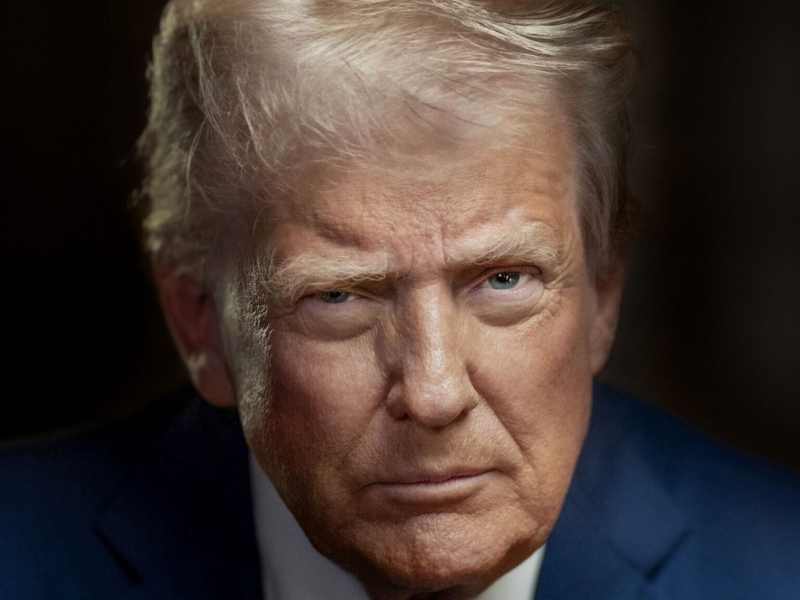
President Donald Trump is rewriting the history of his own war predictions. In a Truth Social post on October 1, 2026 — seven months into the U.S.-Israeli war with Iran — Trump claimed he had “stated, numerous times, that it would take 4-6 weeks to get rid of THE IRAN NUCLEAR THREAT,” and that he “did it in one night!” A review of what he actually said in March, documented this week by CNN and PolitiFact, shows his weeks-long forecasts were about the war as a whole, not just the nuclear mission. PolitiFact rates the claim False.
The post that started the fight
Trump's October 1 post, in full: “I stated, numerous times, that it would take 4-6 weeks to get rid of THE IRAN NUCLEAR THREAT, and I did it in one night! The rest of the time is just to make sure it stays that way. President DONALD J. TRUMP.” He reiterated the claim hours later at a rally in Oklahoma, insisting he had “said numerous times that it would take four to six weeks to get rid of the Iran nuclear threat and I did it in one night.”
The war he launched on February 28, 2026 is now in its eighth calendar month. The timing matters: the November 3 midterm elections are weeks away, and voters — per PolitiFact's reporting — are frustrated that a conflict Trump once described in weeks has instead fueled inflation and higher gasoline prices.
What the record shows: the March timeline
Here is what Trump and his administration actually said in March — the month the “four to six weeks” figure was born:
- March 1: Asked by The New York Times about the expected duration of strikes, Trump said, “We intended four to five weeks.”
- March 2: In a CNN interview less than three days into the war, Jake Tapper asked how long it might last. Trump answered: “I don't want to see it go on too long. I always thought it would be four weeks. And we're a little ahead of schedule.” Later that day he projected “four to five weeks” for the war, adding only that the U.S. had “capability to go far longer.”
- March 7: Aboard Air Force One, Trump called the operation a “short excursion.”
- March 10: Then-press secretary Karoline Leavitt said the “initial timeline was about four to six weeks to achieve the full objectives of Operation Epic Fury” — which she defined as destroying Iran's missiles and missile-making capacity, destroying its navy, “permanently deny them nuclear weapons forever,” and weakening its regional proxies. That is the whole war, not one mission.
- March 26: At a Cabinet meeting Trump twice repeated “four to six weeks” for “our mission,” twice adding the U.S. was “way ahead of schedule.”
- March 31: About a month in, Trump said, “I would say that within two weeks, maybe; two weeks, maybe three.” Asked whether he meant the U.S. would be done with the war, he said, “I think two or three weeks, yeah” — and interjected “We'll leave.”
- April 8: Leavitt said the U.S. had “achieved and exceeded those core military objectives in just 38 days.”
In not one of these documented statements did Trump draw the distinction he now claims — that the weeks-long window applied only to the nuclear threat rather than the war. As CNN notes, Defense Secretary Pete Hegseth was at times vaguer, but Trump himself was the primary source of the specific weeks-long timeframe. PolitiFact reaches the same conclusion: “a review of the record shows Trump himself was the primary source for that specific timeframe.”

The blame shift: “the press fed it to them”
Pressed in a September 28 TIME Magazine interview, published October 1, on why the war dragged on, Trump first said he simply chose to continue: “Only because I wanted to go further. I took them out. I could have stopped then, but I wanted to go further... because I met my timeline.” When TIME noted that most people heard a four-to-six-week estimate, Trump replied: “No, I think the press fed it to them.”
But the press reported what he said on camera, on the record, repeatedly. CNN asked the White House for any example of Trump making the nuclear-only distinction at the time; the White House could not provide one, emailing a statement declaring Trump “right” without answering the question. PolitiFact reports the White House statement “failed to reference any such remarks.” It is also worth noting that Trump began distancing himself from the timeline as early as April, when he wrote that Democrats “like to say that I promised 6 weeks to defeat Iran.”
The “one night” claim vs. the experts
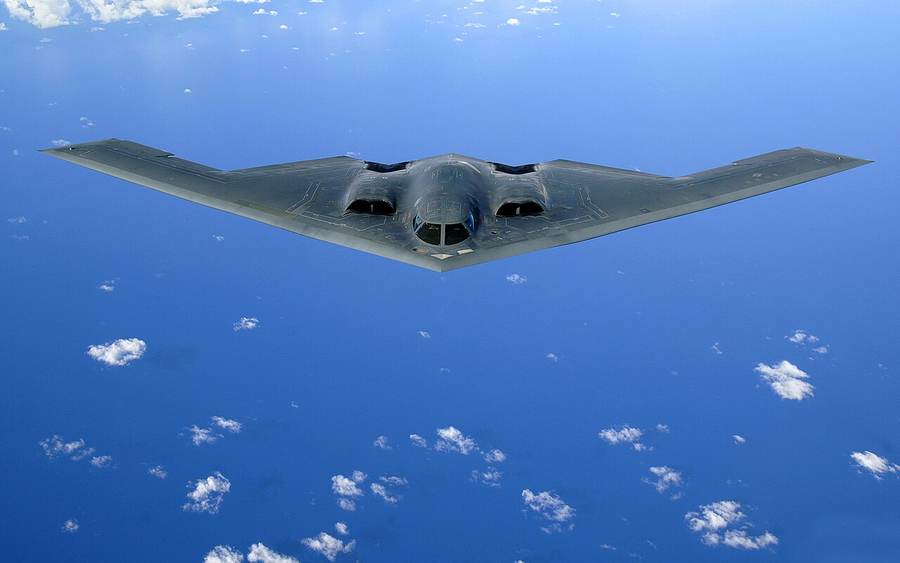
Trump's “one night” assertion refers to the opening-night bombing campaign of February 28, 2026, which launched the war. The administration says that campaign eliminated the Iranian nuclear threat. Here the facts are genuinely contested, and the distinction matters. CNN's fact-check notes the one-night claim “is rejected by many experts.”
Military and nuclear specialists cited by PolitiFact say earlier U.S. strikes likely degraded Tehran's nuclear program but did not completely eradicate it: Iran's stockpile of highly enriched uranium has not been secured, and it has not been definitively proven that uranium-enrichment machinery was entirely destroyed. White House spokesperson Anna Kelly has defended the administration's record, maintaining the strikes successfully targeted Iran's nuclear ambitions. A note of humility is warranted on all sides here: bomb-damage assessment of deeply buried facilities is inherently uncertain, and both official claims and expert skepticism rest on incomplete evidence. What is not uncertain is the record of what was promised about the war's length — that is on tape.
Why this matters: midterms, gas prices, and wartime credibility
Three things make this dispute bigger than a fact-check. First, the calendar: the November 3 midterms are weeks away, and PolitiFact reports voters are frustrated that a war described in weeks has instead stretched across seven months, feeding inflation and gasoline costs. Second, wartime credibility: when a commander-in-chief misstates his own public record, it corrodes public trust in everything else the government says about a war — casualties, costs, progress.
Third, the decision ahead: Trump has openly linked the war's next phase to the elections. On October 1 he told Iran, “They'll either sign a very fair deal or they won't exist any longer,” and a day earlier in the Oval Office: “We have to make that decision. We blow them up. Make a deal. But the time is coming. It's going to end very soon one way or the other.” The Pentagon is reportedly sending some 9,000 additional troops to the region and a third carrier, the USS Theodore Roosevelt — hardly the posture of a finished war.
Meanwhile, one pressure point is easing: Middle East crude exports have recovered to pre-war levels, industry analysts say, as Saudi Arabia and other exporters reroute through alternative pipelines. Disputed incidents — an alleged FlyDubai hijacking link to Iran that Trump cited with sparse evidence, and a British terror-plot allegation outside RAF Fairford that Iran calls a “false flag” — show how quickly the conflict could flare again. In that environment, accuracy about the war's history is not trivia; it is how the public judges the next decision.
What happens next: three scenarios
Scenario 1 — Post-election escalation
The carrier buildup, the troop movements, and Trump's own ultimatums point to a decision point after November 3. A “very fair deal” offer backed by a credible threat of renewed large-scale bombing is textbook coercive diplomacy — and Trump has now explicitly framed the choice as his to make.
Scenario 2 — A negotiated off-ramp
Iran's foreign minister Abbas Araghchi remains diplomatically active — he attended the UN General Assembly session in New York in September — and Trump's repeated “make a deal” language leaves the door open. The recovery of oil flows reduces one source of economic pressure on both sides, which can either enable or remove urgency for talks.
Scenario 3 — The grinding status quo
Seven months in, the war has settled into a pattern of strikes, proxy pressure, and economic maneuvering. The risk of this scenario is miscalculation — a disputed incident like the FlyDubai allegation or the Fairford arrests could force escalation neither capital chose. Analysts should be honest that none of these paths is foreordained; the only verifiable fact is that the war outlasted every timeline its architect gave it.
Sources
- CNN, October 2, 2026: “Fact check: Trump's attempt to pretend he didn't say the Iran war would last mere 'weeks'”
- PolitiFact via GoGoSpoiler: “Trump said the war in Iran would last 4-6 weeks. Then he changed his story and blamed the media”
- Fox49 / The National News Desk, October 2, 2026: “President Trump issues ultimatum to Iran: Sign a peace deal or cease to exist”