War · U.S. Army · Pentagon
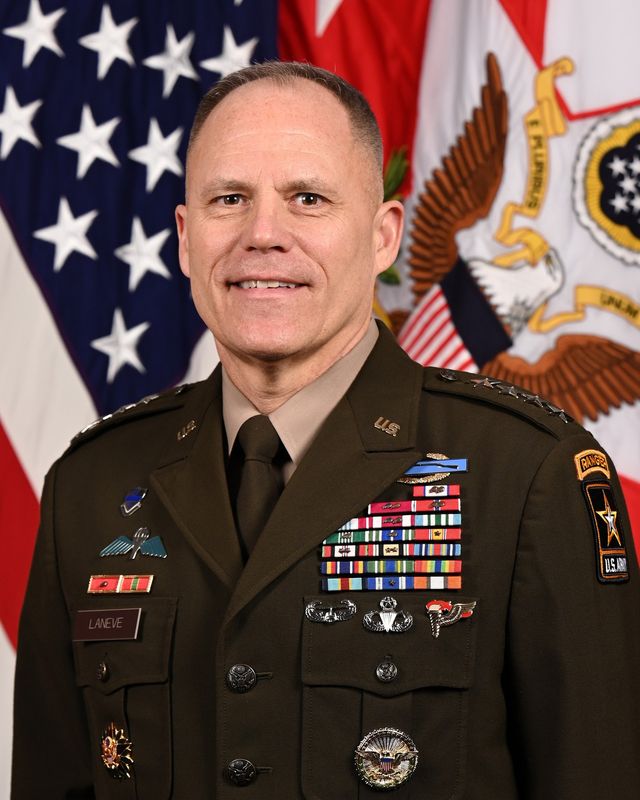
The Chris LaNeve Army chief nomination is finally official. President Donald Trump formally sent the nomination of Gen. Christopher C. LaNeve to the Senate on Monday, November 16, in a congressional notice reported on Tuesday — asking the Senate to make permanent the general who has run the Army in an acting capacity since Defense Secretary Pete Hegseth fired Gen. Randy George in April. A second Monday notice nominated Lt. Gen. Marcus Evans as vice chief. LaNeve needs Senate confirmation, and on the reporting of the last three months, that is where this story now lives: the nomination has been ready since spring, and the Senate has been the obstacle.
Track it live: Wars tracker
WASHINGTON, November 17, 2026 — The formal step, when it came, was a paperwork step: a congressional notice, sent Monday, recording that the president had nominated Gen. Christopher LaNeve to be chief of staff of the Army, as Military Times reported on Tuesday. Nothing about the choice is new. LaNeve has been the Army’s vice chief since February and its acting chief since April 2, and he was Hegseth’s senior military assistant before that. What is new is that the White House has finally put his name in front of the Senate Armed Services Committee — more than seven months after the job fell vacant, more than six months after the administration was first reported ready to nominate him, and weeks after midterm elections that will hand control of Congress to the Democrats in January. Acting Army Secretary Adam Telle welcomed the move in the terms the administration will now repeat through the confirmation fight: “He is the right leader at the right time to modernize the Army and ensure our soldiers are prepared to dominate on any battlefield.”
The seven-month vacancy
The vacancy LaNeve’s nomination would end began on April 2, 2026, when Hegseth removed Gen. Randy George as chief of staff in the middle of the Iran war. The firing was never publicly explained. The Guardian has reported one element of the rupture: George had insisted on an official investigation into an unauthorized March 28 Army helicopter flyover near the Tennessee home of the musician Kid Rock, and Hegseth blocked it — a dispute reported by the Guardian and attributed here to its reporting, not established as the stated reason, because no reason was ever stated. George’s removal was one move in a tenure that has seen Hegseth fire more than a dozen generals and admirals, and it left the Army’s top uniformed job in acting hands at the moment the service was fighting a war.
The civilian side of the house emptied soon after. Army Secretary Dan Driscoll resigned in September, amid reported tension with Hegseth, and his acting successor, Adam Telle, has not been officially nominated to the post. The result is a sentence that would have been difficult to write about the modern Army in any previous war: a service of nearly one million people in uniform and about 200,000 civilian employees, in the Washington Post’s figures, has gone through the autumn of a shooting war — a war that this week alone brought Iranian drone claims against the Sheikh Isa base in Bahrain, covered in our report on Bahrain’s interception of Iranian drones and the claim against the U.S. radar at Sheikh Isa — without a Senate-confirmed leader in either of its two top jobs. LaNeve’s nomination addresses half of that sentence. The secretary’s half remains open.
Who is Chris LaNeve
Christopher C. LaNeve, 59, is a Pittsburgh native who was commissioned into the infantry from the University of Arizona’s ROTC programme in May 1990, and who has now served 36 years. His biography, as set out by the Army and the House Armed Services Committee, is a paratrooper’s biography: he commanded at every echelon, including the 2nd Battalion of the 325th Airborne Infantry Regiment, the 3rd Brigade Combat Team of the 1st Armored Division, the 7th Army Training Command in 2018–19, and — the command that defines him — the 82nd Airborne Division from March 2022 to November 2023, a tenure that began weeks after Russia’s full-scale invasion of Ukraine, when the division deployed to Poland. He then commanded Eighth Army in Korea and served as chief of staff of the ROK/U.S. Combined Forces Command from April 2024 to April 2025, before becoming Hegseth’s senior military assistant — the job that put him inside the secretary’s office, and the association his critics now cite most. His combat deployments run through Iraq and Afghanistan, on Operations Iraqi Freedom, Enduring Freedom and Freedom’s Sentinel, and he holds master’s degrees from Central Michigan University and the U.S. Army Command and General Staff College.

His rise since returning to the Pentagon has been fast by any era’s standards. He was nominated as vice chief in October 2025, replacing Gen. James Mingus before Mingus had completed a typical four-year term; the Senate confirmed him on January 7, 2026, and he was sworn in with his fourth star on February 6 as the Army’s 40th vice chief. Two months later George was gone, and the vice chief became the acting chief by default. That speed is now itself an issue in his confirmation: when the Wall Street Journal examined his prospects in August, LaNeve had been a four-star for about six months — an unusually short apprenticeship at the rank for a service chief — and the Journal reported the point being raised among Democrats and Republicans alike.
Why the nomination waited
The delay is the best-documented part of this story, because it happened in stages, each reported at the time. In May, the administration was poised to nominate LaNeve — and held off, the Wall Street Journal reported in August, after Senate Armed Services Committee Chairman Roger Wicker communicated that he did not have the votes: without unanimous Republican support, the nomination would not advance out of committee. In August, U.S. officials told the Washington Post that Sen. Joni Ernst of Iowa — a Republican and an Army veteran — was opposed to confirming LaNeve. Pentagon spokesman Sean Parnell downplayed the delay that month, saying the Pentagon was “actively coordinating with our Senate partners to lock in the optimal moment.” The New York Times has since reported the fuller picture: Ernst repeatedly voiced skepticism, proposed three alternatives to the White House, and preferred Gen. Christopher T. Donahue, the Army’s top officer in Europe before Hegseth forced him to retire. All of this is reported opposition, attributed to the outlets and officials who described it; Ernst has not made the case against LaNeve in an on-record statement of her own, and this article does not present it as one.
What changed was the calendar. The midterms delivered massive Republican losses, shifting control of both the House and the Senate to the Democrats next session. A nomination that could not command a Republican committee in the autumn faces, from January, a Democratic one — and a White House that wants LaNeve confirmed now has a closing window in which its own party still holds the gavel. Aviation Week, reporting the formal nomination on November 17, placed it in the frame the administration itself uses: the permanent appointment of the acting head as part of an ongoing reshaping of the Army, with a focus on homeland defence under LaNeve’s guidance. The reshaping, in other words, could not wait for a friendlier Senate, because no friendlier Senate is coming.
The confirmation fight ahead
The case against confirming LaNeve, as it has been assembled in reporting across the Journal, the Post and the Times, has three strands. The first is seniority: a four-star since February, elevated over officers with longer tenure at the rank, nominated for the vice chief’s job before his predecessor’s term had run and now for the chief’s job within the year. The second is proximity: LaNeve served as Hegseth’s senior military assistant, and some Republican lawmakers, the Times reported, are frustrated with Hegseth’s leadership of the Pentagon and wary of officers seen as closely aligned with him — a wariness sharpened by a tenure that has removed more than a dozen senior officers, George and Donahue among them. The third is a decision: as a commander, LaNeve eliminated the 600-member Unmanned Assault Battalion of the 173rd Airborne Brigade, a move that drew congressional ire — critics ask why the Army would disband a drone-assault unit in the middle of a war in Ukraine that has made small drones the decisive weapon of the land battlefield, the same logic that runs through Hegseth’s wider autonomous-warfare reorganisation, covered in our report on the autonomous warfare command announced at Quantico. Since then, LaNeve has sought to reassure industry, and the Army’s future-force command has been renamed the U.S. Army Futures and Autonomous Systems Command — FASCOM — a signal, at least, that the drone argument has been heard.
The case for him is the one Telle made on Tuesday — the right leader at the right time to modernise the Army — reinforced by the argument the administration has made since August: that LaNeve is already doing the job, has been doing it through a war since April, and that the Senate is being asked to ratify a reality rather than gamble on an unknown. His supporters can also point to the breadth of the record: battalion to army-level command, two theatres of combat deployment, the 82nd in a crisis deployment and Eighth Army on the Korean peninsula. And paired with his nomination is the Evans nomination — Lt. Gen. Marcus Evans, currently the director of the Army staff, previously a special assistant at Fort Shafter in Hawaii, chief of staff of U.S. Special Operations Command from 2021 to 2023 and commander of Special Operations Joint Task Force–Afghanistan in 2020–21, promoted to lieutenant general in 2025 — which gives the committee a matched pair of Army leaders to consider together, and gives the service, if both are confirmed, a confirmed chief and vice for the first time since April.
Why this matters
Service chiefs are not political ornaments; they are the officers legally charged with organising, training and equipping a service, and the Senate’s confirmation power over them is one of the load-bearing checks in American civil-military relations. That is why the manner of this vacancy matters as much as its length. A chief fired without a public explanation, in wartime, after a reported dispute over whether an apparent favour to a celebrity supporter of the administration should be investigated; a secretary resigned amid reported tension with the same Pentagon leadership; a successor nomination held for six months not because the nominee was unready but because the votes were absent; and a firing pattern across the building that has removed more than a dozen generals and admirals — each element is reported, and together they describe a strain on the norms that are supposed to make the military’s leadership predictable to allies, adversaries and the soldiers themselves. The strain is not hypothetical context: it runs alongside an active war in which U.S. intelligence reporting on Iranian weapons planning is itself front-page news, as our report on the U.S. intelligence assessment of Iranian dirty-bomb plans sets out.
There is also a structural fact that cuts in LaNeve’s favour, and the Senate knows it: he cannot easily be made to disappear. He is already Senate-confirmed as vice chief, and an acting chief draws his authority from that confirmed office. If the committee balks, the White House’s fallback is not a vacancy — it is LaNeve, continuing to run the Army indefinitely in an acting capacity, accountable to a confirmation process he would never have completed. A failed nomination would therefore not restore the status quo ante; it would entrench the very arrangement — a wartime Army led by acting officials — that the confirmation fight is supposed to end. That arithmetic shapes every senator’s vote, including the skeptics’: the choice is not between LaNeve and a consensus alternative waiting in the wings, because the reported alternative, Donahue, was forced into retirement by the same secretary. It is between confirming the acting chief and keeping him acting.
What happens next
The nomination now goes where the White House sent it this week: the Senate Armed Services Committee, for a hearing at which LaNeve can expect the drone-battalion decision, his tenure as Hegseth’s military assistant, the circumstances of George’s firing and his own short time as a four-star to be examined in public — and at which Ernst’s reported skepticism will either become on-record opposition or soften into questions. The committee vote is the hinge Wicker identified in May: without unanimous Republican support, the nomination does not advance, and the intervening months have not obviously added a vote. Beyond the committee sits the calendar. The lame-duck session offers the administration a Republican Senate for a matter of weeks; from January, a Democratic majority takes over both chambers, and a nomination identified this closely with Hegseth would face a committee chaired by his critics. The Evans nomination travels with LaNeve’s and shares its timetable. The Army secretary vacancy — Telle acting, no nominee named — has no such clock and no such nominee, and nothing in Tuesday’s notices changed that. The Army has waited seven months for a confirmed chief. It will learn in the next few weeks whether the wait ends with a confirmation, or simply continues under a different description. Follow Signal Post News for updates from Washington, and share your thoughts below.
Sources
Military Times, November 17, 2026 — “LaNeve formally nominated for Army chief of staff role” (militarytimes.com): the Monday congressional notice nominating Gen. Christopher LaNeve as chief of staff of the Army; the vacancy since Hegseth fired Gen. Randy George in April; LaNeve as vice chief and acting chief; the second Monday notice nominating Lt. Gen. Marcus Evans as vice chief; Adam Telle’s statement; the Army’s position without Senate-confirmed top uniformed and civilian leadership since Driscoll’s September resignation; the Unmanned Assault Battalion elimination and congressional ire; the FASCOM rename; Evans’s biography; and Hegseth’s firing of more than a dozen generals and admirals. The Guardian, November 17, 2026 (syndicated reporting): LaNeve’s service as Hegseth’s senior military assistant; the George firing never having been explained; the reported dispute over George’s insistence on an official investigation into the unauthorized March 28 Army helicopter flyover near Kid Rock’s Tennessee home, which Hegseth blocked; and LaNeve’s biography, including the 82nd Airborne Division and Eighth Army commands. The Washington Post, November 17, 2026: the nomination setting up a possible confirmation battle before Democrats take control of Congress in January; the Army’s nearly one million people in uniform and about 200,000 civilian employees; U.S. officials’ August statements that Sen. Joni Ernst was opposed to confirming LaNeve; and Sean Parnell’s August “optimal moment” statement. The Wall Street Journal, August 2026 — “Hegseth’s pick for top Army job is losing GOP support” (wsj.com): the May decision to hold the nomination after Chairman Roger Wicker communicated he did not have the votes; the requirement of unanimous Republican support to advance from committee; and the questions raised over LaNeve’s short four-star tenure. The New York Times, as reported November 17, 2026: the nomination’s delay of more than six months; Ernst’s repeated skepticism, her three proposed alternatives and her preference for Gen. Christopher T. Donahue; the forwarding of both nominations to the Senate Armed Services Committee this week; and Republican frustration with Hegseth’s Pentagon leadership. Aviation Week, November 17, 2026 — “New US Army leaders nominated for permanent roles” (aviationweek.com): the formal November 16 nomination of the acting head to take over permanently, as part of the ongoing reshaping of the Army with a focus on homeland defence. U.S. Army leadership biography and House Armed Services Committee biography of Gen. Christopher C. LaNeve, and the Association of the United States Army, February 2026 — “LaNeve sworn in as 40th Army vice chief of staff” (ausa.org): LaNeve’s birth date and Pittsburgh origin; his May 1990 University of Arizona ROTC commissioning; his commands at every echelon, education and combat deployments; and his October 2025 vice-chief nomination, January 7, 2026 Senate confirmation and February 6, 2026 swearing-in as the 40th vice chief. Photographs: the lead portrait is the official U.S. Army portrait of Gen. LaNeve (public domain); the remaining photographs are file photos via Wikimedia Commons (U.S. Army and U.S. Navy, public domain), as credited.