Politics · US Midterms 2026
More than 51 million Americans had already voted by Saturday afternoon — roughly five million more than voted early in the entire 2022 midterm cycle, with three days still to go. Texas alone has banked more than 7.5 million ballots. The midterm early voting record is not just broken; it has been left behind, and both parties are reading the surge very differently.
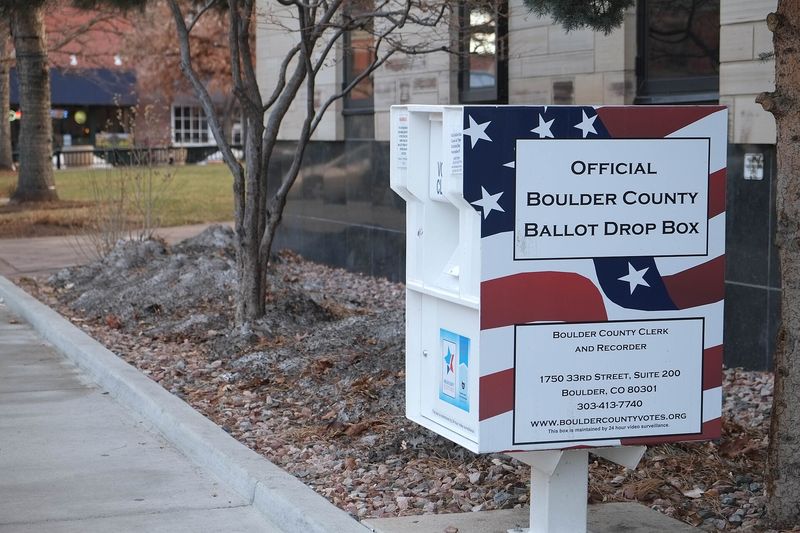
WASHINGTON — The midterm early voting record fell on Friday, and by Saturday it was not even close. The University of Florida's Election Lab, the standard tracker of American early voting, put the national total at 50.5 million ballots by Saturday morning and at 51.31 million by 2:30 p.m. on Saturday, October 31 — in person and by mail combined — with the final weekend of campaigning still under way and Election Day itself, Tuesday, November 3, still to come. Reuters' final-weekend report likewise put the figure above 51 million. For scale: across the whole of the last midterm cycle, in 2022, about 45.9 million Americans voted before Election Day. The 2026 electorate passed that full-cycle total before Halloween, and passed 50 million a day earlier than the headline numbers suggested, because the count kept climbing through Saturday as states reported Friday's in-person lines.
The record itself was broken at midday on Friday, October 30, when the Election Lab tally reached 47,922,669 — already past the 2022 mark with four days of voting left. By Friday evening the count stood at about 49.6 million, split between roughly 22.9 million returned mail ballots and 26.8 million in-person votes, and tracker summaries through Saturday put in-person voting above 28 million — millions ahead of the roughly 20.5 million in-person early votes recorded in 2022. In other words, this is not only a mail story. The defining image of the 2026 early vote is a line: at libraries, county buildings and vote centers, in states from Virginia — where long lines formed on Saturday, the last day of in-person early voting, some voters arriving in Halloween costumes — to Texas, where the numbers are rewriting what a midterm electorate looks like.
Texas is the story inside the story
No state explains the surge better than Texas. More than seven million Texans had voted early in the Election Lab's count, and state-compiled figures through Friday put the Texas total at 7,552,377 — about 40 percent of all registered voters in the state, before the weekend. That is already roughly 1.5 million more early ballots than Texas produced in the entire 2022 cycle. Harris County, which includes Houston, counted 862,700 early voters by Wednesday in an Associated Press analysis — against 564,500 at the same point in 2022 — and approached one million by Friday. The reason is on the ballot: the Senate race between Republican Attorney General Ken Paxton and Democrat James Talarico has become unexpectedly close in a state that has not elected a Democrat statewide in more than three decades, and it has pulled voters to the polls weeks early. Texas is central to Democratic hopes of flipping the Senate, and its early numbers are being watched in both parties' war rooms the way Ohio's once were — as the earliest hard data in an election otherwise argued through polls.
Texas is the largest example, not the only one. An Associated Press analysis found early voting up 83 percent in South Carolina against the same stage of 2022, up 44 percent in Maine, 34 percent in Kansas and 32 percent in Michigan — every one of them a state with a competitive Senate race. The pattern is consistent enough to state plainly: where control of Congress is genuinely contested, voters are not waiting for Tuesday.
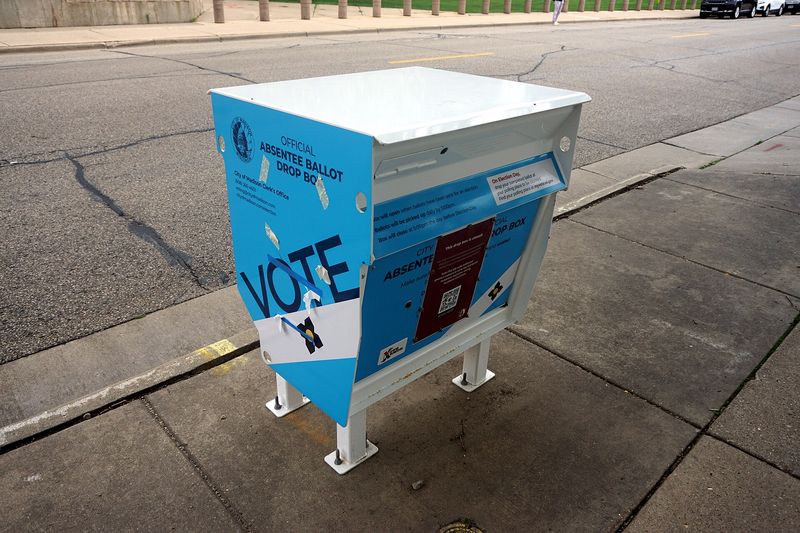
Why this matters
A midterm is normally the quiet sibling of American elections — turnout falls, casual voters stay home, and the electorate that does show up is older and more partisan than a presidential year's. An early vote north of 51 million, three days out, says this cycle is not behaving like a quiet sibling. What is being decided on Tuesday is unusually concrete: all 435 seats in the House of Representatives, 35 Senate seats and governorships in 36 states — in short, who holds Congress for the final two years of Donald Trump's second term. Republicans defend a 53–47 Senate majority and a narrow House edge; Democrats need a net gain of four Senate seats, a path that runs through states they were not supposed to contest, which is precisely why the Texas, Alaska and Kansas numbers matter more than the national total. When early voting surges in places a party expected to hold without effort, it is information — about enthusiasm, about where campaigns will pour their last dollars, and about which races were mispriced. The record also matters administratively: election offices in the biggest states have had to add sites, staff and equipment to handle demand, and every ballot banked early is a ballot that does not need a machine, a line or a ruling on Tuesday.
What the party numbers do — and do not — show
In the 27 states that record the party registration of early voters, registered Democrats have so far outnumbered registered Republicans by 10.7 million to 7.8 million; expressed as shares, trackers put Democrats at roughly 44 percent of early ballots in those states, Republicans at about 31–32 percent and unaffiliated or minor-party voters at about a quarter. Polling averages cited in the final-weekend coverage, including RealClearPolling's generic congressional ballot, also show Democrats ahead nationally. Michael McDonald of the University of Florida, who runs the Election Lab, has pointed to rising participation among Black and Hispanic voters in states that report demographic data, with particularly strong turnout in heavily Hispanic communities along the Texas–Mexico border, AFP reported.
All of that needs three warnings attached, and honest analysts in both parties attach them. First, party registration is not a vote: a registered Democrat in Texas may vote for Paxton, a registered Republican in Maine for the Democrat, and nobody's ballot is counted before Election Day in any case — these figures describe who has voted, never how. Second, the 27 registration states are not the country; Georgia, and several other battlegrounds, do not appear in that split at all. Third, a record early vote does not guarantee a record total vote. Some of the surge is genuine new engagement; some of it is the same electorate voting sooner, cannibalising Tuesday. Republicans, who historically lean on Election Day turnout, are entitled to argue that their vote is still largely to come — and Democrats, who remember 2022's red mirage debates in reverse, are entitled to answer that a ballot already banked cannot be talked out of voting by a bad final-weekend headline. Both things are true. What the data cannot support is certainty, in either direction, before Tuesday night.
How we got here
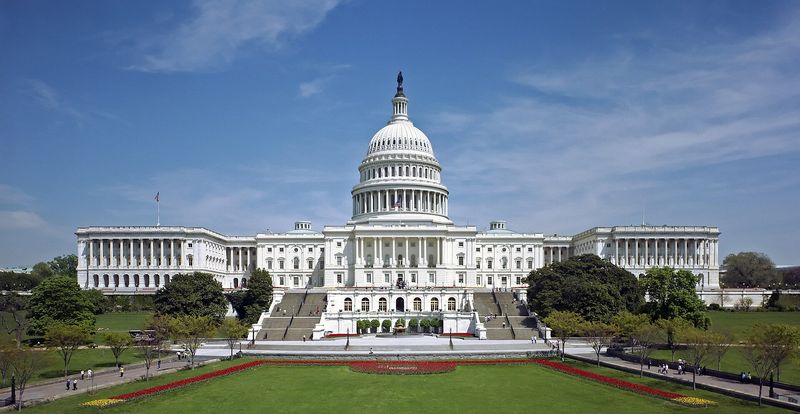
Early voting's takeover of American elections has been building for two decades, accelerated by the pandemic cycle of 2020 — when more than 100 million Americans voted before Election Day — and then retained, deliberately, by states that discovered voters liked it. The 2022 midterms set the previous benchmark at 45.9 million early ballots. What is different in 2026 is the composition: the growth is being led by in-person early voting rather than mail, rising fastest where Senate control is contested, and arriving alongside an unusually litigated election — Reuters reported this week that the Trump administration has intensified legal challenges against states, including a Justice Department suit in Alaska's pivotal Senate race and subpoenas in California in a probe into alleged non-citizen voting, as election officials brace for post-election disputes. A large, early, heavily scrutinised vote is the new normal; 2026 is simply the cycle where the numbers stopped looking normal even by recent standards.
What happens next
Three things will decide how this record is remembered. The first is the weekend itself: early voting remains open in many states through Sunday and Monday, and the Election Lab total will keep rising — the only question is whether it lands in the mid-50s or pushes higher. The second is Tuesday's Republican turnout: if the party's traditional Election Day vote materialises at presidential-cycle levels, the final electorate could be far larger, and more balanced, than the early electorate suggests; if it does not, the early Democratic registration edge in the 27 reporting states will harden from a talking point into the story of the election. The third is the count: with millions of mail ballots banked and legal challenges already filed in at least two states, close Senate races — Texas above all — may not be called on election night, and the record early vote guarantees a record volume of ballots whose processing will be argued over in public. Either way, the first fact of the 2026 midterms is already in, and it is not a projection: more Americans voted before this election than before any midterm in the country's history, and they did it with days to spare.
Related coverage: The Democrats' Senate path runs through Alaska, Maine, Texas and North Carolina · The House races that will decide the majority · Wisconsin's Supreme Court race and the ballot measures to watch
Sources
- University of Florida Election Lab (via the Guardian's analysis, Oct 31, 2026): 50.5 million early ballots by Saturday morning; 10.7 million registered Democrats vs 7.8 million registered Republicans in states recording registration; Texas above 7 million, 1.5 million ahead of its full 2022 early total.
- Aju Press (Nov 1, 2026, reporting the Election Lab/Election Research Center tally): 51.31 million early voters nationwide as of 2:30 p.m. on Saturday, October 31.
- Reuters (Oct 31, 2026, final-weekend campaign report): more than 51 million Americans have already cast ballots, up from nearly 46 million before Election Day in 2022; Republicans hold the Senate 53–47; all 435 House seats and 35 Senate seats contested.
- Associated Press analyses (Oct 2026): Harris County 862,700 early voters by Wednesday vs 564,500 at the same point in 2022; early voting vs 2022 up 83% in South Carolina, 44% in Maine, 34% in Kansas, 32% in Michigan.
- Agence France-Presse (Oct 31, 2026): the record 47,922,669 tally that passed the 2022 mark on Friday; Election Lab director Michael McDonald on rising Black and Hispanic participation, including along the Texas–Mexico border.
- NHK World-Japan (Oct 31, 2026): more than 51 million voted by the end of October; long final-day early-voting lines in Virginia.