President Donald Trump used his bilateral meeting with Philippine President Ferdinand Marcos Jr. at Malacañang Palace on Wednesday to declare that US–Philippines defence cooperation is expanding, pointing to more than $5 billion in approved American arms sales, backing major increases in foreign military financing, and describing the 75-year-old treaty alliance as stronger than ever. He paired the hardware with two forward promises he did not define: the two countries will probably do “something very big” on nuclear power, and the Philippines could become a partner for US energy exports through a proposed Alaska pipeline. Asked about tensions in the West Philippine Sea and the prospect of the Mutual Defense Treaty being invoked, he waved the concern aside: “I’m not concerned at all… That’ll be taken care of.” Marcos, for his part, pressed for deeper technology cooperation, invoking “superintelligence,” and reminded his guest that the United States is Manila’s only treaty ally. Outside the palace, anti-Trump protesters burned a US flag. By nightfall Manila time, Trump was due to depart for Shenzhen, where Thursday brings a meeting with Xi Jinping on the APEC sidelines and the first-ever Trump–Xi–Putin trilateral.
Track it live: Wars tracker
MANILA, Philippines, November 18, 2026 — Trump Marcos meeting Manila: President Donald Trump told Philippine President Ferdinand Marcos Jr. at Malacañang Palace on Wednesday that Washington is expanding defence cooperation with the Philippines, saying the United States had approved more than $5 billion in arms sales to the country and supported major increases in foreign military financing, Reuters reported. Trump described the alliance — now in the 75th-anniversary year of the 1951 Mutual Defense Treaty — as stronger than ever. The bilateral talks and working lunch were the centrepiece of the Manila stop’s final day, following Tuesday’s Quad meeting and the US–ASEAN special summit and dinner, and they were Trump’s last major engagement before departing for Shenzhen, China, for Thursday’s meeting with President Xi Jinping and the first-ever trilateral with Xi and Russian President Vladimir Putin. Our coverage of Trump’s arrival in Manila and the Quad meeting that opened the Asia trip sets out how the week began.
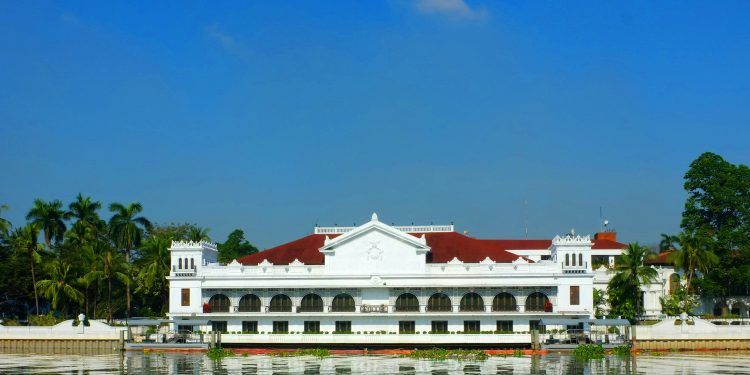
The meeting at Malacañang: an alliance described as stronger than ever
The setting did diplomatic work before either man spoke. Marcos received Trump at the presidential palace for bilateral talks and a working lunch, the formal close to a Manila programme that had already put the American president in a room with the Quad leaders — the United States, Japan, Australia and India — and at a special summit and dinner with ASEAN leaders on Tuesday. Wednesday’s bilateral was the one-on-one: the Philippines alone with its treaty ally, in the anniversary year of the pact that binds them.
Trump’s message, as reported by Reuters and carried live by AnewZ, was expansion. Defence cooperation between the two countries is growing, he said, and he anchored the claim in a number: the United States has approved more than $5 billion in arms sales to the Philippines. He added that Washington supported major increases in foreign military financing for Manila. No financing figure was given, and none is reported here: the president quantified the arms approvals and left the financing as a direction of travel. He described the alliance itself in superlatives, as stronger than ever.
Marcos framed the Philippine ask in two registers. The first was historical and legal: this is the 75th anniversary of the Mutual Defense Treaty alliance, and the United States is Manila’s only treaty ally — a fact that gives every American statement in Manila a weight it carries nowhere else in Southeast Asia. The second was forward-looking: Marcos called for deeper US technology cooperation, including in what he called “superintelligence,” casting the alliance’s next chapter as one written in advanced technology as much as in ships and aircraft.
$5 billion in arms: approved, not delivered
The $5 billion figure needs its precision lock stated plainly, because it is the number most likely to be misread. What Trump said, per Reuters, is that the United States had approved more than $5 billion in arms sales to the Philippines. Approval is the Washington end of the process: it clears a sale to proceed. It is not a delivery manifest. Equipment approved is not equipment shipped, equipment shipped is not equipment fielded, and the gap between an approval headline and a capability in Philippine hands is measured in contracts, production queues and years. Nothing in Wednesday’s reporting itemised the $5 billion — no platform list, no delivery schedule was announced at the palace — and this report does not invent one.
The same discipline applies to the financing line. Trump supported major increases in foreign military financing; he did not attach a dollar figure, a fiscal year or a congressional pathway. Foreign military financing is the mechanism by which Washington helps an ally pay for American equipment, so the two halves of Trump’s statement fit together — approvals to sell, financing to help buy — but only one half came with a number, and the number it came with describes permissions, not hardware on a tarmac.
The nuclear tease: ‘something very big,’ and nothing signed
The remark that will travel furthest from Wednesday’s meeting may be the one with the least substance behind it. Trump said the two countries will probably do “something very big” — in another rendering, “something big” — on nuclear power. AnewZ’s live blog recorded the American president saying Washington and Manila were discussing a major nuclear energy project, signalling closer cooperation in civilian nuclear technology.
What that is, on the record, is a tease. No deal was announced at Malacañang. No project was named, no site identified, no technology specified, no timeline offered, no agreement signed or initialled. The Philippines’ nuclear history makes the subject genuinely significant — the country has debated civilian nuclear power for decades without operating a commercial reactor — but significance is not substance, and Wednesday produced the former only. Any account presenting the nuclear remark as an agreement, a project launch or a commitment goes beyond what either government said, and this report does not.
Trump paired the nuclear line with a second energy thread: he identified the Philippines as a potential partner for US energy exports through a proposed Alaska pipeline project. The operative words are the same ones — potential partner, proposed pipeline. An archipelagic, energy-importing Philippines is a natural customer in any American pitch for long-term energy supply from Alaska, and Wednesday’s mention puts Manila on that map rhetorically. It does not put a contract, a volume or a route on paper.
‘I’m not concerned at all’: the West Philippine Sea answer
The sharpest exchange of the day came on the subject that hangs over every US–Philippine meeting: the West Philippine Sea, Manila’s name for the parts of the South China Sea within its exclusive economic zone, where Philippine and Chinese vessels have confronted each other repeatedly as Beijing presses its claims. Asked about those tensions, and about a possible invocation of the Mutual Defense Treaty, Trump dismissed the premise. “I’m not concerned at all,” he said. “That’ll be taken care of.”
Two readings of that answer are available, and the record supports only the narrower one. The narrow reading is factual: the president expressed no concern and offered a general assurance that the matter would be handled. The wider reading — that Trump restated, expanded or formalised the treaty commitment in new language — is not in what he said. His words were a dismissal of concern, not new formal treaty wording: no threshold was defined, no scenario specified, no invocation promised or ruled out. Allies and adversaries alike will parse the sentence for signal; what it literally contains is confidence and vagueness in equal measure, delivered in a palace where the host government has spent years seeking exactly the opposite combination — specificity about the commitment, calm about everything else.
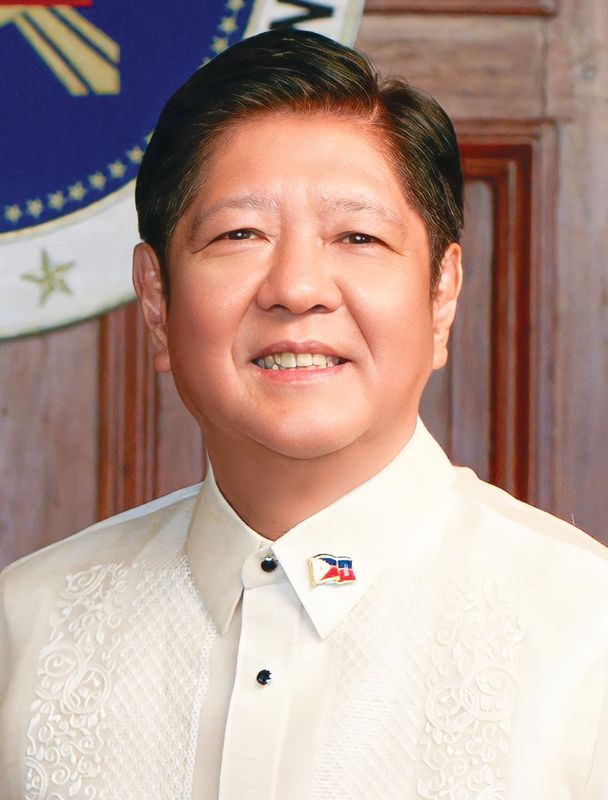
Context: a 75-year treaty, a week of summits, and a difficult backdrop
The Mutual Defense Treaty was signed in 1951, which makes 2026 its 75th-anniversary year — the frame Marcos himself chose for the meeting. The treaty is the legal spine of the alliance: each country recognises that an armed attack in the Pacific area on the other would be dangerous to its own peace and safety, and declares it would act to meet the common dangers in accordance with its constitutional processes. Around that spine, the modern alliance has added layers — visiting-forces arrangements, an enhanced defence cooperation framework, joint exercises, and the steady traffic of arms approvals and financing of which Wednesday’s $5 billion figure is the latest instalment. When Trump calls the alliance stronger than ever and Marcos answers that America is Manila’s only treaty ally, both men are speaking inside a structure three-quarters of a century old that neither capital shows any intention of leaving.
The immediate context was the week itself. Trump arrived in Manila on Tuesday for the first Quad meeting of the trip and a US–ASEAN special summit and dinner, a programme our report on the ASEAN summit in Manila, where an energy crisis shadowed Trump’s arrival covers in full. The through-line of the week has been the South China Sea: friction with Beijing is the reason the Quad convenes, the reason ASEAN hedges, and the reason a Philippine president asks an American president about a treaty written before either man entered politics. Hovering over the diplomacy, too, was the domestic backdrop Trump carried into the trip — a midterm defeat at home that has narrowed his room for manoeuvre in Washington even as he performs undiminished confidence abroad.
Outside the palace: protesters burn a US flag
Not everyone in Manila welcomed the pageantry. Anti-Trump protesters demonstrated in the capital on Wednesday, and burned a US flag — the street’s answer to the palace’s communiqué. The protests were the visible edge of a long Philippine argument about the alliance itself: for one tradition in Philippine politics, the American connection is the country’s essential security guarantee; for another, it is a dependency that compromises sovereignty and drags the Philippines into other people’s rivalries. A state visit by an American president who arrives promising more arms is, for the second tradition, a provocation as much as a reassurance. The flag-burning does not change the policy arithmetic in either capital, but it records, for the delegations driving past it, that the alliance Trump and Marcos celebrated indoors is contested outdoors — and that the contest is a permanent feature of Philippine democracy, not an interruption of it.
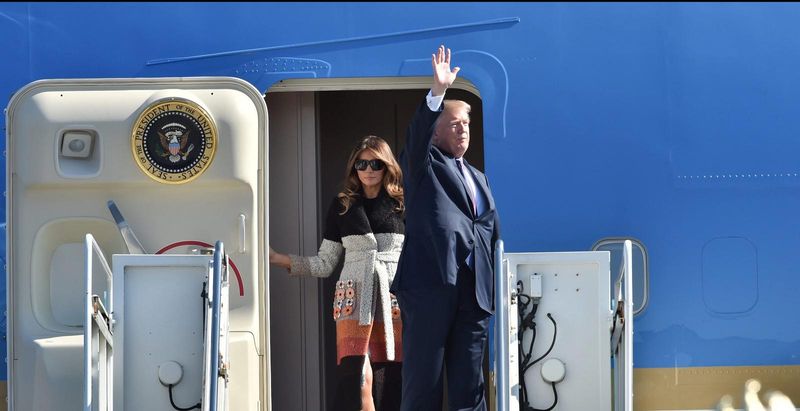
What was NOT announced
A summit’s silences are part of its record, and Wednesday’s list is long enough to itemise. No nuclear agreement, project, site or timeline was announced — only the tease. No foreign military financing figure was given. No itemised list of the approved arms sales, and no delivery schedule, was published. No new treaty language, no clarified threshold for Mutual Defense Treaty invocation, and no new formal commitment on the West Philippine Sea was issued; the president’s assurance there was verbal, general and unconcerned in tone. No Alaska pipeline contract or energy purchase commitment was signed. And looking ahead to Shenzhen, the floated possibility of a meeting with North Korea’s Kim Jong Un remained exactly that — floated, and unconfirmed. Readers measuring Wednesday by its paper should measure it as a day of direction and rhetoric, not of instruments signed.
The numbers in context
Two numbers organise the story, and both shrink or grow depending on the frame. The first is 75: the years since the Mutual Defense Treaty was signed in 1951. The alliance predates the jet age’s maturity, the People’s Republic’s navy as a blue-water force, and the South China Sea dispute in its modern form; its survival across fifteen US presidencies and repeated Philippine reinventions of the relationship is itself the context that makes a single meeting’s rhetoric legible. The second number is $5 billion: the value of arms sales Trump said Washington has approved. Set against a 75-year alliance, it is one tranche in a long ledger of transfers, exercises and financing; set against a single news cycle, it is a headline figure large enough to signal seriousness to Manila and to be noticed in Beijing. Both frames are true. What the figure is not, yet, is a delivery record — and the alliance’s credibility over the next 75 years will be built from deliveries, deployments and decisions, not approvals alone.
Why this matters
Analysis. The first reason Wednesday matters is the geography of the American alliance system in Asia. The Philippines is the treaty ally that sits on the South China Sea’s eastern edge and along the Luzon Strait; an expanding defence relationship with Manila is the load-bearing wall of Washington’s position in the first island chain. When an American president stands in Malacañang and quantifies that expansion — $5 billion approved, financing to rise, cooperation growing — he is addressing at least four audiences at once: Manila, which wants the commitment specific; Beijing, which is meant to price it in; Tokyo, Canberra and New Delhi, fresh from Tuesday’s Quad room, which calibrate their own commitments against America’s; and Washington, where the midterm-defeat backdrop makes every overseas promise a domestic argument.
The second reason is the gap between the day’s two registers, which analysis should name rather than smooth over. On defence, Trump offered a number and a direction — the most concrete currency a summit trades in. On the question Manila most needed answered — what happens in the West Philippine Sea if a confrontation turns lethal — he offered serenity without specificity. Alliances run on both hardware and belief, and the belief half is traditionally maintained by careful, lawyered language about treaty obligations. “That’ll be taken care of” is not that language. It may prove to be backed by exactly the resolve Manila hopes for; nothing in the sentence guarantees it, and the protesters burning a flag outside and the planners in Beijing reading the transcript will each draw their own conclusions from the same eleven words.
The third reason is what Manila gains, and what it risks, in the bargain as presented. The gains are tangible: approved sales that modernise a military long outmatched at sea, financing support that stretches a limited defence budget, a technology agenda — Marcos’s “superintelligence” ask — that reaches beyond weapons into the industries of the next decades, and the public embrace of the alliance’s anniversary year by the ally itself. The risks are the mirror image: deeper dependence on a single patron whose president answers treaty questions with a wave, exposure as the front-line state in any US–China confrontation, and a domestic opposition ready to frame each new approval as sovereignty sold. Marcos’s framing — anniversary, only treaty ally, technology future — is an attempt to bank the gains as national strategy rather than American favour. Whether Philippine politics sustains that framing is a question Wednesday’s meeting posed but cannot answer.
How Beijing will read it requires no speculation about secret assessments; the public logic is sufficient. Chinese officials have consistently framed expanding US–Philippine defence cooperation as destabilising and as Manila being enlisted in an American containment design. A $5 billion approvals figure and a nuclear-energy tease, announced the day before Trump lands in China to meet Xi, will be read in Beijing as the pressure half of a pressure-and-talk sequence — which may be precisely the sequence Washington intends, since Trump now carries Manila’s applause into the Shenzhen room as evidence that America’s Asian alliances are tightening on the eve of the talks. The risk in that design is symmetric: Beijing may equally read the Manila performance as a reason to test whether the West Philippine Sea assurance was substance or mood.
Forward look: Shenzhen, and the scenarios that branch from Thursday
Trump departs Manila for Shenzhen, where Thursday’s programme is the heaviest of the trip: a meeting with Xi Jinping on the sidelines of the APEC summit, and the first-ever Trump–Xi–Putin trilateral, at which nuclear arms control, Iran and Ukraine may all feature. Three scenarios branch from it. In the first, the trilateral produces a genuine framework — even a narrow one on nuclear arms control — and the Manila stop is retrospectively read as the alliance-consolidation overture to a week that ended in great-power choreography. In the second, Shenzhen yields atmospherics and deferrals: warm statements, no instruments, and the questions Trump waved away in Manila — the treaty’s meaning in a crisis, the South China Sea’s trajectory — returned to the region unanswered, to be priced by coast guards rather than communiqués. In the third, the week’s two halves collide: signals sent in Manila harden positions in Shenzhen, the trilateral stalls, and the floated Kim Jong Un meeting — unconfirmed as of Wednesday — becomes the improvisation that fills the vacuum. Which scenario unfolds will be visible first in what Thursday produces on paper, and in whether the nuclear subject that Trump teased in Manila reappears in Shenzhen in its serious form: arms control among the three powers whose arsenals define the word.
Sources
Sources: Reuters, November 18, 2026 — President Trump told President Marcos at Malacañang Palace that US–Philippines defence cooperation is expanding, that the US had approved more than $5 billion in arms sales to the Philippines and supported major increases in foreign military financing, and described the alliance as stronger than ever; Trump said the two countries will probably do “something very big” on nuclear power and identified the Philippines as a potential partner for US energy exports through a proposed Alaska pipeline project; asked about West Philippine Sea tensions and a possible Mutual Defense Treaty invocation, Trump said, “I’m not concerned at all… That’ll be taken care of”; Marcos called for deeper technology cooperation including “superintelligence,” noted the 75th anniversary of the Mutual Defense Treaty alliance and that the US is Manila’s only treaty ally; anti-Trump protesters demonstrated in Manila and burned a US flag. Reuters preview by Trevor Hunnicutt and Jarrett Renshaw, November 17, 2026 — Trump to meet Marcos in Manila before China talks: the Wednesday bilateral at the presidential palace ahead of Trump’s travel to China; Tuesday’s Quad meeting opening the Asia trip; Thursday’s meeting with Xi Jinping on the APEC sidelines in Shenzhen; and the floated, unconfirmed possibility of a meeting with North Korea’s Kim Jong Un. AnewZ live blog, November 18, 2026 — Trump meets Marcos in Manila before China talks: Trump welcomed by Marcos at the presidential palace; Trump saying the US approved over $5 billion in Philippine arms sales and that the US and Philippines were considering a major nuclear project. Photographs are file photos and do not depict the events of November 18, 2026.