Trump names John Coale hostage envoy
The Belarus negotiator gets a larger portfolio and a sharper dilemma: how to bring Americans home without turning sanctions relief into a standing price for political imprisonment.
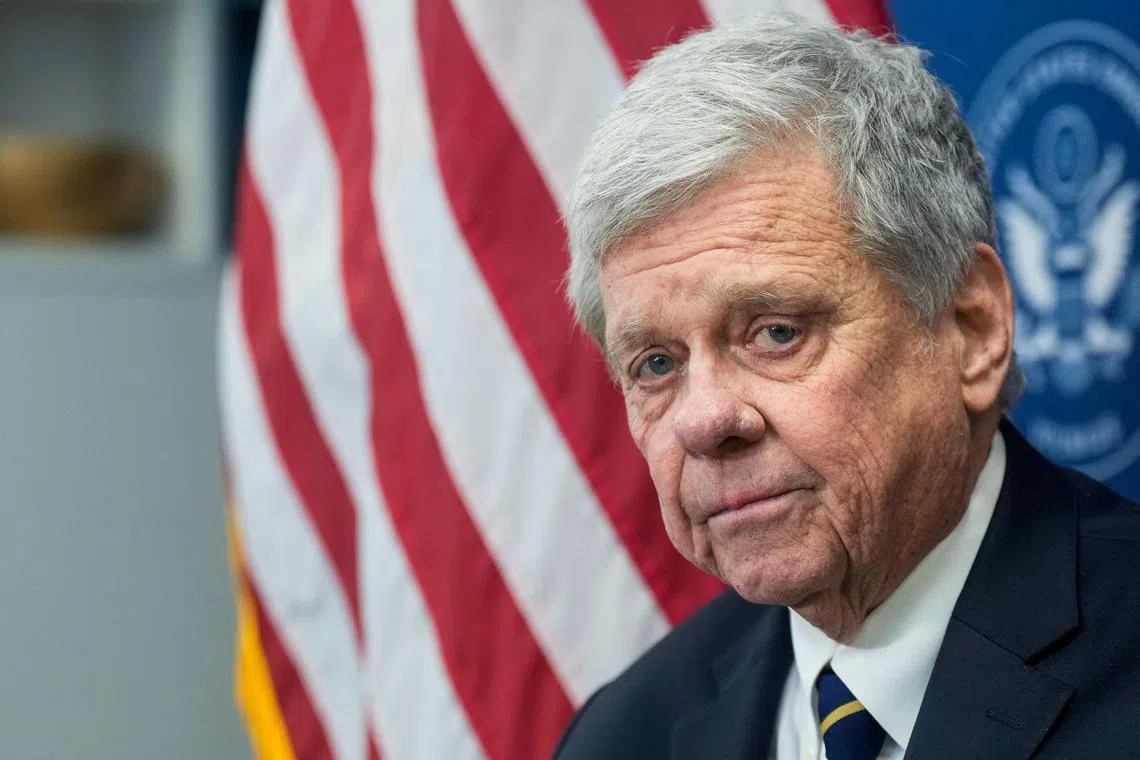
President Donald Trump said Sunday that he has chosen Washington lawyer John Coale to become special presidential envoy for hostage affairs, elevating an ally whose negotiations with Belarus produced prisoner releases but also tested how much sanctions relief Washington should trade for human freedom.
The choice, announced by Trump on social media and reported by Reuters, moves Coale from a country-specific assignment into the office that coordinates the government's response to Americans held hostage or wrongfully detained abroad. Trump said Coale had helped secure the return of more than 65 Americans and allied citizens from Belarus over the past year and had negotiated the release of more than 800 political prisoners from several Eastern European countries. Those are the administration's claims; no public case-by-case accounting accompanied Sunday's announcement.
Coale replaces Adam Boehler, whom Trump credited with bringing home 196 hostages and who will remain a senior adviser. That continuity matters. A hostage office succeeds through patient case files, intelligence, family trust and interagency leverage, not merely through a prominent envoy's telephone list. Coale arrives with the president's confidence and a record of direct bargaining. He also inherits the harder burden of proving that his Belarus method can travel without becoming a template for authoritarian governments to manufacture bargaining chips.
Why this matters
A hostage envoy works in the most morally uneven corner of foreign policy. The immediate objective is wonderfully simple: get a person out of a cell and back to a family. The strategic problem is not. Every concession can save a life today while raising the value of detaining another traveler, journalist or dissident tomorrow. Coale's appointment puts that tension inside the administration's preferred theory of statecraft — personal access, rapid bargaining and visible deliverables.
For families of detained Americans, the upside is tangible. Coale appears to have access to Trump, experience speaking with a government under heavy U.S. sanctions and a willingness to treat a prisoner's release as an objective rather than a footnote. The State Department describes the hostage-affairs office as the center for diplomatic outreach, family support, interagency case management, policy development and implementation of the Levinson Act. A politically empowered envoy can force stalled cases onto a president's agenda and make agencies answer the same question at the same table.
For Trump, the promotion also extends a dealmaker narrative just 30 days before the November 3 midterm elections. A returned prisoner is a rare foreign-policy result that voters can see without reading a communique. That does not make the work cynical; it does make its timing politically useful. The White House is already trying to turn foreign-policy negotiation into a domestic competence argument, a theme visible in Trump's push to reshape Republican voting strategy before the midterms.
The losers, or at least the parties carrying more risk, are Belarusian civil society and human-rights groups that fear Washington will normalize President Alexander Lukashenko's government without forcing structural reform. A prisoner release is real relief. It is not the same thing as ending arbitrary arrest, restoring independent courts or allowing free political competition. If the repression machine remains intact, the government can replenish the pool after every deal.
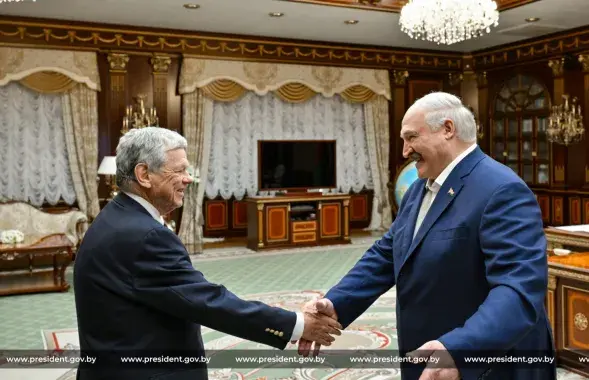
John Coale: lawyer to Trump, Ukraine deputy envoy, Belarus negotiator
Coale's path to the U.S. hostage affairs envoy job has been unusually compressed. He was previously one of Trump's personal lawyers and helped obtain YouTube's settlement payment to the Trust for the National Mall in litigation over the platform's suspension of Trump's account after the January 6 attack on the Capitol. By March 2025, he was serving as deputy U.S. special envoy for Ukraine. In June of that year, he helped negotiate a Belarusian release of 14 political prisoners.
Trump named him special envoy for Belarus on November 9, 2025, crediting Coale at the time with the release of “100 hostages” and saying the effort was “going for an additional 50.” The vocabulary deserves attention. Belarusian dissidents jailed by their own government are political prisoners; Americans held unlawfully abroad may be hostages or wrongfully detained citizens under U.S. policy definitions. Political rhetoric often folds the categories together, but an envoy's legal authorities and the government's obligations differ by case.
Coale's value to Trump is easy to see. He is a lawyer who turned into an informal diplomat, then converted direct presidential trust into an official portfolio. His approach is transactional, personal and impatient with the ceremony that normally surrounds diplomacy. That can break a deadlock. It can also bypass the institutional skepticism designed to test whether a concession creates a dangerous precedent.
The appointment therefore is not simply a personnel change. It is a bet that Coale's Belarus results came from a repeatable negotiating skill rather than from the peculiar needs of Lukashenko, who has sought economic relief and a less isolated relationship with Washington while remaining dependent on Moscow.
What the Coale Belarus prisoner-release numbers really show
The numbers tell a story of scale, but not a clean story of attribution. Four benchmarks recur in the record:
- 14 political prisoners were released in the June 2025 round Coale helped negotiate.
- “100” released and “an additional 50” sought was Trump's public summary when he assigned Coale the Belarus role in November 2025.
- 25 people in one week were part of the release activity Coale discussed in September 2026.
- 800 to 900 prisoners over 22 months was Coale's broader estimate in a September 17 interview with Radio Free Europe/Radio Liberty, along with his hope that hundreds more could be freed within roughly a month.
On paper, the later 25-person group was 11 people, or about 79 percent, larger than the 14-person June 2025 tranche. But that arithmetic can mislead: they were different releases, under different arrangements, and not necessarily the same mix of political prisoners and other detainees. The 800-to-900 estimate works out to roughly 36 to 41 releases per month over 22 months. It should not be read as a steady monthly pace; mass releases arrive in bursts, and Coale did not claim sole responsibility for every case.
The “100 plus 50” language is another snapshot, not a denominator. A 150-person claim-and-target would represent only about one-sixth of the later 800-to-900 cumulative range. That gap may reflect releases negotiated by other governments, institutions and Belarusian actors, as well as a wider geography. Sunday's Trump statement similarly combined Americans and allied citizens returned from Belarus with political prisoners released across multiple Eastern European countries. The figures demonstrate momentum. They do not yet provide an auditable measure of Coale's individual performance.
Coale told RFE/RL that Washington's engagement had moved Belarus in the right direction, according to a republished transcript of the September interview. His argument rests on outcomes: people were freed, some sanctions were eased, and negotiations continued. Critics answer with a different before-and-after test: how many people remain jailed for political reasons, how many new arrests occur, and whether ex-prisoners can remain safely in their country. Those measures are not interchangeable.

Who benefits — and who fears the sanctions-for-prisoners bargain
The first beneficiaries are not abstract. They are detainees who leave prison, children who see a parent again and families who finally stop living between a rumor and a consular call. A sanctions waiver can be reversed. Lost years in a cell cannot. That fact gives negotiators a strong moral case for accepting imperfect deals.
Belarus also benefits. Washington lifted sanctions on the Belavia airline in November 2025 and explored a potash arrangement, according to the public accounts of the talks. Those moves offer Lukashenko economic breathing room and a channel to the United States without first meeting the democratic conditions that produced much of the isolation. Moscow watches the opening, too: any daylight between Minsk and the Kremlin has strategic value to Washington, but any easy rehabilitation of Belarus could weaken the credibility of future sanctions threats.
Human-rights organizations judge the bargain over a longer horizon. In an October 2025 review, Human Rights Watch said hundreds had been pardoned while repression continued, and cited the Viasna Human Rights Center's count of at least 1,184 political prisoners still behind bars at that point. That figure predates Coale's September 2026 estimate and should not be treated as current. It does illustrate the core criticism: a government can release hundreds while still preserving the system that put them there.
The right question is therefore not “sanctions or prisoners?” Diplomacy rarely offers such a clean choice. It is whether concessions are sequenced, reversible and tied to independently verifiable acts — releases completed, deportations avoided, new arrests reduced and civic space reopened. An arrangement that frees people in exchange for narrow, reversible relief is easier to defend than broad normalization granted on promises.
The reported Coale Russia sanctions-prisoners deal is the next test
Belarus may have been the laboratory. Russia would be the stress test. In late September, Dagens, citing reporting by The Atlantic, said Coale had developed a proposal linking the release of Russian political prisoners to an easing of U.S. sanctions and that Trump had reportedly approved the plan. The account suggested possible American business opportunities involving Russian oil, diesel and rare-earth minerals. The Kremlin publicly denies that Russia has political prisoners.
That proposal remains reported, not established policy. Public details do not show which prisoners would be covered, which sanctions could be changed, whether Congress would need to act, what verification would be required or how Ukraine-related sanctions would be separated from human-rights measures. Those are not drafting details. They are the policy.
A narrow humanitarian exchange could be worthwhile. A broad sanctions opening dressed as a prisoner deal would be something else entirely, particularly while Russia's war in Ukraine continues. The administration would need to show that the value of the relief matched completed releases, that sanctions imposed for aggression were not casually traded away, and that Moscow could not pocket commercial access while retaining the ability to seize new prisoners. The diplomacy also sits beside other channels, including the Vatican's effort to press Moscow on prisoners of war and humanitarian cases.
What the special presidential envoy for hostage affairs can — and cannot — do
The title sounds more sovereign than the job. The envoy can coordinate cases, recommend negotiating positions, convene agencies, brief the president, communicate with families and represent Washington in sensitive talks. The envoy cannot independently erase statutory sanctions, command foreign governments to release prisoners, determine every wrongful-detention case alone or guarantee that an agreement will survive contact with domestic politics in another country.
Coale will also encounter cases that do not resemble Belarus. Some Americans are held by governments seeking prisoner swaps, cash access or diplomatic recognition. Others are held by armed groups, where military, intelligence and third-country channels matter more than sanctions. Still others are caught in legitimate foreign legal systems and do not meet the U.S. government's wrongful-detention standard. A negotiator's willingness to deal is an asset only when paired with disciplined case distinctions.
His first public test should be transparency without recklessness. Families need private confidence that their cases are moving; the public needs enough information to judge the policy's costs. The government should publish aggregate results, define what it means by “hostage,” “wrongfully detained” and “political prisoner,” and distinguish Coale's work from releases attributable to allies or independent campaigns. Secret talks can be necessary. Secret scorekeeping is not.
What happens next after the Trump hostage envoy appointment
Three questions now matter. First, which American cases will Coale prioritize, and will his portfolio extend immediately beyond Belarus? Second, will the White House formalize the reported Russia proposal, and if so, which sanctions and prisoners are actually on the table? Third, what role will Boehler retain as senior adviser, and how will the office prevent a change at the top from slowing casework already under way?
The answers were unknown at publication. Sunday's announcement did not provide a public list of cases, a negotiating mandate, a sanctions framework or an implementation timetable. It also did not supply documentation for the administration's headline release totals. Those gaps do not negate the achievement of people walking free. They do limit how confidently anyone can judge the durability of the model.
Coale deserves credit for treating imprisonment as a solvable problem, not a permanent talking point. He now needs to prove that urgency and restraint can coexist. The measure of this appointment will not be the number of photographs from negotiating rooms or even the first burst of releases. It will be whether Americans come home, whether political prisoners are freed without a replenishing cycle of arrests, and whether the United States preserves enough leverage to make the next bargain from strength.
Sources
- Reuters — Trump picks John Coale as special presidential envoy for hostage affairs
- U.S. Department of State — Office of the Special Presidential Envoy for Hostage Affairs
- Radio Free Europe/Radio Liberty interview transcript — Coale on U.S.-Belarus negotiations
- Dagens — report on the proposed Russia prisoner-sanctions arrangement
- Human Rights Watch — Belarus political-prisoner releases and continuing repression
Reporting reviewed October 4, 2026. Release figures are attributed to the people and organizations that published them; some categories and time periods overlap and should not be added together.