Trump vote by mail midterms
Politics / U.S. / TrumpThe president who called mail ballots a "Nation Destroying SCAM" now wants Republicans to use them. Inside the biggest messaging U-turn of the 2026 campaign — and the turnout math that forced it.
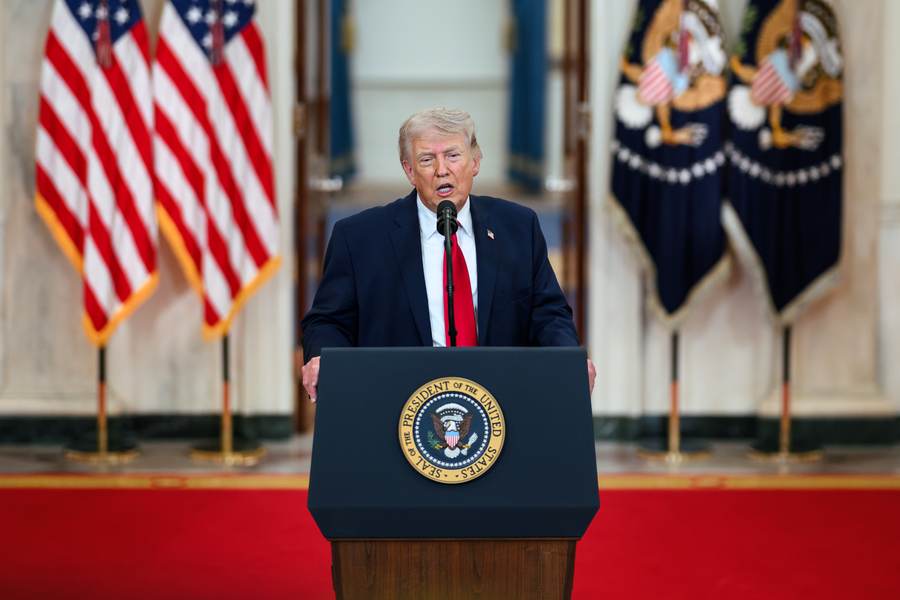
One month before the 2026 midterms, Donald Trump made the most startling messaging pivot of the campaign: he told Republicans to vote by mail. In a pre-recorded video posted to Truth Social on Saturday morning, the president urged supporters to cast ballots using "every appropriate tool" — "Vote early. Vote by mail. Or vote in person on Election Day." For a politician who built a movement on the claim that mail ballots are "inherently corrupt," the Trump vote by mail midterms message is no minor tactical adjustment. It is a full reversal — and it reveals how the Republican turnout operation really sees the next 30 days.
What happened Saturday
Trump's pre-recorded video was unusually direct. It did not revisit the mechanics of mail-ballot security or reconcile the recommendation with his years of warnings. Instead, it gave Republican voters a menu: use the method available and get the vote cast. The appeal appeared on Truth Social on Saturday morning and was amplified by a companion post on X, according to CNN's October 3 report.
In the written post, Trump declared that "Republicans must WIN the 2026 Midterm Elections" and told supporters to "swamp the Radical Left Dumocrats with massive turnout!" The misspelling was his. A Republican website accompanied the push by laying out early-voting and mail-voting options state by state — the practical field guide underneath the presidential message.
Another post told voters to "pretend I'm on the ballot." Trump added that his name delivers "45% more votes," a claim made by the president, not an independently established measure. The day's wider posting burst also included another mention of his "$5,000 Trump Dividend" pledge, first made September 9 in Dallas, and a separate call on daylight-saving time covered in Signal Post News's report on Trump's same-day Truth Social blitz.
The significance lies less in the production of the video than in its unmistakable instruction. For years, Republican operatives have tried to soften Trump's hostility to mail voting without openly contradicting him. On Saturday, they no longer had to translate. The president himself said the words.
Why this matters
Midterms are turnout elections before they are persuasion elections. The electorate is smaller, the drop-off from a presidential year is uneven, and the decisive question is often not whether a voter prefers one party but whether that voter completes the ballot. A Republican official put the calculation bluntly to CNN: "It's all a turnout game." That is analysis disguised as a slogan — and it is correct.
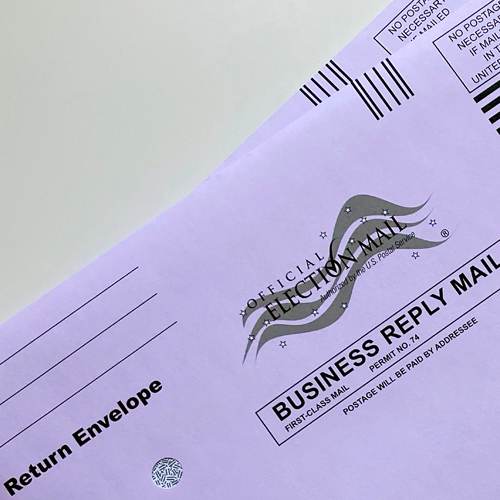
The lesson of 2020 was not merely that Trump's attacks on mail voting angered Democrats. They changed Republican behavior. Democratic campaigns encouraged supporters to request and return ballots weeks early, while many Republican voters waited for Election Day because their party's most powerful voice had taught them to distrust the mail. That left the GOP more exposed to last-minute illness, weather, work conflicts, transportation problems, long lines and ordinary human forgetfulness.
Every vote banked early is a voter the field operation can stop chasing. The volunteer who no longer needs to make a fifth reminder call can move to a sporadic voter; the campaign that knows a supporter has returned a ballot can spend its final dollars elsewhere. Early votes are also insurance against a bad final week. No competent turnout operation can leave one of its own voters' preferred methods on the table simply because the party spent years making that method politically awkward.
That tension has surfaced elsewhere in the administration's voting agenda. The dispute over access for Americans abroad, now at the center of the DNC lawsuit over an overseas voting form, shows how procedural changes become operational turnout questions when deadlines are close.
A reversal years in the making
Trump has attacked mail voting since 2020 with language that left little room for tactical nuance. He called mail ballots "inherently corrupt" as recently as July, and over the years labeled them "a disaster" and a "Nation Destroying SCAM." He said he would "lead a movement to get rid of MAIL-IN BALLOTS." Those were not passing complaints about one state's rules; they were the organizing premise of a sustained political argument.
The administration tried to convert that argument into policy. A March executive order imposed sweeping restrictions on voting procedures. Last month, however, the Supreme Court rejected the relevant restrictions for this year's midterms, according to NPR's September 14 report carried by WAMC. Trump's SAVE America Act has also faced bipartisan opposition in the Senate, where lawmakers have resisted the bill's election restrictions.
At the same time, the administration fought a U.S. Postal Service rule change involving mail ballots. In that litigation, Trump's own lawyers gave the courts no evidence of fraud. That gap matters: a political claim can mobilize supporters without meeting the evidentiary standard demanded in court. The president's personal practice adds another contradiction. Trump himself has voted by mail in Florida.
The legal context extends beyond one order. A recent Supreme Court voting case, examined in Signal Post News's analysis of the voter-citizenship ruling, shows the boundaries the justices are drawing around federal election policy as Congress, states and the executive branch press competing claims.
The courts closed the other door
Richard Pildes, an election-law professor at New York University, told Election Law Blog, citing reporting by The New York Times, that the restriction strategy had failed "across the board." His reading of the pivot was plain: "He's realizing that his efforts to change policy on mail-in voting have basically run aground at this point, and he's shifting gears."
That is the bridge between the legal setbacks and Saturday's campaign message. When you cannot change the rules before Election Day, you change tactics. The new imperative is not to persuade Republican voters that the system has suddenly become flawless. It is to persuade them that using every lawful method is preferable to losing because they refused one.
This distinction allows Trump to preserve, at least rhetorically, his broader complaints while urging a different behavior in the present contest. Yet it also exposes the weakness in the earlier absolutism. If mail ballots were truly an inherently corrupt, nation-destroying scam, the answer would not be to encourage millions of supporters to use them. Operational necessity has collided with the language of principle, and necessity is winning.
The numbers behind the gamble
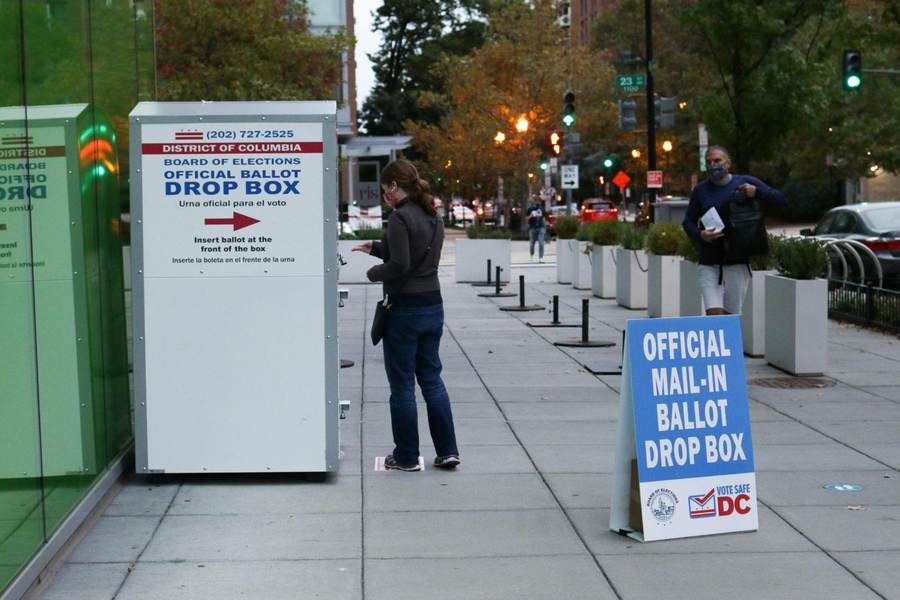
The partisan gap is measurable. Figures from the MIT Election Data and Science Lab for 2024 show that 37% of Democrats voted by mail, compared with 24% of Republicans — a 13-point difference. The gap is not an abstraction. It is a list of Democratic votes already received and removed from the universe of people a campaign must still contact, while more Republican votes remain exposed to Election Day risk.
NPR reported that about one-third of voters cast ballots by mail in each of the last two federal elections. In other words, this is not a niche voting method that a national party can safely ignore. It is a major lane of participation. A party that voluntarily narrows its access to that lane is beginning the turnout contest with a self-imposed handicap.
Early-vote banking is especially valuable in the final month. An October surprise can disrupt enthusiasm or change the news agenda. A storm can complicate travel. Long lines on November 3 can test patience, and a late campaign controversy can make low-propensity voters reconsider. None of those shocks can uncast a lawful ballot already returned and accepted. That makes the mail gap the battlefield: Republicans do not need to match Democratic voting habits perfectly, but every point they close reduces avoidable exposure.
Who wins, who loses
The immediate winners are Republican field operatives. Their preferred message and the president's are finally aligned, making door-knocking, text outreach and ballot-chase programs simpler. Republican voters who prefer mail because of age, disability, travel, caregiving or work schedules also benefit from being told their method is legitimate rather than suspect. Election administrators could see a smoother load curve if more ballots arrive before the final day, though mail processing rules vary by state.
The awkward position belongs to the media and activist ecosystem built around years of fraud claims. Saturday's video undercuts its hardest line by instructing the same audience to use the method it was taught to fear. Supporters who took the "SCAM" rhetoric literally are now being asked to reverse behavior without being given a comparable reversal in explanation.
Democrats will call the pivot hypocrisy, with reason, while noting that Trump still supports the SAVE America Act and its restrictions. Their strategic problem is that mockery does not erase the Republican advantage if the message works. A Democratic campaign may prefer an opponent whose voters concentrate on Election Day; it should not assume the contradiction will prevent Republicans from banking ballots.
Nor is the change necessarily permanent. Republican strategist Doug Heye cautioned that it is too soon to conclude Trump will stick with the new line. Heye said it would be "no surprise if the president returned to his claims that mail voting is fraud in the days to come." The warning is central: one presidential video can unlock a tactic, but another post can reintroduce the doubt it was meant to resolve.
What comes next
Three scenarios define the 30 days to November 3. In the first, the message sticks. Trump repeats it, Republican candidates echo it, and the party narrows the mail-voting gap enough to make its field operation more efficient. That would not end the legal fight over election rules, but it would mark the most consequential Republican adaptation since 2020.
In the second, the message wobbles. If early-return data look weak, if a disputed local incident dominates coverage, or if Trump resumes fraud claims, cautious Republican voters may hear contradiction rather than permission. Campaigns can print new scripts overnight; rebuilding trust in a voting method takes longer.
In the third, the 2020 pattern repeats in a new form: encourage mail voting before the election, then contest particular mail-ballot procedures or results afterward. That would let Republicans pursue turnout and litigation at the same time, even if the public arguments strain against each other.
The deeper signal is that the center of the fight has moved. For this month, the practical question is no longer whether mail voting should exist. The courts have preserved the rules for the midterms, ballots are moving, and campaigns face a deadline. The question now is who can bank the most lawful votes before Election Day — and whether Trump's supporters will follow him through the sharpest voting reversal of his political career.
Sources
- CNN: Trump urges Republicans to vote early and by mail, October 3, 2026
- Election Law Blog, reporting on The New York Times: Trump urges mail voting, October 3, 2026
- Political Wire: Trump urges Republicans to vote by mail, October 3, 2026
- NPR via WAMC: Supreme Court rejects Trump's mail-voting restrictions for the 2026 midterms, September 14, 2026