legal immigrants lose Medicaid

PHOENIX — Legal immigrants lose Medicaid beginning October 1 under a federal eligibility change that reaches refugees, people granted asylum, trafficking survivors, humanitarian parolees and special immigrant visa holders. They are in the United States with permission. Many qualified for coverage for decades. Yet they are now among the first groups to feel the health-policy consequences of the 2025 budget reconciliation law.
The immediate count is already larger than Washington expected. KFF Health News found more than 281,000 people at risk across just nine states and the District of Columbia. The Congressional Budget Office had projected roughly 100,000 additional uninsured immigrants by 2034 from this Medicaid provision. Those figures are not identical measures—the state count includes people who may find other coverage—but the gap is a warning that the first-wave disruption could be much broader than the national score implied.
In Arizona, officials identified 20,658 people who will lose full coverage. Nearly 15,000 can fall back to Federal Emergency Services, which pays for emergency treatment, including labor and delivery, but not ordinary doctor visits, prescription drugs, preventive care or long-term management of chronic disease. Another 5,744 lose coverage altogether. That distinction is crucial: emergency-only coverage is not a substitute for the inhaler, seizure medicine, cancer follow-up or behavioral-health treatment that prevents an emergency.
Why this matters: the first cut is aimed at people here legally
The political sales pitch and the legal reality are miles apart. President Donald Trump and congressional Republicans described the broader law as protecting Medicaid for vulnerable Americans and targeting fraud, abuse and people without authorization. But unauthorized immigrants were already barred from federally funded full-scope Medicaid. The people removed on October 1 are lawfully present, often after the federal government recognized that they fled persecution, war, trafficking or abuse.
Georgetown University researcher Leo Cuello put the baseline in perspective. Before this change, only about 11 of roughly 30 lawful immigration classifications qualified for Medicaid. “It's already somewhat of a strict test because there are 19 types of immigrants who are here lawfully but aren't eligible for full Medicaid,” he said. The new law narrows the eligible classifications from 11 to three. “It's a very strict cliff, so there will be a wave of October 1st terminations,” Cuello said. “Bottom line, a lot of lawfully present immigrants are about to lose coverage, and many of them are in statuses where they have had very vulnerable journeys, escaping trafficking, war, domestic violence, and so it's really heartbreaking for them to lose this coverage.”
Supporters see a legitimate boundary-setting exercise: federal benefits should be concentrated on citizens and a smaller set of long-term lawful residents, and lower federal spending can strengthen the program's finances. Critics answer that the law is not removing ineligible recipients; it is redefining legally admitted neighbors as ineligible. That choice may save federal dollars while transferring medical risk and unpaid bills to families, clinics, hospitals and states.
Thirty years of eligibility reversed
The change reopens an argument that dates to the 1996 welfare overhaul. The Personal Responsibility and Work Opportunity Reconciliation Act created a five-year waiting period for many legal immigrants and divided noncitizens into eligibility categories. But Congress preserved access for refugees, asylees and several humanitarian groups, recognizing that people admitted after persecution or service to the United States often arrive with little money, interrupted medical care and no employer coverage.
For nearly 30 years, that structure endured through Republican and Democratic administrations. A refugee's eligibility was not an accidental loophole. It was part of the settlement Congress designed: the United States admitted a person through a lawful humanitarian pathway and provided a bridge while that person rebuilt a life. The 2025 law breaks that bargain before many can obtain green cards, even when processing delays are beyond their control.
That is why the phrase “legal immigrants lose Medicaid” carries more than rhetorical force. The affected population includes interpreters who aided U.S. troops in Afghanistan, people who survived sex trafficking, and families resettled through the U.S. Refugee Admissions Program. Green-card holders, certain Cuban and Haitian entrants and people from Compact of Free Association nations remain eligible. States may also cover lawfully residing children and pregnant people, but Arizona has not adopted that option.
The patients behind the eligibility codes
Meheria Habibi, the International Rescue Committee's site director in Tucson, described a 9-year-old refugee from the Democratic Republic of the Congo who has epilepsy. “Medicaid has enabled him to attend school. He experiences seizures that require emergency medical attention and his school has said if he doesn't have his seizure medication he can't attend school,” Habibi said. “His family cannot afford to cover those medical costs out-of-pocket.”
Joanne Morales of Catholic Charities in Phoenix said the newly arrived people she serves are not entering the health system with simple needs. “We have refugee survivors of torture, genocide and war. Some have behavioral health issues, PTSD (post traumatic stress disorder), gunshot wounds and other types of injuries,” she said. “Refugees who are admitted lawfully are allowed to apply for a green card within one year. We have refugees who arrived within the last two to three years who have followed the procedures, but there are delays in (green card) processing.”
Magdalene Munezero, a cultural health navigator at Valleywise Health, remembers relying on Arizona Medicaid after arriving from Burundi. “When I first arrived here, I relied on AHCCCS. When I came, I suffered through asthma,” she said. “Medicaid helped me a lot, including to have an inhaler.” Her warning about current patients is starker: “Our management is not sleeping. If this care is going to be taken away, for some of them, it means death. It is really, really bad.”
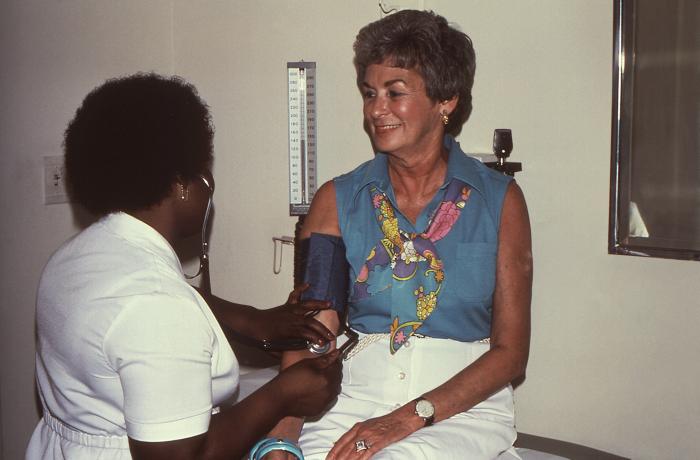
Who benefits, who loses and where the costs go
The federal treasury is the clearest fiscal beneficiary. The broader law is expected to cut more than $900 billion from Medicaid through 2034. Politically, supporters gain a bright line they can describe as reserving federal benefits for a narrower population.
The losses spread outward. Patients lose continuity of care. Employers may lose workers who cannot manage chronic conditions. Community health centers and charities inherit demand they cannot fully finance. States must choose whether to spend their own money to preserve coverage. California plans to spend $365 million to maintain a separate program for about 148,000 affected residents until July 2027; New York and Pennsylvania also fund coverage for many people in the excluded categories.
Hospitals will still treat emergencies, but they do not escape the cost. People without routine coverage often wait until a condition becomes acute, when care is more expensive and less effective. Ann-Marie Alameddin, president and CEO of the Arizona Hospital and Healthcare Association, said it plainly: “This impacts everyone seeking care in hospitals. It's a fraying of the safety net.”
Former Arizona health director Will Humble argues the state made its own choice by refusing the federal option to cover lawfully residing children and pregnant immigrants. “We don't do it because we have lawmakers who are not compassionate,” he said. “They don't care. We could have been doing it for many years. But it's not something that any Arizona Legislature has wanted to do.” His language is partisan and blunt, but the underlying policy point is verifiable: state decisions will determine whether the federal cutoff becomes a complete loss of care.
What the numbers mean—and what they do not
The 281,000-person tally is not a final national count. It covers nine states and Washington, D.C., and some people may move to employer insurance, a spouse's plan, emergency Medicaid or a state-funded program. Final termination numbers will not be available until later in the fall. Still, the count is a concrete administrative inventory, not a modeling exercise, and Florida alone identified nearly 177,000 people. North Carolina estimated about 29,000, Washington 11,000 and New Jersey 15,000 to 25,000.
The CBO's 100,000 figure measures the expected net increase in people without insurance by 2034, after accounting for other coverage. That helps explain part of the apparent mismatch, but not all of it. A person who loses Medicaid and buys a costly plan is not counted as newly uninsured, yet still experiences a major loss. The better measure of disruption is therefore wider than the uninsured total: terminations, plan transitions, prescription interruptions, uncompensated care and the share of people who successfully appeal an incorrect notice.
Arizona's breakdown makes the practical divide visible. About three-quarters of the 20,658 affected people retain emergency services only; 5,744 lose even that fallback. The first group can receive stabilization after a seizure or asthma crisis, but not necessarily the medicine and appointments that prevent one. The system saves on scheduled care and then risks paying more when preventable illness reaches the emergency room.
What comes next: January brings a second, larger test
October 1 is the opening move, not the endpoint. On January 1, 2027, many Medicaid expansion adults will face work or qualifying-activity requirements and twice-yearly renewals instead of annual renewal. The paperwork itself creates a coverage hazard: eligible people can be removed because they missed a notice, could not document hours or were caught between state systems.
The same day, most lawfully present immigrants outside the narrower categories lose access to federal Affordable Care Act marketplace subsidies, creating an ACA subsidy cliff just as Medicaid closes. On January 4, Section 71201 terminates Medicare for affected current enrollees who do not meet the new status rules. Older people eligible for both Medicare and Medicaid can therefore lose both programs within months.
A coalition of 21 states is challenging the administration's expanded “public charge” policy, which critics say could deter immigrants from using benefits for which they remain eligible. That lawsuit will not automatically restore the Medicaid categories Congress removed, but it may shape whether fear and confusion magnify the coverage loss. Meanwhile, states considering backfill programs face a hard fiscal question: spend state dollars to replace withdrawn federal support or absorb the consequences in public hospitals and local safety-net systems.
For affected families, the immediate advice is practical rather than ideological: read every eligibility notice, verify that the state used the correct immigration category, appeal errors quickly, and ask about community health centers, hospital charity care and state-funded coverage. Nobody should assume an emergency-only designation covers prescriptions or ongoing treatment. And nobody should assume the October notice is the last one coming.
This is what the policy looks like when the slogans fall away: a coverage rule written in Washington becomes a missed refill, a delayed scan or a school calling a parent because a child lacks seizure medicine. The federal government will record savings. States and hospitals will record costs. Families will live the difference.
Sources and reporting notes
- The Arizona Republic / azcentral: Arizona terminations, patient accounts and hospital response
- KFF Health News: nine-state count, federal estimates and state backfill
- STAT: national reporting on legal immigrants losing Medicaid coverage
- Medical Daily: H.R. 1 Medicaid and Medicare effective dates
- CDC Public Health Image Library: clinical photograph
Reporting note: State totals are pre-termination estimates and may change as appeals, documentation reviews and alternate coverage are resolved. Quoted remarks are reproduced from The Arizona Republic's reporting; national counts and state backfill figures are from KFF Health News. Policy interpretation is Signal Post News analysis.
Signal Post News will update this analysis as states publish final termination totals and courts rule on related immigration-benefit challenges.
Back to all stories