The Trump North Carolina rally in Greenville on Tuesday night, October 20, 2026, was a president with a 31 percent approval rating flying into the Senate race his own party's money has already walked away from — and insisting, two weeks before the November 3 midterms, that the polls are wrong again.
U.S. Politics / Elections — At 31 percent approval, with gas prices biting and his Senate pick down double digits, the president bet that one more rally in a state he has never lost can still change the math of November 3.
What happened in Greenville
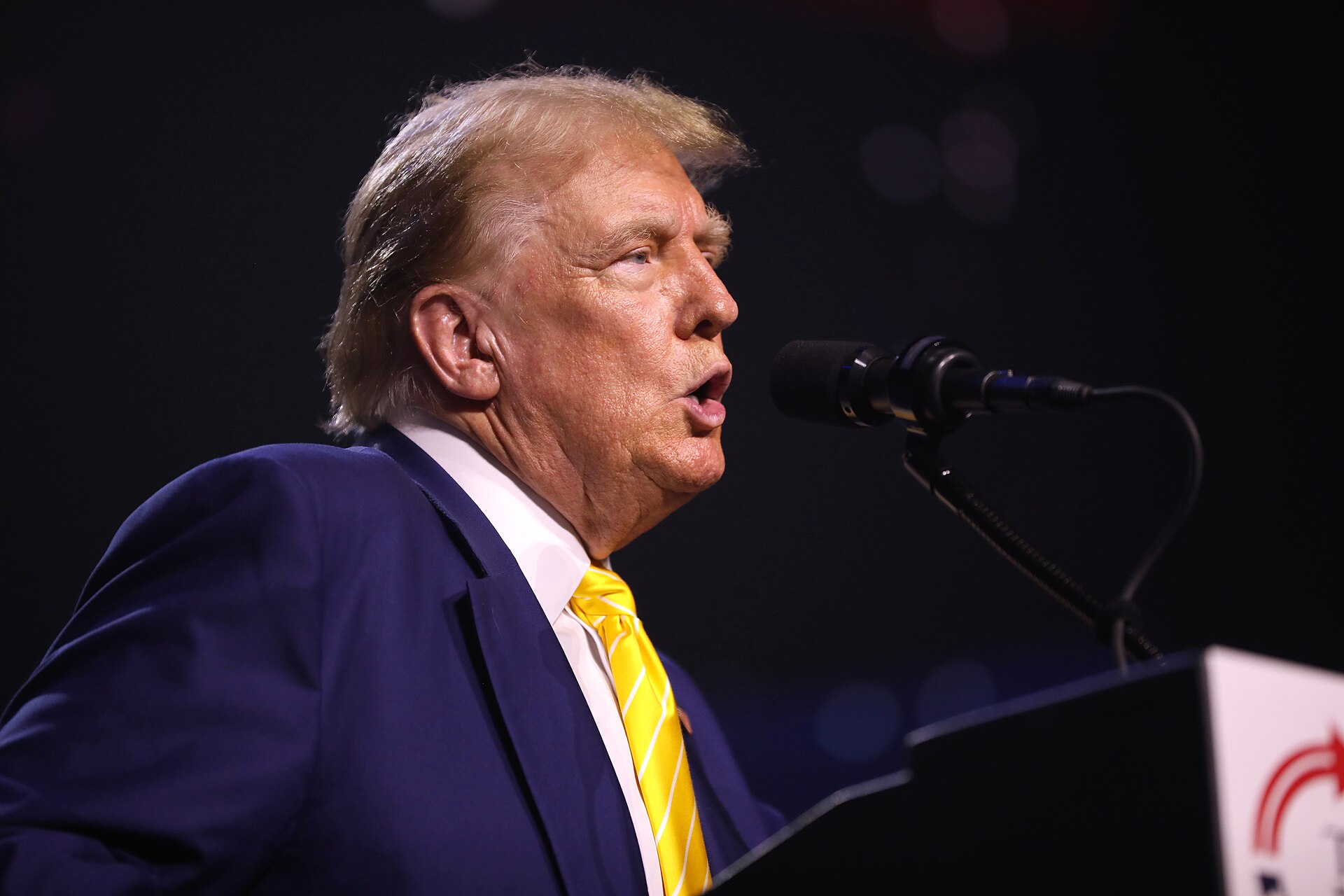
The Greenville stop was not a detour. Reuters, reporting from the city, put the rally inside a deliberate campaign blitz: more than 29,000 miles traveled since late September to boost Republican candidates ahead of the November 3 midterms, and a second North Carolina stop in as many months. Trump won North Carolina in each of his three presidential runs, which is why the White House treats it as winnable ground even in a year when almost every indicator points the other way. The Associated Press, in its News Minute account, reported that protesters repeatedly disrupted the rally, shouting that gas is too expensive, and that Trump largely focused on crime. Reuters reported the same tension from inside the president's own coalition — from voters who came to support him (more on Greenville voter Taylor Smith below).
The news lines from the stage were economic, and both came with an asterisk. Commerce Secretary Howard Lutnick announced on stage that Sibelco, an industrial minerals mining and processing company, is expanding its operations in North Carolina — without providing specifics — and Reuters noted that Sibelco did not immediately respond to a request for comment. Trump said the Defense Department would invest $1.5 billion in semiconductor chip production in North Carolina, without saying where or how the money would be spent. Neither announcement, as reported, came with a site, a jobs figure, or a timeline. That does not make them unreal — rally announcements often precede formal details — but for now they are claims awaiting documentation, not documented investments. Toward the end of his speech, Trump repeated the promise that has become the closing argument of this blitz: $5,000 to every U.S. adult should Republicans maintain their hold on Congress. "If we lose," he said, "you get nothing."
And on the race he had flown in for, Trump was unambiguous. Whatley, he predicted, would prove the doubters wrong: "I think you're gonna see some amazing results... They never poll us right. We have more spirit." That is not rhetoric laid on top of the strategy; it is the strategy. With the party's super PAC gone from the state and the polls showing a double-digit deficit, the remaining Republican theory of this race is that the polling is missing Trump's voters as his campaigns have long argued it does — and that presidential presence, applied late and loudly, turns those voters out.
The Senate race Trump came to save
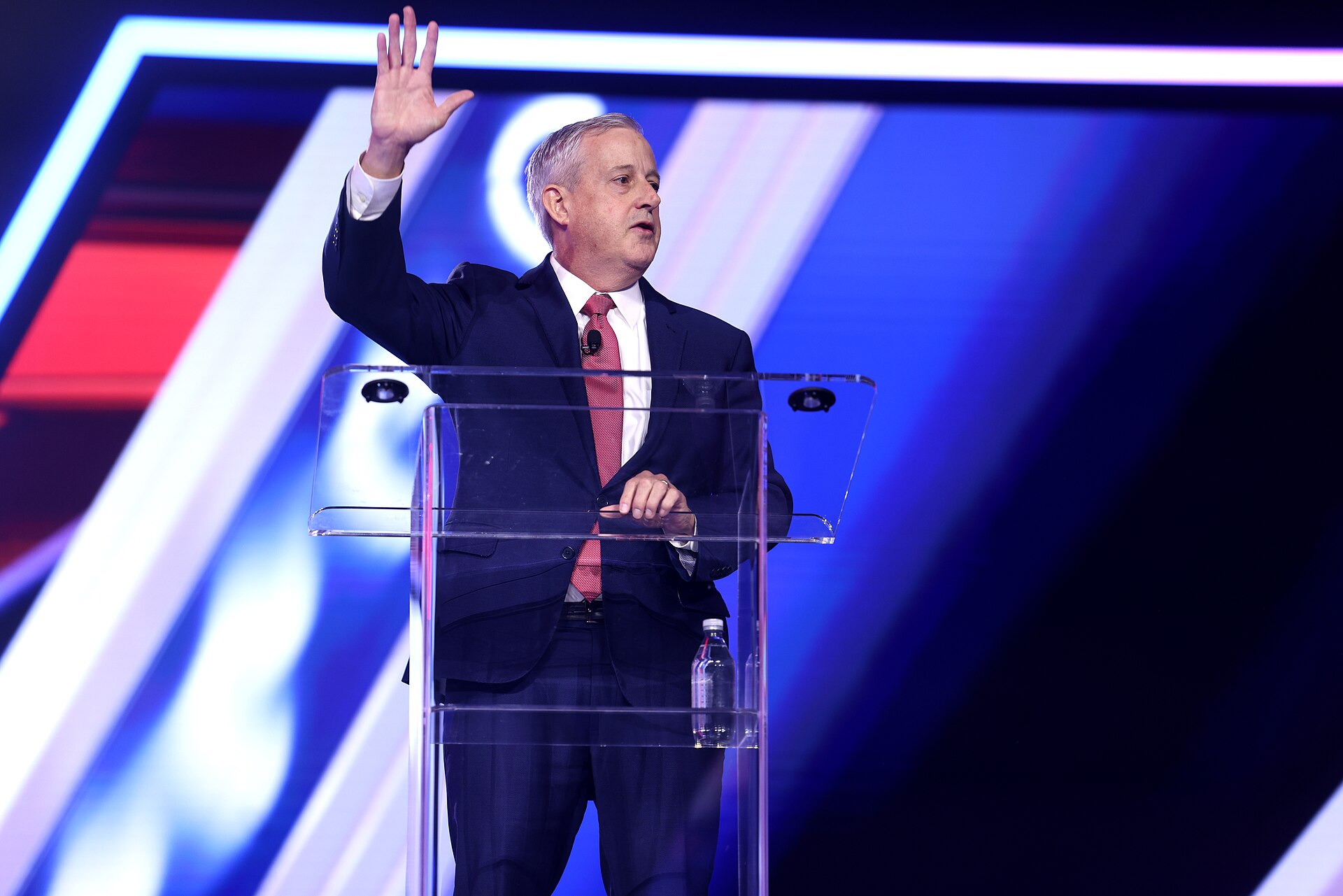
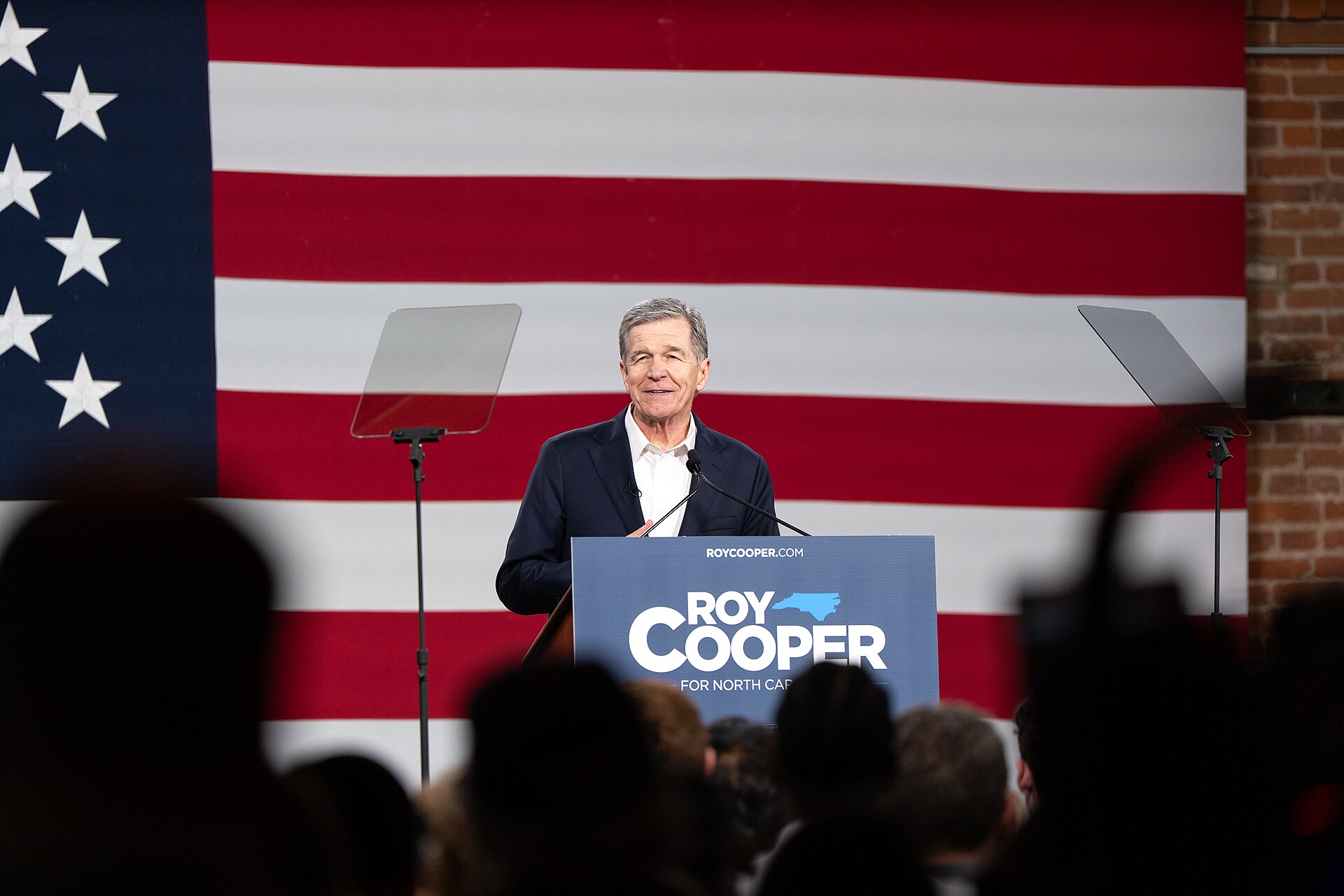
Start with the seat. Thom Tillis is retiring after splitting with Trump over his landmark tax bill and defense policy — a rupture that turned a safe incumbent's seat into an open contest. Into that opening, the two parties have sent almost opposite candidates. Roy Cooper is the most successful Democrat in modern North Carolina politics: a former governor who won statewide in a state Trump carried every time he ran. Michael Whatley is a party man — a former senior Republican official whose career ran through the state party and the national committee rather than through elections of his own. Reuters' description of the polling is blunt: Cooper holds a commanding lead, and as he posted double-digit leads, the Senate Leadership Fund — the main Republican Senate super PAC — cut off spending in North Carolina earlier this month.
That last fact gives the Greenville rally its real meaning. Super PACs do not abandon states out of pessimism; they abandon them out of arithmetic — every dollar not spent in North Carolina can defend a seat they calculate is closer. A rally argues against that conclusion by trying to move turnout and enthusiasm — but it cannot restore the television advertising the super PAC was buying. Which brings up the number hanging over the whole evening: in early voting in North Carolina, according to state data reported by Reuters, Democrats have cast more ballots than Republicans by two-to-one. Early voting is not the electorate — Republicans historically vote later, and in person on Election Day — but a two-to-one banked-vote deficit is not a polling abstraction. It is ballots, already cast, that Republicans now have to overcome rather than merely match.
How we got here: a president at 31 percent
The approval collapse has a specific origin in Reuters' account, and it is not the usual midterm drift. Trump's popularity, Reuters reported, fell after he ordered military strikes on Iran in February alongside Israel, which triggered surges in gasoline and diesel prices — and polls show a clear majority of Americans dissatisfied with rising prices and with the Iran war. The 68 percent disapproval of his economic handling is the figure that should worry the White House most, because the economy is the ground on which this president has always claimed his strongest mandate. The detail inside it — 37 percent of self-identified Republicans disapproving — is what converts a bad number into a structural one: midterm turnout models start to break when more than a third of a president's own identifiers disapprove of him on his best issue, because those are the exact voters a midterm electorate is made of — the faithful, deciding whether the trip to the polls is worth it.
Thirty-one percent, the lowest mark at any point in either of Trump's terms, also reframes what "they never poll us right" can plausibly mean in 2026. In Trump's three presidential runs, the polling-error argument had a real foundation: state polls repeatedly understated his support, and North Carolina is the standing proof — he won it all three times, including cycles in which he was expected to struggle there. But an approval rating is not a horse-race poll: it does not need to find likely voters or model turnout; it measures the country as it is. The Greenville argument asks voters to believe the Senate polling is wrong in the specific, enormous way this race requires — not by two or three points, but by enough to erase a double-digit lead, a super PAC withdrawal and a two-to-one early-vote deficit, all at once, in the same state, in fourteen days. That has happened in American politics before — in smaller pieces, never in all of them simultaneously.
Why this matters
The first reason this rally matters is that North Carolina is the Senate map's hinge, and everyone behaving as if it is already decided is making a bet, not stating a fact. If Cooper's lead is real, Democrats flip a Republican seat in a Trump-carried state, and the path to a Senate majority runs through exactly this kind of race: open seats, in purple states, against nominees without independent electoral brands. If the lead is a polling mirage of the kind Trump has exposed before, the Senate Leadership Fund's withdrawal will be remembered as one of the great unforced errors of the cycle. Either way, Greenville is where the two readings collided in person: the retiring Republican senator saying "train wreck," the president saying "spirit."
The second reason is what the rally reveals about the Republican Party's internal argument, now conducted in public by its own officeholders. Tillis is not a Democrat or a pundit; he is the Republican whose seat this is, and his reasoning, as a retiring senator with nothing left to lose electorally, deserves to be taken as data rather than noise: he has watched the same numbers all cycle, and his incentive is no longer to please the White House. Against that, weigh the candidates still fighting: Republican House nominee Laurie Buckhout put it plainly — "This is a Republican majority district. We have the momentum. We have the message. Now we need you." Both cannot be describing the same electorate accurately. A night like Greenville forces the disagreement into the open, fourteen days before the voters settle it.
The third reason is the $5,000. A promise of a direct payment to every adult American, explicitly conditioned on Republicans keeping Congress — "If we lose, you get nothing" — deserves scrutiny from both directions. For supporters, it is the clearest possible statement of stakes: a tangible, personal return on a party victory, offered by a president whose brand is transactional candour. For critics, it inverts the normal logic of representation: a reward withheld if voters choose wrong. Either way, the promise's place at the close of the speech tells you what the White House believes this election is about: money in voters' pockets, at a moment when voters' own verdict on the president's economic handling is 68 percent negative. The promise tries to change the economic conversation from prices paid to payment promised. Whether that reads as relief or as an admission is, in the end, the question November 3 answers.
Multiple angles: the believers, the doubters, and the voter in the middle
The most telling voice in Reuters' Greenville reporting was not on the stage. Taylor Smith, a Greenville voter and housewife who said she had only ever voted Republican, told Reuters she was thinking twice this year. "Anything good that could be happening is being co-opted by the tomfoolery that's just going on," she said — and then went straight to the pump: "I hate these gas prices," urging the president to "tighten that ship up." Smith is the midterm electorate in one person: a lifelong Republican whose loyalty has become conditional on the price of fuel. Parties usually lose midterms not because their base defects, but because voters like Smith stay home, or split a ticket, or decide the ship is not tight enough to reward. Everything about the Greenville operation — the crime focus AP reported, the investment announcements, the $5,000 close — can be read as addressed to her.
The doubters' case, stated fairly, is that the rally form itself has limits that 2026 is exposing. A pep rally preaches to the converted by definition. The doubters note the company this one keeps: a super PAC that has left, a retiring senator predicting a wreck, an early-vote ledger running two-to-one the wrong way, and the state's most proven Democratic vote-winner running against a nominee who has never won an election of his own. The believers' case, also stated fairly, is not nothing: Trump has won this exact state three times, against the grain of what the polls said it would do; his voters have a habit of materialising late; Republicans hold ten of the state's fourteen House seats; and a midterm electorate in November is not an approval poll in October. Both cases are honest readings of real evidence. They differ on one question: whether 2026 is a normal midterm with an unpopular president — in which case Greenville was a valedictory tour of a state about to flip — or another cycle in which the specific gravity of Trump himself bends the numbers his party's professionals rely on.
The races in numbers
Strip the evening down to its figures. Republicans hold 10 of the state's 14 House seats, and the two most expensive defences are both in Reuters' account. The contest between Trump-backed Republican Laurie Buckhout and Democratic Representative Don Davis has drawn $21 million in outside money since September 1 — a Reuters analysis of filings makes it the third most expensive House contest in the country. In western North Carolina, Democrat Jamie Ager's race against Republican Jennifer Balkcom has drawn $14.5 million in outside spending. Sit those figures next to the Senate numbers and a revealing pattern appears: the money is flowing hardest not to the statewide race at the top of the ticket, but to the House districts beneath it — as if the market has priced the Senate race as close to settled and the House majority as the genuinely open question. Add the rest of the night's arithmetic — 29,000 miles of travel; a $5,000-per-adult promise; a 31 percent approval rating with 68 percent economic disapproval — and Greenville becomes a study in two kinds of numbers: the ones campaigns spend, and the ones voters keep.
What happens next
There are fourteen days between the Greenville rally and November 3, and the sequence of tests is now fixed. The first is the early vote: Democrats' two-to-one edge in banked ballots will narrow as Republican-leaning voters cast theirs, and the question is by how much — narrowing to parity would mean the enthusiasm gap is not showing up in behaviour; a persistent gap would confirm it in the hardest data available before Election Day. The second test is the House map, where $21 million and $14.5 million of outside money will render their verdict on whether the state's ten-to-four Republican delegation holds — and with it, possibly, the House majority.
Three scenarios cover the realistic ground. In the first, Greenville is remembered as the night the professionals were wrong again: late Republican turnout swamps the early-vote deficit, and Whatley rides the president's coattails to the cycle's biggest upset. In the second, the numbers were the numbers: Cooper's lead compresses, as leads do, but holds; Democrats flip the seat; Tillis's "train wreck" becomes the epitaph Republicans quote at each other through 2027; and the $5,000 promise is remembered as the tell that the White House knew the economy argument was lost. In the third — the muddle midterms produce most often — the state splits its verdict: Cooper takes the Senate seat while the House delegation largely holds. What Greenville established, beyond argument, is narrower than any of those outcomes: a president at the lowest approval of his career chose to spend one of his last fourteen nights in the state that has never once let him down — asking it, one more time, to prove the numbers wrong.
For readers following the midterms on Signal Post News, see our coverage of Whatley's campaign pulling its own TV ads as Republican groups walked away from the North Carolina Senate race, the Reuters/Ipsos poll showing Trump voter midterm enthusiasm lagging far behind, and Ohio's governor race, where a family video upended the final fortnight.
Sources
Reuters, October 21, 2026 (reporting by Jacob Bogage in Greenville; published 03:34 UTC) — "Trump, in North Carolina, says Republicans will defy midterm odds" (the Greenville airport-grounds rally and hundreds of supporters; the 29,000-mile blitz since late September and second North Carolina stop in as many months; the 31 percent Reuters/Ipsos approval rating, lowest of either term, and 68 percent economic disapproval including 37 percent of Republicans; the February Iran strikes alongside Israel and the gasoline and diesel price surges behind the fall; Cooper's commanding, double-digit polling lead over Whatley; the Senate Leadership Fund cutting off North Carolina spending earlier this month; Tillis's split with Trump over the tax bill and defense policy and his Tuesday Politico interview — "a train wreck" and a "whoop ass"; Trump's prediction and "They never poll us right" quote; Trump's three North Carolina wins and Democrats' two-to-one early-voting edge per state data; the ten-of-fourteen House split, the $21 million Buckhout–Davis outside-spending figure as the country's third most expensive House contest per Reuters' analysis of filings, Buckhout's "We have the momentum" quote, and the $14.5 million Ager–Balkcom figure; Taylor Smith's quotes; Lutnick's Sibelco announcement without specifics and Sibelco's non-response; the $1.5 billion semiconductor claim without a site; and the $5,000 promise — "If we lose, you get nothing"). Associated Press, AP News Minute, October 20–21, 2026 (transcript record via AP Newswatch) — protesters repeatedly disrupted the Greenville rally shouting that gas is too expensive, and Trump largely focused on crime. Precision notes: Reuters reported the crowd as "hundreds of supporters" and the venue as the grounds of the local airport in Greenville; no larger crowd figure or venue name is used anywhere in this article. The Sibelco expansion and the $1.5 billion semiconductor investment are reported throughout as announcements made on stage without specifics, exactly as Reuters reported them — neither is stated as a completed or documented investment.