Trump Says He Is Considering Firing Guilfoyle as Greece Ambassador, 'Not Happy'
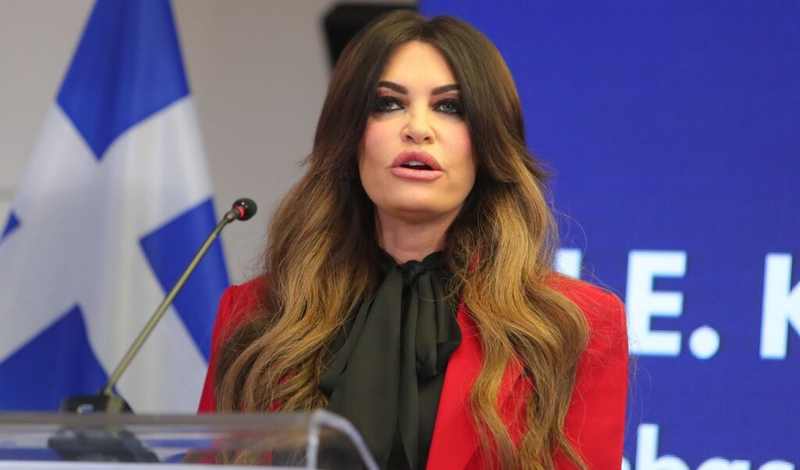
President Donald Trump said on Monday that he is considering firing Kimberly Guilfoyle, the U.S. ambassador to Greece, over alleged misconduct — and, just as notably, he offered her no defence at all. Speaking to reporters as he left the White House for a campaign event in Ohio, Trump said his administration was looking at the matter and that he was not happy, remarks that were brief, unscripted and, for an ambassador who has been one of his most loyal public surrogates, unmistakably cold.
The comments, reported by Reuters, convert days of Washington speculation into something close to an open verdict. Presidents rarely discuss dismissing their own ambassadors in public, and when they do, the language is usually protective — full confidence, a valued member of the team. Trump used none of it. He did not say when a decision would come, did not describe the allegations in detail, and did not push back on the reporting that has engulfed Guilfoyle since last week. In the choreography of this White House, that silence is itself information.
Guilfoyle, a former prosecutor and television host who was once engaged to the president's son, Donald Trump Jr., has served in Athens since November 2025. Her nomination was always going to draw scrutiny — she is a political appointee in a post that rewards visibility, in a country where the United States has been deepening energy and defence ties. But the question hanging over her has changed in the past week from whether she is effective to whether she can survive an ethics file that now includes a formal inspector general inquiry.
A decision Trump has been weighing for days
Monday's remarks were not the start of the story; they were the moment it became public that the story had reached the president's desk. CNN reported on Sunday that Trump was already weighing whether to fire Guilfoyle, with a decision expected soon — possibly this week. The same reporting placed the State Department's Office of Inspector General inside the matter: the department's internal watchdog is investigating the allegations. The OIG, following its standard practice, has declined to comment, neither confirming nor denying the specifics of any inquiry.
That institutional detail matters. Ambassadorial scandals usually move through one of two channels: political, in which the White House simply loses patience, or bureaucratic, in which investigators assemble a record that makes the political decision for it. Guilfoyle's case is now travelling down both tracks at once. An inspector general investigation does not require the president to act on any timetable, but it strips away the option of treating the allegations as gossip. Once a watchdog is involved, "no comment" from the department and "not happy" from the president point in the same direction.
The timing has an additional awkwardness. The reports about Guilfoyle surfaced while Secretary of State Marco Rubio was in Athens — in Greece, in part, to deliver a speech at the Acropolis celebrating the depth of the U.S.-Greek relationship. The spectacle of the secretary of state extolling the partnership in the ambassador's own capital while the ambassador's future was being debated in Washington is the kind of diplomatic static that both governments would rather avoid, and it may help explain why the White House appears eager to close the question quickly, one way or the other.
The messages at the centre of the case
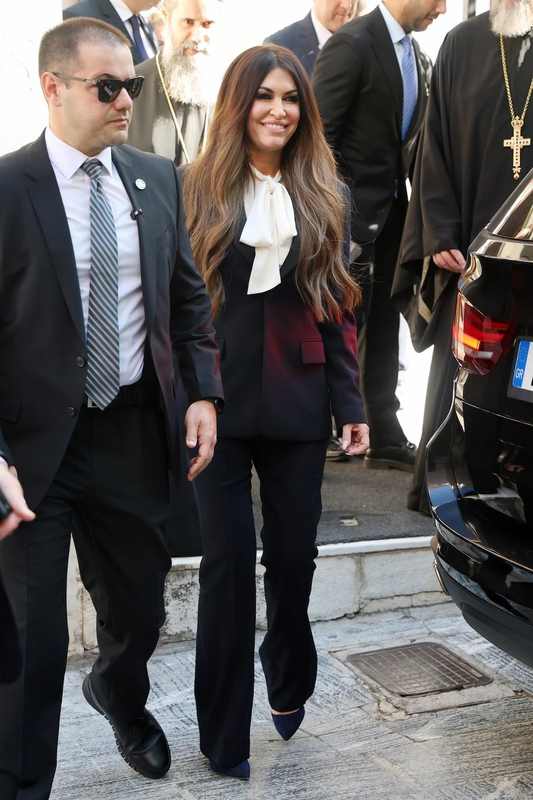
The allegations themselves were first detailed by The Wall Street Journal on October 7. According to that reporting, messages attributed to Guilfoyle before her confirmation asked a donor, Eric Deters, to pay $100,000 toward a personal American Express bill. Deters has said he paid some $300,000 over the years in connection with Freedom Fest, an event with which Guilfoyle was associated. The messages — Signal Post News examined the surrounding reporting in its earlier account of the $100,000 text messages that put Trump's ambassador to Greece under fire — landed at the worst possible moment for a nominee-turned-ambassador: after confirmation, when the Senate's questions are supposed to be behind her.
The core questions are straightforward to state and, so far, unanswered in public. If the messages are authentic, did a future ambassador solicit money from a political donor to settle a personal debt, and what, if anything, was the donor led to expect in return? Were any payments connected to official access or official acts? And did her travel and spending as ambassador comply with department rules? These are the questions an inspector general exists to answer, and they are why the phrase "alleged misconduct" — not a proven charge — is the accurate description of where the case stands.
It is worth being precise about what has not happened. Guilfoyle has not been charged with anything. No investigative findings have been published. The president has not announced a decision. What exists is a set of reported messages, on-the-record statements from the donor, a denial from her camp, an investigation, and now a president publicly unwilling to vouch for his own appointee. In Washington personnel politics, that combination has historically been enough.
Guilfoyle's side of the story
Guilfoyle's lawyers dispute the authenticity of the messages and offer a different frame for the money: that sums involved were owed to her for prior appearances and work, not solicited gifts. On travel, her team's position is that her movements followed State Department guidance. Those are not trivial defences. Disputed-message cases turn on provenance and context, and "owed for appearances" — if documented — describes a commercial dispute rather than a solicitation. Her supporters add, with some justification, that the story has advanced largely through leaks whose sources and motives are unknown, and that an ambassador who has not been charged with anything is being tried in headlines.
The counter-argument comes from the reaction of people with no obvious incentive to harm her. Senator John Barrasso, a senior Republican on the Foreign Relations Committee, called the reports very troubling. Representative Gregory Meeks and other foreign-affairs Democrats have urged Rubio to investigate — predictable opposition pressure, but pressure the department has, in effect, already answered by involving its watchdog. And Vice President JD Vance, notably, did not defend her either; he urged waiting for the facts. Read together, the Republican response is not a closing of ranks. It is a holding pattern — the posture of a party waiting to see whether the facts make the decision for them.
Why this matters
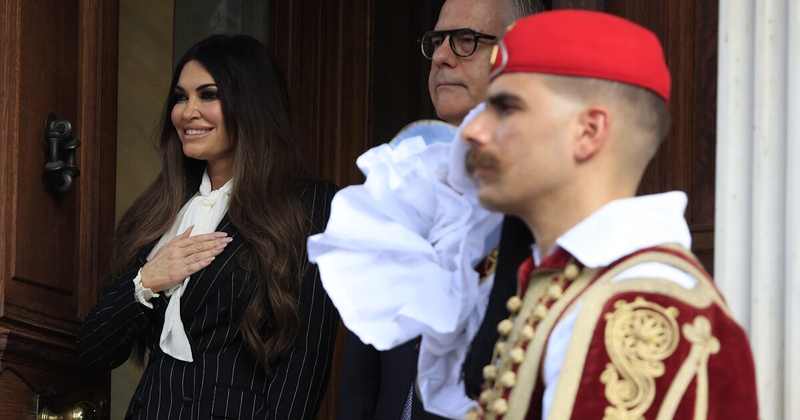
It would be easy to file this as a personnel soap opera — a famous name, leaked texts, a president's displeasure. That undersells it. Ambassadorships to allied capitals are working instruments of policy, and Greece in 2026 is not a ceremonial posting. Athens sits at the centre of several files Washington cares about: energy routes into Europe, shipping and port infrastructure, defence cooperation in the eastern Mediterranean, and the management of relations with Turkey. An ambassador under an ethics cloud, whose own president will not defend her, has measurably less capital in the host capital — every meeting read through the question of whether she will still be there in a month.
A loyalty appointment meets an ethics file
Guilfoyle's appointment was, from the start, an argument about what ambassadorships are for. Her confirmation hearing on July 9, 2025, rehearsed it: supporters saw a high-profile communicator who could sell the relationship; critics saw a fundraiser rewarded with a flag. That debate is normal and survivable. What political appointees cannot easily survive is the combination of an inspector general inquiry and a president who treats them as expendable in public. Career diplomats operate under institutional protection; political appointees serve entirely at the president's pleasure, and their real security is his willingness to spend capital on them. Trump's remarks on Monday announced, in effect, that the account is empty.
The numbers in context
Consider the timeline as a set of figures. Eleven months in post. Roughly $100,000 in the alleged request; $300,000 in the donor's account of what he paid over the years. One inspector general investigation. Zero words of defence from the president on Monday. The arithmetic of Washington is that ambassadors survive scandals when the political cost of keeping them is lower than the cost of admitting a mistake in appointing them. By saying "not happy" out loud, Trump lowered his own cost of firing her — he has already distanced himself — while raising the cost of keeping her, since every future headline will now be measured against his stated displeasure.
What happens next
CNN's reporting put a decision possibly within the week, and three scenarios cover most of the ground. The first is a clean removal: the White House announces that Guilfoyle is stepping down or being recalled, a deputy runs the embassy, and the story becomes a one-day personnel note. The second is a slower bleed: the administration lets the inspector general process run, Guilfoyle stays in Athens in a diminished state, and the question reopens with whatever the investigators find — a scenario that serves neither the embassy nor the relationship, and which Monday's comments make less likely. The third is a resignation framed as mutual, the traditional Washington exit that lets everyone avoid the word "fired." Guilfoyle has given no public indication of intending to quit, and her legal team's posture suggests she intends to contest the allegations; but ambassadors who have lost the president's confidence rarely outlast the news cycle that revealed it.
For Greece, the practical stakes are continuity. Greek officials have not commented publicly, and Athens will deal with whomever Washington sends; but a rapid change at the embassy, mid-negotiation on energy and defence files, is friction neither side sought. For Trump, the decision is simpler and colder: whether the remaining political value of a loyal surrogate outweighs an ethics story that now has his own "not happy" attached to it. On Monday, he sounded like a president who had already done that math.
Sources: Reporting by Reuters, CNN and USA Today on President Trump's October 12, 2026 remarks and the inspector general inquiry; background reporting by The Wall Street Journal, October 7, 2026. Photographs from Greek outlets, credited individually.