President Donald Trump on Monday, October 19, 2026, renewed his call to rename New Mexico, posting on Truth Social that the state should "immediately change its name to New America" — a demand New Mexico's leaders already rejected this fall, and one he cannot carry out alone.
The post: 'We are not Mexico'
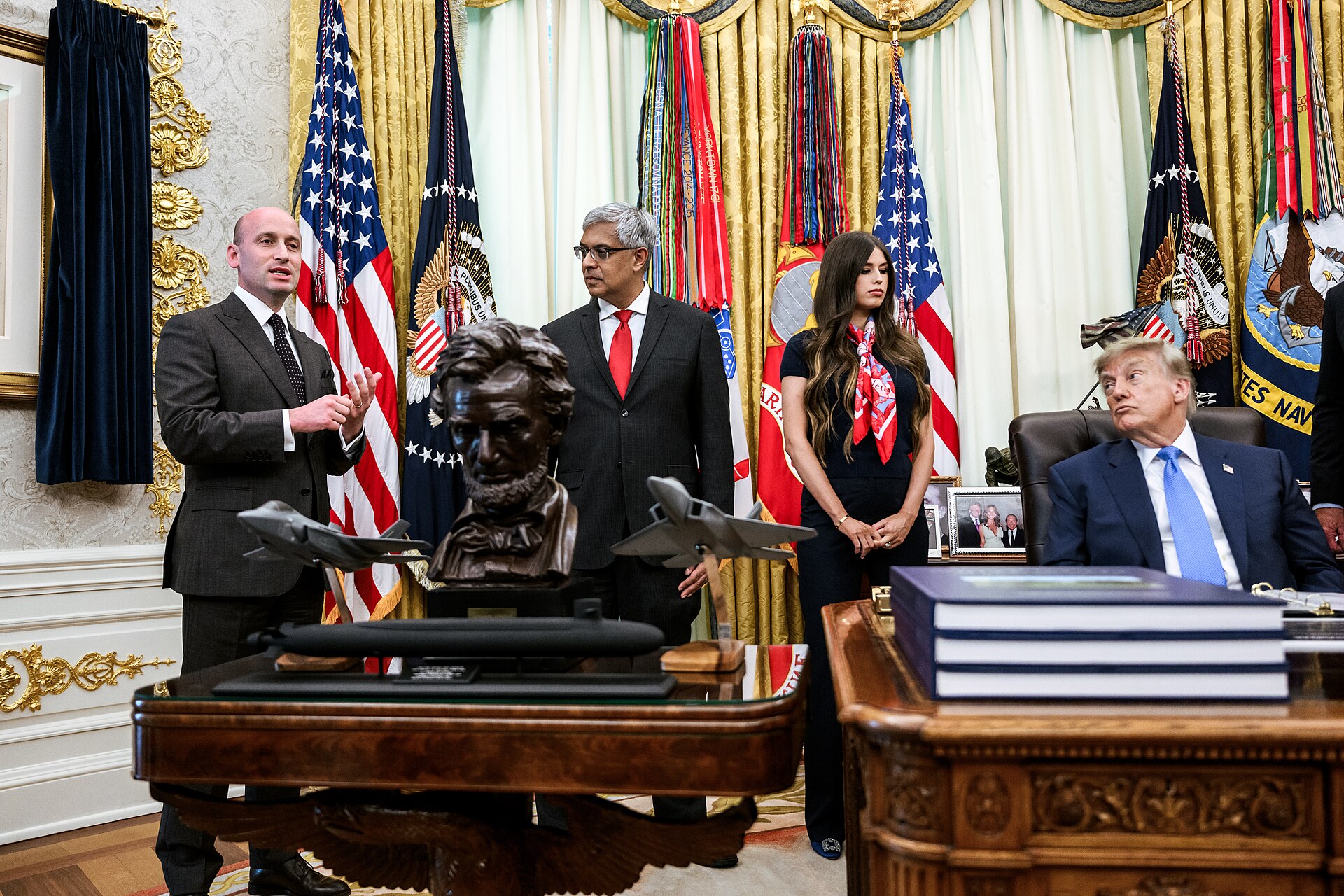
WASHINGTON — The message went up on Truth Social shortly after 3 p.m. Eastern on Monday. "New Mexico should immediately change its name to New America," the president wrote. "We are not Mexico, we are the United States of America!" He argued the new name "would add great value and prestige to the State," predicted that "Home Values and Incomes would rise," and said residents "would be even prouder while saluting our beautiful American Flag." Then he attached the condition that has run through his New Mexico commentary all year: "Maybe even the Crooked Elections, that New Mexico is known for, would become honest again!" The Kobeissi Letter flagged the post on X within the hour; the screenshot passed 100,000 views in under forty minutes. The White House had announced no executive order or formal step to accompany it. As in September, the demand exists, so far, as a statement — which in New Mexico politics is more than enough to start a fight.
The elections line needs its context, because it is a claim, not a finding. No court has found New Mexico's elections fraudulent; its administrators, Republican county clerks among them, defend their counts. When Trump called the state's elections "so corrupt" at a rural-health roundtable earlier this year, Alex Curtas, spokesman for Secretary of State Maggie Toulouse Oliver, answered that "New Mexico runs the nation's top-ranked elections," citing its #1 Elections Performance Index finish and its safeguards: paper ballots, mandatory audits, air-gapped counting. State Republican chair Amy Barela backed the president. Both positions are now welded to the renaming fight.
September's fight, October's sequel
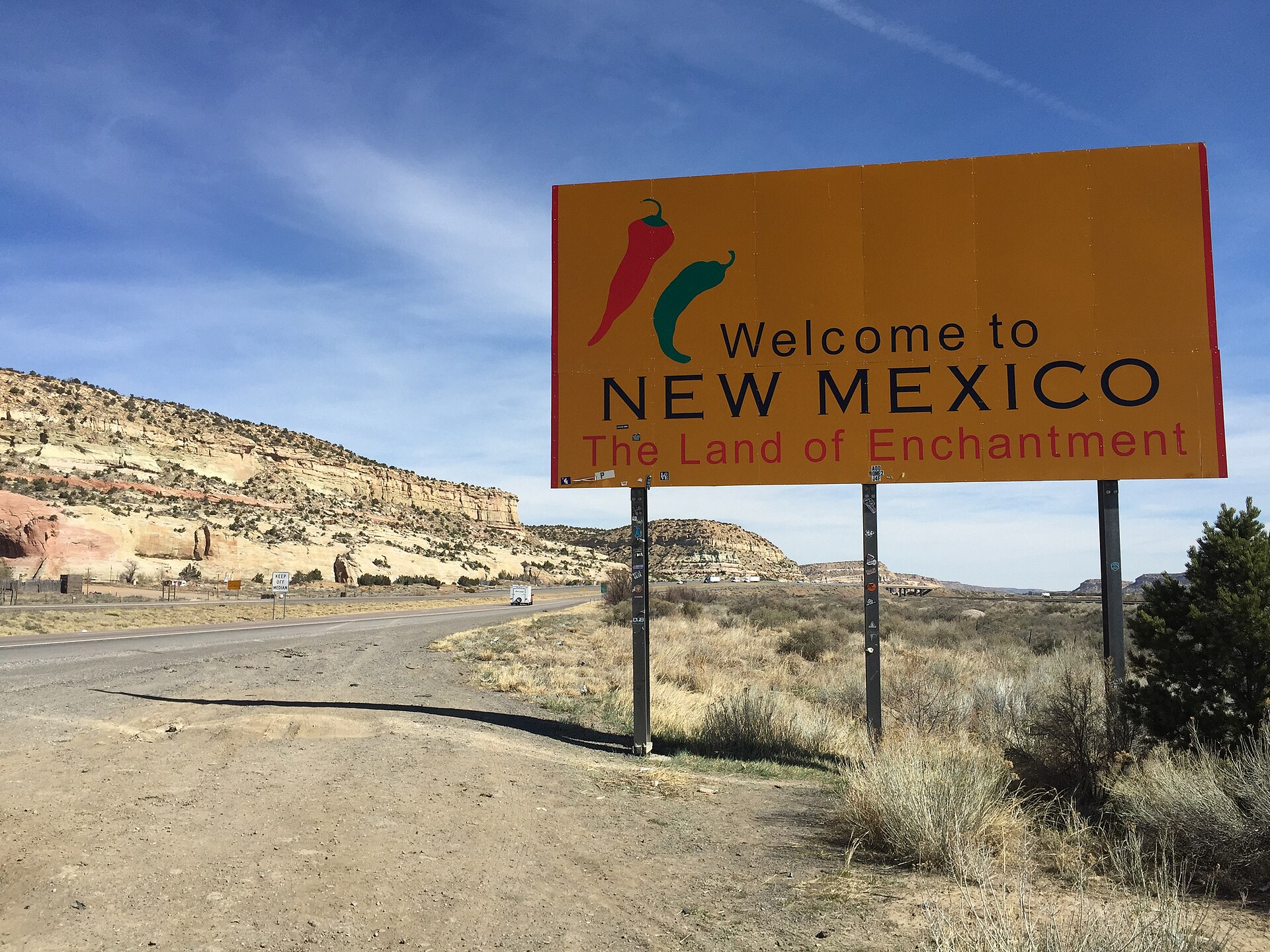
The idea did not begin with the president. On September 1, a satirical X account circulated a fabricated executive order claiming Trump had already renamed the state; Snopes debunked it. Five days later Trump took up the idea himself — posting a map of New Mexico with "Mexico" struck through in red and "America" written over it, and writing that "many people suggested changing the name of New Mexico" to "NEW AMERICA." The White House account reshared the map. On Labor Day he returned to it at least seven times in about an hour, by Forbes's count, including an AI video of himself slapping an "America" sticker over a "Welcome to New Mexico" sign. Later in September, at the GOP midterm convention in Dallas, he told a live audience: "We think it should be called 'New America'... the people love the idea." And on October 3, in a video endorsing Republican Greg Cunningham for Congress, he opened — "Hello New America, formerly known as New Mexico" — before softening: "I'm not going to push it, but a lot of people are liking it." Monday's post drops the softening. Where September said "many people suggested," Monday says "should immediately change." The escalation ladder — suggestion, performance, instruction — is the story inside the story.
New Mexico's answer: a wall of no
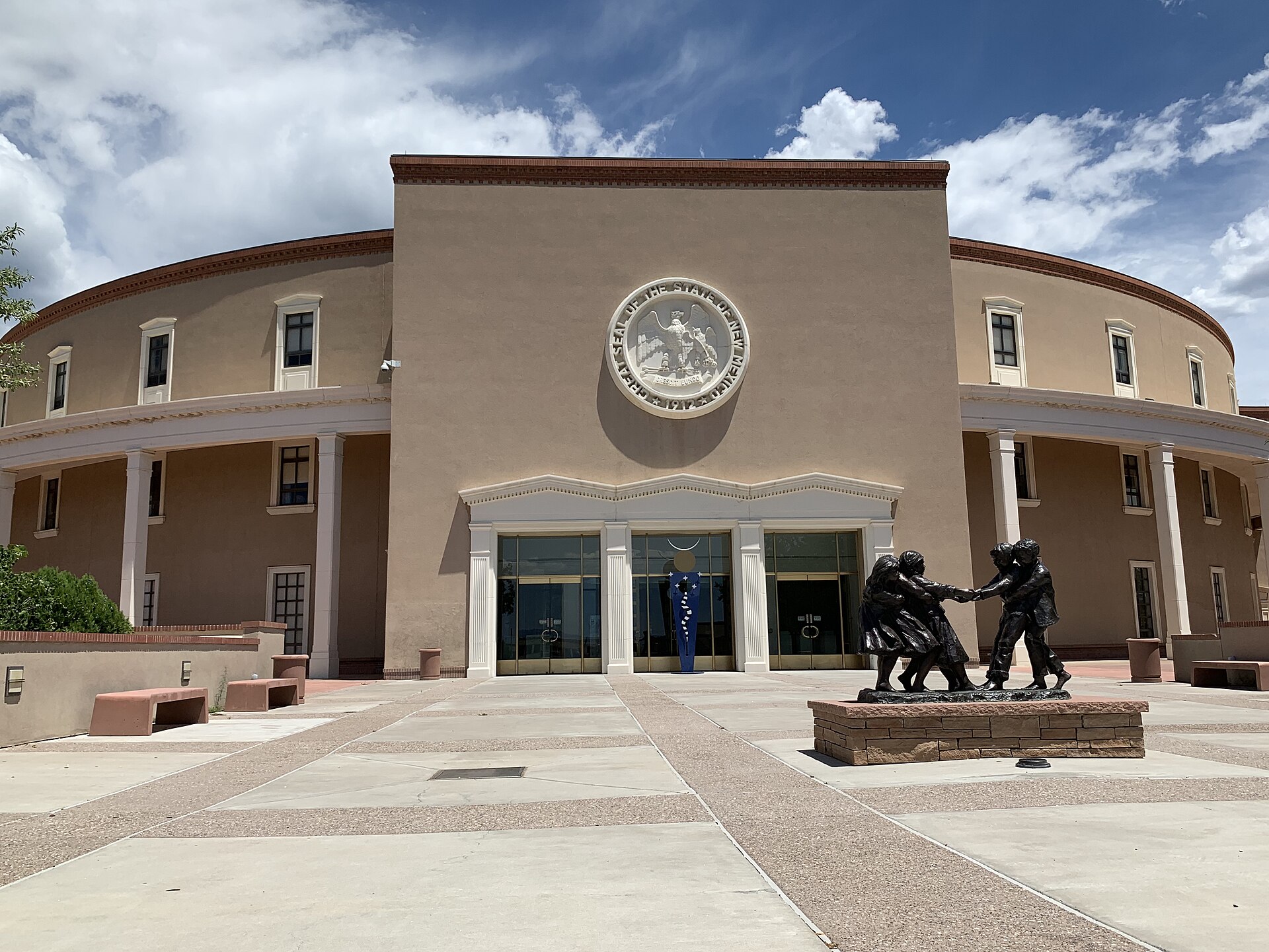
The state's Democratic leadership answered the September round within hours, in a coordinated volley Monday's post is likely to reactivate. Governor Michelle Lujan Grisham set the line: "New Mexico's name isn't up for debate — it's been ours since before the United States existed." She framed the campaign as a diversion ("While the President tries to distract Americans from his disastrous war in Iran, gas prices keep soaring") Senator Martin Heinrich answered with a list: "Three things I will always call by their actual names. The Gulf of Mexico. Lake Ontario. New Mexico." Senator Ben Ray Luján was blunter: "It's New Mexico, always has been and always will be," adding that Trump would "always be a sinvergüenza" — a scoundrel. Representative Melanie Stansbury, in a video by the Rio Grande: "WE ARE NOT CHANGING OUR NAME! New Mexico is New Mexico. We are fiercely proud of our name, our people, and our places." Representative Gabe Vasquez, whose southern district is the state's most competitive, wrote: "You don't get to erase New Mexico. Not our name. Not our history. Not our culture." Attorney General Raúl Torrez answered with one word: "Pendejo."
The Republican side is split, and the split is the politically interesting part. Gregg Hull, the former Rio Rancho mayor who is the Republican nominee for governor, broke with the president outright: "New Mexico does not need a new name. That identity is not up for negotiation." Cunningham, the Trump-endorsed candidate in the 2nd District, declined to fight over the name, calling the focus on it a Democratic distraction and pivoting to the border, taxes and oil and gas. Utah Senator Mike Lee, from outside the state, called "New America" "kind of catchy." As of Monday afternoon, no state official had answered the new post; the September statements stand, and none left room for negotiation.
Residents interviewed in September by The Guardian added the layer politicians mostly implied. "In his mind, the word 'Mexico' has some kind of connotation of people of color and it just feels like the whitewashing of our state," said Sarah Noss, a Santa Fe nonprofit executive. Antoinette Armijo-Rougemont, a multigenerational New Mexican and Army National Guard veteran, put it in one line: "We were New Mexico even before we were the United States." New Mexico has the highest share of Latino residents of any state and 23 federally recognised tribal nations; for many of them, the argument is not really about cartography.
Why this matters
It is tempting to file this under presidential trolling, and the governor's office plainly would like voters to. But naming fights are never only about names — they are about who holds the authority to define a place — and this one lands on a state whose identity is constitutionally bilingual and politically contested in an election fifteen days out. The president's renaming record shows a method: the Gulf of America was a joke until it was an executive order on his first day back; Lake Ontario became "Lake America" by order in August. Each federal renaming tested how far executive naming power stretches, and each held inside federal usage, because the law lets a president direct the federal government's own map. A state is where that method meets its limit: a name the president did not give and cannot take.
There is a harder political logic, too: New Mexico is a small, safe-blue state the president lost in all three of his elections. Attacking its name costs him nothing with his base and forces every Democrat in the state to spend the final fortnight of a midterm campaign defending a name instead of attacking his record. The state's Republicans are the ones squeezed: Hull needs independent and Latino voters to win the governorship; Cunningham needs Trump voters to flip a House seat. In September both men reached the same conclusion — change the subject — from opposite directions.
A name older than the country it is said to insult
The historical irony at the centre of this fight is that "New Mexico" is not named after the country of Mexico. Spanish explorers applied "Nuevo México" to the upper Rio Grande valley in the 1500s — in documented use by the 1580s — hoping it held riches like the Mexica empire to the south. The name means, in effect, another Tenochtitlan. Juan de Oñate founded the first Spanish colony in 1598; Santa Fe dates to 1610 and remains the oldest capital city in the United States. The nation of Mexico did not exist until independence in 1821 — by which point the province to its north had been "New Mexico" for roughly two and a half centuries. The land became American by war and treaty: the Treaty of Guadalupe Hidalgo in 1848 ceded it to the United States, the New Mexico Territory followed in 1850, and after a six-decade statehood fight — delayed in part by congressional suspicion of its Spanish-speaking, Catholic majority — New Mexico entered the Union on January 6, 1912, as the 47th state, with a constitution written in English and Spanish that protects both languages to this day. When the governor says the name predates the United States, she is being literal.
The legal wall: states are not federal scenery
Nothing in Monday's post changes the legal position, which is not close. A president's naming power runs to the federal government's own usage: a president can direct what federal maps and documents call a gulf, a lake or a mountain. That is how the Gulf of Mexico became the Gulf of America for federal purposes under the January 2025 executive order "Restoring Names That Honor American Greatness" — the same order that restored Mount McKinley over Denali — and how Lake Ontario became "Lake America" in August 2026. Canada and Mexico ignore those names; the orders bind Washington, not the world, and not the states. A state is a different category of thing. New Mexico's name sits in its constitution and its admission acts. Changing it would require amending that constitution — a proposal passing both chambers of the state legislature, then approval by a majority of New Mexico voters at the ballot box, as legal explainers laid out in September. The closest precedent proves the route: Rhode Island's official name included "and Providence Plantations" until 2020, when Rhode Islanders themselves voted to drop it. No president has ever renamed a state, and the White House has announced no formal process — because, for the White House, there isn't one to announce. What he can do is what he has done: say it, repeat it, and make the state's politicians answer for it. The name on the constitution stays New Mexico until New Mexicans vote otherwise — an electorate that, on the September evidence, is not asking to.
Fifteen days out: the politics in New Mexico
The timing is the tell. The midterms are November 3, and New Mexico holds two races this fight touches directly. The governorship is open — Lujan Grisham is term-limited — and the contest between Democrat Deb Haaland and Republican Gregg Hull pits a Republican nominee on record against the president's signature state issue against a Democrat with a unique credential: as Interior Secretary, Haaland ran the department housing the Board on Geographic Names, the machinery of federal renaming. "You can't be serious," she wrote in September. "New Mexico is not for renaming. Not up for sale." In the 2nd District, Vasquez — who won his last race narrowly in a district that also backed Trump — is wielding the fight as proof of loyalty to the state, while Cunningham, carrying Trump's endorsement, must defend a president whose signature New Mexico position is erasing the state's name. The rename campaign also sits inside a year of escalating federal–state conflict: the administration sued the state in September over in-state tuition for undocumented students, and Attorney General Torrez sued the administration in August over access to files for the state's investigation of Jeffrey Epstein's Zorro Ranch. Read in Santa Fe, Monday's post is not an isolated joke about a map — it is the latest move in an argument about whether New Mexico's institutions are legitimate — hence responses so total, and so fast.
What happens next
Legally: nothing, unless New Mexico's legislature and voters start a process no one in the state has proposed. There is no bill, no ballot measure, no executive order and no federal mechanism; the Roundhouse opens its next session under the same name. Politically, watch three things. First, whether the White House amplifies Monday's post the way it amplified September's map — an official reshare turned a joke into a week of coverage last time. Second, whether Hull's break with the president hardens or gets walked back under pressure, a live test of how much independence a Republican nominee can afford in the final fortnight. Third, whether the state's Democrats can convert the fight into turnout in the 2nd District, where the margin will decide whether the "erase New Mexico" line was a rallying cry or a gift. The president has now made the demand three ways — as a suggestion, as a performance and as an instruction. The state has answered three times with the same word. Fifteen days of campaign will show which of them the voters of New Mexico — by that name — believe.
Related coverage: Trump Urges Alaska to Scrap Ranked-Choice Voting as Repeal Vote and Peltola Challenge Loom · Timothy Busfield Indictment Dismissed by New Mexico Judge in Grand Jury Fairness Ruling
Sources
- Truth Social, October 19, 2026 — President Trump's post (text as quoted; verified against the independent Truth Social archive and the GETTR mirror of the president's feed, both timestamped October 19, 2026).
- Washington Examiner, September 2026 — Gov. Michelle Lujan Grisham's response ("New Mexico's name isn't up for debate — it's been ours since before the United States existed"), her distraction framing.
- The Guardian, September 2026 — reactions: Heinrich, Luján ("sinvergüenza"), Stansbury's Rio Grande video; residents Noss and Armijo-Rougemont; the tuition and Zorro Ranch fights.
- Fox News Digital (syndicated), September 2026 — reaction roundup: Lujan Grisham, Heinrich, Luján, Stansbury, Vasquez ("You don't get to erase New Mexico"), Torrez ("Pendejo"), Hull ("New Mexico does not need a new name"), Haaland ("You can't be serious... Not up for sale"); the November 3 Haaland–Hull matchup.
- Roswell Tribune, October 2026 — Trump's October 3 Cunningham endorsement video ("Hello New America, formerly known as New Mexico"; "I'm not going to push it"); Cunningham's response; Speaker Martinez.
- 2nd Life Media Alamogordo / Yahoo News, September 2026 — Trump's Dallas convention remarks; the September 1 fabricated-order origin (Snopes); Forbes's seven Labor Day posts; the White House reshare.
- Delaware Online (USA Today Network) and Detroit Free Press, September 2026 — the legal explainer: a president cannot unilaterally rename a state; change requires legislative action plus a voter-approved amendment.
- Albuquerque Journal, 2026 — Trump's "the elections are so corrupt" remarks; SOS spokesman Alex Curtas's response (Elections Performance Index #1; paper ballots, audits, air-gapped counting); NM GOP chair Barela's support.
- Background — Executive Order 14172 (January 20, 2025: Gulf of America; Mount McKinley); the August 27, 2026 Lake Ontario/"Lake America" order (per Snopes/KRQE); Rhode Island's 2020 name amendment; NM history ("Nuevo México," 16th c.; statehood January 6, 1912).