Published October 2, 2026 · Updated October 3, 2026
Trump $90 seniors checks October 2026
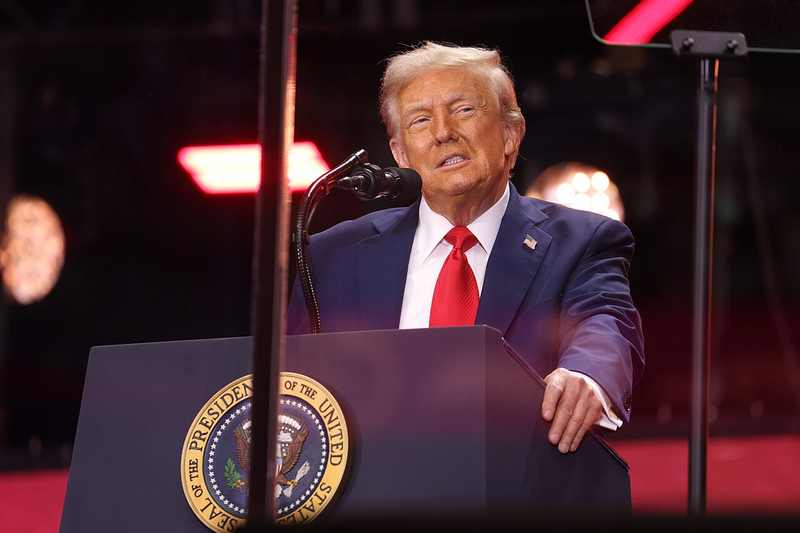
WASHINGTON — Late Friday, President Donald Trump announced that his administration would begin sending what he called checks of “nearly $100” to more than 20 million seniors to help with Medicare Part B premiums. The exact payment is $90 per eligible person. According to a White House fact sheet, most recipients will see a direct deposit in early October; people without direct deposit will receive a paper check at the mailing address Medicare has on file.
That is the factual core. Around it sits a far larger argument about executive power, election-season economics and the way this White House converts public funds into highly personal political messages. Trump says the money will come from the Medicare Improvement Fund, which Congress supplied with $2 billion for improvements to Medicare’s fee-for-service program. He derided that account on Truth Social as a pointless “Slush Fund” used by “Dumocrats” for waste, fraud and abuse. The White House presents the payout as a first-of-its-kind way to use dormant money for seniors. USA TODAY reported that it remains unclear whether the administration has authority to redirect the money this way.
The distinction matters. A promised direct deposit can be real and useful to a household even while the legal mechanism behind it is contested. Reporting should not flatten those two propositions into one. The administration has described a delivery plan; independent reporting has raised a serious authority question; and, as of publication, that question has not been definitively resolved in public. The safest conclusion is neither “the checks are fake” nor “the legal issue is settled.” It is that the payment plan is moving faster than the public legal explanation.
What is confirmed, and what remains uncertain
Facts: amount, timing and delivery
The White House says the federal government will make a one-time Medicare Part B premium payment of $90 to more than 20 million enrollees. Most eligible seniors will receive the money through direct deposit in early October. Those without direct deposit will receive a mailed check, also in early October, using the address registered with Medicare. The administration says most Part B enrollees qualify.
The eligibility language is important because “20 million seniors” is not the same as every person on Medicare. The White House says people whose Part B premiums are already paid by Medicaid do not qualify. It also excludes beneficiaries who pay an Income-Related Monthly Adjustment Amount, the extra premium charged to higher-income enrollees. That leaves the payment aimed broadly at middle- and lower-income people who pay their own standard Part B premium, while omitting some of the poorest dual-eligible beneficiaries and some of the wealthiest enrollees.
Uncertainty: the legal authority to spend the fund this way
USA TODAY’s reporting says it is unclear whether the White House can divert money from the Medicare Improvement Fund for direct household payments. That is not a technical footnote. Congress appropriates money for stated purposes, and the executive branch generally cannot treat a program account as an unrestricted checking account. The relevant question is whether a premium rebate to beneficiaries can reasonably be treated as an “improvement” to Medicare fee-for-service, or whether Congress would need to authorize a new use.
The White House fact sheet asserts the authority by announcing the payments, but an announcement is not a legal memorandum. Until the administration publishes the statutory analysis, congressional committees examine the transfer, or a court is asked to review it, readers should understand the authority claim as the administration’s position, not a settled conclusion. The practical wrinkle is timing: if deposits land before a challenge moves, the government could complete most of the program before the legal dispute catches up.
Who qualifies for Trump’s $90 check
For anyone asking who qualifies for Trump $90 check, the administration’s current answer is narrower than the headline but still broad. You generally need to be enrolled in Medicare Part B, pay your own standard premium, and have a valid direct-deposit account or mailing address already on file. The White House says there is no separate application described in its rollout. That means seniors should be especially wary of calls, texts or emails demanding a fee, a Social Security number or banking credentials to “release” the money.
Two groups are specifically excluded in the White House description. First are beneficiaries whose premiums are paid by Medicaid, usually through a Medicare Savings Program. Their premium burden is already absorbed by another public program, so the administration says they will not receive a second payment. Second are higher-income beneficiaries subject to the Income-Related Monthly Adjustment Amount. That design makes the payment roughly progressive among people who pay premiums themselves, but it creates an awkward political result: some very low-income seniors will not receive the check because Medicaid already covers their bill.
Households should also distinguish this payment from Social Security benefits, a cost-of-living adjustment, a tax refund and the separate Trump $500 ACA checks. The $90 is a one-time Medicare-related payment, not a permanent reduction in monthly Part B premiums. A one-time credit can ease one month’s budget; it does not change the long-run premium formula or the underlying cost of medical care.
The $1.8 billion math behind the Trump $90 payment for seniors
The arithmetic is simple enough to reveal the policy’s real scale. Multiply $90 by 20 million people and the cost is $1.8 billion. The administration says “more than” 20 million people will receive the payment, so the final total would be higher. Against a fund described as holding $2 billion, the payment consumes at least 90% of the available balance. At 21 million recipients, it would cost $1.89 billion. At 22 million, it would cost $1.98 billion, leaving almost no cushion for administrative costs.
That calculation cuts both ways. In the federal health budget, $1.8 billion is small: Medicare spending reached about $1.1 trillion in 2024, according to national health expenditure data published in Health Affairs. The payment equals roughly sixteen-hundredths of one percent of that annual total. It will not materially alter Medicare’s finances, solve its long-term cost pressure or make Part B permanently cheaper. Yet within the targeted Medicare Improvement Fund, it is enormous. It uses nearly the whole pot in one stroke.
This is why calling the payment “only $90” misses half the story. For an individual, $90 is modest. For 20 million individuals, it becomes one of the administration’s largest immediate household transfers of the season. It is simultaneously too small to transform a senior’s annual finances and large enough to redirect almost an entire congressional fund. Policy debates often turn on exactly that tension: small benefits multiplied across a vast population become major fiscal choices.
Compare it with Trump’s other promises. The separate $500 ACA refunds for nearly one million Americans imply roughly half a billion dollars. The $90 Medicare payment reaches more than twenty times as many people but at less than one-fifth the per-person amount, putting its aggregate cost around three to four times higher. The proposed Trump $5000 checks would be in another universe entirely: if paid to every U.S. adult, the bill would move from billions into the trillion-dollar range and would require legislation and a credible funding source.
What the Medicare Improvement Fund was built to do
The Medicare Improvement Fund was created as a policy reserve within the federal Medicare framework, not as a consumer rebate program. Congress has used such funds to manage future changes to the Medicare fee-for-service payment system, offset legislative adjustments and create budget room for program improvements. The White House says Congress supplied this account with $2 billion and that no previous administration had used it to make direct payments to seniors.
Trump’s description of the fund as a “slush fund” is political framing, not an accounting definition. A fund can be flexible without being lawless, and it can be unused without being pointless. Budget reserves often exist because Congress wants capacity to absorb future payment changes. The strongest case for the administration is functional: helping beneficiaries afford Part B arguably improves access to Medicare. The strongest case against it is textual and institutional: Congress specified a Medicare fee-for-service improvement purpose, and an executive-created mass rebate may be a different program.
Those competing readings explain why the legality issue cannot be answered by rhetoric alone. The administration needs to identify the statute, the precise transfer or payment authority, and any limits on the fund. Congress, especially the committees that write Medicare law, needs to say whether this is the use it authorized. If lawmakers object only after the money goes out, the practical remedy becomes murky. Courts are generally reluctant to claw small payments back from millions of beneficiaries, but that does not erase the separation-of-powers question for future presidents.
Trump’s pattern of cash promises
The Medicare payment is not arriving in isolation. It is the latest entry in a series of highly visible cash offers made as Republicans defend narrow majorities in the House and Senate. Last month, Trump proposed $5,000 payments to every U.S. adult if Republicans keep both chambers. Analysts, economists and some Republican lawmakers reacted skeptically, while critics called the conditional promise a bribe. The administration is separately sending $500 refunds to nearly one million people it says were overcharged through Affordable Care Act marketplace fees.
There is also a mixed record of delivery. Roughly 1.45 million service members received a $1,776 “warrior dividend.” By contrast, the promised $2,000 tariff dividend and proposed checks tied to Department of Government Efficiency savings never materialized. The emerging pattern is not that every promise is fake or every promise is fulfilled. It is that the White House repeatedly turns complicated pools of public money into simple, branded dollar figures that voters can picture arriving in an account.
That is potent politics because a check does something a tax provision, payment rule or reimbursement formula cannot: it creates a personal receipt. The beneficiary knows the amount and often knows who claimed credit. Trump’s Truth Social announcement tied the $90 payment directly to his promise to protect Medicare and then pivoted immediately to the conditional $5,000 dividend. That sequencing makes the $90 more than relief. It becomes evidence offered for the credibility of the larger promise: one payment now as proof of another later.
Why this matters
Analysis: The most important feature of this story is not the size of the check. It is the collapse of policy, campaign message and executive action into a single transaction weeks before the midterms. Seniors are among the most reliable voting groups. Medicare is among the most emotionally protected federal programs. A direct payment labeled as help with a Medicare premium reaches a constituency that notices both household prices and threats to benefits.
Reuters reports that Trump’s approval has been low over his handling of the cost of living during the U.S.-Israeli war on Iran, which has pushed oil and gasoline prices higher. That context explains the administration’s urgency. A president cannot quickly reverse a global energy shock, but he can send a finite payment from an existing federal account and argue that he is lowering costs. Ninety dollars does not offset months of elevated fuel, food, housing and medical expenses. It does, however, give the White House a concrete answer when voters ask what it has done.
The political danger is equally concrete. If payments are delayed, challenged or narrower than the headline, disappointment will be personal. If the legal theory fails, opponents will say the administration treated congressional funds as campaign resources. If the checks arrive smoothly, Republicans gain a simple doorstep message: Trump sent help; Democrats questioned it. The policy’s limited economic scale may therefore be inversely related to its political power. A small payment that arrives can be more persuasive than a large promise that remains abstract.
Who benefits, who loses and what critics say
Who benefits
The clearest beneficiaries are eligible Part B enrollees who pay their own standard premium and have current payment information on file. For a senior living on a fixed income, $90 can cover groceries, a utility bill or part of a prescription. It is not transformational, but dismissing it as meaningless would be as glib as presenting it as a solution to Medicare affordability. The payment is real household cash if it arrives, and people are entitled to value it on their own terms.
Who is left out
People whose premiums are paid by Medicaid are excluded, even though they are among the poorest Medicare beneficiaries. The policy rationale is that Medicaid already absorbs their premium. The political optics are harder: a low-income senior may see a neighbor receive $90 while receiving nothing. Higher-income enrollees paying an income-related surcharge are also excluded. Future Medicare fee-for-service improvements could lose funding if the account is nearly emptied, although the practical impact depends on what Congress intended to finance next.
What critics say
Critics make three distinct arguments. The first is legal: the president may not have authority to repurpose the fund. The second is fiscal: nearly exhausting a designated account for a one-time payment sacrifices future program flexibility. The third is electoral: announcing checks weeks before a close midterm looks less like neutral administration and more like taxpayer-funded persuasion. Supporters answer that unused public money should reduce seniors’ costs, that the payment is broadly available rather than limited to swing states, and that timing does not make lawful relief illegitimate.
Both sides should avoid easy caricatures. Calling every transfer a “bribe” skips the policy question; governments routinely send benefits near elections because governments operate continuously. Calling every legal concern partisan obstruction is equally weak. The authority question exists precisely because public money remains public even when the beneficiary deserves help.
The midterms angle: cash as a governing language
Republicans hold narrow congressional majorities, and the November elections will determine whether Trump retains a cooperative House and Senate. The president has explicitly tied the proposed $5,000 dividend to a Republican victory. The Medicare payment carries no stated voting condition, but it strengthens the same campaign narrative: Republican control produces cash; divided government puts it at risk.
The broader Trump cash giveaway midterms strategy also reflects a change in how policy is sold. Rather than asking voters to credit aggregate growth, future investment or complex regulatory savings, the administration offers named payments with round numbers. The $500 ACA refund, $1,776 warrior dividend, $2,000 tariff promise, $5,000 dividend and now $90 Medicare payment form a political ledger. Some lines are paid, some pending and some abandoned. Voters may judge the total record less by economic theory than by which deposits actually cleared.
The Iran war raises the stakes. As Lara Trump has warned, the conflict’s household cost could hurt Republicans in the midterms. Elevated energy prices flow through transportation, food and home budgets. A $90 payment can soften one bill but cannot neutralize that broader burden. It may still help shift the conversation from costs imposed to money returned, which is the immediate communications objective.
What happens next
First, watch execution. The White House says direct deposits and mailed checks will begin in early October. The administration should publish recipient counts, total outlays, delivery dates and administrative costs. A program this large needs more than a press release; it needs auditable numbers. Beneficiaries should keep Medicare and Social Security contact information current and ignore anyone asking for a payment or private credentials to process the check.
Second, watch Congress. Lawmakers can demand the legal memorandum, hold hearings, request an inspector general review or legislate explicitly for or against this use. If Republican leaders endorse the payments, the oversight pressure may come mainly from Democrats. But appropriations authority is an institutional issue that should concern both parties: a precedent available to Trump would also be available to a future Democratic president.
Third, watch the courts and the clock. A lawsuit would need a plaintiff with standing and a remedy that makes sense once payments are underway. That may be difficult, which is one reason executive spending disputes often become fights over future conduct rather than completed transactions. If no challenge comes before the money moves, the legal precedent may be politically powerful but judicially unresolved.
Finally, watch whether the $90 becomes a bridge to the $5,000 campaign promise. Trump’s announcement linked them. If Republicans retain Congress, pressure will build for a bill quickly. If they lose either chamber, the White House can blame the opposition for blocking the larger dividend. In either outcome, the smaller Medicare payment will have served its strategic purpose: it gives voters a delivered example before asking them to believe a much bigger promise.
The bottom line
Fact: the administration says more than 20 million eligible Medicare Part B enrollees will receive $90 in early October, mostly by direct deposit, with mailed checks for those without it. Fact: at exactly 20 million recipients, the cost is $1.8 billion, at least 90% of the $2 billion fund balance cited by the White House. Unresolved: whether existing law authorizes the administration to use the Medicare Improvement Fund for direct beneficiary payments. Analysis: the check is modest household relief and major election-season messaging at the same time.
That combination is why the story deserves more than a headline about free money. The $90 will matter to recipients. The $1.8 billion matters to the fund. The legal theory matters to Congress. And the timing matters to an election being fought around the cost of living. All four can be true at once.
Sources
- Reuters — one-time $90 Medicare payment, fund size, delivery plan and midterm context, October 3, 2026.
- USA TODAY — announcement, authority question and Trump’s record of cash promises, October 3, 2026.
- The White House — payment amount, eligibility exclusions, direct-deposit and mail details.
- Donald Trump’s Truth Social announcement — archived transcript of the October 2 post.
- Health Affairs — 2024 national health expenditure data, including Medicare spending.