The second is dead / Timekeepers just voted to let the clock drift from the Earth itself
"After 30 years of debates, we are ready," said Noël Dimarcq, president of the BIPM's Consultative Committee for Time and Frequency, shortly before the vote, as Scientific American reported. The decision needs precision, because the shorthand attached to it — a "leap hour" replacing the leap second — describes something the resolution does not do. Delegates did not schedule a leap hour or define how one would be inserted. They set a new maximum difference of 3,600 seconds between UT1 and UTC, asked the BIPM to monitor how it evolves, and left any eventual correction to a future generation. Scientific American estimates a leap hour would not be needed for more than 1,000 years; the official text is more cautious, describing continuity for several centuries. The vote's practical content is the opposite of an imminent adjustment: it is a decision to stop adjusting.
Two clocks: why UTC and UT1 never agreed
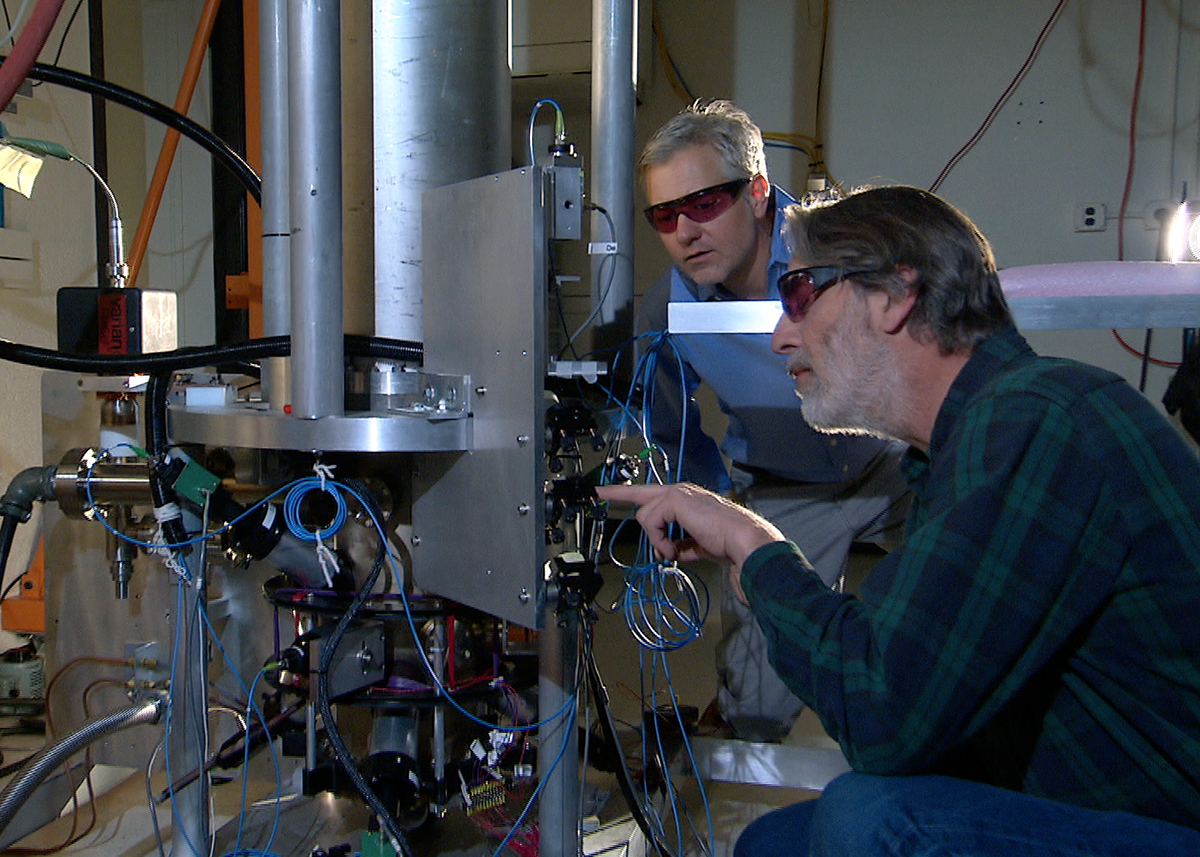
Since 1967 the second has been defined by the oscillations of caesium-133 atoms — 9,192,631,770 of them — and atomic clocks keep it with extraordinary stability. Earth, by contrast, is a poor timekeeper: tides gradually slow its rotation, while shifting oceans, winds, earthquakes, melting ice and movements in the core speed it up or slow it down unpredictably. UT1 measures the planet's actual orientation. UTC, the world's civil standard, is produced by the BIPM from a weighted average of atomic clocks worldwide. When UTC took its modern form in 1972, astronomers insisted it stay tied to the rotating Earth, so the compromise was the leap second: whenever the gap approached 0.9 seconds, the Earth-rotation service would announce, about six months ahead, a minute with a 61st second — 23:59:60. Twenty-seven leap seconds have been inserted since 1972, most recently on December 31, 2016. None has ever been removed.

The negative leap second: the untested step that forced the issue
What turned a 30-year argument into a decision was a reversal. Earth's rotation has recently been speeding up slightly — enough that, since the mid-2010s, scientists have predicted the possible need for a negative leap second, a minute of only 59 seconds, perhaps as early as 2029. A negative leap second has never happened, and the software to execute it has never been tested in production. Engineers describe it as a "mini Y2K": a step backward for every synchronised system on Earth at once. A 2025 BIPM expert workshop estimated a 30 percent probability of one becoming necessary by 2035 under the old rules. Nick Stamatakos of the United States Naval Observatory told Scientific American that avoiding negative leap seconds was "a very big driver" in opening the window between UTC and UT1. Faced with testing an unprecedented subtraction or abolishing the adjustment altogether, the conference abolished the adjustment.
A second that broke the internet
Even positive leap seconds have a documented record of damage, which is why the technology industry campaigned against them for decades. Software assumes minutes are uniform; a 61-second minute violates that. The leap second of June 30, 2012 disrupted major websites, Reddit among those that crashed, and LinkedIn also reported problems. On January 1, 2017, Cloudflare attributed failures in its DNS service to the leap second inserted the night before. Large platforms responded with "smearing" — Google, Meta and others spread the extra second across hours in tiny increments — but each smears differently, so for part of the day the world's biggest clocks deliberately disagree with each other and with official UTC.
From 2035 to 2027: the timeline
Thursday's decision was step two of two. At the 27th CGPM on November 18, 2022, member states passed Resolution 4, deciding the maximum permitted UT1–UTC difference would be increased "in, or before, 2035," and asking for a new maximum keeping UTC continuous for at least a century. What remained open was the number and the date. The 28th CGPM supplied both, faster than the 2022 deadline: 3,600 seconds, effective May 20, 2027 — World Metrology Day. The committee weighed three options: a one-minute tolerance, assessed as buying roughly a century of continuity; one hour, assessed at roughly a millennium; and no fixed limit, rejected because some systems need a defined bound when encoding the UT1–UTC offset. Transitional arrangements for radio systems broadcasting the offset in older formats run to 2035, or 2040 at the latest.
What changes for GPS, finance, astronomy and networks
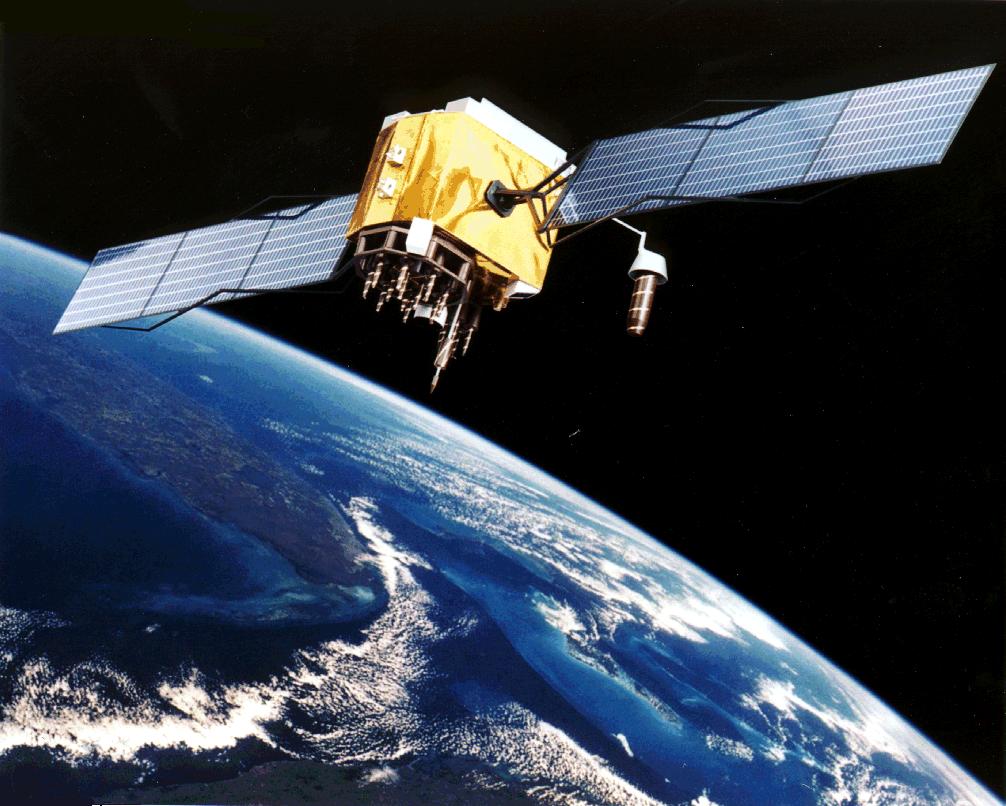
For almost everyone, nothing visible changes: phones and watches will show the same time on May 21, 2027 as under the old system. The change operates one layer down, in the infrastructure distributing time. After May 2027, the Earth-rotation service will no longer schedule leap seconds, and software will no longer need special handling for a 61-second minute. GPS is the clearest precedent: its timescale never adopted leap seconds, runs 18 seconds ahead of UTC today, and works because receivers apply a published offset. Systems that need Earth's orientation — astronomers, geodesists, satellite operators, navigators — will do what GPS receivers do, using published UT1–UTC values the BIPM will continue to report. Financial markets and telecom networks gain a timescale with no scheduled discontinuities: the benefit is not accuracy, which atomic clocks already supplied, but removal of a recurring, globally simultaneous exception. Civil time has always been a convention layered on astronomy — as the permanent daylight saving time debate shows — and this week the convention loosened its oldest tie.
Why this matters
The deeper significance is philosophical as much as technical. For as long as humans have told time, the day — one rotation of the Earth under the sun — was the definition, and clocks were approximations of it. Atomic time inverted that: the clock became exact and the planet the approximation. The leap second was the last formal mechanism subordinating the exact clock to the messy planet, a recurring admission that noon should mean the sun overhead. Removing it changes no one's noon perceptibly — time zones already displace solar time by hours, and daylight saving shifts clocks by an hour twice a year — but it changes the principle. Accumulated over centuries, the drift becomes real: solar noon will migrate away from clock noon, and a distant society may face a one-hour correction far more disruptive than any leap second, or simply accept that clock time and sky time are different things. "It's kind of a philosophical discussion, because if a leap hour happens, it won't be for a very, very long time," Christian Bizouard, director of the IERS Earth Orientation Center, told the Guardian. "What we are doing is pushing back the decision." Supporters answer that pushing a problem a thousand years forward, while removing a proven recurring fault from today's networks, is engineering judgement, not evasion — and astronomers lose nothing, because UT1 continues to be measured and published. The vote, passed by majority rather than unanimously, reflects a genuinely contested question. The conference also looked beyond Earth, to lunar time scales — Moon clocks run slightly faster than Earth's — and a future redefinition of the second from optical clocks, for the 29th CGPM in 2030: themes visible in our reports on Google's Project Suncatcher and the SpaceX Crew-13 launch.
What happens next
Implementation is confirmed for May 20, 2027. Before then, the BIPM and partners must inform UTC's users and support the transition; operators of critical systems must ensure equipment follows the revised standard and does not insert a leap second after the practice ends. No leap second is currently scheduled, so the last one — December 31, 2016 — is likely to stand as the 27th and final entry in the table. The BIPM will keep publishing the UT1–UTC difference as it slowly grows, so the authorised drift will be visible in data long before it is visible in anyone's day. If long-term slowing resumes, the gap will widen by roughly a minute every 60 to 90 years — still leaving any "leap hour" to timekeepers not yet born, who will inherit both the problem and a thousand years of warning.
Sources: Scientific American, Oct. 15, 2026 (the Versailles vote; May 20, 2027 date; Dimarcq and Stamatakos comments); Smithsonian Magazine, Oct. 15, 2026 (27 leap seconds; 2012 Reddit crash; Bizouard comment); Yoopya News analysis of the resolution text, Oct. 16, 2026 (Resolution 5; 3,600-second maximum; 30 percent estimate); Neo Science Hub, Oct. 16, 2026 (BIPM text; 2017 Cloudflare failure; GPS offset); BIPM, Resolution 4 (2022). Background: The Morning Brief, Oct. 17, 2026. Related on Signal Post News: Permanent daylight saving time debate · Google Project Suncatcher · SpaceX Crew-13 launch.