Google AI chips in space
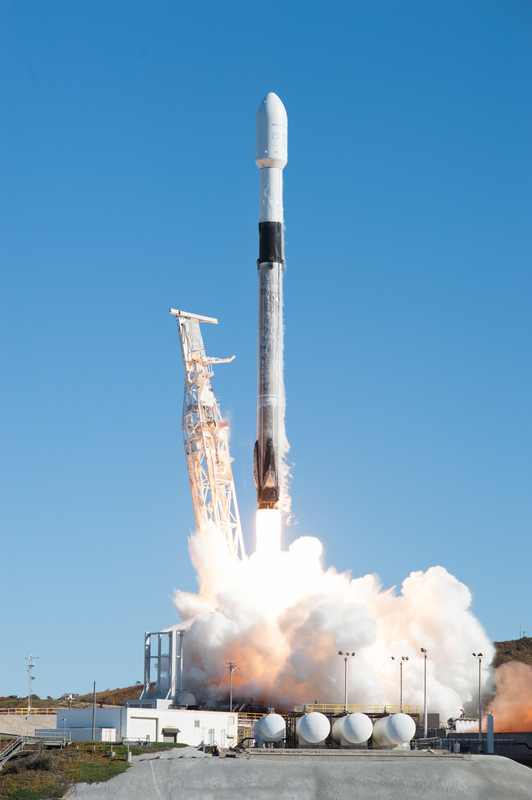
Google AI chips in space are no longer only a research diagram. On October 1, 2026, SpaceX's Transporter-18 rideshare mission lifted off from Vandenberg Space Force Base carrying the first Project Suncatcher prototype, a refrigerator-sized spacecraft built with satellite company Planet and loaded with four of Google's Trillium tensor processing units.
Google says it established contact and that the satellite is operating as expected. That is an important first checkpoint, but it is not evidence that an orbital data center works. This spacecraft is an engineering experiment: expose terrestrial AI processors to launch vibration, radiation and vacuum; measure how they behave; and learn whether a far larger architecture deserves to exist.
The distinction protects the story from its own science-fiction appeal. A working space-based data center would require reliable power, heat rejection, high-speed links, fault tolerance, low-cost launches and a practical way to move useful data between orbit and Earth. Suncatcher has placed four chips at the beginning of that list. It has not checked the list off.
What happened on the Transporter-18 launch
The MVP satellite carries four Trillium TPUs, not a production cluster
The satellite is described as an “MVP,” or minimum viable prototype. Its size and payload make the mission deliberately modest. Four Trillium-generation TPUs are enough to expose real hardware, memory and power systems to orbital conditions without pretending the spacecraft can train a frontier model or replace one building full of servers.
The Times reported the October 1 launch and Google's confirmation that contact had been established. TechRepublic and TechWireAsia placed the mission in the wider race to find energy for AI infrastructure. Those accounts agree on the central point: this is a hardware-validation flight, not a commercial service.
The first success is survival. Rockets subject electronics to vibration, acceleration and acoustic loads far beyond a server room. Once in orbit, the spacecraft must boot, communicate, distribute power and collect telemetry. Google's “operating as expected” statement means those basic steps have worked so far; it says nothing yet about long-duration reliability or the economics of scaling.
Why this matters
The AI compute boom is colliding with the limits of terrestrial grids
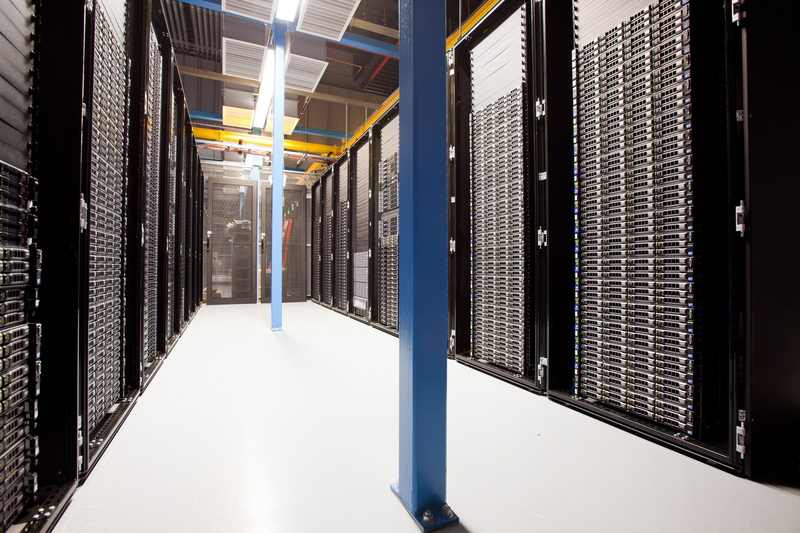
The attraction of orbit begins on Earth. AI systems require more accelerators, and accelerators require electricity, cooling equipment, substations and new transmission. The International Energy Agency's figures, cited in coverage of the mission, put global data-center electricity consumption at about 485 terawatt-hours in 2025 and roughly 950 TWh by 2030. Consumption by AI-focused facilities is expected to triple over that period.
Those projections do not mean the world is running out of electricity. They mean the best places to connect enormous new loads are becoming harder to secure. Grid queues can stretch for years. Communities see land and water demands arrive faster than local benefits, particularly when a highly automated data center promises relatively few permanent jobs. Utilities must decide who pays for generation and transmission built around one giant customer.
Project Suncatcher is therefore less an escape from Earth than a response to terrestrial scarcity. If abundant solar power can be harvested continuously in orbit, Google could move part of the energy problem away from the grid. But the solution trades familiar constraints for harder ones: launch mass, radiation, thermal control, networking and orbital maintenance.
Project Suncatcher began as a 2025 research moonshot
Solar power and optical links form the long-term architecture
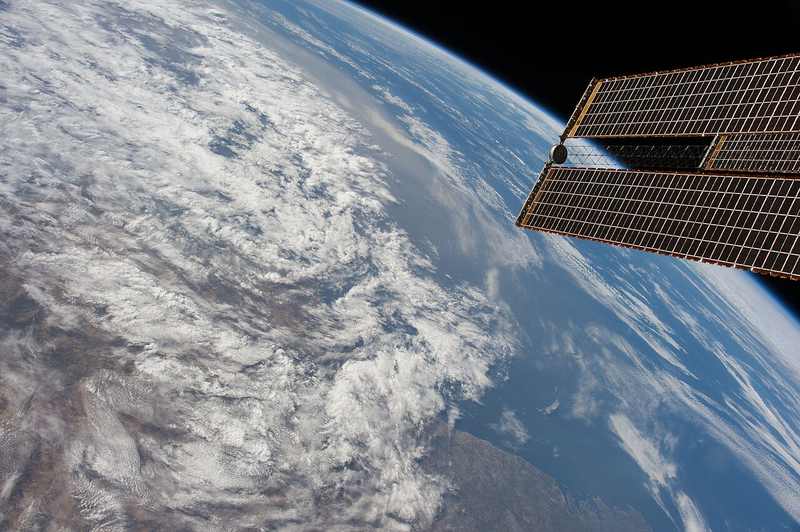
Google introduced Suncatcher in 2025 as a concept for compact constellations of solar-powered satellites carrying TPUs and connected through free-space optical links. In its official research announcement, the company said a solar panel in a favorable orbit could be up to eight times more productive than one on Earth and could generate power nearly continuously.
That number is a productivity estimate, not a promise of eight times cheaper computing. An orbital panel can spend more time in direct sunlight and avoid clouds, night and atmospheric losses. But a complete system must pay to launch the panels, structure, processors, radiators, communications gear and propellant. It must also tolerate degradation and eventually be replaced.
The optical-link ambition is equally important. One small satellite cannot become a data center by itself. The concept needs many spacecraft to exchange information over laser links quickly enough to behave like a distributed cluster. Terrestrial accelerators are connected across carefully engineered networks measured in meters. An orbital system would connect moving machines across far greater distances while maintaining precise pointing.
The first technical test: can an AI chip stay accurate under radiation?
Cosmic rays can flip bits without visibly damaging the processor
Space radiation creates a risk that is easy to describe and difficult to eliminate. A high-energy particle can strike a memory cell or logic circuit and change a zero to a one, or the reverse. The chip may remain powered on while producing a corrupted calculation. In an AI workload made of billions of numerical operations, engineers must detect whether those “bit flips” are rare nuisances or a reliability problem.
Suncatcher can measure upset rates in real conditions and compare them with ground testing. It can also test mitigation: error-correcting memory, duplicated calculations, software checks and the ability to reset a faulty component. The important metric is not whether a single error occurs. It is whether the system can find, contain and recover from errors without undermining useful output.
Launch survival proves that hardware reached orbit intact. Radiation testing asks whether it can remain trustworthy there. A chip that runs fast but silently changes results would be worse than one that shuts down cleanly.
The harder problem may be heat, not power
Vacuum provides no air for fans or cooling towers
On Earth, data centers move heat through air and liquid toward chillers, cooling towers or outside air. Space is cold in the popular imagination, but vacuum does not carry heat away through convection. A spacecraft must conduct heat from the processors into radiators, which then emit it as infrared energy. Radiators are large, add mass and must be positioned so they do not absorb too much sunlight.
That physics turns every watt used by a TPU into a thermal-design obligation. More chips require more solar area and more radiator area. A future orbital cluster cannot simply copy a ground data center's rack density; it must balance compute, power collection, thermal rejection, communications and attitude control as one system.
The prototype's measurements will matter more than a single peak-performance result. Engineers need to know how long the four TPUs can run at useful loads, how quickly temperatures rise, how performance throttles and whether repeated heat cycles damage components. A brief successful computation is not the same as continuous service.
Who benefits if orbital compute becomes practical
Google gains optionality; launch providers gain demand
Google's immediate benefit is knowledge. A small mission can answer questions that no simulation resolves completely and can reveal which constraints deserve investment. Even a negative result has value if it prevents billions of dollars from being committed to an architecture that fails on thermal or reliability grounds.
If the system eventually scales, Google could gain a new source of compute that is less dependent on congested regional grids. Launch companies and satellite manufacturers would gain a high-mass, high-cadence customer. Power-constrained regions could benefit indirectly if some future AI load no longer competes for local generation and transmission.
The nearer-term beneficiaries are more conventional. Planet gains experience integrating high-performance computing payloads. SpaceX adds another specialized customer to its rideshare business. Chip designers learn more about operating commercial accelerators in radiation environments without redesigning every component to traditional space-grade standards.
Why skeptics remain right to be skeptical
Launch cost, debris risk and communications can overwhelm the solar advantage
The first objection is economic. Terrestrial data centers are expensive, but they are reachable by road, repairable by technicians and connected to fiber. A failed server can be swapped. A failed satellite can become debris. Lower launch prices improve the equation, but they do not make mass, replacement and insurance free.
The second objection is operational. Large constellations add collision risk and congestion. Optical links must remain aligned among fast-moving spacecraft. Downlinks to Earth introduce bandwidth limits and latency, which means orbital compute would be most useful for workloads that can be staged, processed and returned efficiently rather than tasks requiring constant exchange with terrestrial users.
The third objection is environmental and scientific. Moving power demand off the ground does not erase the footprint of rockets, manufacturing and reentry. Large reflective constellations can also interfere with astronomy. Those costs would depend on scale, orbit, brightness, replacement cadence and mitigation; one prototype cannot settle them.
What the numbers actually imply
Eight times more productive solar does not mean eight times cheaper AI
Google's eightfold solar-productivity estimate is best treated as an input to a system model. If a given panel can harvest more energy over a day, the satellite may carry less battery mass and run compute for longer periods. But cost per useful computation depends on far more: launch price per kilogram, TPU lifetime, radiator mass, networking efficiency, failure rate, ground-station costs and how often the constellation must be replenished.
The IEA's 485-to-950 TWh projection explains urgency, not inevitability. A near doubling of data-center electricity use in five years creates pressure for new sources, yet terrestrial responses are also improving: more efficient chips, purpose-built power contracts, nuclear and renewable projects, demand shifting, and data centers placed near available generation.
That sets the proper comparison. Suncatcher does not need to beat every ground data center. A niche win could be enough — perhaps highly parallel workloads with limited data movement and abundant tolerance for delay. Conversely, if cooling hardware and communications consume the mass saved by solar productivity, orbit may remain an expensive laboratory.
What happens next
Five milestones separate a useful experiment from an orbital data center
Radiation reliability. Google must publish or otherwise demonstrate how often errors occur, whether they affect calculations and how effectively the system recovers.
Thermal endurance. The TPUs must operate through repeated workload cycles without overheating, excessive throttling or accelerated degradation.
Useful computation. The mission must move beyond powering on chips to running representative AI workloads and verifying output against ground systems.
Optical networking. Future satellites must exchange data at high bandwidth and with sufficient reliability to distribute a workload. A constellation without that fabric is a collection of isolated computers, not a data center.
Economics and replacement. Google must model the full lifecycle: launch, operations, failures, debris mitigation, ground links and end-of-life disposal. A technically successful platform can still be commercially irrational.
Two plausible futures: niche infrastructure or an expensive dead end
The prototype matters because either outcome would be useful
In the optimistic case, the four TPUs remain stable, thermal systems support sustained workloads, and later spacecraft prove optical links. Falling launch costs and improving solar arrays could then make orbital compute competitive for selected workloads. Google would have a new infrastructure option rather than a wholesale replacement for Earth-based facilities.
In the skeptical case, radiation mitigation, radiator mass and communications overhead overwhelm the solar advantage. The project may still produce better satellite computers and fault-tolerant software, but the data-center vision would recede. That would not make the mission a failure; it would make it an experiment that answered an expensive question early.
The third possibility is slower and more likely than either headline. Orbital AI develops as a specialized layer — processing Earth-observation data close to where it is collected, handling intermittent workloads or supporting scientific missions — while large-scale model training stays on the ground. Suncatcher's significance would then be measured not by a server farm in the sky, but by a new boundary between where data is produced and where it is computed.
Project Suncatcher has crossed the line from proposal to hardware. The next line is harder: evidence. The four chips must show that ordinary AI processors can be accurate, coolable and useful in orbit. Only after that should anyone mistake a refrigerator-sized prototype for the beginning of a city-sized data center above Earth.
Sources
- The Times, October 5, 2026 — launch, spacecraft and contact confirmation.
- TechRepublic — mission goals and the terrestrial power-demand context.
- TechWireAsia — Suncatcher's hardware test and orbital-data-center analysis.
- Google Research — Project Suncatcher's original system design, solar estimate, optical links and research objectives.
Reporting note: Launch details and Google's statements are attributed above. Cost comparisons, beneficiary analysis and future scenarios are Signal Post News analysis. The mission has not demonstrated a production orbital data center.