
A familiar animal becomes new to science
Researchers formally described “Leopardus tilcayo” in Current Biology on September 17, the first living cat species named and described in more than a century, since the Uruguayan pampas cat in 1923. The animal lives in Bolivia’s Yungas cloud forest near La Paz and keeps the name local communities have long used: tilcayo. Science did not create the cat or discover it before local people. It established that the population is evolutionarily distinct.
What the animal is
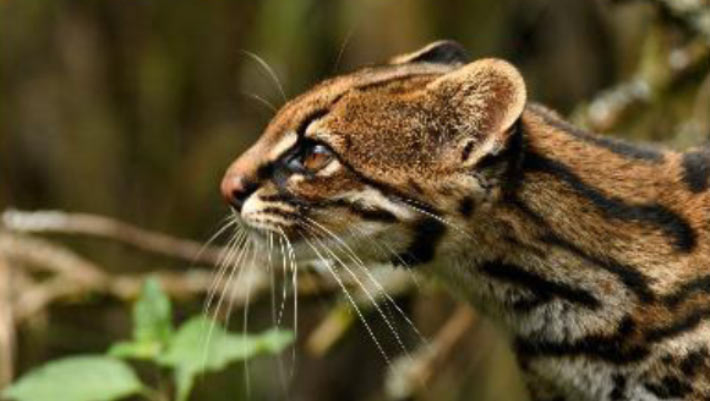
The tilcayo is about 18 inches, or 46 centimeters, long and weighs around three pounds, or 1.4 kilograms—smaller than an average domestic cat. Its light-brown coat carries irregular rosette spots. Camera traps suggest nocturnal activity, and rodent remains in scat point to a diet of small mammals, but much of its behavior remains unknown. That uncertainty is not a weakness in the discovery; it is the research agenda the discovery creates.
The accidental beginning
Co-lead author Paola Nogales-Ascarrunz was volunteering at a sanctuary when a man brought in a cat that did not match known species. A 10-year-old male now lives at Senda Verde Wildlife Sanctuary after a family had kept it as a pet. A female was rescued and released after being attacked by local people. The formal study drew on two live individuals and camera-trap records, a small base that makes every future sighting valuable.
Why DNA changed the map
DNA from 38 tiger-cat samples across South America revealed five genetically distinct species. The tilcayo lineage diverged around 1.4 million years ago. That is why modern mammal discovery often looks different from the age of expedition trophies: researchers revisit animals grouped by appearance and find deep separation hidden beneath similar coats. Genetics does not replace morphology or ecology, but it can reveal that one conservation label has been masking several vulnerable populations.
Why this matters
Conservation follows names. If five lineages are treated as one widespread species, the combined range can make the group appear safer than any local population actually is. Splitting the tilcayo into its own species forces a separate estimate of range, population and threats. An upcoming IUCN review could list it as endangered, triggering attention, research priorities and stronger arguments for habitat protection.
Local knowledge and scientific credit
Keeping “tilcayo” in the scientific name recognizes that communities had language and experience for the animal before formal taxonomy caught up. That choice can improve trust, but naming alone is not partnership. Conservation will require local people to benefit from forest protection and receive practical guidance that reduces conflict with small cats. The rescued female’s attack is a warning that rarity does not automatically produce tolerance.
A week of new species—and what happens next
The same week brought reports of the white-throated egg-eating snake “Dasypeltis albigularis” from Ethiopia’s Harenna Forest and the golden-green darkling beetle “Steneucyrtus wayanadensis” from India’s Wayanad Wildlife Sanctuary. The tilcayo captures more attention because it is a cat, but the pattern is broader: biodiverse forests still hold poorly documented lineages. Next steps are camera surveys, genetic sampling, prey studies and threat mapping. Discovery is the opening sentence; protection is the unfinished article.
The caution built into species description
Taxonomy is a hypothesis tested by multiple lines of evidence. Genetic divergence supports distinction, but researchers will continue comparing skulls, coats, behavior, geography and reproductive isolation as more samples become available. A small known sample creates uncertainty around variation: scientists must distinguish features typical of the species from traits unique to one individual. That does not invalidate the name. Formal description gives future observations a framework and allows disagreement to become testable. It also helps museums and databases revisit specimens that may have been mislabeled. Some “new” species discoveries are therefore hiding in collections or familiar landscapes rather than unknown wilderness.
Protection without turning the cat into a commodity
Public attention can help fund surveys and habitat protection, but charismatic rarity can also create demand for illegal pets and intrusive wildlife tourism. The sanctuary history shows that private keeping is already part of the story. Conservation messaging should avoid publishing precise locations, discourage ownership and support local reporting and rescue capacity. Cloud-forest protection must also benefit communities through land security, sustainable livelihoods and services; otherwise a new restriction can feel like an external cost imposed in the animal’s name. The tilcayo’s small range makes habitat continuity especially important because a road, fire or land-use change can divide an already limited population. The goal is not to freeze the Yungas as scenery. It is to keep ecological and human systems viable together.
Sources: Reuters discovery report; Scientific American report; Phys.org research report. Facts and figures are a fixed September 18, 2026 reporting snapshot and do not update live.