The environmental authorization application was withdrawn last year to redesign the proposal from floating to anchored wind turbines, according to Acer (Africa) Environmental Consultants, the firm appointed to conduct the assessment. The consultancy said the delay was technical rather than environmental and that it was unsure of the project’s current status.
Gagasi was launched in 2022 by GenesisHexicon, a joint venture between Sweden’s Hexicon and South Africa’s Genesis Eco-Energy Developments. Genesis Eco-Energy said it expected to provide a project update in October.
A much larger offshore opportunity
The delay comes as a World Bank study estimates that selected areas of South Africa’s coast could support about 95 gigawatts of offshore wind potential, much of it using floating technology.
The study says large-scale offshore wind development could contribute billions of dollars in employment wages by 2050 and help reduce emissions from coal-fired power generation. Turning that potential into operating projects would still require environmental review, port and grid investment, technical decisions and long-term policy support.
Floating versus anchored turbines
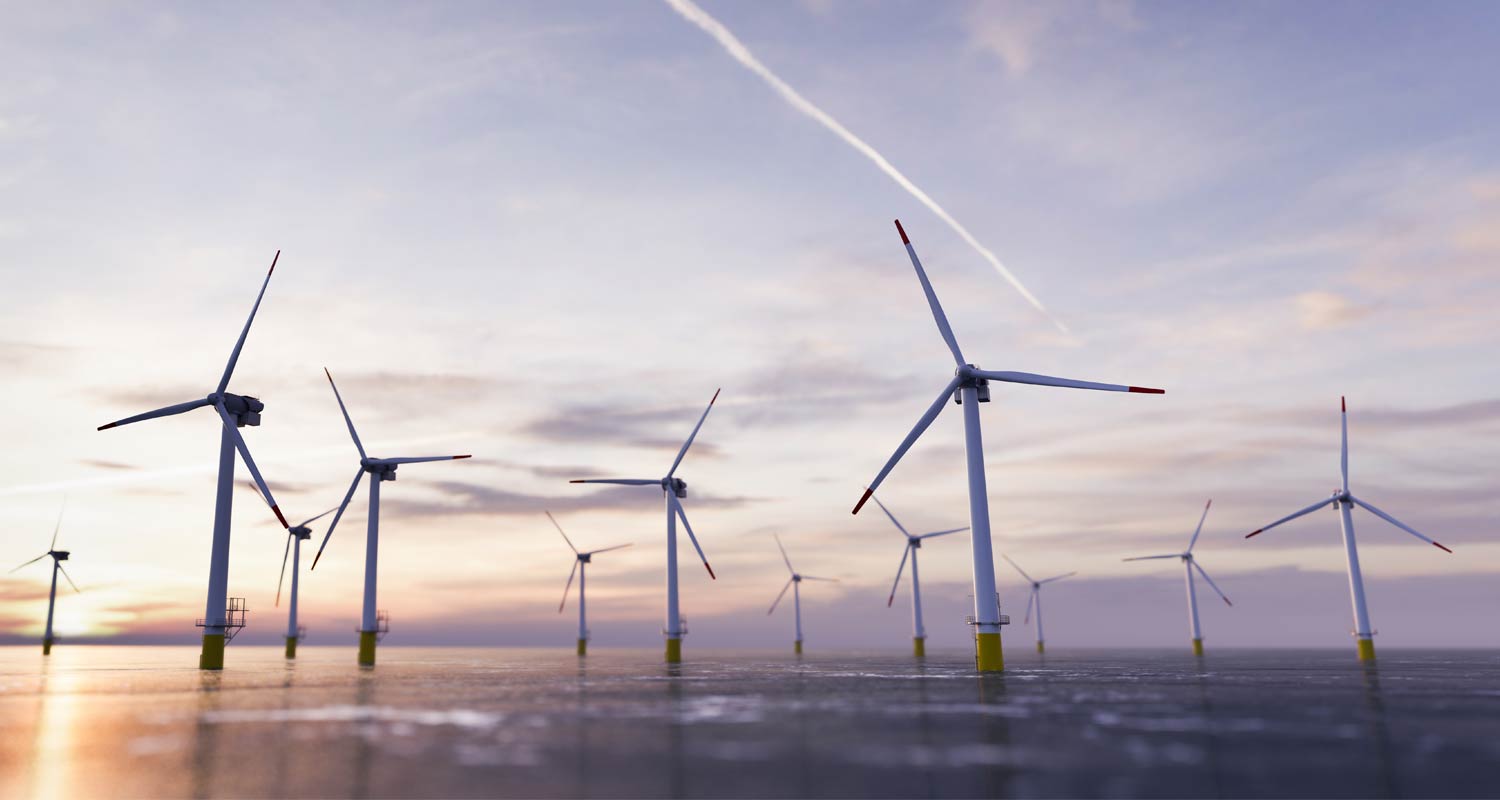
The design question goes to the economics and engineering of the project. Fixed-bottom turbines are attached to foundations in the seabed and are generally favored where water depth and geology make construction practical. Floating turbines sit on buoyant platforms held in place by mooring lines, which can open deeper waters with stronger wind resources.
Neither approach is automatically superior. A fixed-bottom design may use more established technology, but it requires detailed knowledge of seabed conditions and can demand specialized installation vessels. Floating systems can reach sites that fixed foundations cannot, but costs, maintenance and local supply chains remain important constraints.
Why a redesign pauses environmental review
An environmental assessment must evaluate a defined project. Changing turbine foundations can alter the seabed footprint, cable routes, vessel traffic, construction methods and potential effects on marine habitats. A withdrawn application therefore does not by itself mean the project failed an environmental test; it can mean that the proposal being assessed is no longer the one developers intend to build.
The next useful milestone would be a revised design followed by a new or updated assessment process. That process would give regulators, coastal communities, fishing interests and environmental groups a clearer basis for evaluating the site.
Wind potential is not the same as a buildable project. The distance between them is filled with engineering, permits, ports, cables and public trust.
South Africa’s energy context
Offshore wind is being considered as South Africa looks for ways to expand electricity supply and reduce dependence on coal over time. Large projects could diversify generation, but they must connect to a grid capable of carrying power from coastal sites to demand centers.
That makes transmission planning as important as the turbines. A wind farm can be technically sound and still face delays if ports cannot handle components, grid connections are unavailable or procurement rules do not provide a bankable path to sell electricity.
The promise — and limits — of the 95-gigawatt estimate
The World Bank estimate describes potential in selected coastal areas, not capacity that is approved, financed or under construction. Resource assessments are useful because they identify where wind conditions and broad constraints look promising. Developers must then narrow that potential through site surveys, wildlife studies, geotechnical work and commercial analysis.
Even a small share of the estimated resource could become significant. But the pace will depend on project costs, policy certainty and whether South Africa develops local skills and infrastructure without promising benefits that individual projects cannot yet guarantee.
What to watch next
- A formal developer update: Genesis Eco-Energy said an update was expected in October.
- A revised technical design: the choice between floating and anchored turbines will shape cost and permitting.
- A new environmental filing: this would define the project regulators are being asked to assess.
- Grid and port plans: both are prerequisites for construction at commercial scale.
- Community consultation: coastal livelihoods and marine impacts need early, documented engagement.
For now, the Gagasi proposal is best described as delayed and under reconsideration, not canceled and not approved. The broader offshore-wind opportunity remains substantial, but the first project will test whether national potential can be translated into a credible, locally supported investment.
Why this matters
Gagasi is a test of whether resource potential can become buildable infrastructure. South Africa does not need another impressive capacity estimate; it needs a project that aligns engineering, grid access, ports, financing and community consent. The delay exposes the real work hidden between a wind map and an operating turbine.
How we got here
The country’s electricity system remains heavily dependent on coal while reliability and transition pressures encourage diversification. Offshore wind arrived later than solar and onshore wind because seabed, vessel and transmission demands are larger. Early projects in other countries also faced cost escalation and redesign, showing that first-of-kind development is rarely linear.
Who benefits, who loses and what critics say
Developers, ports, manufacturers and skilled workers could benefit from a new industry. Fishing communities, ratepayers and marine ecosystems bear risk if consultation or cost control is weak. Critics argue offshore wind is too expensive for urgent power needs; supporters answer that a diverse long-term grid needs resources with different production profiles. Both claims depend on actual procurement prices and connection plans.
What the numbers actually imply
The proposed project is 800 megawatts, while the World Bank identifies about 95 gigawatts of potential in selected areas—nearly 119 times larger. That comparison shows Gagasi would be a demonstration-scale share of the theoretical resource, not proof the full resource is economic. Potential is filtered by seabed, environment, transmission and finance before it becomes capacity.
What happens next
A revised foundation choice and environmental filing are the first credible milestones. The positive scenario turns redesign into a bankable template for later projects; the negative one leaves the proposal stranded by costs or grid constraints. Port investment and transmission planning will reveal whether the country is preparing an industry or merely assessing one site.
Source: Details of the Gagasi redesign and the World Bank study were reported by Reuters on September 17, 2026. The article image is a credited illustrative file photograph, not a depiction of Gagasi.