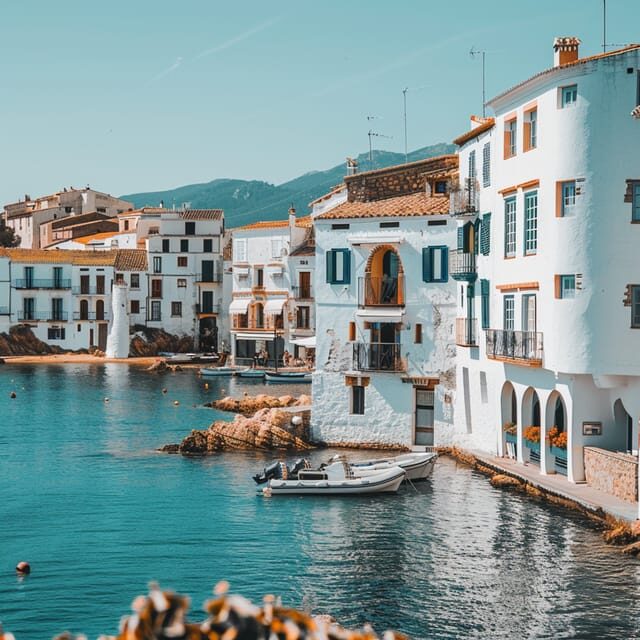

Modern travel planning rewards coverage. Maps fill with saved restaurants, museums and viewpoints; a successful day can begin to look like a chain of completed pins. The trouble is that movement consumes the very attention a traveler hopes to give. Time is spent comparing routes, watching departure boards and calculating whether one more attraction will fit before dinner.
A neighborhood-first trip starts with a different question: what could become familiar here? Choose a compact base with ordinary life around it — a bakery, a market, a park, a useful transit stop — and let repetition do some of the work. Visit the same café twice. Walk one street early and again after dark. Learn where the morning shade falls and when the corner shop becomes busy.
Trade coverage for texture
Familiarity changes what you notice. On the first pass, a square is architecture. By the third, it has a rhythm: deliveries before breakfast, older neighbors after lunch, children and bicycles toward evening. None of this appears on a highlights list, yet it often becomes the most durable memory of a trip.
Set one anchor each day — a museum booking, a long lunch or a walk with a local guide — and protect the hours around it. A useful rule is to keep most plans within a half-hour walk of your base. The limit is not a punishment. It removes decisions, makes room for detours and allows the day to stretch when something is worth staying for.
Depth is not the opposite of discovery. It is discovery with enough time to notice.
Spend closer to where you stay
A smaller radius can also make spending more deliberate. Independent grocers, neighborhood restaurants and repair shops tend to reveal more about local priorities than businesses built mainly for passing visitors. Ask simple questions, return when service is kind and buy fewer things with a clearer story behind them.
This approach does not require romanticizing every street or refusing famous sights. It simply puts the landmark inside a fuller day. The result is travel that feels less like collecting evidence and more like participating, briefly and respectfully, in the life of a place.
Choose a base with practical life around it
A neighborhood travel plan succeeds or fails with the base. Look beyond a photogenic street and check the ordinary infrastructure: frequent transit, a grocery store, breakfast options, a pharmacy and routes that feel comfortable after dinner. Read recent accommodation reviews for noise, stairs and access rather than only décor. A beautiful room that requires two transfers before every outing can turn a slow travel guide into a daily commute.
Map three distances before booking: the walk to the nearest useful station, the trip to the main sight you care about and the route from the airport or railway terminal. Then inspect the blocks immediately around the property at street level. This does not eliminate surprises, but it replaces a vague idea of “central” with a practical understanding of how the stay will work.
Build days around one anchor
Give each day one fixed purpose and three optional layers. The anchor might be a timed museum entry or a reservation. The first layer is nearby and easy — a market, a church, a waterfront path. The second is a meal or rest. The third is a farther possibility you can drop without regret. This structure protects spontaneity because the day still makes sense if weather, energy or a conversation changes the plan.
Use opening hours as boundaries, not as a challenge to fit everything in. Group places by geography, then choose the one that matters most. Save the rest on a map for another day or another visit. The discipline is especially useful in large cities, where crossing town several times can consume the hours that looked free on paper.
Travel slowly without becoming a spectator
Respectful observation includes awareness of who lives in the place. Keep apartment-building entrances clear, follow local rules for photography and do not turn ordinary residents into scenery. In crowded neighborhoods, consider a licensed local guide whose work explains the area’s history and supports local knowledge rather than a tour organized around social-media backdrops.
Spending close to your base can deepen the trip, but avoid treating every interaction as content. Learn a few courteous phrases, ask before photographing people or interiors and accept that some places are not arranged for visitors. Slow travel is not entitlement to intimacy. It is the willingness to move with enough patience to notice context and enough humility to leave some of it alone.
A repeatable three-day rhythm
On the first day, orient: walk the main streets, locate transit and eat somewhere simple. On the second, go deep: spend the morning at the primary sight, then return by a different route with no second reservation. On the third, revisit: return to one café or shop, explore the edge of the neighborhood and make notes about what you would do with another day.
This rhythm works for a weekend and scales to a week. Add one farther excursion after you understand the local transport pattern. Keep a paper or offline map in case a battery dies, and write down the address of where you are staying. The practical preparation is small; the payoff is more attention for the place itself.
Before leaving, record a few details that no ranking could provide: the hour a square became lively, the route you preferred, the meal you would order again and the place you chose not to photograph. Those notes make future neighborhood travel more informed and preserve the trip as an experience rather than a completed list.
Practical visitor guide: build a neighborhood day
A slow itinerary still needs structure. Use this checklist after choosing a city and neighborhood, then confirm local details on official attraction and transit sites before setting out.
Opening hours
Check the anchor sight, market and restaurant separately. Museums may close one weekday, markets often finish by early afternoon and kitchens may pause between lunch and dinner.
Best time and day
Start the principal sight at opening on a weekday, then return to the streets after the commuter rush. Keep the busiest weekend hours for parks, waterfronts or untimed walks.
Tickets
Reserve only the capacity-limited attraction that defines the day. Buy through the venue’s official channel, save the confirmation offline and leave enough time for security and bag checks.
Getting there
Choose a base within a short walk of frequent public transport. Save the route from the airport or station, the last useful evening service and one licensed taxi option before arrival.
What to expect
Expect ordinary urban rhythms rather than nonstop spectacle: deliveries, school runs, midday closures and busy evening squares. One museum, a meal and several hours on foot is a full day.
Safety and etiquette
Keep valuables close in dense transit areas, follow posted photography rules, lower your voice near homes and places of worship, and never block doorways while consulting a map.
What to bring
Wear broken-in shoes; carry water, weather protection, a charged phone, an offline map, a small power bank and the written address of your accommodation.
How long to spend
Give one compact district at least half a day; two or three days reveal its morning, evening and weekday character. Add a cross-city excursion only after the local routine makes sense.
Why this matters
Neighborhood-scale travel changes who receives the traveler’s time and money. A slower radius makes ordinary businesses, public space and local rhythms visible, replacing the destination checklist with a more honest encounter. It is also a practical answer to overtourism: depth can distribute attention away from the few landmarks designed to absorb everyone.
How we got here
Mass tourism was built around limited vacation time, cheap transport and guidebook highlights, then intensified by social platforms that reward recognizable proof of arrival. The neighborhood approach echoes older forms of travel—walking, extended stays and repeated local routines—but adapts them to shorter modern trips by narrowing scope rather than lengthening the calendar.
Who benefits, who loses and what critics say
Independent cafés, markets and guides can benefit when spending leaves the landmark corridor. Travelers gain memory and confidence, while tour operators built around rapid attraction-hopping may lose demand. Critics rightly note that “living like a local” can become a self-flattering pose; the better goal is not imitation but respectful attention, including acceptance that residents do not exist to perform authenticity.
What the comparison implies
A ten-stop day maximizes places recorded; a two-stop day maximizes time per place. That is not automatically superior, but it changes the unit of value from quantity to understanding. The relevant data are personal: transit time, repeat visits, conversations and money kept in the chosen area—measures a highlight count ignores.
What happens next
Cities facing crowd pressure will increasingly steer visitors toward districts and off-peak hours. The best outcome is dispersal that supports local economies without turning every residential street into a tourism product; the worst simply moves congestion elsewhere. Travelers should watch how neighborhoods respond and choose invitations—public markets, cultural programs, local tours—over intrusion.