Politics / Courts — Twelve days before Election Day, the justices sided with New Hampshire officials in an emergency fight over whether a college ID can help prove who a voter is. The underlying law was never blocked — what changed on Thursday is that poll workers can no longer consider a student ID at all, even as one piece of evidence among others.
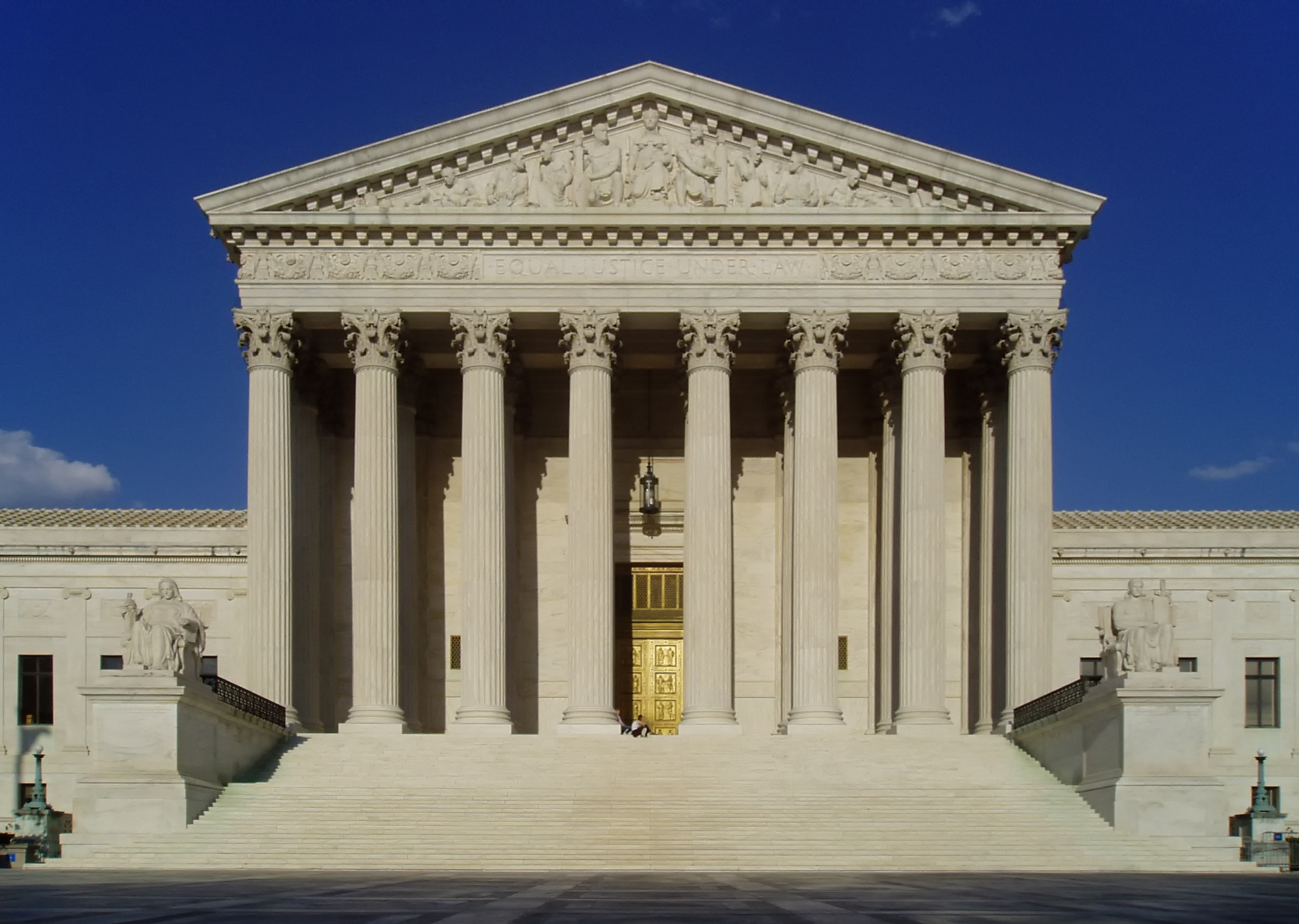
WASHINGTON — The New Hampshire student ID voting fight reached the Supreme Court this week, and the state won. In a brief, unsigned emergency order issued on Thursday, October 22, the justices allowed New Hampshire to fully enforce its ban on student identification cards at the polls for the November 3 midterm elections, pausing a federal judge’s ruling that would have let poll workers consider a student ID as one piece of evidence when a voter has no government-issued ID. The case is Scanlan v. Coalition for Open Democracy, No. 26A512, and the order arrives twelve days before voters in New Hampshire — including students at Dartmouth, the University of New Hampshire and dozens of smaller colleges — cast ballots in one of the Senate races that will decide control of the chamber.
The court’s reasoning fit in a paragraph. Invoking what election lawyers call the Purcell principle, the justices wrote that “lower federal courts should ordinarily not alter the election rules on the eve of an election,” and that the district court “did not point to anything that would justify deviating from that principle.” Justice Ketanji Brown Jackson, who handles emergency filings from the First Circuit and referred the application to the full court, was the only justice to publicly dissent. The district judge, she argued, had not changed the rules at all — he had corrected the state’s public misstatement of them. “I respectfully dissent because — even, and perhaps especially, when an election is looming — I would not disturb a clearly justifiable federal-court order issued to ensure that the public receives accurate information about a State’s electoral processes,” she wrote, in an account of the order reported by CNN and USA Today.
What the Court actually decided — and what it did not
The first thing to understand about Thursday’s order is how narrow the legal question had become by the time it reached Washington. New Hampshire’s underlying statute was not blocked by anyone. House Bill 323, signed by Republican Governor Kelly Ayotte on April 3 and in effect since June 2 after passing on party lines, removed student IDs from the list of identification a voter can present to receive a ballot. Under the law, the IDs that work on their own are a driver’s license or state nondriver ID card from any state, a United States armed services ID, or a United States passport or passport card. A federal judge left that core prohibition in place. So did the appeals court. No court, at any point in this litigation, ordered New Hampshire to accept a student ID as stand-alone proof of identity for this election.
The fight was over something smaller and, to the people administering the election, thornier: the law’s “safety valve.” New Hampshire law has long allowed a voter who lacks an approved ID to try to prove identity through other means, with a poll worker weighing the evidence case by case. Secretary of State David Scanlan, a Republican, issued guidance reading HB 323 to shut that door where student IDs are concerned — barring election officials from considering a student ID even as supporting evidence, and later applying the same restriction at voter registration, according to the New Hampshire Bulletin’s reporting as summarised by the Daily Caller. The Coalition for Open Democracy, a voting-rights group, sued, arguing the change discriminated against younger voters and burdened their right to vote. On October 2, United States District Judge Joseph Laplante upheld the statute but blocked Scanlan’s directive “to the extent it prohibits or discourages election officials from considering student IDs,” writing that “the State has offered no independent justification for that broader prohibition.” He also found the change had already kept one student from voting.
The First Circuit Court of Appeals declined on October 14, by a 2–1 vote, to pause Laplante’s ruling. New Hampshire, backed by the Republican National Committee, filed its emergency application at the Supreme Court the next day, arguing that the October 2 order injected uncertainty into procedures the state had been training officials and printing guides for since April, less than three weeks before the election. Thursday’s stay grants that request. It holds while the state’s appeal proceeds in the First Circuit and through any petition asking the Supreme Court to decide the merits, and it ends automatically if the Court refuses review. It is not a ruling that HB 323 is constitutional; the lawsuit continues in district court, and the merits question — whether the state may treat student IDs as uniquely suspect among non-government IDs that poll workers may still weigh case by case — remains open for a future election cycle. For November 3, though, the practical answer is settled: in New Hampshire, a student ID proves nothing at the polls.
Why this matters
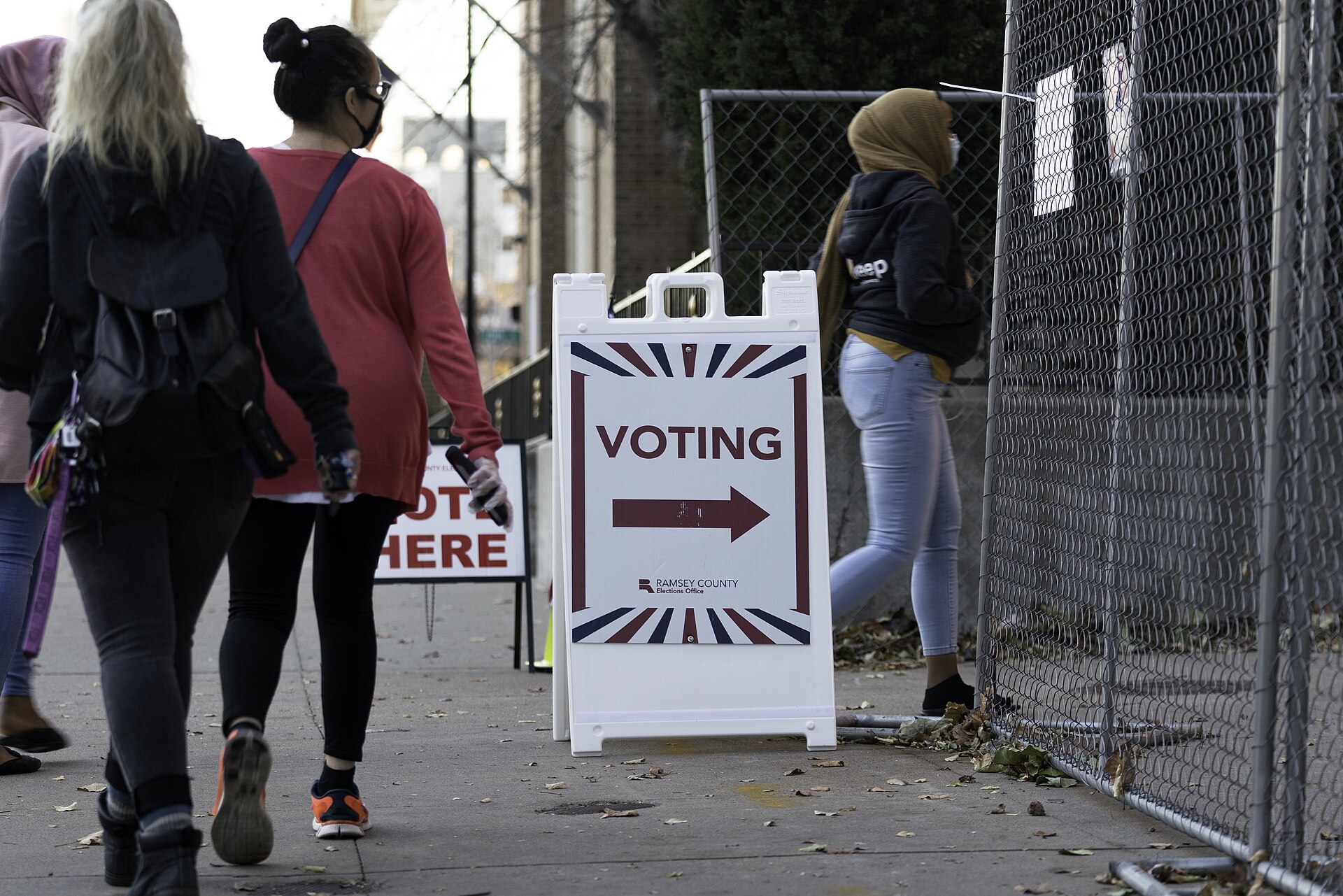
Start with the arithmetic of the state itself. New Hampshire’s open Senate seat — Democratic Senator Jeanne Shaheen is retiring — pits former Republican Senator John E. Sununu against Democratic Representative Chris Pappas in a race the Cook Political Report rates “Lean Democrat” after polling that moved from a dead heat toward Pappas. It is exactly the kind of contest where a few thousand young voters can matter, in a state with an unusual concentration of them: Dartmouth in Hanover, the University of New Hampshire in Durham, Plymouth State, Keene State and a long tail of colleges whose students are disproportionately likely to hold a campus card and nothing else from the accepted list. A recent CNN poll found Democrats leading Republicans by 31 points among younger adults nationally, which is why both parties read a student-ID rule as something more than an administrative detail.
Then there is the doctrine, which will outlast this race. Purcell v. Gonzalez, decided in 2006, began as a caution against voter confusion; two decades on, it functions as a ratchet. The closer an election gets, the harder it becomes for a federal court to correct anything about how it is run — including, on Jackson’s account, a state’s own misdescription of its rules. Her dissent and the majority’s one paragraph are really arguing about what counts as a “change.” If a secretary of state’s guidance goes beyond the statute in April, and a judge trims it back to the statute in October, which of those two acts altered the election rules on the eve of the election? The majority’s answer treats the last court order as the disturbance. The dissent treats the guidance as the disturbance and the order as the repair. Lawyers for the Coalition for Open Democracy made the same point after the ruling, calling the stay itself an injection of confusion — “precisely what the Purcell principle is supposed to prevent” — and an authorisation of “an unconstitutional policy that will deprive young voters of their right to vote.” Every future eve-of-election case, in every state, will now be argued inside that framing dispute.
The politics, stated plainly by both sides, are not subtle. Attorney General John Formella praised the order: “New Hampshire has a responsibility to protect the integrity of its elections and ensure that election laws are applied as written,” calling it “an important victory for our efforts to defend those laws and prevent last-minute court orders from creating uncertainty for voters and election officials.” State Representative Ross Berry, who chairs the House Election Law Committee, had called Laplante’s order the work of “another Liberal judge,” according to the Boston Globe. Democratic House Minority Leader Alexis Simpson answered that the law was an attempt by Republicans “to put their finger on the electoral scale”: “Eligible voters have a fundamental right to cast a ballot, and deliberately removing ways to prove identity is voter suppression.” The Coalition’s underlying legal point is narrower than the rhetoric and worth keeping in view: the state, in the district court’s words, identified no security or integrity concern specific to student ID cards that does not also apply to other non-governmental documents poll workers may still consider under the safety valve. The state’s answer, in its emergency filing, was less about the cards than about the calendar — and on the calendar, it won.
The practical question: what should a New Hampshire student do now?
There are eleven days between this order and Election Day, and the useful response is paperwork, not outrage. A student ID — on its own, or offered as supporting evidence under the safety valve — will not be considered by New Hampshire poll workers on November 3. What will be accepted standing alone is a driver’s license or state nondriver ID from any state, a military ID, or a United States passport or passport card. Students who have one of those should bring it and check their registration now rather than on Election Day morning. Students who have none of them should call their town or city clerk this week, before the lines form, and ask exactly what their polling place will accept and what the challenged-ballot and affidavit procedures are in their town — because the remaining routes run through local officials, and local officials are reachable in a way the Supreme Court is not. The same advice, it should be said, applies to any voter whose wallet is thin on government plastic, student or not.
What happens next
Legally, the case goes back to the First Circuit, where the state’s appeal of Laplante’s October orders will be briefed and argued on a normal timetable — which is to say, after the election it concerns. The stay stays in force through that appeal and any Supreme Court petition, so even a First Circuit win for the Coalition would arrive too late for November 3. The district-court lawsuit continues underneath it all, and the merits — discrimination, burden, and the adequacy of the state’s justification for singling out student cards — will be decided for 2027 and beyond, not for this cycle. Politically, watch two things. First, whether turnout operations on New Hampshire campuses convert the ruling into an organising tool, as voting-rights groups have done after similar orders elsewhere; a rule change twelve days out cuts both ways, as a barrier and as a story. Second, whether other states with student-ID exclusions and pending challenges cite Scanlan in their own emergency filings before November 3 — the order is unsigned and unexplained beyond its Purcell paragraph, but emergency orders have a way of becoming the argument. The broader midterm picture, meanwhile, is being shaped by the same voters this case is about: our coverage of the Justice Department’s refusal to rule out blocking state election certifications and of consumer sentiment sitting near a record low eleven days before the vote fills in the rest of the landscape. What Thursday settled is only this: when New Hampshire votes, the card in a student’s pocket that says who they are will not count as proof of it.
Sources
Supreme Court of the United States, order and dissent in Scanlan v. Coalition for Open Democracy, No. 26A512 (October 22, 2026); CNN, “Supreme Court says New Hampshire can limit use of student IDs for voting” (October 22, 2026); USA Today, “Supreme Court sides with GOP in New Hampshire student ID voting fight” (October 22, 2026); Daily Caller, “SCOTUS Announces Decision That Could Give GOP An Edge In Closely Watched NH Senate Race” (October 23, 2026), summarising Boston Globe, Valley News and New Hampshire Bulletin reporting; SCOTUSblog case coverage of No. 26A512.