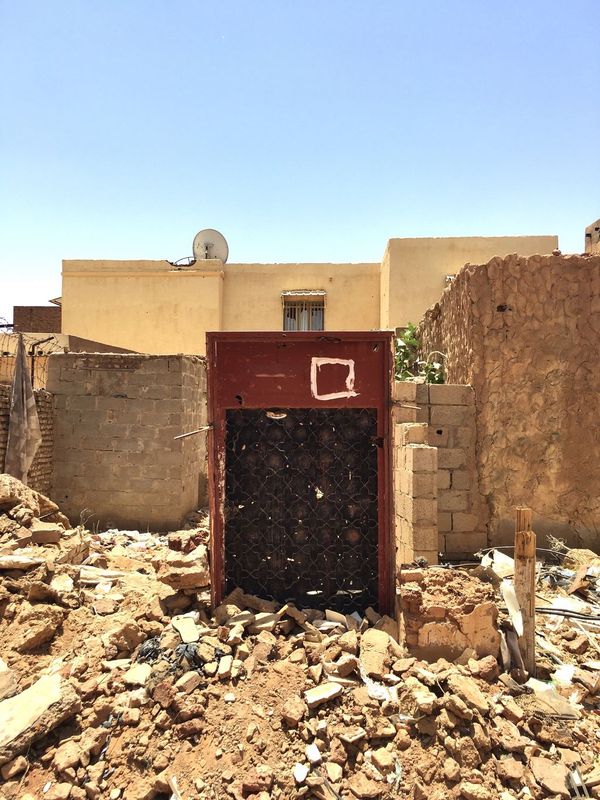
KHARTOUM — A drone swarm struck Khartoum and Omdurman between about 2:00 a.m. and 4:30 a.m. local time on Sunday, November 22, killing children in residential neighbourhoods and causing major damage to a civilian neighbourhood and to United Nations premises while staff were inside, in attacks the UN said were reportedly launched by the Rapid Support Forces (RSF). Denise Brown, the UN Resident and Humanitarian Coordinator in Sudan, condemned the strikes in a statement from UN OCHA Sudan, and her condemnation was amplified on Monday, November 23, by Massad Boulos, the US Senior Advisor for Arab and African Affairs. The casualty toll is disputed. Al Jazeera and Sudan Tribune reported at least four people killed; Radio Dabanga reported five children killed and at least 10 people injured. Those accounts overlap in geography but differ in their figures and details, and Signal Post News does not merge them into a single confirmed toll.
Track it live: Live wars tracker · Africa wars tracker
What happened before dawn on Sunday
Air defences over the airport and Omdurman
The strikes unfolded over roughly two and a half hours in the middle of the night. Witnesses cited by Sudan Tribune said Sudanese air defences intercepted drones apparently targeting Khartoum International Airport and a military facility in Omdurman, the capital’s twin city across the Nile. Interceptions were also reported in the Arkawit neighbourhood of Khartoum, including one drone carrying unexploded explosives — a detail that underlines how much of the swarm was aimed, or at least fell, over residential districts rather than the military targets its operators may have intended. Despite the interceptions, drones and projectiles reached homes in Omdurman and Khartoum, and the deadliest impacts were not at the airport or the military facility but in the streets around them.
The UN premises were occupied when they were hit
According to the UN OCHA Sudan statement, the attacks — described by Brown as “reportedly launched by the RSF” — caused major damage to a civilian neighbourhood and to UN premises while staff were inside the building. No UN staff deaths were reported in the statement. The significance of the location is a matter of record rather than interpretation: it was the first reported attack on a UN compound in Khartoum since the Sudanese army recaptured the capital in May 2025, a milestone the army and its aligned authorities had presented as the moment the capital began to stabilise. A drone strike that reaches a staffed UN building in that capital reaches the institution the rest of the humanitarian operation depends on for presence, coordination and, not least, witness.
Two tolls, reported separately
Because the accounts differ — in the number of dead, in who they were and in where exactly they died — they are set out here one by one, attributed to the outlets that reported them. Neither account has been independently reconciled with the other, and readers should treat the overall toll of Sunday’s strikes as disputed until a verified count exists.
Al Jazeera and Sudan Tribune: at least four people killed
Al Jazeera, in reporting carried alongside Sudan Tribune’s coverage, put the toll at at least four people killed. Three of the dead were members of one family, killed when a drone struck their home in northern Omdurman; nine people were wounded in that account. The fourth death was a 10-year-old child killed in Jebel Aulia, south of the capital. On this account, then, the confirmed floor is four dead and nine wounded, with the family in northern Omdurman accounting for three of the four deaths.
Radio Dabanga: five children killed, at least 10 injured
Radio Dabanga’s account is different in both scale and composition: five children killed and at least 10 people injured. Four of the children, aged between 7 and 18, were from a displaced family originally from En Nuhoud in West Kordofan; they were killed when a drone crashed into a house in Block 95 of the El Thawra neighbourhood in Omdurman at dawn. The fifth child, a 10-year-old, was killed in the El Assal area of Jabal Awliya at about 5:15 a.m. Radio Dabanga also reported that a projectile hit a family home in Block 68 of the Arkaweet neighbourhood in Khartoum, damaging the building and property there. On this account, every one of the dead was a child, and four of them had already been displaced once — from West Kordofan to Omdurman — by the same war.
The two accounts are not necessarily irreconcilable: they may describe overlapping incidents with different levels of access and verification in different districts of a metropolitan area of millions, struck in the dark over several hours. But “not necessarily irreconcilable” is not the same as confirmed, and the difference between “at least four killed, including a child” and “five children killed” is not a rounding error. It is the difference between two versions of the same night, and it is reported here as exactly that.
The condemnation from the UN and Washington
Brown’s statement went beyond the night’s events to the pattern she said they belong to. “Nearly every day, strikes like these, using foreign-supplied drones, are killing civilians across Sudan and impeding humanitarian work,” she said. She called for an end to the flow of weapons — particularly drones — into Sudan, and for a swift humanitarian truce. Both halves of that appeal matter. The weapons-flow demand names the supply chain, not only the operator, as the problem; the truce demand concedes that, absent one, the strikes will continue to be a daily fact rather than an exceptional one. Boulos, the US senior advisor for Arab and African affairs, amplified the OCHA statement on Monday, putting the weight of the United States behind the UN’s wording — including its careful attribution of the attacks to the RSF as “reportedly” responsible, a formulation Washington chose to repeat rather than harden.
Why this matters
Start with the map. Khartoum was retaken by the Sudanese army in May 2025 and has been presented by the army-aligned authorities ever since as a capital stabilising — the seat of a state reasserting itself. A pre-dawn swarm that kills children in Omdurman, damages homes in Khartoum and hits a staffed UN building does not undo that recapture militarily. It does something else: it demonstrates that the RSF, pushed out of the capital on the ground, retains the ability to reach it from the air, at will and at scale. Control of the streets and control of the sky have become two different facts, and Sunday’s strikes were a demonstration of the second.
It matters, second, because of what the UN’s own numbers say about how this war now kills. The UN Human Rights Office reported on November 17 that drones caused more than 1,630 of the more than 2,230 confirmed civilian deaths in Sudan between January and the end of October 2026 — close to three-quarters of the verified civilian toll. When one weapon system accounts for that share of the killing, the diplomacy follows the weapon. That is why Brown’s statement targeted the flow of foreign-supplied drones and not only the force accused of flying them: the supply chain — who builds the drones, who sells them, who lets them transit — is now the point of maximum diplomatic leverage, and Sunday’s strikes will be used to press it.
Third, the night carried a regional risk that earlier strikes on the capital did not. Sudanese army sources say the drones came from an airport in Ethiopia — a claim examined in detail below, unverified and denied in its general form by Addis Ababa. If the allegation hardens into policy in Khartoum, a civil war becomes a state-to-state crisis on top of itself. And fourth, the immediate fork is plain: either the condemnation converts into the humanitarian truce Brown demanded, with the drone supply chain as its first subject, or the pattern of late October — when RSF-attributed strikes hit the Al-Markhiyat power substation near Omdurman and the Um Dabakir power plant — extends further into the capital’s infrastructure and homes. Nothing in Sunday’s reporting suggests the second path needs any new capability. It needs only the absence of the first.
The Ethiopia allegation: claimed, denied and unverified
Sudanese army sources told media outlets that the drones that struck the capital originated from Bahir Dar airport in Ethiopia. That claim has not been independently verified, and Signal Post News reports it as a claim, not a finding. Ethiopia has previously denied claims that its territory is used for RSF operations. The allegation did not begin on Sunday. Sudan’s army-aligned Transitional Sovereignty Council said in early November that it had documented 70 attacks involving 187 drones allegedly launched from Ethiopian territory between mid-February and late October 2026, claiming 484 civilian casualties and 176 soldiers killed. Those figures are Sudanese claims, attributed here to the body that issued them; they have not been independently verified either. Sudan raised the allegation at the UN Security Council in early November, and the diplomatic temperature between the two capitals was already falling before Sunday — as Signal Post News reported when Sudan and Ethiopia shut each other’s border consulates amid reciprocal diplomat expulsions. Sunday’s strikes give Khartoum a fresh and grievous occasion to press the Bahir Dar allegation; they do not, by themselves, make it true, and the distinction is the whole of the matter for any reader weighing the risk that this war regionalises.
Context: a war in its fourth year, fought increasingly by drone
The war between the Sudanese Armed Forces and the RSF began in April 2023, consuming first the capital, then Darfur and the Kordofans, and it is now in its fourth year. Its humanitarian ledger is the largest displacement crisis in the world: UNHCR recorded about 8.6 million internally displaced people in Sudan as of October 31, 2026 — a figure that includes the family from En Nuhoud whose four children, on Radio Dabanga’s account, were killed on Sunday in the Omdurman house they had fled to. The war’s method has changed as it has lengthened. The UN Human Rights Office’s November 17 report — the subject of Signal Post News’s earlier coverage, “Sudan Drone War Deaths: UN Says Drones Caused Nearly Three-Quarters of Civilian Killings This Year” — documented more than 2,230 confirmed civilian deaths from January to the end of October 2026, with drones responsible for more than 1,630 of them. The late-October strikes on the Al-Markhiyat substation near Omdurman and the Um Dabakir power plant, attributed to the RSF, showed the campaign reaching the power grid that the capital’s remaining residents and its returning displaced families depend on. Sunday’s swarm sits on that trajectory: from front lines, to infrastructure, to the capital’s neighbourhoods and the UN building inside them.
What happens next
The declared path is the truce. Brown called for a swift humanitarian truce and an end to the weapons flow; Washington amplified her within a day. A truce process that takes drones as its first subject — their supply, their launch sites, their operators — would be the first negotiation in this war aimed at the weapon doing most of the verified killing. The countervailing evidence is the calendar: strikes described by the UN as a near-daily occurrence, an infrastructure campaign already under way in October, and now a swarm over the capital that neither air defences nor the fact of the army’s recapture prevented. Watch three things. First, whether any verified, reconciled toll of Sunday’s strikes emerges — and from whom. Second, whether Sudan presses the Bahir Dar allegation at the Security Council with evidence it is willing to show, and how Ethiopia answers. Third, whether the next swarm targets the grid again. The answers will say whether Sunday was the night the drone war over Khartoum became a diplomatic emergency, or simply the latest entry in a ledger the UN says grows nearly every day.
Read next: Sudan Drone War Deaths: UN Says Drones Caused Nearly Three-Quarters of Civilian Killings This Year · Sudan and Ethiopia Shut Each Other’s Border Consulates as War Accusations Deepen
Sources
Sources: UN OCHA Sudan, statement by UN Resident and Humanitarian Coordinator Denise Brown, November 22–23, 2026 (the attacks reportedly launched by the RSF; major damage to a civilian neighbourhood and to UN premises while staff were inside; the first reported attack on a UN compound in Khartoum since the army recaptured the capital in May 2025; Brown’s call to end the flow of weapons, particularly drones, into Sudan and for a swift humanitarian truce), amplified on November 23, 2026 by US Senior Advisor for Arab and African Affairs Massad Boulos; Addis Standard, November 23, 2026 (Sudanese army sources’ claim that the drones originated from Bahir Dar airport in Ethiopia, reported as unverified, and Ethiopia’s previous denials that its territory is used for RSF operations; the Transitional Sovereignty Council’s early-November claims of 70 documented attacks involving 187 drones allegedly launched from Ethiopian territory between mid-February and late October 2026, with 484 civilian casualties and 176 soldiers killed claimed, and Sudan’s raising of the allegation at the UN Security Council); Radio Dabanga, November 22, 2026 (five children killed and at least 10 injured: four children aged 7 to 18 from a displaced family from En Nuhoud, West Kordofan, killed in Block 95 of El Thawra, Omdurman; a 10-year-old killed in El Assal, Jabal Awliya, at about 5:15 a.m.; a projectile hitting a family home in Block 68, Arkaweet, Khartoum); Al Jazeera, November 22, 2026 (at least four people killed: three members of one family in northern Omdurman, nine wounded, and a 10-year-old killed in Jebel Aulia); Sudan Tribune / AFP reporting (witness accounts of air-defence interceptions of drones apparently targeting Khartoum International Airport and a military facility in Omdurman, and interceptions in the Arkawit neighbourhood including a drone carrying unexploded explosives); UN Human Rights Office, Sudan report, November 17, 2026 (drones caused more than 1,630 of more than 2,230 confirmed civilian deaths from January to end-October 2026); UNHCR displacement figures as of October 31, 2026 (about 8.6 million internally displaced people). The Al Jazeera/Sudan Tribune and Radio Dabanga casualty accounts are reported separately throughout this article and are not merged; the Bahir Dar origin claim and the Transitional Sovereignty Council’s figures are Sudanese claims that have not been independently verified.