Topicssudan funding cuts humanitarian crisissudan aid funding collapse 2026IRC sudan half million servicessudan cholera funding crisisdarfur famine malnutrition clinicssudan 33 million aid needus funding cuts sudan aid
The Sudan funding cuts have become a humanitarian crisis in the present tense. As of October 1, 2026, almost half a million people across Sudan have lost access to lifesaving health care, nutrition support, clean water and protection services, after U.S. funding ended in July 2026 and the additional bridge funding the International Rescue Committee sourced to keep programming alive in the interim ran out — with no resources to fill the gap. The announcement came in an IRC press release issued via ReliefWeb from Nairobi on October 1.
Three and a half years into the war between the Sudanese Armed Forces and the Rapid Support Forces, 33.7 million people in Sudan need humanitarian aid — a figure already documented in our earlier coverage, and the backdrop against which this week's collapse must be read. Diseases such as cholera are spreading even as the clinics built to fight them close their doors.
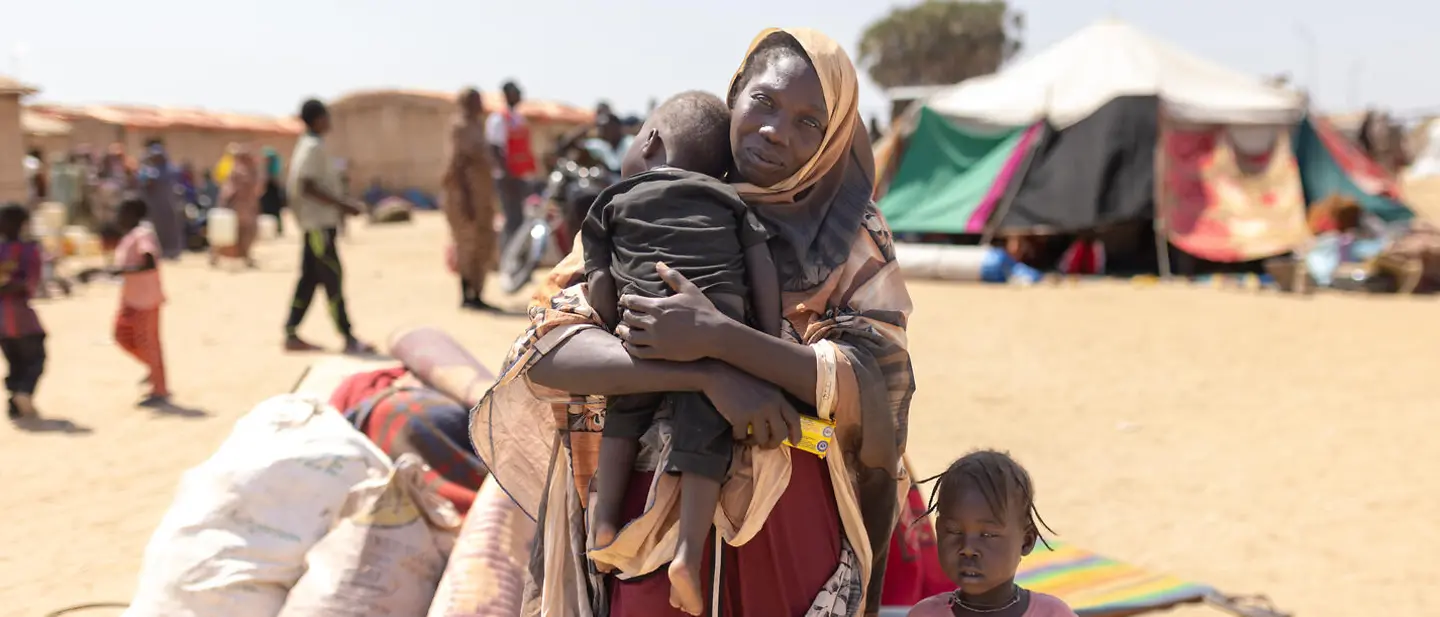
Why this matters: donor arithmetic meets the world's largest displacement crisis
Sudan is already the world's largest displacement crisis. Against 33.7 million people in need, half a million losing services in a single funding cliff is not a rounding error — it is roughly one in every sixty-seven people in need, cut off at once. The IRC's programs covered Blue Nile, Al Jazirah, River Nile, White Nile, Khartoum, West Darfur and North Darfur states: health care, nutrition treatment, clean water, sanitation and protection for displaced people, returnees and host communities. When a single donor's withdrawal erases services across seven states, the story is not only about Sudan — it is about how concentrated humanitarian funding has become, and how brittle.
How the money ran out
The sequence is stark. U.S. funding ended in July 2026. The IRC found bridge funding to maintain programming in the interim — a stopgap, not a solution. That bridge funding has now run out, and there is nothing behind it. IRC Director for East Sudan Mohammed Mahdi put it this way: "We have spent over 3 years watching what happens when the world looks away from Sudan... right now, in the middle of one of the world's largest humanitarian crises on earth, we're being forced to close the doors on people who have nowhere else to turn. Donors have the power to change that." Note what this is: a donor-policy consequence, not a battlefield event. No front line moved. The clinics closed anyway.
Darfur takes the hardest hit
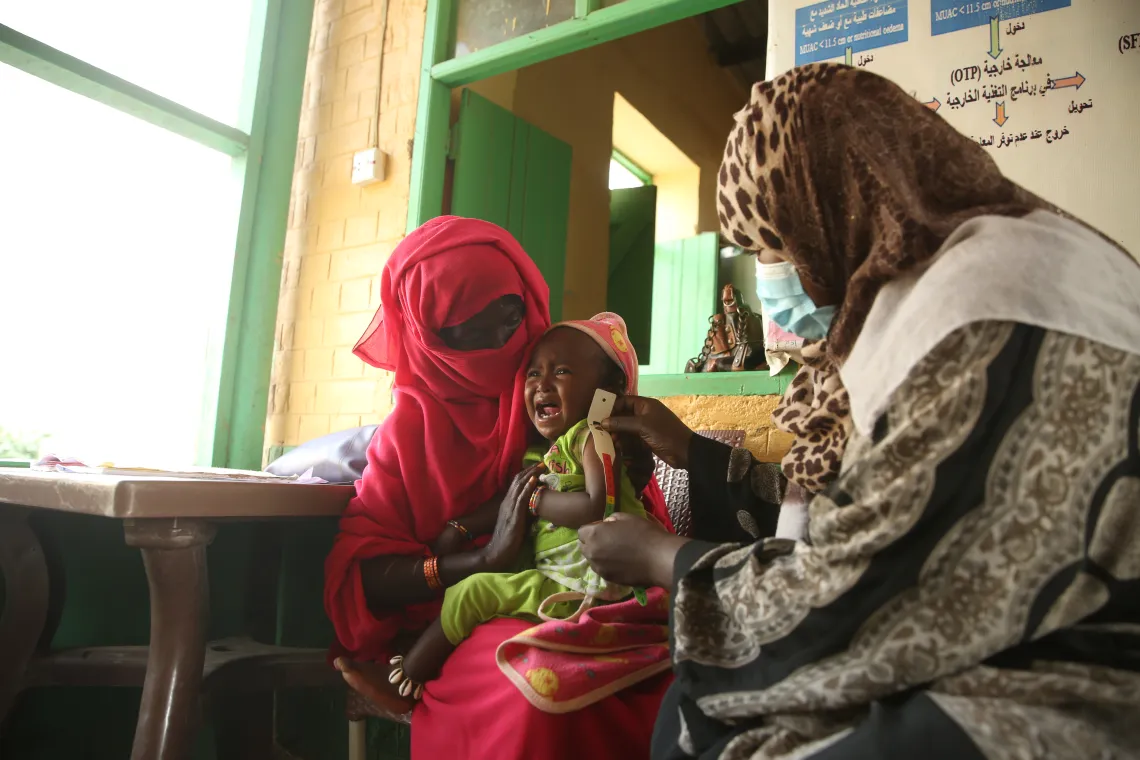
The sharpest edge of the cuts falls on Darfur, where malnutrition rates are among the worst in Sudan and famine conditions have been confirmed in parts. Fourteen facilities and mobile clinics providing care to an average of 16,900 patients and 6,381 young children a month will disappear — just as needs spike. Do the monthly maths: that's roughly 23,000 patient contacts a month, the majority of them children, vanishing from the hungriest corner of the country. Cholera, already spreading amid the funding collapse, now meets a population with fewer clinics, less clean water and less nutrition support — the three things that keep a cholera outbreak from becoming a cholera catastrophe.
The wider donor-retreat pattern
Sudan is not an isolated case. The UNHCR's Yemen response plan is less than 20% funded — a different theatre, the same donor-retreat pattern. The political backdrop compounds the damage: the U.S. State Department holds that neither the SAF nor the RSF represents legitimate governance; the RSF has set up a parallel administration in Nyala; and the U.S. 90-day ceasefire proposal brokered by Massad Boulos has stalled after Washington withheld a visa for junta leader Abdel Fattah al-Burhan. Humanitarian leverage is evaporating at precisely the moment the guns are not. (Related: UNHCR chief on Sudan's truce and 117 million displaced; the withheld Burhan visa and the stalled ceasefire plan; Trump's Sudan peace plan.)
What the next three months hold
Three scenarios. First, donors partially refill the gap and some clinics reopen — but reopening is slower than closing, and staff once dispersed are hard to reassemble. Second, the gap persists through the hunger season: unfunded cholera plus confirmed famine conditions in parts of Darfur, with 16,900 monthly patient contacts gone, implies a measurable rise in preventable deaths among children under five — the group the closed nutrition programs served. Third, the humanitarian collapse feeds the war itself: with aid leverage gone, the stalled ceasefire diplomacy loses one of its few remaining instruments, and the SAF–RSF war grinds into its fourth year with even less of a civilian safety net. The IRC's figures are the IRC's; but the arithmetic they describe — half a million people, seven states, one funding cliff — does not depend on anyone's narrative. It is simply what happens when the world looks away, priced in clinics.
Sources: International Rescue Committee press release via ReliefWeb (Nairobi, October 1, 2026); UNHCR; U.S. State Department (via prior Signal Post News reporting). IRC's figures are reported as IRC's claims.