Nasdaq −2.6%, worst day since June / Meta's AI bill spooks Wall Street as oil tops $113 and bonds rally
Track it live: Live stock market tracker · Live oil price tracker · Live crypto tracker
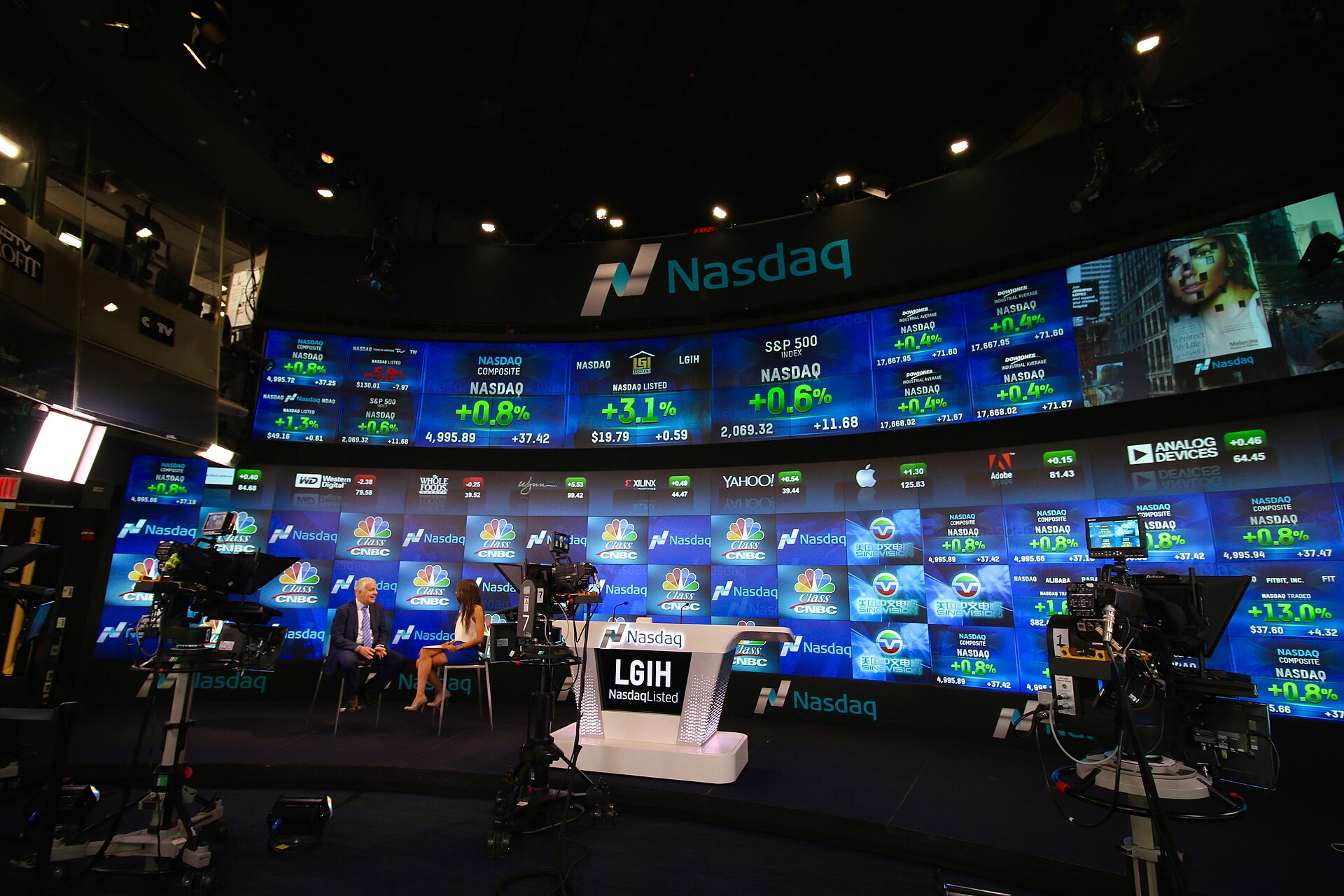
The close in numbers: the Nasdaq Composite lost 694 points, or 2.6 percent, to finish at 26,008.86 — its biggest one-day drop since June — and the Nasdaq-100 fell 2.8 percent. The S&P 500 shed 93.74 points, or 1.21 percent, to 7,663.43. The Dow, with barely any exposure to the day's casualties, inched up 11.89 points, or 0.02 percent, to 52,867.98, and the small-company Russell 2000 added 0.11 percent to 2,784.04. The VIX volatility index jumped 14.4 percent to 19.08. The split with Wednesday's rally, which had carried the S&P 500 to within 0.8 percent of its record, could hardly have been sharper: Thursday's selling was aimed with unusual precision at the artificial-intelligence trade that has powered the year, and the index is still up roughly 11.5 to 11.8 percent for 2026 — but now sits about 2.2 percent below its October 6 record high, in the wrong direction.
Meta's $9.9 billion legal bill — and the AI tab behind it
The day's catalyst reported after Wednesday's close. Meta beat on revenue, with $64.6 billion against expectations, but its earnings per share printed $3.83 against a $6.54 estimate — a gap explained by a $9.9 billion legal settlement that, excluding the charge, would have put earnings at $7.40 a share. What the market actually punished, though, was the future: Meta committed to billions more in artificial-intelligence spending and announced new non-voting shares, reviving the question hanging over this entire earnings season — how large the AI bill can grow before shareholders start asking what it buys. Meta shares fell 7 percent. The reaction extended a pattern visible since before the open, when futures slid on AI-spending worries: investors are no longer paying for AI ambition on faith; they are asking each company, one earnings report at a time, to show the return.
Chips led the fall; Tesla slipped on a beat
If Meta lit the fuse, semiconductors carried the blast. The PHLX Semiconductor index fell 6.7 percent and the SOXX semiconductor fund 6.5 percent. Lam Research dropped 10.3 percent on a supply-constrained outlook, AMD fell 8.2 percent, Micron 6.3 percent, Nvidia 4.4 percent and Broadcom more than 4 percent. The AI-infrastructure names that had run hardest were hit hardest of all: CoreWeave fell 10.3 percent, Nebius 7.2 percent, and SpaceX — a day after posting the first profit in its history — gave back 9 percent. Tesla fell 3 percent despite an earnings beat: adjusted earnings of 48 cents a share topped the 43-cent estimate and revenue of $28.05 billion beat as well, but a cut to its capital-spending plans landed in a market that, perversely, is now punishing AI companies both for spending too much and for spending too little. Nvidia chief Jensen Huang's remark that demand from the new cloud providers is "off the charts" but capital is scarce captured the day's tension exactly: the demand is real, the money is the question.
Oil above $113: the war premium grows
Underneath the tech selloff, the day's other engine kept running. Brent crude settled at $113.17 a barrel, up 4 percent, and West Texas Intermediate rose about 2.4 percent to $99.47. The New York Times reported that the United States and Israel have drawn up plans for a "short but intensive" operation against Iran to be executed after the November 3 midterm elections; President Trump repeated that "something one way or another will happen fairly soon" while insisting there would be no strikes before the midterms, and Washington ordered non-emergency personnel and families to leave Saudi Arabia, citing the Houthi attacks, while denying a wider Gulf evacuation. Gasoline's national average remains stubbornly above $4 a gallon. Oil is the channel through which the war reaches every other price in the economy, and at $113 it is telling the bond market and the Federal Reserve the same thing it has said all autumn: the inflation fight is not finished while the war premium is still building.
The bond market's strange relief
The day's most counterintuitive move came from bonds. The 10-year Treasury yield plunged 19 basis points to 4.95 percent — below 5 percent for the first time in a month, and its biggest one-day fall in more than two years. The two-year yield dropped 18.8 basis points to 4.635 percent, its biggest one-day fall in more than a year, and the 30-year fell 15.1 basis points to 5.286 percent. Frightened money ran out of tech stocks and into Treasuries, and Thursday's economic data — the Conference Board's leading index unchanged in September and a surprise decline in weekly jobless claims — did nothing to stop it. The Federal Reserve is expected to hold rates steady at next week's meeting, and a 4.95 percent 10-year changes the background for everything priced off it: it is the first genuine relief borrowers have seen in a month, delivered, ironically, by a stock-market rout. Not every haven rose: gold fell 2.8 percent to about $4,025 an ounce as holders took profits, and bitcoin slid about 4 percent to roughly $81,300, with ether down 4.4 percent to $2,383.
Where the money hid: staples, health care and homebuilders
Thursday was not a rout; it was a rotation, and the destinations tell their own story. Consumer staples were the market's best sector — up 3.11 percent on one measure, with the XLP fund up 2.5 percent — as Procter & Gamble jumped 6.3 percent on 4 percent organic sales growth and core earnings of $2.00 a share. Health care gained 1.6 percent, led by Johnson & Johnson, and utilities, financials, real estate and materials all rose between 0.3 and 1.2 percent. Communication services, home to Meta, was the worst sector at −3.01 percent, and industrials and energy slipped between 1.1 and 1.8 percent. The day's single-stock winners were a portrait of the defensive economy: Pool Corp up 9.9 percent, Allegion 9.7 percent, Spotify 8.8 percent on 306 million premium subscribers, Roper 8.7 percent, Zillow 8.6 percent and Netflix 3.09 percent. The losers' list ran from the speculative to the punished: TTM Technologies down 27.7 percent on a weak fourth-quarter guide, Forgent Power down 23.2 percent, and Valero down 4.04 percent despite $6.8 billion of quarterly net income. On the New York Stock Exchange, advancers still edged decliners by about four to three, on higher volume — the breadth of a market repositioning, not capitulating.
Housing was the rotation's most hopeful corner. Freddie Mac's weekly survey put the average 30-year fixed mortgage rate at 7.32 percent, down from 7.40 percent — still punishing by any normal standard, but moving the right way on the very day the Treasury market handed borrowers more relief — and the White House moved on housing costs of its own, signing an executive order cancelling mortgage insurance early and making title-insurance waivers permanent. Homebuilders responded as if a turn might be forming: the ITB home-construction fund rose 4.8 percent, Lennar 7.2 percent and PulteGroup 5.7 percent.
What it means for regular people
For retirement savers, Thursday was the year's AI trade showing its other face: a 2.6 percent Nasdaq fall concentrated in the handful of giant tech names that dominate index funds, cushioned — as it was all day — by the Dow's flat finish and gains in the everyday-economy stocks most funds also hold. For borrowers, the day's best news came from the bond market: a 10-year yield at 4.95 percent and a 7.32 percent average mortgage rate are both steps, small ones, toward cheaper money, and they arrived together for the first time in weeks. For everyone else, the number that matters most did not move the right way at all: oil at $113 a barrel and gasoline above $4 a gallon are the war reaching the household budget, and Thursday's rally in builders and bond prices does not change what it costs to fill a tank this weekend.
Why this matters
Thursday matters because it stress-tested the market's central assumption in public. For two years, the AI spending boom has been treated as self-justifying: the spending itself was the growth story, and questioning it marked a investor as behind the times. Meta's report broke that spell for a day — not because the company stumbled operationally (revenue beat, and earnings excluding the legal charge beat too), but because the size of the commitment finally exceeded the market's willingness to take it on trust, at the same moment an oil price above $113 and a possible post-midterm strike on Iran raised the cost of everything else. The result was a revealing map of what investors actually believe: they sold the future (chips, neoclouds, AI infrastructure) and bought the present (soap, medicine, houses, dividends). Markets that rotate are healthier than markets that collapse, and Thursday's breadth — advancers still ahead on the NYSE, the Dow flat — says rotation, not panic. But a rotation away from the only trade that has carried the index, with a war premium still building into an election, is a market that has started, quietly, to hedge its own story.
What happens next
The calendar gives the market no rest. Friday brings the flash PMI surveys for October (manufacturing forecast at 55.5 against 55.9, services at 58.0 against 58.8) and the final University of Michigan sentiment reading (46.3 forecast against 48.1), both of which will test whether the real economy shares the stock market's nerves. Western Digital reports after Thursday's close and the energy majors follow on Friday, into an oil price that will grade their answers for them. Then the Federal Reserve meets next week, with a hold expected and every word of its statement on energy-driven inflation destined for line-by-line reading — and twelve days out, the November 3 midterms, after which the reported Iran operation plans move from background risk to live question. Thursday's lesson is banked either way: the AI bill has come due for inspection, and from here to the election, every earnings report and every barrel of Brent will be read as evidence.
Sources: The Wall Street Journal, Oct. 22, 2026 (closing index levels, Treasury yields, Meta and sector moves); Investor's Business Daily, Oct. 22, 2026 (Nasdaq-100, breadth, Lam Research, market action); New York Post, Oct. 22, 2026 (WTI and Brent settlements); Investopedia, Oct. 22, 2026 (Meta settlement and AI spending, Tesla results); TipRanks sector summary, Oct. 22, 2026; Morningstar / Dow Jones Data Talk, Oct. 22, 2026 (30-year yield); Freddie Mac Primary Mortgage Market Survey, Oct. 22, 2026. Related on Signal Post News: Stock market, October 21: Nasdaq jumps on SpaceX's first profit · Trump's housing-costs executive order.