Markets · Business · Economy
The stock market today refused to move in one direction. The Dow Jones Industrial Average fell 566.39 points, dragged down by a single stock — UnitedHealth, which lost 8.82% after a federal proposal threatened billions in Medicare payments. The S&P 500 slipped 0.24% for a fifth straight losing session. And yet the Nasdaq Composite rose, small companies rose, five of the S&P 500’s eleven sectors finished higher, and the market’s fear gauge fell. Underneath the split close sat three stories at once: Nvidia, in its first full session after a blockbuster earnings beat, rose early and then faded; the minutes of the Federal Reserve’s October meeting, released at 2 p.m., pointed to a rate hike in December rather than relief; and shoppers, judging by Target and TJX, are heading into the holidays still spending. This is the full close, with the numbers in context.
Track it live: https://signalpostnews.com/tracker/markets
NEW YORK, November 18, 2026 — The Dow Jones Industrial Average fell 566.39 points, or 1.12%, to close at 50,193.03 on Wednesday, according to Reuters preliminary closing data. The S&P 500 lost 18.00 points, or 0.24%, to finish at 7,322.53 — its fifth consecutive losing session, a run that has now cost the index about 3.9%. The Nasdaq Composite, by contrast, gained 101.50 points, or 0.39%, to 24,429.89, and the small-company Russell 2000 rose 12.44 points, or 0.46%, to 2,714.31. The Cboe Volatility Index, Wall Street’s fear gauge, fell 3.53% to 24.56 — investors paid less for protection at the close than they had the day before, which is not what a genuine scare looks like. Wednesday followed a heavier Tuesday, when the Dow closed at 50,759.42, down 1.64%, the S&P 500 fell 1.03% to 7,340.53 and the Nasdaq lost 0.74% to 24,328.38, as our November 17 close report recorded. The difference between the two days is the story: Tuesday was a broad selloff; Wednesday was a rotation, in which money left health insurers and energy and arrived, selectively, in retailers and technology.
The Dow’s headline number needs an asterisk, and the asterisk is UnitedHealth Group. The health insurer closed at $355.30, down $34.38, or 8.82%, and it was the Dow’s biggest drag by a wide margin. The Dow is price-weighted: its 30 components count in proportion to their share prices, not their company sizes, so a stock trading in the mid-$300s moves the index far more, point for point, than the same percentage move in a lower-priced component — and far more than it moves the market-weighted S&P 500, where UnitedHealth is one holding among 500. That arithmetic is why the Dow can fall 566 points on a day when the broad market slipped only 0.24% and the Nasdaq rose. The sections below take the day apart: what Nvidia’s fade means, what the Fed minutes actually said, which retailers carried the upside, what happened in oil, gold and bonds — and what any of it means for a mortgage, a savings account or a retirement fund.
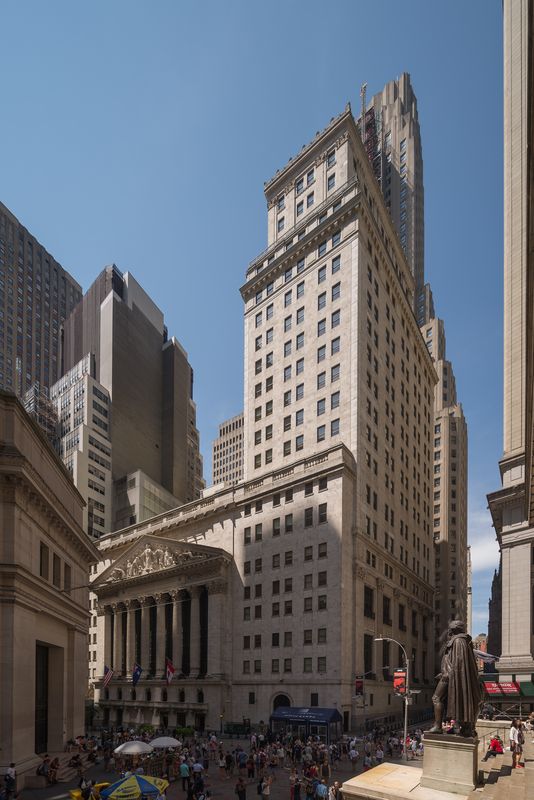
The close in full
Start with the sector table, because on Wednesday it explains the indices better than the indices explain themselves. Five of the S&P 500’s eleven sectors finished higher. Consumer discretionary led, up 1.79%, powered by retailers reporting holiday demand. Technology added 0.34%, communication services and utilities each rose 0.30%, and real estate edged up 0.07%. On the losing side, industrials were nearly flat at −0.05% and consumer staples fell 0.31%, but the damage concentrated in three places: materials, down 0.75%; financials, down 1.14%; health care, down 2.20% on the managed-care selloff; and energy, the day’s laggard at −3.27%, as crude oil fell on a build in US inventories. A day on which the leading sector is consumer discretionary and the technology sector rises is not a day investors fled risk altogether — it is a day they repriced specific risks: a regulatory proposal aimed at health insurers, a Federal Reserve leaning toward higher rates, and an oil market suddenly long on supply.
The longer context still hangs over the tape. The S&P 500 now sits 6.3% below its October 6 high, though it remains up 7.0% for the year. The Nasdaq is 11.5% below its October 6 high — in correction territory, the term for a decline of 10% or more from a peak. Five straight losses for the S&P 500, totalling about 3.9%, describe a grind rather than a capitulation: each day has taken a little, breadth has been mixed rather than uniformly negative, and Wednesday’s split close — Dow down hard, Nasdaq up, small caps up, volatility down — is the pattern of investors rotating within the market rather than leaving it. Whether that composure survives December’s Federal Reserve meeting is the question the rest of this report keeps returning to.
Why this matters
Why this matters is that Wednesday’s three storylines all run through the same channel: the price of money. The Fed minutes, covered in full below, showed a committee that held rates steady in October only with two members voting to raise them, and a near-consensus that further increases are likely appropriate — with futures markets now pricing a December hike as close to certain. Higher-for-longer rates are the backdrop against which Nvidia’s earnings were judged and found, by the stock market at least, insufficient; they are the reason a $400,000 mortgage costs about $236 more a month than it did a year ago; and they are the reason cash parked in a Treasury bill earns more than ten times the average savings account. The health-care selloff, by contrast, is a reminder that not every risk is a rate risk: a single proposed rule from the Centers for Medicare & Medicaid Services removed 8.82% from the Dow’s most influential stock in a day, on a proposal that has not yet taken effect and may change before it does.
It matters, finally, because of what the day was not. A 566-point Dow decline sounds like a crash headline; the underlying session was a 0.24% slip in the broad index, smaller than most sessions this year, with advancing corners easy to find. Learning to read past the Dow’s points to the percentages underneath is the single most useful skill a regular reader can take from a week like this one — and the data-in-context section below puts Wednesday’s move on that scale precisely.
Nvidia: a beat the stock could not hold
Nvidia reported its fiscal third quarter on Tuesday after the bell, and Wednesday was the stock’s first full session with the numbers. By every operating measure, the report was emphatic. Revenue reached $115.84 billion, up 103% year over year, against about $109 billion expected. Adjusted earnings were $2.68 a share against $2.47 expected. Data-center revenue was $107.6 billion, up 110%; net income was $65.3 billion, up 105%; and the adjusted gross margin was 74.9%. The guidance pointed the same way: fourth-quarter revenue of about $130 billion against about $125 billion expected, the fiscal 2028 revenue growth outlook raised to 75% from 70%, and the new Vera Rubin platform contributing nearly $20 billion in its first production quarter — though fourth-quarter gross margin is guided lower, to 71–72%, as the new platform ramps. It was also the company’s first report since Jensen Huang resigned on November 12: interim chief executive Colette Kress led the release, and board chair Harvey Jones has said the board does not intend to bring Huang back.
The stock’s verdict was colder than the numbers. Nvidia rose as much as 2.7% early in the session, then faded, and by 3:39 p.m. Eastern it was down 2.87% at $151.00, according to the Motley Fool — below Tuesday’s $155.46 close. The Philadelphia Semiconductor Index closed slightly lower, with AMD advancing while Intel and Micron lost ground. The pattern has a name on trading desks — selling the news — and a logic: when a stock has run ahead of even optimistic expectations, a beat that merely confirms the story gives holders a reason to take profits rather than add. Ryan Detrick, chief market strategist at Carson Group, put the mood to Reuters this way: “There’s been a lot of dark clouds of uncertainty over technology, chip stocks and AI in general.” His accompanying point matters as much as the quote: the market is not totally falling apart, and other groups are doing pretty well under the surface. Wednesday’s tape — retailers up, discretionary leading, small caps positive — is that point made visible. The question Nvidia now carries into the coming sessions is not whether its business is growing; the report settled that. It is what multiple investors will pay for that growth while the Fed is raising, not cutting, the rate against which all future earnings are discounted.
The Fed minutes: a hold, two dissents, and a December hike in view
The day’s scheduled event arrived at 2:00 p.m. Eastern: the minutes of the Federal Open Market Committee’s October 27–28 meeting. The S&P 500 gave back early gains after the release, and the document explains why. The committee voted 10–2 to hold the federal funds rate at 3.75% to 4.00% — but the two dissenters, Lisa Cook and Beth Hammack, voted against holding because they favoured a 25-basis-point increase. Almost all participants judged that further rate increases likely would be appropriate in the months ahead to return inflation to the 2% target, and a couple of participants said a hike of more than 25 basis points could be warranted in December if incoming inflation data were unfavourable. Dissents in favour of tightening, at a meeting that held rates steady, are the minutes’ clearest signal: the centre of the committee, under Chair Kevin Warsh, is closer to raising rates than to cutting them.
The public remarks around the release pointed the same way, with differences of degree that now define the December debate. Fed Governor Christopher Waller said on CNBC on Wednesday that he favours a 50-basis-point move in December, arguing that inflation is headed in the wrong direction and broadening, with about 70% of core services items rising above 3%. New York Fed President John Williams said on Tuesday that he favours tighter policy but saw no need for dramatic action. San Francisco Fed President Mary Daly said on Wednesday that further hikes are needed, but with a measured approach. Markets have largely settled the first question and moved to the second: CME FedWatch prices a near-certain probability — about 95% — of a 25-basis-point hike at the December 8–9 meeting, and futures also price a January hike and another by April. The open argument is no longer hike or hold; it is 25 or 50. Wednesday’s housing data, reported by Reuters, supplied the counterweight the doves would cite: mortgage rates climbing, building permits faltering, and pending home sales dropping to a record low — evidence that the tightening already in place is biting hardest exactly where borrowing costs are longest.
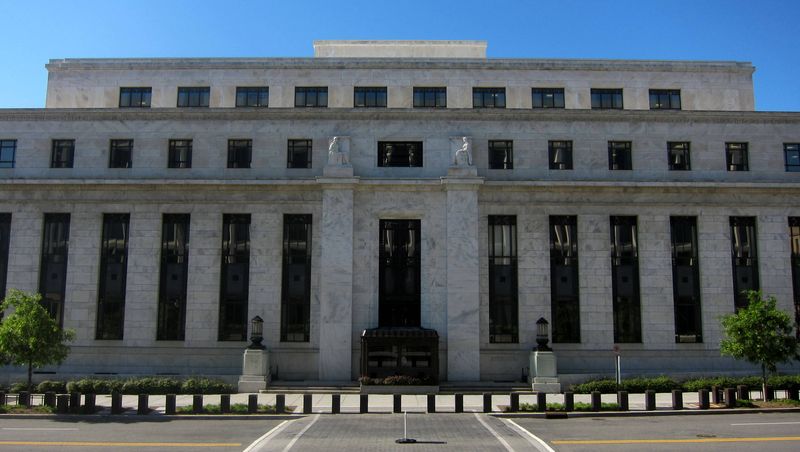
Winners and losers: retailers rose, managed care fell
The day’s winners wore name tags from the mall. TJX Companies — the owner of TJ Maxx, Marshalls and HomeGoods — surged about 10.4% on the day, as reported by the Motley Fool and OrbitLens, after third-quarter earnings of $1.34 a share edged past the $1.33 consensus and the company raised its full-year guidance on strong holiday demand. Target jumped after a third-quarter beat and an upbeat holiday outlook in which it raised its sales outlook; Reuters reported the jump, and midday reports put the shares up about 5.6%. Lowe’s also reported on Wednesday within the retail group. Take-Two Interactive rose ahead of the Grand Theft Auto VI rollout. Read together, the retail reports describe a consumer who is still spending into the holiday season but hunting value while doing it — the strongest results came from the off-price end of the market, where TJX lives, and from a big-box chain guiding sales higher. Consumer discretionary’s 1.79% sector gain, the day’s best, is those company stories added together.

The losers’ list begins with UnitedHealth, and the cause deserves a plain explanation. On November 16, the Centers for Medicare & Medicaid Services proposed what it calls the CRUSH proposal: reviving wider Medicare Advantage risk-adjustment audits — RADV audits, which test whether the diagnoses insurers submit match patients’ medical records — reaching back to payment year 2018. CMS estimates the wider audits could recover about $9 billion per payment year across the industry, or about $90 billion over a decade in federal savings. For insurers, recoveries of that scale, applied retroactively across years of payments, are a direct earnings risk, and it lands on top of investor concern about rising medical costs. Two cautions belong with the stock move. First, this is a proposal, not a final rule: comments are due January 19, 2027, and the text can change before anything takes effect. Second, the market is pricing an estimate and a direction, not a bill that has arrived. Humana also fell sharply as the managed-care group sold off together, and health care finished as the second-worst sector, down 2.20% — a sector move built substantially from one regulatory document.
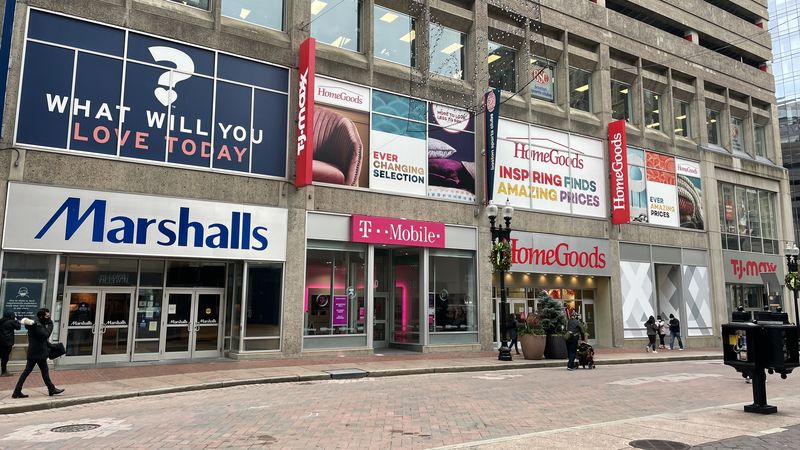
Beyond stocks: oil, gold and the bond market
Cross-asset markets had their own day, and it did not rhyme with the equity split. Treasury yields fell even as the Fed minutes leaned hawkish: the 10-year yield dropped 4 basis points to 5.07%, the 30-year fell 5 basis points to 5.41%, and the 3-month Treasury bill yielded 4.14%. Falling long yields on a hawkish document usually mean bond investors are weighing the growth cost of tightening — the housing data, with pending home sales at a record low, is the visible part of that cost. Oil fell hard: West Texas Intermediate crude settled at $82.09 a barrel, down 4.56%, after industry data showed a larger-than-expected build in US inventories — the American Petroleum Institute reported crude stocks up 5.28 million barrels and gasoline stocks up 5.12 million barrels. Brent crude was about $91.64, down 1.61%, and energy stocks, down 3.27%, were the equity market’s casualty of the same numbers.
Gold, the asset that is supposed to rise when investors are nervous, fell instead: down 3.57% to $3,726 an ounce, below $3,800 for the first time in over a year and at its lowest since September 2025. The US dollar index rose 0.30% to 103.80 — a firmer dollar and high cash yields both work against gold, which pays no interest while a Treasury bill pays 4.14%. Bitcoin fell 4.07% to $62,250, measured since midnight UTC, continuing to trade as a risk asset on a day when risk was being repriced rather than embraced. The combined message from bonds, oil, gold and crypto is narrower than the Dow’s headline: supply is weighing on oil, the strong-dollar, high-rate regime is weighing on gold and bitcoin, and none of the classic crisis signals — a volatility spike, a haven rush — appeared. The VIX fell.
What it means for regular people
Most readers do not own the Dow; they own a slice of the broad market through a retirement account, and Wednesday’s arithmetic for that reader is small. A 0.24% fall in the S&P 500 moves a $10,000 index-fund holding by about $24, in price terms — real money, but the scale of a weekly grocery variation, not a life event, and five-day runs of about 3.9% are the ordinary cost of being invested at all. The larger household numbers in Wednesday’s news sit elsewhere. The 30-year fixed mortgage rate averaged 7.11% in Freddie Mac’s November 12 survey. On a $400,000 loan, that is about $2,691 a month in principal and interest — about $236 a month more than the same loan a year ago at 6.22%. With the Fed minutes pointing to hikes rather than cuts, and Wednesday’s housing data showing permits faltering and pending sales at a record low, readers waiting for mortgage relief should understand what would have to change: not a single soft headline, but a run of inflation data cool enough to move a committee that currently leans the other way.
Savers face the mirror image of the borrower’s problem, and it is worth stating plainly. The average savings account pays 0.39%. Cash held in instruments close to Treasury bills pays about 4.14% — the 3-month bill’s yield. With inflation running around 3.7%, money in an average savings account is losing buying power every month: prices rise roughly ten times faster than the account’s balance grows. Money at bill-like rates, by contrast, roughly keeps pace with inflation before tax. That gap — between 0.39% and about 4.14% for cash that is not being spent soon — is the quiet household story of the high-rate era, and it persists whichever way December’s meeting goes. Finally, the pump: oil down 4.56% in a day can help drivers, because wholesale fuel costs feed into retail gasoline prices — but with a lag of days to weeks, and only if the lower crude price lasts rather than snapping back. One day’s inventory report is a possibility for cheaper fuel, not a promise of it. None of this is personalised advice; it is the arithmetic of Wednesday’s numbers applied to the accounts most households actually hold.
Data in context: why 566 Dow points mislead
Here is the calibration this article exists to provide. Despite the 566-point Dow headline, the S&P 500’s move on Wednesday — 0.24% on the Reuters preliminary figures — was smaller than the index’s moves on 77% of sessions this year, according to Pulsafi’s close data. In other words, by the measure that best represents a diversified portfolio, Wednesday was a quieter-than-typical day. The Dow’s points mislead for two mechanical reasons. Its level is high — above 50,000 — so a routine 1% move is more than 500 points. And its price-weighting lets one expensive stock, on Wednesday UnitedHealth at $355 a share, dominate the print. The percentages tell the truer story, and Wednesday’s percentages describe a rotation day: the Dow down on one stock’s regulatory shock, the S&P 500 down slightly for a fifth day, the Nasdaq and small caps up, volatility down, and five of eleven sectors higher. Rotation days feel alarming in headlines and unremarkable in portfolios. Crash days look different in every column at once — and this was not one.
What happens next
Thursday, November 19, arrives crowded. Walmart reports earnings, completing a retail week in which Target and TJX have already set an upbeat tone — Walmart’s read on the same consumer will either confirm the holiday story or complicate it. Weekly jobless claims land at 8:30 a.m. Eastern, the freshest pulse on a labour market the Fed is watching for cracks. And Thursday is the market’s newest test of the AI trade: Anthropic’s Nasdaq debut, under the ticker ANT, after pricing on Wednesday night in a $70–78-a-share range — 825 million shares raising about $64.4 billion and valuing the company at about $1.4 trillion. How the newest pure AI listing trades, one day after Nvidia’s beat failed to lift Nvidia, will say a great deal about the appetite underneath the sector.
Beyond Thursday, the December 8–9 FOMC meeting dominates the calendar, and the question has sharpened from whether the Fed hikes to whether it hikes by 25 or by 50 basis points — the argument Waller opened publicly on Wednesday. Three dials will tell readers how that argument is trending: the 10-year Treasury yield around the 5% line, which prices the whole path of policy rather than one meeting; whether Nvidia can hold its post-earnings level after Wednesday’s fade; and the CMS comment period on the CRUSH proposal, open until January 19, 2027, through which the managed-care industry will make its case against retroactive audits. Wednesday’s close, properly read, was not a verdict on any of those questions. It was the market marking time — unevenly, loudly in the Dow, quietly almost everywhere else — while it waits for December to answer them.
Sources
Sources and method: closing index figures are Reuters preliminary closing data for Wednesday, November 18, 2026, as reported by Reuters via SRN News — Dow Jones Industrial Average 50,193.03, −566.39, −1.12%; S&P 500 7,322.53, −18.00, −0.24% (fifth straight losing session, about −3.9% over the run); Nasdaq Composite 24,429.89, +101.50, +0.39%; Russell 2000 2,714.31, +12.44, +0.46%; VIX 24.56, −3.53%. These are preliminary figures; other close tables differ by about a point, and the two sets are not mixed in the body of this article. Sector, yield, commodity and crypto figures are Pulsafi close tables sourced to Yahoo Finance, cross-checked against Fulltilt and CommodityWatch close tables: consumer discretionary +1.79%, technology +0.34%, communication services +0.30%, utilities +0.30%, real estate +0.07%, industrials −0.05%, consumer staples −0.31%, materials −0.75%, financials −1.14%, health care −2.20%, energy −3.27%; 10-year Treasury yield 5.07%, 30-year 5.41%, 3-month bill 4.14%; WTI crude $82.09, −4.56% (other snapshots put WTI in the low $83s); Brent about $91.64, −1.61%; gold $3,726, −3.57%; US dollar index 103.80, +0.30%; bitcoin $62,250, −4.07% since midnight UTC. Nvidia figures are the company’s fiscal third-quarter report as reported by Reuters, CNBC and LSEG-based coverage; the intraday stock figure (−2.87% at $151.00 at 3:39 p.m. ET), the TJX surge of about 10.4% and Target’s midday gain are as reported by the Motley Fool and OrbitLens. Fed material is from the Federal Reserve’s published minutes of the October 27–28, 2026 FOMC meeting and officials’ public remarks (Waller on CNBC; Williams; Daly); rate probabilities are CME FedWatch. UnitedHealth’s closing price is from FI Handbook market data, and the CRUSH proposal is as described in CMS reporting — a proposal open for comment until January 19, 2027, not a final rule. Mortgage figures are Freddie Mac’s November 12 survey (30-year fixed at 7.11%); the monthly-payment arithmetic is this article’s calculation from those rates. Tuesday, November 17, 2026 closing figures (Dow 50,759.42, −1.64%; S&P 500 7,340.53, −1.03%; Nasdaq 24,328.38, −0.74%) are used for continuity context only. Photographs are file photos via Wikimedia Commons; none depicts the events of November 18, 2026.